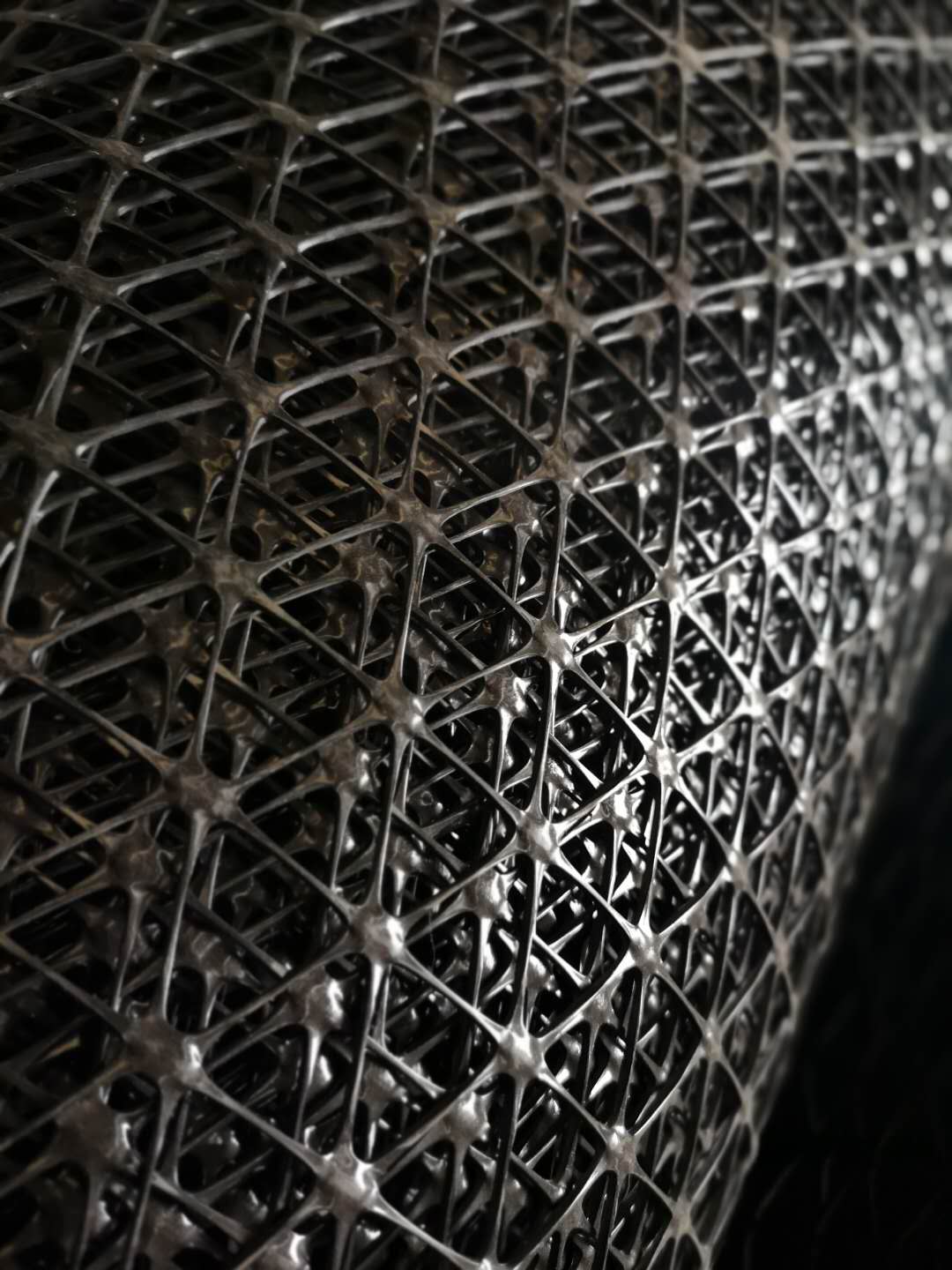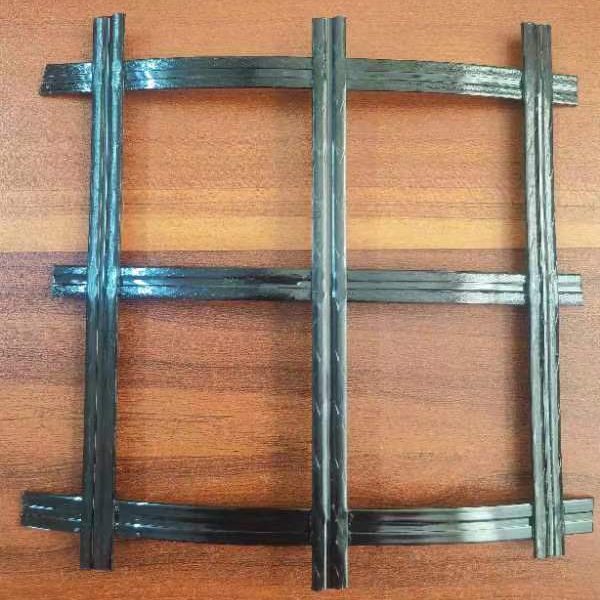


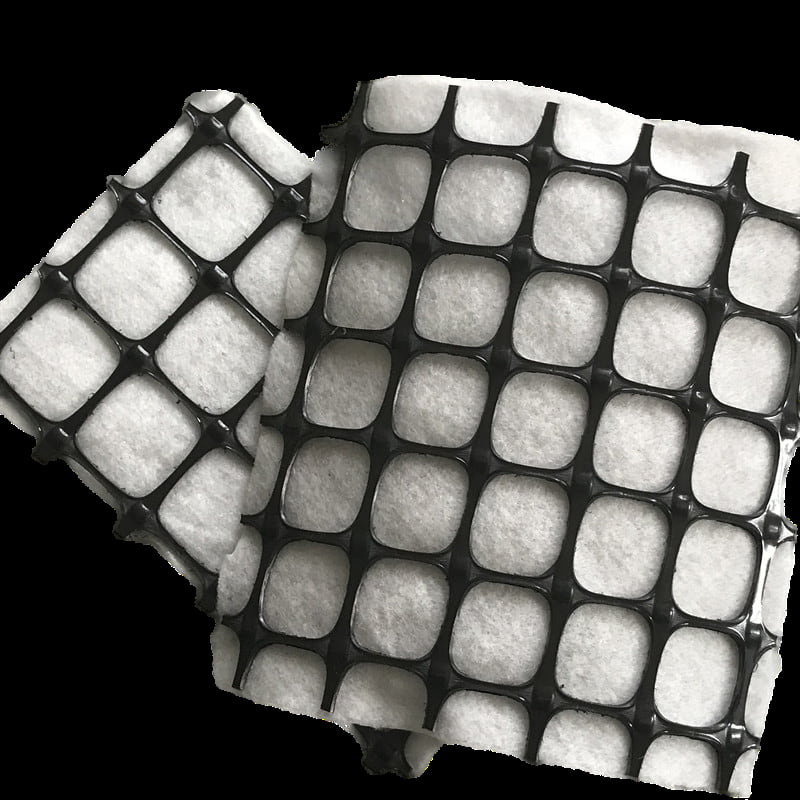


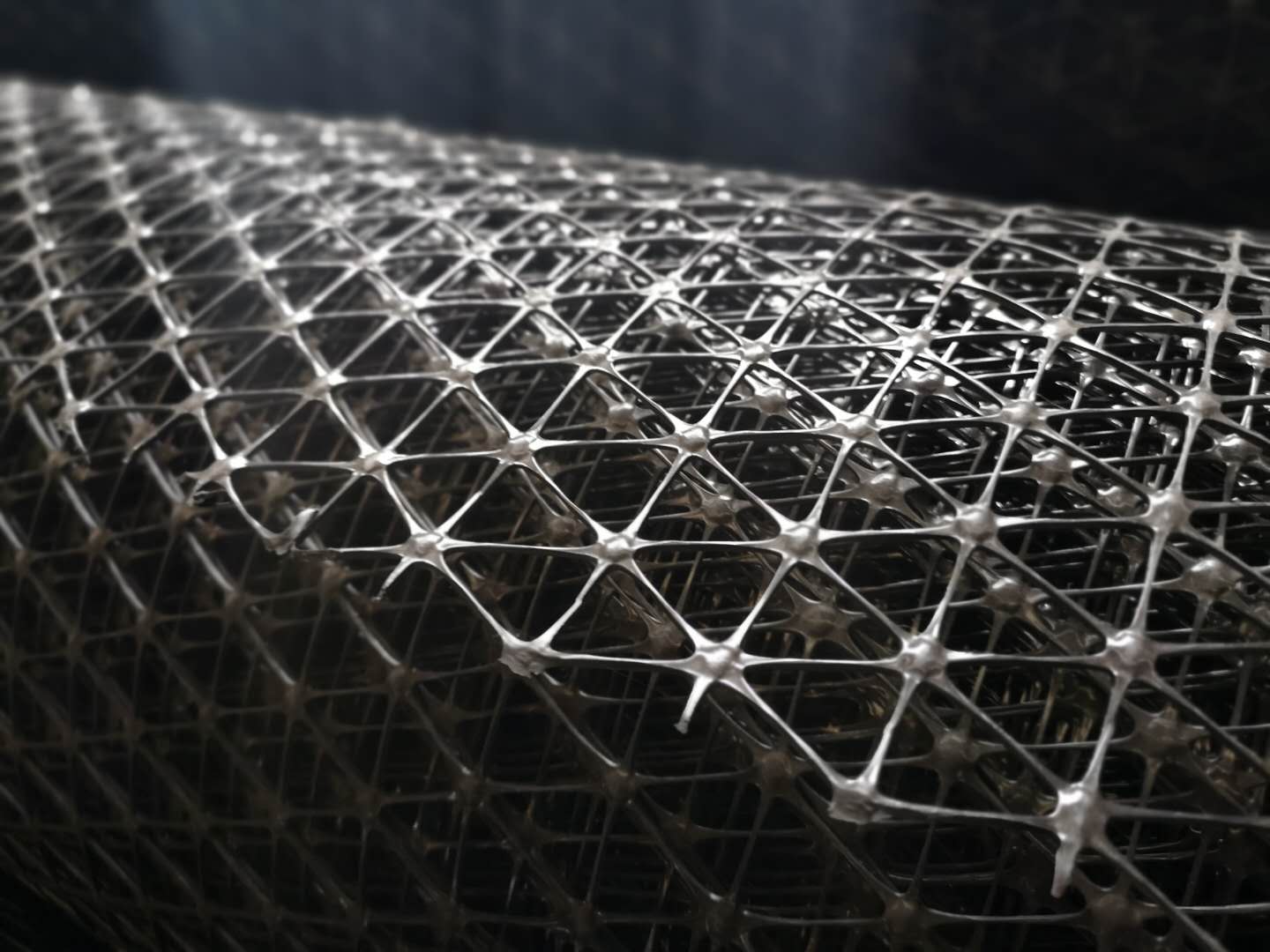


Continuous filament Nonwonven Geotextile
Introduction
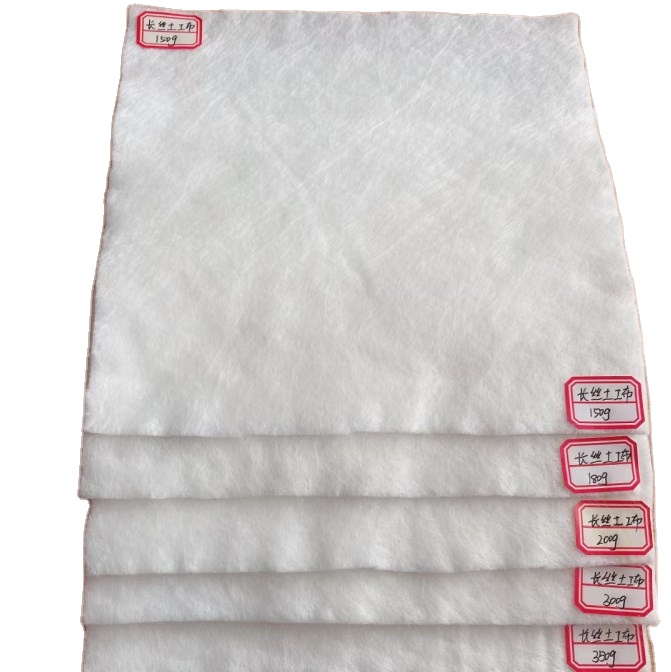
The continuous filament nonwoven geotextile is mainly made from polyester filament which provides functions of separation, protection, filtration and drainage – with weights ranging between 100 g/m2 and 800 g/m2
Function:
- Ground stabilization
- Gravels separation
- Sludge Lagoons
- Water Reservoirs
- Coastal Engineering
- Motorways
Choose Geotextile
Nonwoven geotextiles offer several advantages in civil engineering and construction applications:
- Filtration: Nonwoven geotextiles provide excellent filtration properties, allowing water to pass through while retaining soil particles. This helps prevent soil erosion and maintain the integrity of structures such as retaining walls and embankments.
- Separation: Nonwoven geotextiles act as a barrier between different soil layers or between soil and other materials, preventing mixing and maintaining the structural integrity of the layers. This separation function reduces the risk of soil contamination and enhances the performance of the overall construction project.
- Drainage: Nonwoven geotextiles facilitate efficient drainage by allowing water to flow through the fabric while preventing the passage of soil particles. This helps in the management of water runoff, reducing the risk of waterlogging and associated problems such as slope instability and foundation damage.
- Reinforcement: Although not as strong as woven geotextiles or geogrids, nonwoven geotextiles can provide some level of reinforcement to soils. They help distribute loads and reduce stress concentrations, improving the stability and strength of the soil.
- Versatility: Nonwoven geotextiles are available in various thicknesses, strengths, and permeabilities, allowing for versatility in design and application. They can be tailored to specific project requirements, making them suitable for a wide range of civil engineering and construction projects.
- Cost-Effectiveness: Nonwoven geotextiles are often more cost-effective than woven geotextiles or other geosynthetic materials. They provide reliable performance at a relatively lower cost, making them a preferred choice for many applications, especially in projects with budget constraints.
- Ease of Installation: Nonwoven geotextiles are lightweight and easy to handle, making them simple to install even in challenging site conditions. Their flexibility allows for easy adaptation to irregular surfaces and contours, reducing installation time and labor costs.
- Environmental Compatibility: Lianyi nonwoven geotextiles are easy recycled and biodegradable, reducing their environmental impact. This makes them a sustainable choice for construction projects, aligning with green building initiatives and environmental regulations.
COMPANY PRINCIPLES:
Steps to Produce High-Quality Geotextiles
- Material Selection:
- Polymer Type: Geotextiles are typically made from synthetic polymers such as polypropylene (PP), polyester (PET), or polyethylene (PE).
- Quality Standards: Select high-quality raw materials that comply with relevant industry standards for strength, durability, UV resistance, and environmental compatibility.
- Production Process:
- Extrusion or Spinning:
- For nonwoven geotextiles, polymers are melted and extruded through spinnerets to form continuous filaments (for continuous filament geotextiles) or spunbonded fibers (for spunbonded geotextiles).
- Web Formation:
- Filaments or fibers are laid onto a moving conveyor belt or drum, where they are randomly oriented to create a web.
- Bonding:
- Bonding methods vary based on the type of geotextile:
- Needle-punching: Uses barbed needles to mechanically interlock fibers, creating a strong and durable fabric.
- Thermal bonding: Applies heat and pressure to fuse fibers together, ensuring uniform strength and dimensional stability.
- Chemical bonding: Uses adhesives or binders to bond fibers together, providing flexibility and specific performance characteristics.
- Bonding methods vary based on the type of geotextile:
- Calendering and Finishing:
- Calendering (compression between heated rollers) may be used to enhance surface smoothness, uniformity, and other properties like permeability and drainage.
- Additional treatments such as UV stabilizers, anti-static agents, or flame retardants may be applied to enhance performance and durability.
- Extrusion or Spinning:
- Quality Control and Testing:
- Raw Material Inspection: Conduct thorough checks to ensure raw materials meet specified quality criteria.
- Process Control: Monitor and control parameters such as temperature, pressure, speed, and tension throughout production to maintain consistency and quality.
- Testing: Perform rigorous testing on finished geotextiles:
- Tensile Strength: Measure strength properties under both dry and wet conditions.
- Puncture Resistance: Evaluate resistance to puncture from sharp objects.
- Permeability: Assess water flow characteristics to ensure adequate drainage properties.
- UV Stability: Test for resistance to degradation from UV exposure.
- Chemical Resistance: Evaluate performance in contact with various chemicals and environments.
- Packaging and Storage:
- Properly package geotextiles to protect against damage during transportation and storage.
- Ensure storage conditions meet manufacturer recommendations to maintain fabric integrity and performance properties.
- Quality Assurance and Compliance:
- Adhere to relevant industry standards and certifications (e.g., ASTM, ISO) to ensure geotextiles meet regulatory requirements and project specifications.
- Implement quality management systems to continuously improve processes and product quality.
Key Considerations for Producing High-Quality Geotextiles
- Consistency: Maintain uniformity in fiber distribution, bonding strength, and mechanical properties throughout the fabric.
- Durability: Ensure geotextiles are resistant to environmental factors such as UV exposure, moisture, chemicals, and biological degradation.
- Functionality: Design geotextiles to provide specific functions such as filtration, separation, reinforcement, or erosion control based on project requirements.
- Sustainability: Optimize production processes to minimize waste generation, energy consumption, and environmental impact.
How to use
Ground treatment:
- When reinforcing soft soil foundation, the surface of the foundation must be cleaned and leveled first.
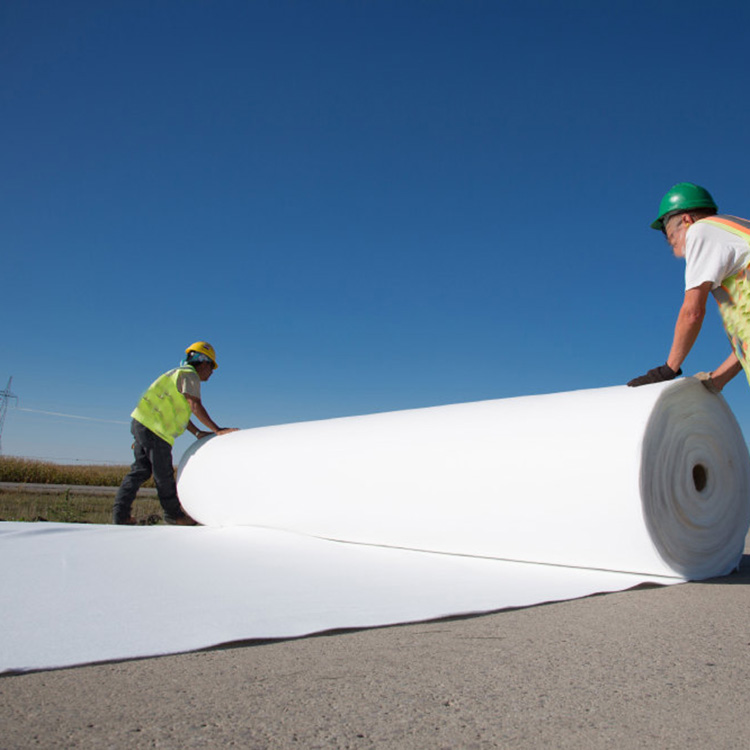
- Spread the Continuous filament Nonwonven Geotextilealong the length of the foundation, and pay attention to keep the geotextile as flat as possible. Use special stitching equipment or special tape for geotextiles to connect to ensure a firm connection.
- After the geotextile is laid, it can form an isolation layer between the soft soil foundation and the upper fill, preventing hard objects such as stones in the upper fill from being embedded in the soft soil, while dispersing the pressure of the upper fill.
Application in road engineering:
- Before the construction of the road pavement base, clean up the debris and loose particles on the bottom of the base.
- Spread the Continuous filament Nonwonven Geotextileon the bottom of the base, such as between the cement stabilized gravel base and the soil base. The laying direction is generally parallel to the center line of the road, and sufficient overlap width must also be ensured.
- It can prevent the base material from mixing with the fine-grained soil in the soil base, and ensure that the performance of the base material is not affected by the soil base material.
Application in water conservancy projects:
- In dam construction, the foundation of the dam must be cleaned and compacted first.
- The Continuous filament Nonwonven Geotextileis laid between the dam foundation and the dam body as an anti-seepage layer.
- The geotextile itself has a certain anti-seepage performance and can prevent water from penetrating.
Maintenance and Inspection
Daily inspection
- Appearance inspection: Perform appearance inspection on the surface of Continuous filament Nonwonven Geotextileregularly (such as monthly or quarterly, the specific frequency depends on the use environment and the importance of the project). Check whether the geotextile has physical damage such as damage, tearing, holes, etc.
- Performance inspection: Test the drainage performance of the geotextile. You can judge whether its permeability is affected by observing the drainage of the drain or setting some simple water level monitoring points on the geotextile. If the drainage is not smooth, it may be that the geotextile is blocked or its internal structure is damaged.
Cleaning work
- Physical cleaning: When there is debris and soil accumulation on the surface of Continuous filament Nonwonven Geotextile, it should be cleaned in time. For a small amount of debris, manual cleaning can be used to gently remove it with a broom or brush. If there is a large amount of soil accumulation, small cleaning equipment such as a low-pressure water gun can be used for flushing without damaging the geotextile, but be careful not to use too high a pressure to flush the geotextile, so as not to damage the geotextile.
- Chemical cleaning: If there are oil stains, chemical stains and other pollutants on the surface of the geotextile that are difficult to remove by physical methods, you can consider using chemical cleaners.
Damage repair
- Small area damage repair: For small area tears or holes on the surface of the geotextile, you can use stitching or pasting to repair. If you choose to sew, use needles and threads that match the material of the geotextile, and the stitching density should be moderate to ensure that the repaired part can withstand a certain amount of tension.
- Large area damage treatment: When the geotextile has large area damage, such as large area tears or severe aging that leads to performance degradation, it may be necessary to replace part or all of the geotextile. During the replacement process, the original laying method and requirements should be followed to ensure that the new geotextile is firmly connected to the surrounding geotextiles and well sealed.