





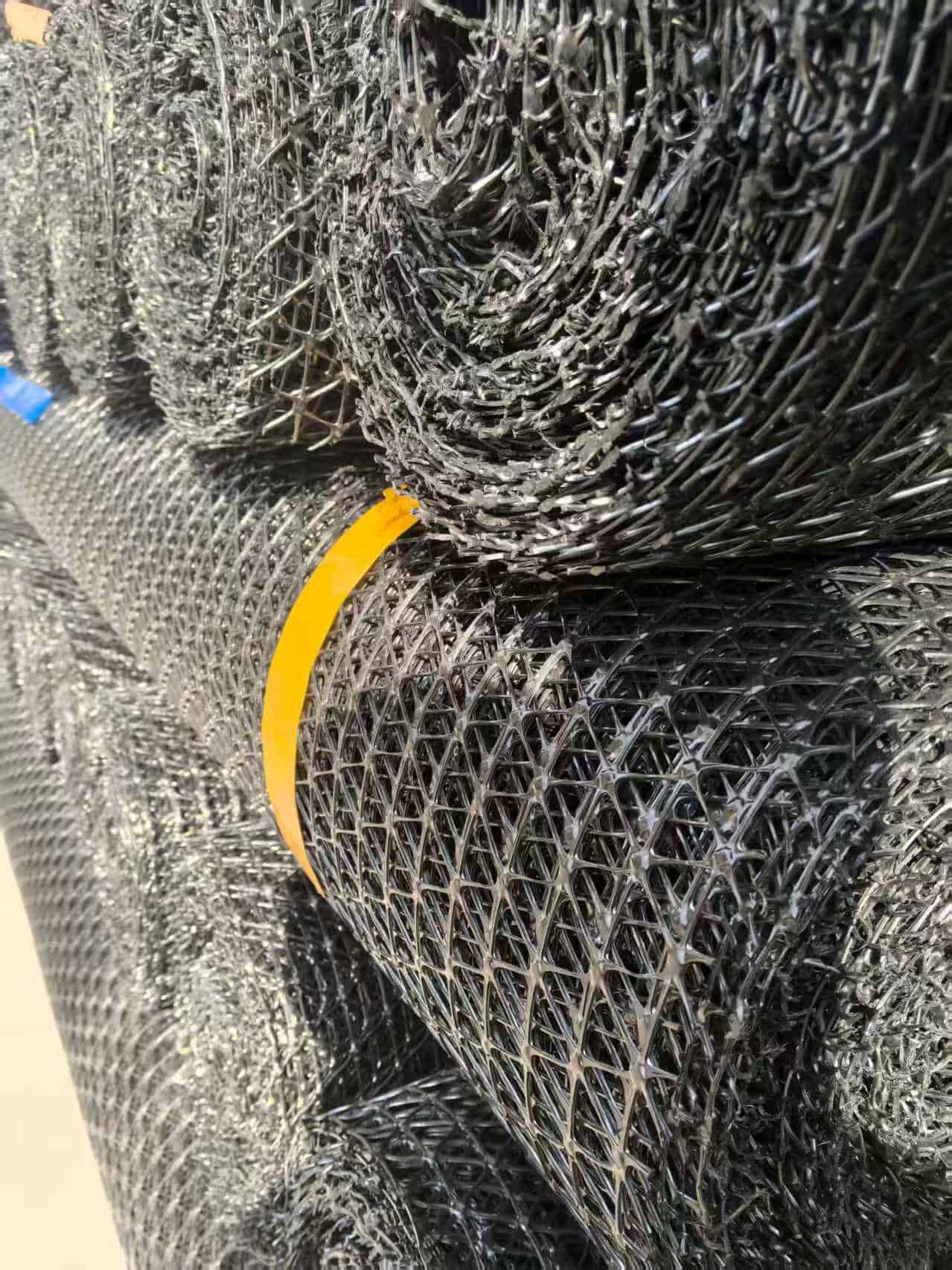
Feicheng Lianyi Polypropylene Triaxial Geogrid – Advanced Multidirectional Reinforcement for Modern Infrastructure

In the pursuit of stronger, longer-lasting, and more cost-efficient infrastructure, geosynthetics have become indispensable. Among them, triaxial geogrids represent the most advanced evolution of soil reinforcement technology.
Feicheng Lianyi Engineering Plastics Co., Ltd., China’s largest and most trusted geogrid manufacturer, has developed a high-performance polypropylene (PP) triaxial geogrid designed to deliver superior load-bearing performance, long-term durability, and exceptional soil confinement.
This document provides a detailed technical overview of the mechanical properties and reinforcement performance of Lianyi’s PP triaxial geogrid, explaining how its unique structure revolutionizes soil stabilization and base course design.
1. Structural Design and Material Composition
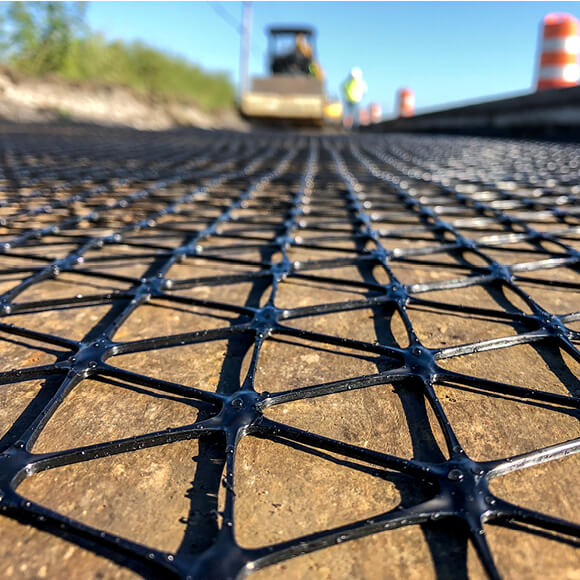
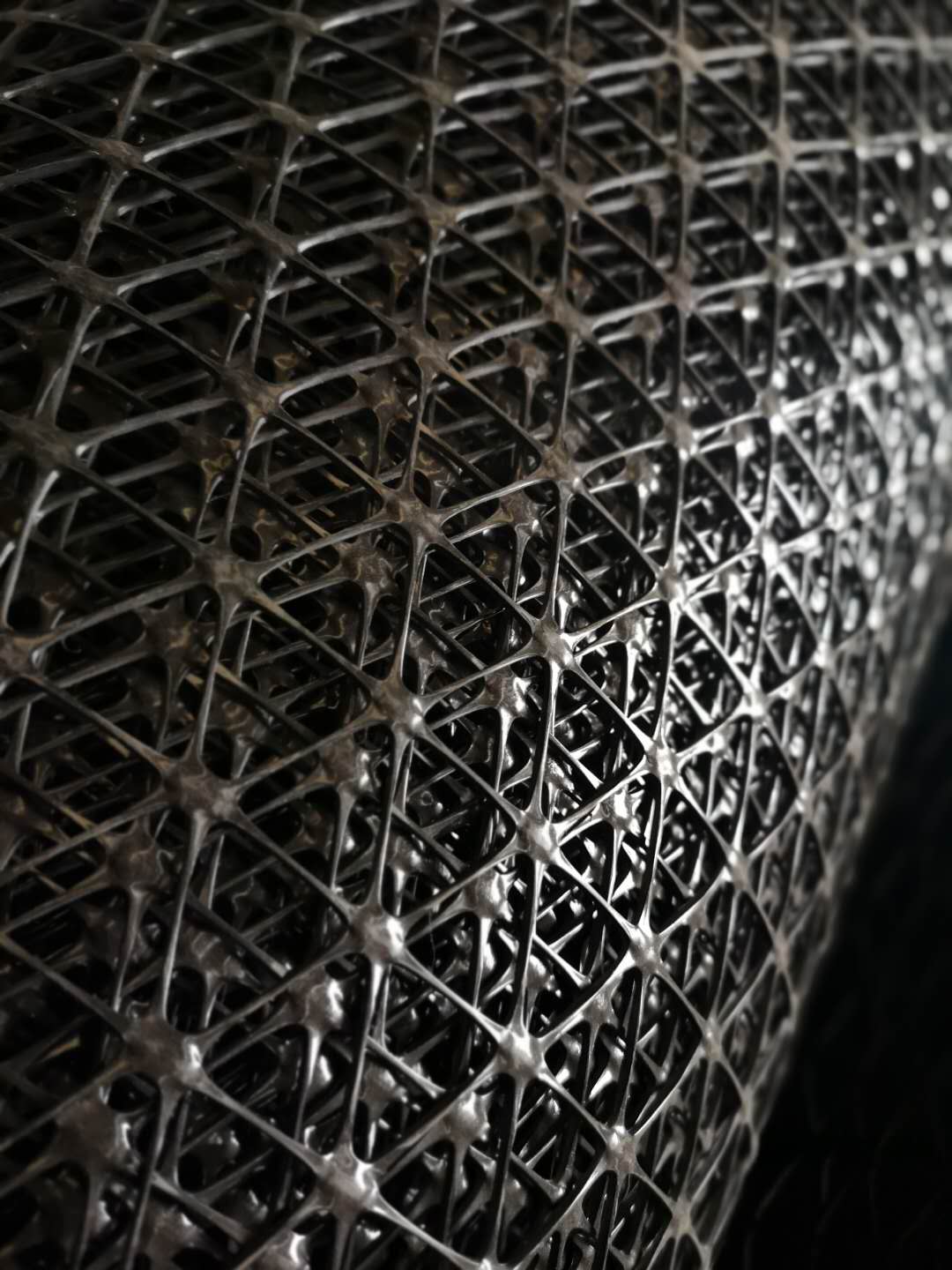
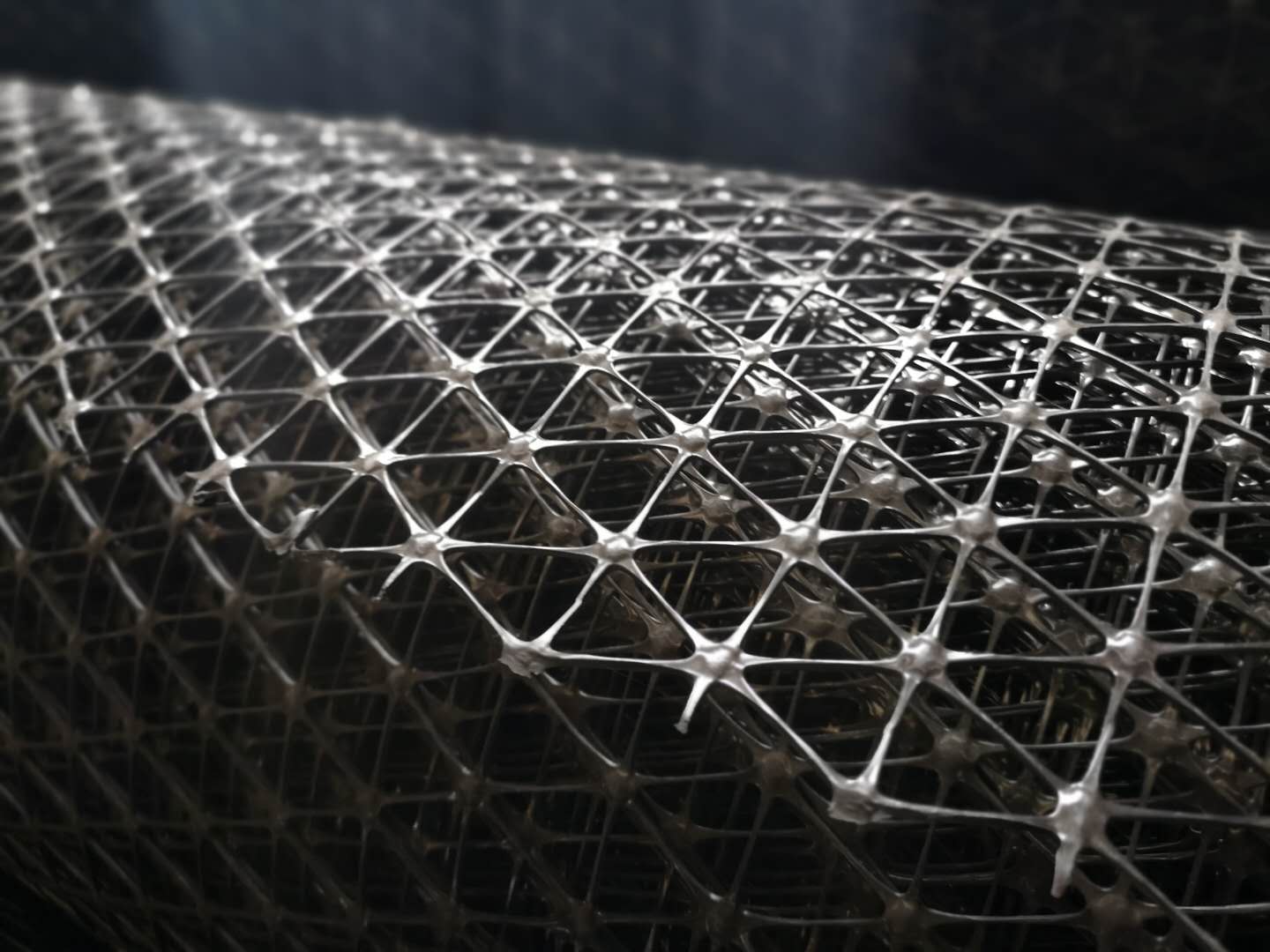
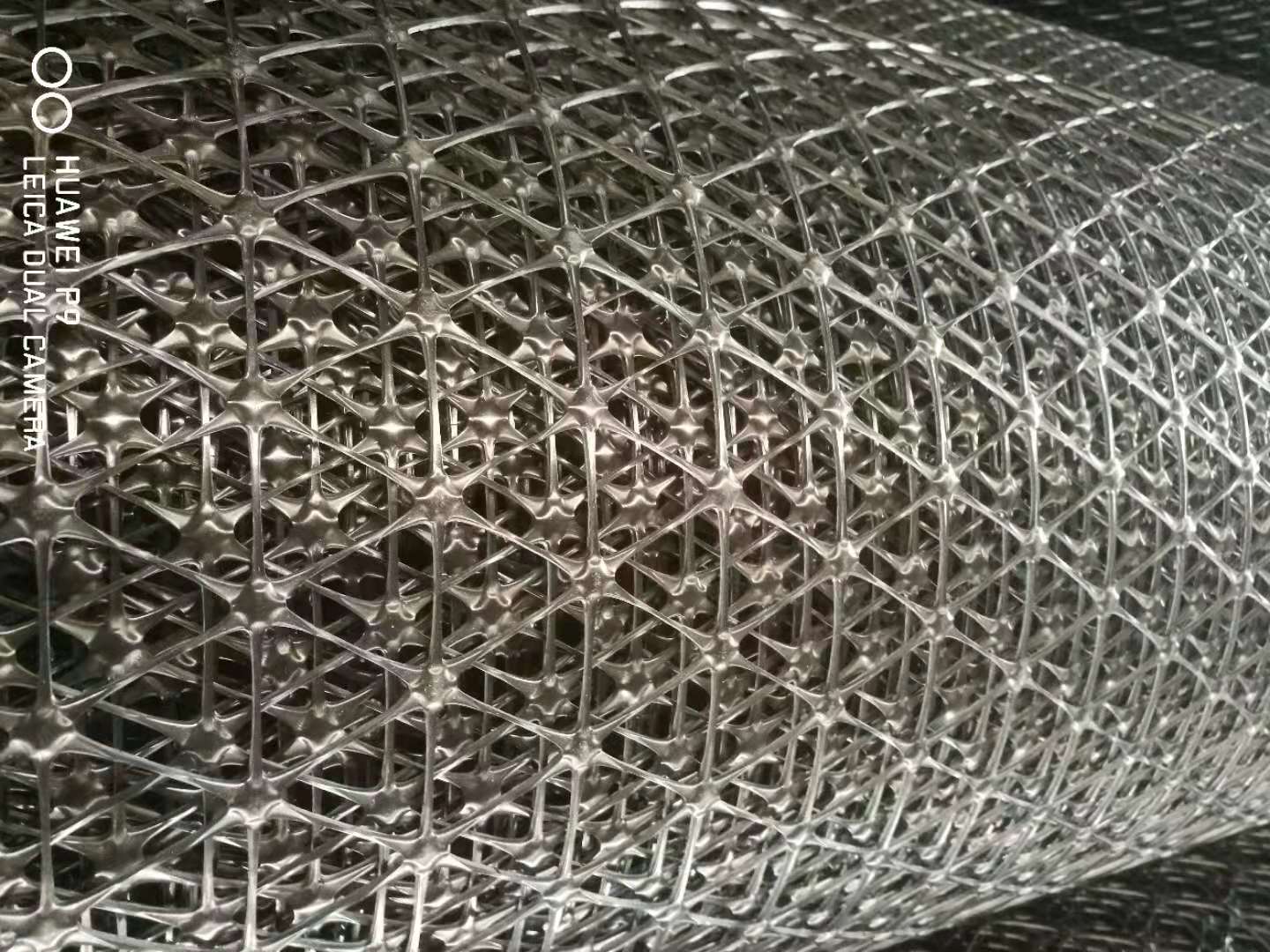
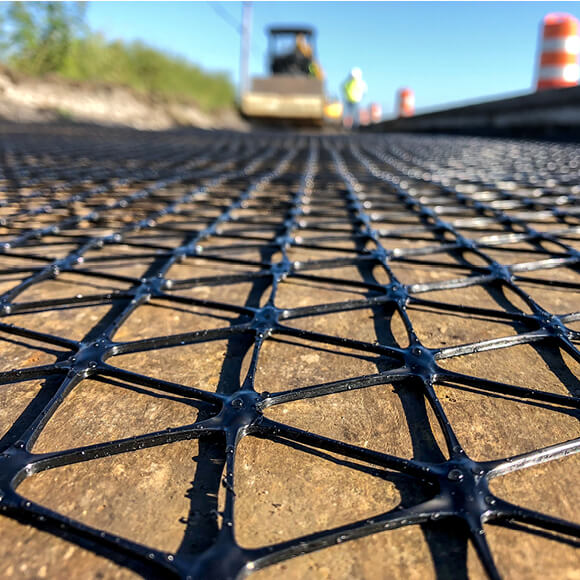
Unlike conventional biaxial geogrids with rectangular apertures, Lianyi’s triaxial geogrid features a triangular aperture pattern—a geometry inspired by natural load-distribution systems such as crystalline lattices and honeycomb structures.
Each node in the grid is connected by three ribs spaced at 120°, creating a continuous network of equilateral triangles that distributes stresses evenly in all directions.
Base Material: High-Molecular Polypropylene (PP)
Lianyi uses virgin polypropylene resin enhanced with carbon black, anti-oxidants, and UV stabilizers to ensure long-term environmental resistance.
PP offers excellent chemical inertness, high stiffness-to-weight ratio, and minimal creep under sustained loading—qualities that make it ideal for long-term soil reinforcement applications.
Typical material characteristics of Lianyi PP include:
-
Density: 0.91 g/cm³
-
Melting point: 165 °C
-
Tensile modulus: > 1.5 GPa
-
Excellent resistance to acids, alkalis, and microorganisms
The inclusion of UV-resistant additives ensures service longevity even under prolonged sunlight exposure, making the geogrid suitable for tropical and desert climates.
2. Manufacturing Process and Mechanical Orientation
The mechanical properties of the geogrid are derived from precisely controlled extrusion and stretching processes:
-
Extrusion: PP resin is extruded into a flat sheet.
-
Perforation: The sheet is punched into an equilateral-triangle aperture pattern.
-
Stretching: The perforated sheet is mechanically stretched in multiple directions—first longitudinally, then radially around each triangular node—to orient polymer chains and significantly enhance tensile strength.
This multiaxial stretching results in a product with:
-
High tensile strength in all in-plane directions (not limited to MD and CD).
-
Uniform node rigidity, ensuring consistent load transfer between ribs.
-
Stable geometric structure, maintaining its shape even under cyclic loading.
Every Lianyi triaxial geogrid roll undergoes strict quality control in accordance with ISO 9001 standards.
3. Mechanical Properties
3.1 Tensile Strength and Stiffness
The hallmark of a geogrid’s quality lies in its tensile behavior.
Lianyi’s PP triaxial geogrid typically achieves the following ranges (depending on model and aperture size):
| Property | Typical Range | Test Standard |
|---|---|---|
| Ultimate Tensile Strength | 30 – 80 kN/m | ASTM D6637 |
| Junction Efficiency | ≥ 90 % | ASTM D7737 |
| Tensile Modulus @ 2 % strain | ≥ 250 kN/m | ASTM D6637 |
| Elongation at Break | ≤ 13 % | ASTM D6637 |
| Aperture Size | 40 – 70 mm (triangular) | ASTM D4751 |
The high initial modulus means the grid mobilizes resistance even under small deformations, a critical factor for pavement and subgrade stabilization where early confinement prevents rutting and settlement.
3.2 Junction Strength
Each node in the triaxial structure acts as a load-transfer hub. Lianyi’s precision thermal-bonding process creates solid-phase junctions with strength exceeding that of individual ribs, ensuring the grid acts as a continuous tensile membrane.
High junction efficiency (> 90 %) prevents node tearing under cyclic traffic loads and maintains interlock between aggregate particles over time.
3.3 Dimensional Stability
Through multi-directional stretching and post-annealing, the triaxial geogrid exhibits:
-
Minimal thermal contraction (< 2 %)
-
High resistance to creep deformation under constant load
-
Consistent aperture geometry, ensuring predictable performance in design calculations
3.4 Environmental Durability
Lianyi’s PP triaxial geogrid is designed for a service life of over 50 years under normal soil conditions, meeting the requirements of ISO 13434 for durability in civil engineering structures.
It demonstrates:
-
Excellent resistance to chemical attack from acids, alkalis, and salts.
-
No biodegradation under microbial exposure.
-
UV resistance, proven through > 5000 h accelerated weathering tests.
-
Thermal stability from −30 °C to +70 °C, enabling use in cold regions and tropical zones alike.
4. Reinforcement Mechanism and Engineering Performance
The success of Lianyi’s triaxial geogrid lies not just in its material properties but in the way it interacts with soil and aggregate layers.
4.1 Multidirectional Load Distribution
Traditional biaxial grids reinforce in two principal directions (longitudinal and transverse).
The triaxial geometry, however, provides equivalent stiffness in 360 degrees, enabling it to resist loads applied from any angle—an essential advantage in road and working-platform applications where traffic loads are multi-directional.
This structure ensures:
-
Uniform stress distribution across the base course.
-
Reduced localized shear and rutting.
-
Enhanced confinement of the aggregate layer.
4.2 Aggregate Interlock and Confinement
The triangular apertures create a mechanical interlock with the aggregate, confining it laterally under applied loads.
When a wheel load is applied to the surface, the aggregate particles attempt to move laterally—but the ribs of the triaxial geogrid restrain this movement, generating a passive resistance that reduces permanent deformation.
Key benefits of this interlock:
-
Reduced lateral spreading of aggregates.
-
Increased stiffness of the base layer.
-
Improved bearing capacity of the subgrade.
-
Extended pavement service life by mitigating rutting and fatigue cracking.
Field trials show that road sections reinforced with triaxial geogrid can achieve up to 50 % reduction in base thickness without loss of performance.
4.3 Shear Strength Improvement
The presence of a triaxial geogrid increases the composite shear strength of the soil-aggregate system.
The geogrid acts as a tensile membrane, mobilizing additional frictional resistance at the soil–grid interface.
This interaction effectively increases the apparent cohesion and friction angle of the stabilized layer, resulting in a higher factor of safety against shear failure.
4.4 Reduction of Differential Settlement
By spreading the applied load more evenly, the geogrid minimizes stress concentration zones that typically lead to differential settlement.
This makes it highly suitable for projects over soft clays, silts, or peat soils, where conventional construction would require excessive excavation or expensive replacement fill.
4.5 Creep and Long-Term Performance
The high-molecular-weight PP resin and oriented polymer structure minimize creep strain under sustained load.
Even under continuous traffic or static surcharge, the triaxial geogrid maintains its tensile capacity, ensuring long-term reinforcement stability.
Creep testing in accordance with ASTM D5262 indicates less than 10 % strain after 10,000 hours at 50 % of ultimate load—a benchmark for durable reinforcement materials.
5. Field Applications and Performance Advantages
5.1 Road and Pavement Stabilization
Lianyi’s triaxial geogrid is ideal for base and sub-base reinforcement in:
-
Highways and expressways
-
Urban roads and parking areas
-
Heavy-duty industrial pavements
-
Airport taxiways and aprons
By improving load distribution, the triaxial geogrid reduces rutting depth by up to 70 % compared with unreinforced sections.
Designers can often reduce aggregate layer thickness by 30–50 %, yielding significant cost savings in materials and construction.
5.2 Working Platforms and Construction Yards
When placed beneath temporary working platforms for cranes or piling rigs, the triaxial grid provides superior load-spreading capacity.
This allows safe operation on weaker soils, minimizes rut formation, and improves equipment mobility during the construction phase.
5.3 Railway and Port Infrastructure
Under rail ballast or container yard pavements, the geogrid improves load transfer and minimizes settlement caused by repetitive loading cycles.
The triangular structure is particularly effective in restraining angular ballast particles, maintaining track geometry over time.
5.4 Embankments and Slope Reinforcement
In slope and embankment reinforcement, the triaxial grid acts as a tensile inclusion, resisting lateral soil movement and enhancing stability.
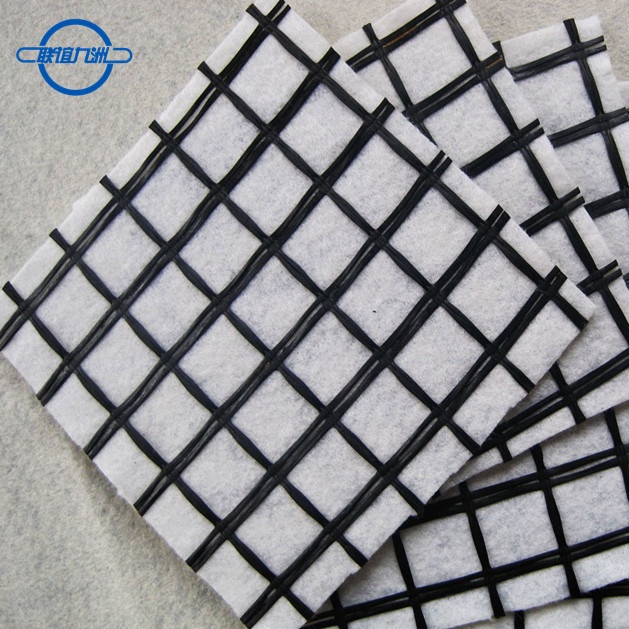
Combined with nonwoven geotextiles or geomembranes, it forms a robust composite system for erosion control and slope protection.
6. Comparison with Biaxial Geogrid
| Feature | Biaxial Geogrid | Lianyi Triaxial Geogrid |
|---|---|---|
| Aperture Shape | Square/Rectangular | Triangular |
| Strength Orientation | Two directions | Multi-directional (360°) |
| Load Distribution | Linear | Radial/Uniform |
| Aggregate Confinement | Moderate | Excellent |
| Junction Rigidity | High | Higher (3-way junctions) |
| Rutting Resistance | Good | Superior |
| Base Thickness Reduction | Up to 30 % | Up to 50 % |
| Typical Applications | Roads, yards | Roads, platforms, heavy-load areas |
The triaxial structure effectively bridges the gap between rigid reinforcement and flexible soil behavior, offering a more isotropic and predictable performance.
7. Quality Assurance and Certification
Feicheng Lianyi operates under an integrated ISO 9001:2015 quality management system and holds CE and IGS certifications for international compliance.
Each production lot is tested for tensile strength, junction efficiency, and dimensional stability, ensuring that every roll meets both domestic and international standards (ASTM, EN, ISO).
The company’s triaxial geogrids have been successfully applied in highways, airports, ports, and railways across Asia, the Middle East, Europe, and South America.
8. Sustainability and Cost Efficiency
Beyond mechanical performance, Lianyi’s PP triaxial geogrid contributes to sustainable construction by:
-
Reducing aggregate consumption and hauling costs.
-
Lowering carbon emissions from quarrying and transport.
-
Extending pavement life, minimizing maintenance frequency.
-
Being 100 % recyclable at end of service life.
9. Conclusion
Feicheng Lianyi’s polypropylene triaxial geogrid represents a breakthrough in geosynthetic reinforcement.
Its multidirectional structure, high tensile modulus, and exceptional interlock capacity deliver superior stabilization performance across diverse soil conditions.
By combining advanced polymer processing, precise geometry, and rigorous quality control, Lianyi provides engineers and contractors with a geogrid that not only enhances mechanical performance but also optimizes cost, durability, and environmental responsibility.
Whether for highways in humid regions, container yards on soft clay, or airfield bases under cyclic loads, Lianyi’s PP Triaxial Geogrid ensures stable foundations, longer pavement life, and sustainable infrastructure for the future.


