


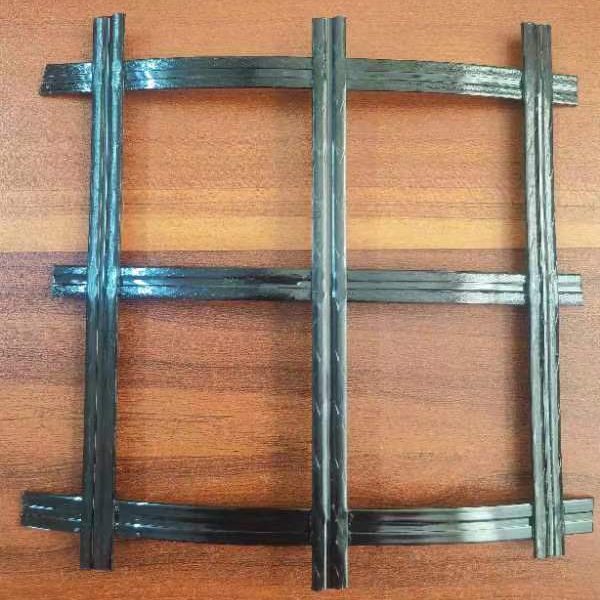
Lianyi’s PP Biaxial Geogrid is a high-performance geosynthetic material designed for soil stabilization and reinforcement applications. It is manufactured through a process involving the punching and drawing of an extruded sheet of polypropylene polymer, resulting in a product with exceptional tensile strength and stiffness in both the longitudinal and transverse directions.
Key Features:
- Material Composition: Made from high-quality polypropylene polymer, ensuring durability and resistance to environmental factors like UV exposure, chemical degradation, and biological attacks.
- Biaxial Structure: Exhibits uniform strength in both directions (longitudinal and transverse), making it ideal for distributing loads evenly.
- Manufacturing Process:
- Punching: The extruded polypropylene sheet is punched with a precise pattern of holes.
- Drawing: The punched sheet is stretched under controlled conditions to align the polymer chains, enhancing its mechanical properties.
- Lightweight and Easy Installation: Its lightweight nature facilitates efficient handling and installation.
Applications:
- Soil Stabilization: Improves load-bearing capacity of weak soils, commonly used in roadways, highways, and railway subgrades.
- Base Reinforcement: Distributes loads over a larger area, reducing rutting and deformation.
- Slope Protection: Provides structural support to slopes, preventing erosion and instability.
- Pavement Reinforcement: Enhances the lifespan and performance of asphalt layers by minimizing cracking and settlement.
Advantages:
- High tensile strength and rigidity.
- Resistance to environmental stresses like UV rays, moisture, and chemicals.
- Cost-effective solution for enhancing the structural integrity of various geotechnical projects.
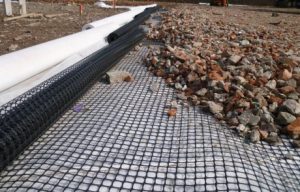
PP Biaxial Geogrid is engineered to deliver superior performance in soil stabilization and reinforcement projects, with strong junction strength being one of its standout features.
Enhanced Junction Efficiency
- Junction Strength: The junctions of the geogrid—the points where the ribs intersect—are robustly designed to withstand significant stress and prevent slippage.
- High Junction Efficiency: The junction efficiency can reach an impressive 93%, ensuring the geogrid’s tensile strength is effectively utilized in both longitudinal and transverse directions. This high efficiency translates to excellent load transfer and structural integrity.
Key Benefits of Strong Junction Strength:
- Durability: Strong junctions prevent structural failure under heavy loads or repeated stress, extending the geogrid’s service life.
- Optimal Load Distribution: High junction efficiency ensures even distribution of loads across the geogrid, minimizing localized stress and deformation.
- Improved Stability: Maintains the structural stability of the reinforced soil, making it ideal for challenging geotechnical applications.
- Cost Efficiency: Enhances project longevity and reduces maintenance costs due to improved performance.
The stabilization function of a geogrid relies on its ability to confine aggregate particles through interlock, which prevents lateral movement and enhances the load-bearing capacity of the reinforced structure. This critical function depends on both the junction strength and the stiffness of the geogrid.
Importance of Junction Strength and Stiffness:
- Particle Confinement: Adequate junction strength ensures the ribs remain securely connected under load, enabling the grid to effectively interlock with aggregate particles.
- Load Transfer Efficiency: High stiffness allows the geogrid to distribute loads evenly, reducing deformation and improving stability.
- Minimized Lateral Displacement: Strong junctions and a stiff structure restrict aggregate movement, maintaining the integrity of the base layer.
Limitations of Woven or Bonded Geogrids:
- Lower Junction Strength: Woven or bonded geogrids may have weaker junctions, making them less effective at maintaining structural integrity under stress.
- Reduced Interlock Capability: The smoother surfaces or less rigid designs of woven or bonded geogrids can limit their ability to achieve adequate confinement of aggregate particles.
- Inconsistent Performance: Due to lower junction strength and stiffness, these geogrids may not deliver the same level of stabilization, especially under heavy loads or dynamic conditions.
Why PP Biaxial Geogrids Excel:
- Superior Junction Strength: With a junction efficiency of up to 93%, PP biaxial geogrids provide reliable interlock and confinement of aggregates.
- High Stiffness: The stretching process during manufacturing aligns the polymer chains, resulting in a rigid structure that enhances stabilization performance.
- Optimal Interlock: The punched and drawn design creates apertures that maximize particle confinement, ensuring long-term stability.
By choosing a high-quality PP biaxial geogrid, project designers can ensure effective stabilization, improved load distribution, and enhanced durability of the structure. Would you like assistance in creating a technical comparison between PP biaxial geogrids and alternative solutions?
