


The Critical Role of Fiberglass Geogrid/Nonwoven Composite in Asphalt Pavements
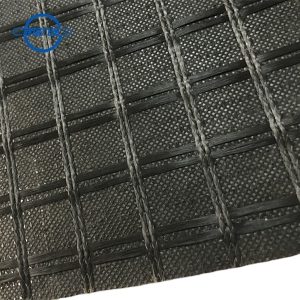
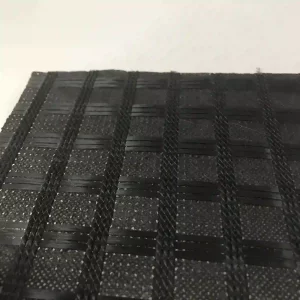
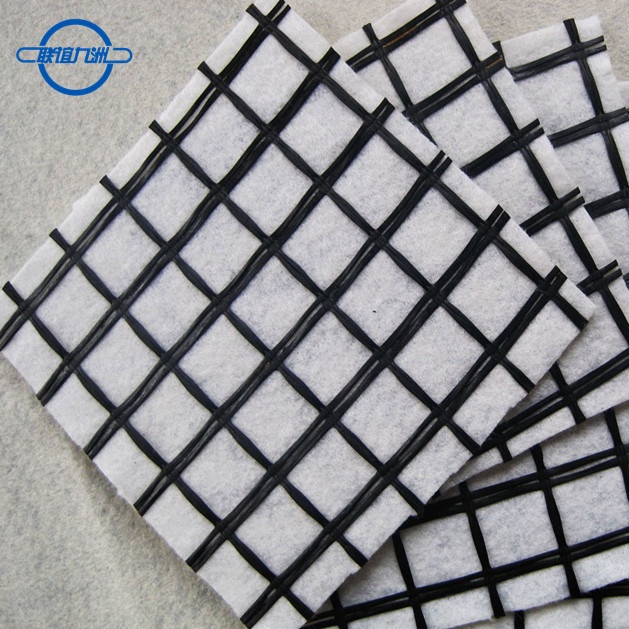
Combining a fiberglass geogrid with an ultra-light nonwoven fabric creates a revolutionary composite material that tackles asphalt pavement’s most persistent enemies: structural weakness, reflective cracking, and water damage. Unlike traditional methods that address these issues separately, this composite integrates all three solutions into a single, high-performance interlayer. Here’s how it outperforms conventional systems:
1. Structural Reinforcement: The Fiberglass Geogrid’s Superpower
Asphalt is strong under compression but weak in tension. The fiberglass geogrid solves this by:
-
Locking asphalt into a tensile armor: The grid’s high-strength fiberglass strands interlock with asphalt, creating a “chainmail” effect. This turns brittle asphalt into a flexible, crack-resistant composite layer.
-
Reducing rutting by 50%+: By distributing heavy loads laterally, the geogrid prevents localized deformation (e.g., truck tire ruts) and extends fatigue life.
-
Bridging weak spots: If the base layer has soft zones, the geogrid spans these areas, preventing surface sagging or cracking.
Real-world impact: High-traffic areas like intersections or ports use this composite to handle relentless heavy loads without rutting.
2. Reflective Crack Elimination: A Team Effort
Reflective cracks occur when old cracks or joints in the underlying layer “telegraph” up into new asphalt. The composite stops this with a two-pronged defense:
-
Geogrid’s crack-jailing action: The grid’s rigid apertures force cracks to branch horizontally, diverting them away from the surface. Think of it as a “crack maze” that dissipates energy.
-
Nonwoven’s stress-absorbing cushion: The fabric acts like a shock absorber, soaking up stresses from thermal expansion, shrinkage, or traffic vibration. This prevents stress concentrations that could restart cracking.
Case study: Overlays on concrete pavements (e.g., highways) use this composite to delay reflective cracking by 5–10 years compared to unreinforced asphalt.
3. Moisture Barrier: The Nonwoven’s Hidden Talent
Water is asphalt’s silent killer. The nonwoven fabric adds a smart barrier function:
-
Blocks liquid water intrusion: The tightly knitted fabric acts like a “raincoat” for the pavement, stopping water from seeping into the base/subgrade. This prevents:
-
Subgrade softening (which leads to potholes).
-
Freeze-thaw destruction (water expands when frozen, exploding pavement from within).
-
Binder stripping (water washes away the glue holding asphalt aggregates together).
-
-
Breathes like Gore-Tex: While blocking liquid water, the fabric allows water vapor to escape, preventing trapped moisture from blistering the asphalt.
Critical for: Regions with heavy rainfall or freeze-thaw cycles, where moisture damage accounts for 80% of pavement failures.
Why This Composite Outshines Traditional Methods
-
No more “layer cake” construction: Traditional pavements need separate geogrids, tack coats, and moisture barriers. This composite combines all three, slashing installation time and cost.
-
Self-healing bond: The nonwoven fabric is often pre-coated with polymer-modified asphalt. When heated during paving, it melts into the geogrid and fresh asphalt, creating a seamless, waterproof bond.
-
Durability boost: Fiberglass resists corrosion and creep, while the nonwoven resists punctures during paving. Together, they outlast asphalt-only layers by decades.
This composite isn’t just an upgrade—it’s a pavement preservation system. By merging tensile strength, crack suppression, and moisture protection, it turns asphalt from a brittle, water-vulnerable material into a resilient, long-lasting surface. Engineers now deploy it in:
-
High-stress zones: Bridge approaches, ports, bus lanes.
-
Aging infrastructure: Extending the life of cracked concrete roads.
-
Climate-vulnerable areas: Flood-prone or freeze-thaw regions.
Pro tip: For maximum performance, pair it with a polymer-modified asphalt binder. The result? A pavement that laughs off heavy trucks, monsoons, and ice storms—all while cutting lifecycle costs by 30–40%.
To optimize the reinforcement function of Feicheng Lianyi’s fiberglass geogrid/25g nonwoven composite in asphalt layers, precise installation is critical. Even minor errors can compromise its crack-blocking, moisture-barrier, and load-bearing capabilities. Below is a step-by-step guide to ensure maximum performance:
1. Substrate Preparation: The Foundation of Success
-
Clean & Repair:
-
Remove debris, loose asphalt, and standing water from the substrate.
-
Repair cracks >3mm wide and potholes with asphalt patching material to prevent “bridging” failures.
-
-
Surface Roughness:
-
For smooth surfaces (e.g., concrete), lightly sandblast or mill to create a profile (1–2mm depth) for better adhesion.
-
-
Tack Coat Application:
-
Apply polymer-modified asphalt emulsion (e.g., PG 76-22) at 0.8–1.2 L/m².
-
Pro Tip: Use a spray paver for even distribution—uneven tack coats cause delamination.
-
2. Geogrid/Nonwoven Composite Installation
-
Unrolling & Alignment:
-
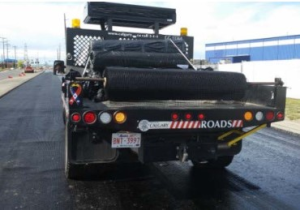
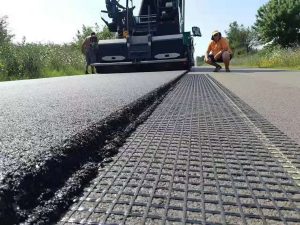
Roll out the composite material longitudinally (in the direction of traffic flow).
-
Overlap edges by 10–15 cm at seams; stagger overlaps in adjacent rows to avoid weak zones.
-
Avoid wrinkles or folds—these create stress points and reduce interlock with asphalt.
-
-
Temporary Fixation:
-
Use asphalt adhesive spray or pneumatic staplers to secure the composite to the substrate, especially on slopes or windy sites.
-
-
Nonwoven Orientation:
-
Ensure the nonwoven fabric faces downward (toward the substrate) to maximize moisture barrier contact.
-
3. Asphalt Overlay Placement
-
Temperature Control:
-
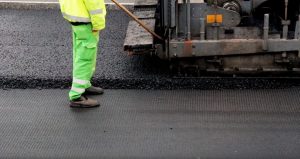
Lay asphalt mix at 140–160°C (depending on binder type). Too cold (<135°C), and the nonwoven won’t bond; too hot (>165°C), and the geogrid may deform.
-
-
Lift Thickness:
-
Minimum overlay thickness = 1.5× the geogrid’s aperture size (e.g., 40mm overlay for a 25mm grid). Thinner layers fail to embed the grid.
-
-
Paver Speed:
-
Maintain a steady paver speed (2–4 m/min) to prevent uneven compaction or geogrid displacement.
-
4. Compaction: Locking the Geogrid into the Matrix
-
Initial Breakdown Rolling:
-
Use a 8–10 ton steel-wheel roller at 2–4 km/h immediately after paving.
-
Make 2–3 passes to embed the geogrid into the hot asphalt.
-
-
Intermediate Rolling:
-
Switch to a pneumatic roller (12–15 tons) for 4–6 passes to eliminate air voids.
-
-
Finish Rolling:
-
Final passes with a static steel roller to smooth the surface without crushing aggregates.
-
5. Critical Dos & Don’ts
-
DO:
-
Preheat the geogrid/nonwoven composite in cold weather (<10°C) to prevent brittleness.
-
Verify seam integrity with a water infiltration test post-installation (ASTM D7002).
-
-
DON’T:
-
Allow construction traffic on the geogrid before asphalt overlay—this misaligns the grid.
-
Use sharp-edged tools that puncture the nonwoven fabric (compromise moisture barrier).
-
Install in rain or high humidity—moisture weakens the tack coat bond.
-
6. Post-Installation Quality Checks
-
Bond Strength Test:
-
Perform a pull-off test (ASTM D4541) to ensure adhesion ≥0.5 MPa.
-
-
Infrared Thermography:
-
Scan for “cold spots” indicating poor geogrid-asphalt bonding.
-
-
Core Sampling:
-
Extract cores to confirm full geogrid encapsulation and no wrinkles/air pockets.
-
Why This Works
-
Optimal Load Transfer: Properly embedded geogrid distributes traffic stresses across the composite layer, reducing strain on weak subgrades by up to 40%.
-
Crack-Free Surface: Seamless installation prevents stress concentrations that trigger reflective cracking.
-
Lifetime Moisture Protection: Intact nonwoven fabric blocks 99% of water ingress, preserving base layers.
For heavy-traffic roads in moisture-prone regions, this protocol ensures Feicheng Lianyi’s composite delivers 20+ years of service with minimal maintenance. Pair it with high-performance binders (e.g., SBS-modified asphalt) for extreme conditions.
