





PET Nonwoven Geotextile
Introduction
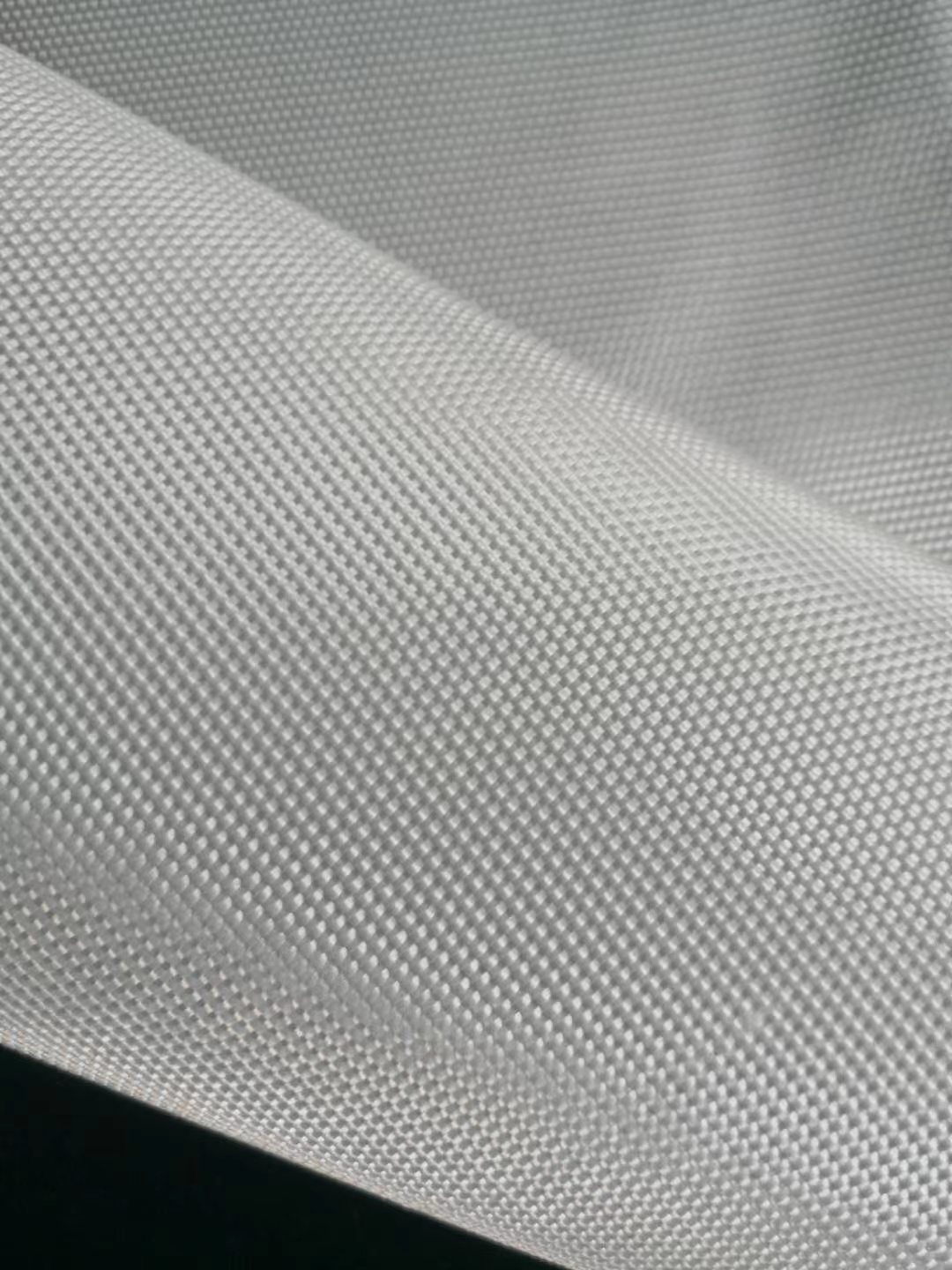
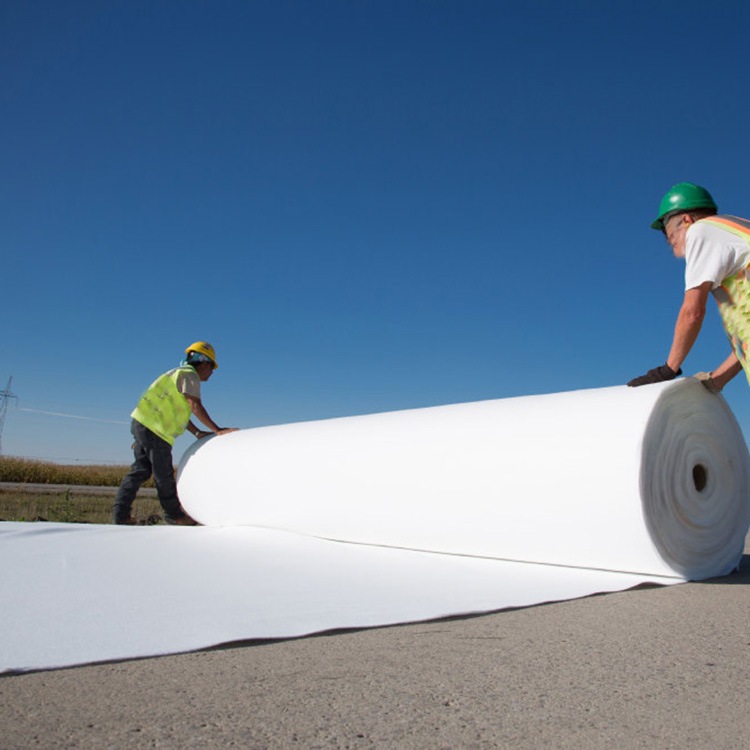
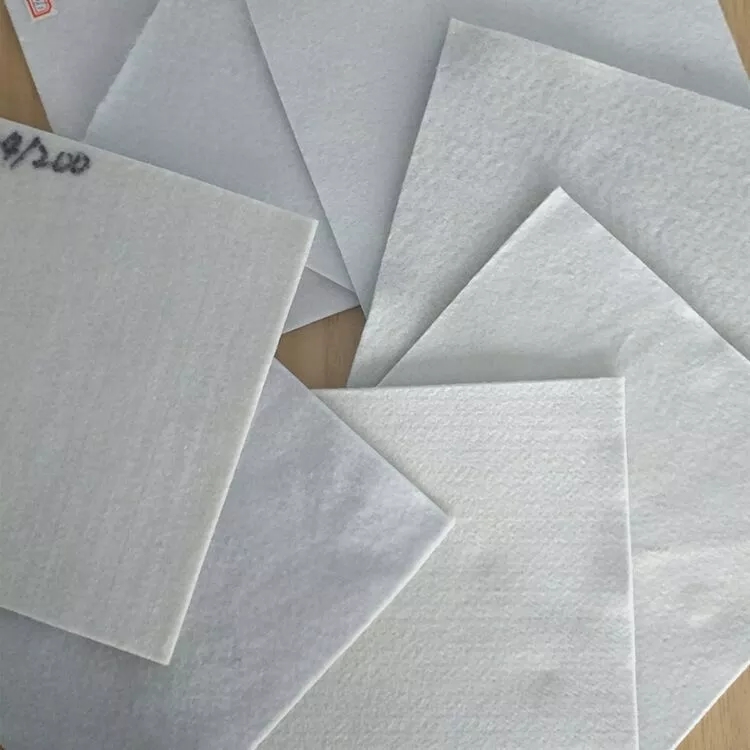
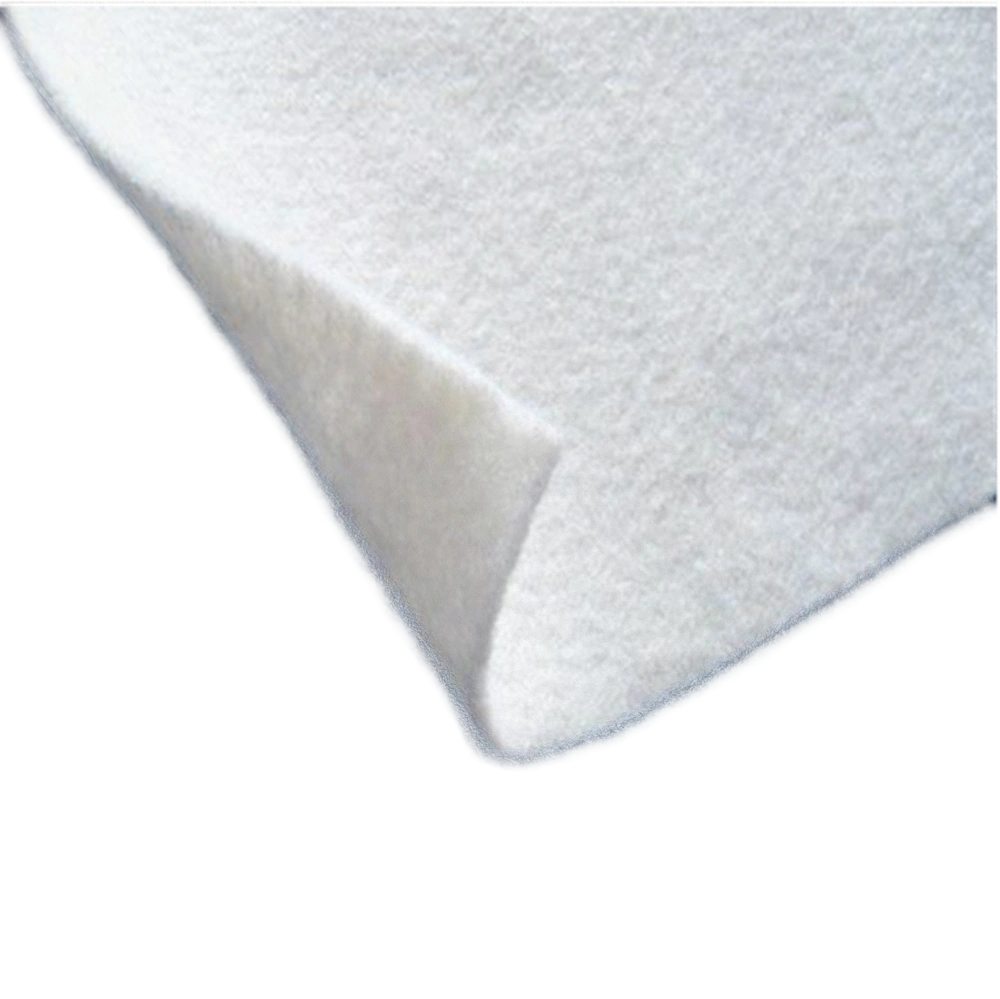
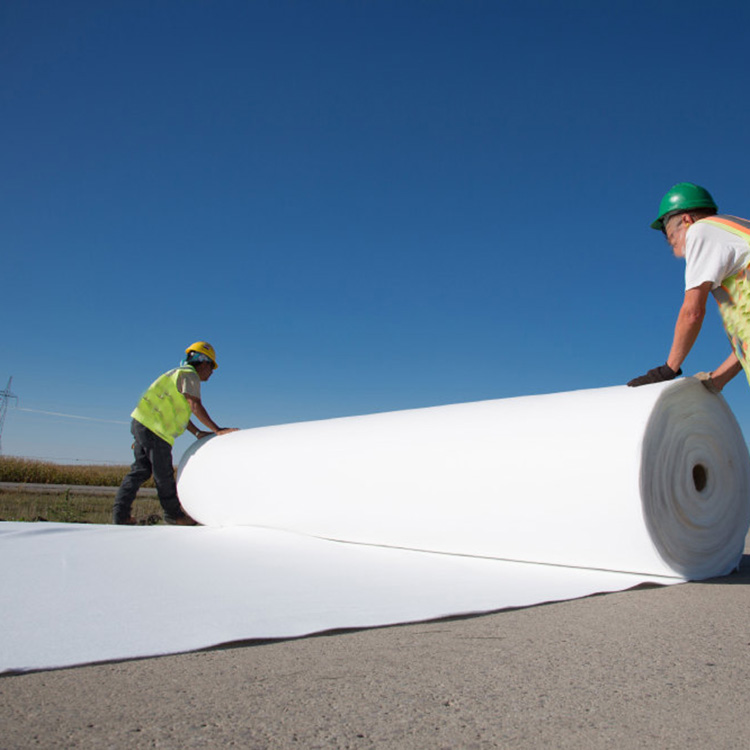
PET nonwoven geotextile is made from high quality PET staple fibres througth needle punching process which mechanically interlocks the staple fibers using barbed needles.
Choose Nonwoven Geotextile
- Filtration: Geotextiles effectively filter soil particles while allowing water to pass through. This property helps in preventing soil erosion and maintaining the stability of embankments, slopes, and other structures.
- Separation: Geotextiles act as a barrier between different soil layers or between soil and other materials (such as aggregates or geomembranes), preventing intermixing and maintaining the integrity of engineered structures. This separation function enhances the performance and longevity of roads, railways, retaining walls, and other infrastructure projects.
- Drainage: Nonwoven geotextiles facilitate water drainage by allowing excess water to flow freely while retaining soil particles. This drainage capability helps in reducing hydrostatic pressure, preventing waterlogging, and improving the stability of soil structures.
- Soil Reinforcement: These geotextiles enhance the mechanical properties of soil by distributing applied loads, reducing soil settlement, and increasing bearing capacity. They are commonly used in soil stabilization applications for roads, parking lots, and building foundations.
Quality control and testing procedures
To present high quality, reliable and sustainable geotextiles, Lianyi strictly follows ISO standards and domestic manufacturing standards.
Characteristics
- Structure: Needle-punched geotextiles are made from synthetic fibers (polypropylene, polyester, or a blend) that are mechanically entangled using barbed needles. This process creates a three-dimensional network of fibers with pore spaces between them.
- Strength: They exhibit high tensile strength, tear resistance, and puncture resistance, making them suitable for applications where reinforcement and stabilization of soil are required.
- Porosity: The needle-punching process creates a geotextile with uniform pore sizes, allowing water to pass through while retaining soil particles. This property is crucial for drainage and filtration applications.
- Durability: They are resistant to UV degradation, biological degradation, and chemical attack, ensuring long-term performance in various environmental conditions.
- Flexibility: Needle-punched geotextiles are flexible and conformable, adapting well to irregular surfaces and terrain.
Manufacturing Process
- Material Preparation: Synthetic fibers (typically polypropylene or polyester) are prepared in staple form, which are short lengths of fibers.
- Web Formation: The fibers are carded and laid onto a conveyor belt or drum to form a loose web.
- Needle-Punching: Barbed needles are repeatedly punched through the web of fibers, mechanically entangling the fibers and binding them together. This process creates a nonwoven fabric with interlocking fibers.
- Finishing: The needle-punched fabric may undergo additional treatments such as calendaring (to smooth the surface), heat setting (to stabilize dimensions), or coating (for specific applications).
Testing Methods
- Tensile Strength Testing:
- Standard: ASTM D4632 (Standard Test Method for Grab Breaking Load and Elongation of Geotextiles).
- Procedure: A sample of the geotextile is clamped in a tensile testing machine. Force is applied until the sample breaks, recording the tensile strength and elongation at break.
- Puncture Resistance Testing:
- Standard: ASTM D4833 (Standard Test Method for Index Puncture Resistance of Geomembranes and Related Products).
- Procedure: A puncture testing device applies force to a standard-sized sample until penetration occurs, measuring the resistance to puncture.
- Permeability Testing:
- Standard: ASTM D4491 (Standard Test Methods for Water Permeability of Geotextiles by Permittivity).
- Procedure: Measures the flow rate of water through the geotextile under a constant head, determining its permeability.
- Thickness and Density Testing:
- Standard: ASTM D5199 (Standard Test Method for Measuring the Nominal Thickness of Geosynthetics).
- Procedure: A micrometer measures the thickness of the geotextile, while weight and area measurements determine its density (mass per unit area).
- UV Resistance Testing:
- Standard: ASTM D4355 (Standard Test Method for Deterioration of Geotextiles by Exposure to Light, Moisture, and Heat in a Xenon-Arc Type Apparatus).
- Procedure: The geotextile is exposed to UV radiation in a controlled environment to simulate long-term exposure to sunlight. Changes in tensile strength and elongation are measured.
- Chemical Resistance Testing:
- Standard: ASTM D543 (Standard Practices for Evaluating the Resistance of Plastics to Chemical Reagents).
- Procedure: The geotextile is exposed to various chemicals, and its physical and mechanical properties are assessed for changes.
Performance advantages of polyester staple fiber
Physical properties
- Fiber morphology and size: The length of polyester (PET) staple fibers is generally between a few millimeters and tens of millimeters. This short fiber morphology helps to form a uniform interwoven structure in the non-woven process.
- Strength and modulus: PET staple fibers have high strength and modulus. Its tensile strength can usually reach a high level, which allows the geotextile made of it to withstand greater tension. In actual engineering applications, such as road base reinforcement, the repeated tensile force generated by vehicle driving acts on the geotextile, and the high strength of PET staple fibers can ensure that the geotextile is not broken.
- Flexibility and elasticity: Although PET staple fibers have high strength and modulus, they also have certain flexibility and elasticity. This property enables the geotextile to better adapt to changes in terrain and uneven settlement during laying and use.
- Density and hygroscopicity: PET has a relatively high density, which makes the geotextile have a certain weight per unit volume, which helps to maintain a stable position after laying and is not easily blown away by wind or water.
FAQ
Q1: How durable is Polyester staple fibre nonwoven geotextile?
A1: Polyester staple fibre nonwoven geotextile has good durability. In terms of UV resistance, by adding UV stabilizers and other measures, it can maintain stable performance under long-term outdoor exposure, and its service life can reach several years.
Q2: How is the water permeability of Polyester staple fibre nonwoven geotextile?
A2: It has a certain water permeability, and its vertical permeability coefficient is generally in the range of 10 – 3 – 10 – 1 cm/s (the specific value varies from product to product). This feature allows water to pass through the geotextile smoothly in water conservancy projects and drainage systems, avoiding water accumulation and damage to the engineering structure.
Q3: How to ensure the product quality of Polyester staple fibre nonwoven geotextile?
A3: First of all, in the raw material procurement link, strictly select high-quality polyester staple fiber raw materials to ensure that their performance meets the standards. At the same time, equipped with a complete quality inspection system, multi-channel inspection of semi-finished products and finished products in the production process.
Q4: How long is the production cycle of Polyester staple fibre nonwoven geotextile?
A4: The production cycle will be affected by factors such as order quantity, product specifications and the complexity of the production process. For regular specifications and smaller batch orders, the general production cycle may be around 5-10 days, including raw material preparation, production processing, quality inspection and packaging.