
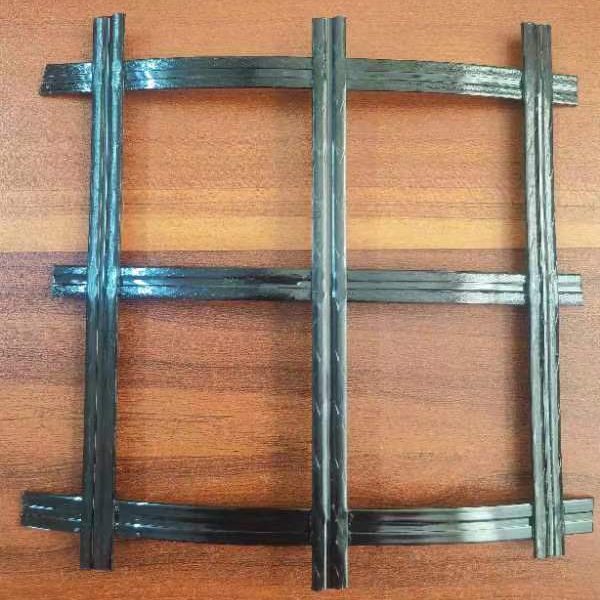


The Fabric of Progress: Unveiling the Multifunctional LIANYI Polyester Continuous Filament Nonwoven Geotextile
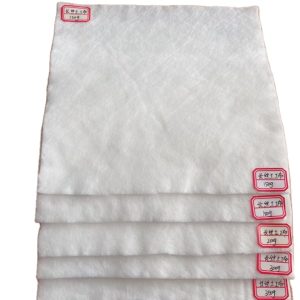
In the demanding world of civil engineering, infrastructure development, and environmental protection, the foundation of success often lies beneath the surface. Geotextiles, the unsung heroes of modern construction, play a pivotal role in enhancing soil stability, facilitating drainage, providing separation, and protecting vital structures. Among these, the Multifunctional LIANYI Polyester Continuous Filament Nonwoven Geotextile stands out as a pinnacle of engineered performance, durability, and versatility. This article delves deep into the essence of this remarkable material, exploring its composition, the rigorous manufacturing process that defines it, the stringent quality control ensuring its reliability, and the comprehensive after-sales support backing its application.
Understanding the Core: Continuous Filament Nonwoven Polyester
The LIANYI geotextile leverages the inherent strengths of Polyester (PET) – renowned for its exceptional tensile strength, superior resistance to biological degradation, chemicals (particularly alkalis), and UV radiation (when properly stabilized). Crucially, it utilizes Continuous Filament technology. Unlike staple fibers (short, chopped fibers), continuous filaments are unbroken strands extruded directly from the polymer melt. This results in:
-
Enhanced Tensile Strength & Modulus: Continuous filaments provide superior load-bearing capacity and resistance to elongation under stress compared to staple fiber equivalents of the same weight.
-
Improved Dimensional Stability: The uninterrupted structure offers greater resistance to creep (long-term deformation under constant load).
-
Consistent Uniformity: Eliminates the variability associated with fiber length and entanglement in staple products, leading to predictable performance across the entire roll.
-
Higher Puncture and Tear Resistance: The long filaments create a more robust, interconnected network.
The Nonwoven structure is formed by laying these continuous filaments randomly into a web and then bonding them together, typically through needle-punching or thermal calendaring (heat bonding). This random arrangement creates a highly porous, three-dimensional matrix ideal for filtration, drainage, and separation functions.
Why “Multifunctional”?
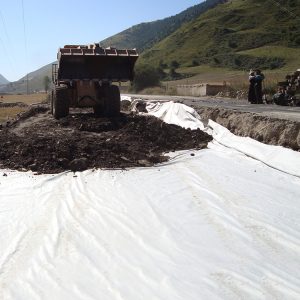
The LIANYI geotextile truly earns its “Multifunctional” designation by excelling in the core functions required of geotextiles:
-
Separation: Prevents intermixing of distinct soil layers (e.g., subgrade and aggregate base), maintaining the integrity and performance of each layer.
-
Filtration: Allows water to flow freely while preventing the migration of fine soil particles, crucial for drainage applications and erosion control.
-
Drainage: Provides a preferential plane for water flow within its structure, relieving hydrostatic pressure and enhancing stability.
-
Reinforcement: Distributes loads over a wider area, improving the bearing capacity of weak subsoils and reducing differential settlement.
-
Protection: Acts as a cushioning layer, shielding geomembranes (used in landfills, ponds) or other sensitive materials from puncture or abrasion by underlying soils or overlying materials.
The Hallmark of Excellence: Strict Production Flow
The consistent high quality and performance of the LIANYI geotextile are direct results of a meticulously controlled and standardized manufacturing process, adhering to international standards like ISO 9001 and industry best practices. Here’s a detailed look:
-
Raw Material Sourcing & Preparation:
-
High-Quality PET Chips: Production begins with rigorously tested virgin or high-quality recycled PET polymer chips. Strict incoming inspection verifies intrinsic viscosity, moisture content, color, and purity to ensure optimal melt properties and final product performance.
-
Drying: PET chips are thoroughly dried in controlled hopper dryers to remove moisture (which can cause hydrolytic degradation during melting), ensuring stable extrusion.
-
-
Polymer Extrusion & Filament Formation:
-
Melting: Dried chips are fed into an extruder, where precise temperature control melts the polymer into a homogeneous, viscous fluid.
-
Metering & Filtration: The molten polymer is metered through a pump to ensure constant volume flow and passed through high-efficiency filters to remove any minute impurities.
-
Spinning (Spunbond Process): The filtered melt is forced through a spinneret – a plate containing hundreds or thousands of fine holes. This transforms the melt into continuous molten filaments.
-
Quenching & Drawing: Filaments exiting the spinneret are rapidly cooled and stretched (drawn) by high-velocity air streams. This molecular orientation is critical for developing high tensile strength and tenacity. Drawing ratios are precisely controlled.
-
-
Web Formation:
-
Laydown: The continuous, drawn filaments are pneumatically directed onto a moving conveyor belt. Sophisticated air-layering technology ensures the filaments are deposited randomly and uniformly, creating a homogeneous web with consistent weight (mass per unit area) across its width and length.
-
-
Web Bonding:
-
Needle-Punching (Primary Method for LIANYI): The unbonded web passes through a needle loom equipped with hundreds of barbed needles. These needles repeatedly punch through the web, entangling the filaments mechanically and creating a strong, coherent, yet porous nonwoven fabric. Needle density, penetration depth, and loom speed are critical parameters optimized for the target fabric weight and properties.
-
Thermal Calendaring (Optional/Complementary): For specific applications requiring a smoother surface or enhanced dimensional stability, the needle-punched fabric may pass through heated calender rolls. This partially melts the PET filaments at contact points, creating thermal bonds that supplement the mechanical entanglement.
-
-
Finishing:
-
Edge Trimming: The fabric edges are precisely trimmed to ensure consistent roll width and neat selvedges.
-
Heat Setting (Stentering): The fabric passes through a stenter frame where it is held under controlled tension and exposed to specific heat. This process relaxes internal stresses, sets the final dimensions, enhances dimensional stability, and can impart specific widths.
-
UV Stabilization (Critical): During production or finishing, high-performance UV stabilizers are incorporated into the polymer or applied as a coating. This is essential for ensuring long-term durability when exposed to sunlight during installation or service life. Levels are tailored to expected exposure.
-
Surface Treatment (Optional): Treatments like calendaring for smoothness or slight compaction might be applied for specific handling or application requirements.
-
-
Rolling, Slitting & Packaging:
-
Inspection & Slitting: The continuous fabric is visually inspected online. Wider master rolls may be precision slit into narrower widths according to customer orders using high-speed slitters.
-
Rolling: Fabric is wound onto sturdy cardboard or plastic cores under controlled tension to ensure tight, stable rolls that prevent damage during transport and handling.
-
Weighing & Labeling: Each roll is weighed to confirm yield and labeled with critical information: Product Name (LIANYI PET CF Nonwoven Geotextile), Weight (g/m²), Roll Dimensions (Length x Width), Batch Number, Date of Manufacture, and relevant certifications.
-
Protective Packaging: Rolls are wrapped in protective plastic film and/or placed in poly bags, often with desiccants, to shield against moisture, dirt, and UV during storage and transit. Pallets are securely strapped.
-
Uncompromising Quality: Rigorous Inspection Regime
Quality is not an afterthought; it is integrated into every stage of the LIANYI production process. A multi-tiered inspection system guarantees compliance with international standards (e.g., ASTM, ISO, EN, GRI) and customer specifications:
-
Incoming Material Inspection: PET chips, additives (UV stabilizers), and packaging materials undergo strict quality checks before entering production.
-
In-Process Controls (IPC):
-
Continuous monitoring of key process parameters: extrusion temperatures, melt pressure, drawing air velocity, line speed, needle loom settings, oven temperatures, tension control.
-
Regular sampling from the production line for immediate testing of basis weight (mass per unit area) and visual defects (holes, contaminants, unevenness).
-
-
Final Product Testing (Quality Control Lab): Every production batch undergoes comprehensive laboratory testing. Key properties include:
-
Physical Properties: Basis Weight (ASTM D5261), Thickness (ASTM D5199), Roll Dimensions.
-
Mechanical Properties:

Geotextile wild width tensile test Wide-Width Tensile Strength & Elongation (ASTM D4595), Trapezoid Tear Strength (ASTM D4533), Puncture Resistance (CBR – ASTM D6241, or ASTM D4833), Grab Strength (ASTM D4632).
-
Hydraulic Properties: Apparent Opening Size (AOS) / Pore Size Distribution (ASTM D4751), Permittivity (ASTM D4491) or Permeability (ASTM D4491), Flow Rate.
-
Endurance Properties: UV Resistance (ASTM D4355 or ISO 4892-2), Creep Behavior.
-
Chemical/Biological Resistance: Assessed against relevant standards or based on PET’s known inertness.
-
- Certification & Documentation: Each batch is supported by a Mill Test Report (MTR) detailing the test results against specified requirements. Regular third-party certification audits (e.g., CE Marking, GRI-GT13) validate internal quality systems and product conformity.
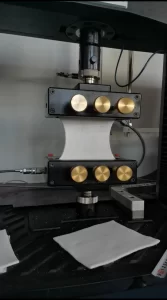
Table 1: Typical Property Ranges for Multifunctional LIANYI PET CF Nonwoven Geotextile
| Property | Standard Test Method | Typical Range Examples (Varies by specific grade) | Importance |
|---|---|---|---|
| Basis Weight | ASTM D5261 | 100 g/m² – 800 g/m²+ | Fundamental measure; influences strength, thickness, filtration. |
| Thickness (@2kPa) | ASTM D5199 | 0.8 mm – 4.5 mm+ | Related to weight, porosity, cushioning. |
| Tensile Strength (MD/XMD) | ASTM D4595 | 8 kN/m – 80 kN/m+ | Critical: Load-bearing capacity, reinforcement function. |
| Elongation @ Max Load (MD/XMD) | ASTM D4595 | 40% – 120% | Indicates ductility and ability to conform/strain without brittle failure. |
| Tear Strength (Trap.) | ASTM D4533 | 0.3 kN – 5.0 kN+ | Resistance to tearing forces, damage propagation. |
| CBR Puncture | ASTM D6241 | 1.0 kN – 10.0 kN+ | Critical: Resistance to penetration by sharp objects (protection). |
| Apparent Opening Size (AOS) | ASTM D4751 | O90: 0.07mm – 0.2mm+ | Critical: Filtration performance (soil retention vs. permeability). |
| Permittivity (s⁻¹) | ASTM D4491 | 0.5 s⁻¹ – 5.0 s⁻¹+ | Critical: Drainage capacity (flow rate per unit head). |
| UV Resistance (% Retained Strength) | ASTM D4355 | 50% – 80%+ after 500 hrs | Critical: Long-term durability under exposure. Higher % = better. |
Beyond the Roll: Commitment to After-Sales Service
LIANYI understands that delivering a superior product is only the beginning. A robust after-sales service program ensures customers derive maximum value and achieve project success:
-
Technical Support & Consultation:
-
Pre-Sales: Engineers assist in selecting the optimal geotextile grade based on specific project requirements (soil types, loads, hydraulic conditions, environmental exposure).
-
Design Support: Providing technical data, typical construction details, and guidance on integration with other geosynthetics.
-
Installation Guidance: Offering best practice manuals, on-site training (if required), and advice on handling, placement, seaming (if applicable), and cover material placement to prevent damage.
-
-
Logistics & Delivery Management: Ensuring timely delivery to project sites worldwide, with transparent tracking and communication. Expertise in handling bulk shipments.
-
On-Site Assistance (Optional): For critical or complex projects, technical representatives can be available on-site during initial installation phases to provide direct support and troubleshooting.
-
Warranty: Backing the product with a clear and comprehensive warranty against manufacturing defects, aligned with industry standards and product specifications.
-
Performance Monitoring & Feedback: Encouraging feedback on product performance in the field and utilizing this data for continuous product improvement.
-
Problem Resolution: Establishing a clear and responsive channel for addressing any quality concerns or technical issues promptly and effectively.
Applications: Where LIANYI Geotextile Makes a Difference
The multifunctionality and robustness of the LIANYI PET Continuous Filament Nonwoven Geotextile make it suitable for a vast array of demanding applications:
-
Road & Railway Construction: Separation, stabilization, and reinforcement of subgrades, base courses, and embankments; preventing reflective cracking in asphalt overlays.
-
Landfills & Containment Facilities: Protection layer for geomembranes (leachate collection, caps), filtration in drainage layers, reinforcement of cover soils.
-
Erosion Control: Underlayment for revetments (riprap, gabions), slope stabilization under turf reinforcement mats (TRMs), shoreline protection.
-
Drainage Systems: Filtration wrap around pipes and aggregates in French drains, highway edge drains, retaining wall drains, sport field drainage.
-
Airports & Ports: Runway/taxiway stabilization, separation in heavy-duty paved areas.
-
Hydraulic Works: Canal and pond lining protection, dam filter layers, coastal protection structures.
-
Green Infrastructure: Separation and drainage layers beneath pavers, in rain gardens, and green roofs.
Conclusion: Engineering the Future with Confidence
The Multifunctional LIANYI Polyester Continuous Filament Nonwoven Geotextile represents more than just a roll of fabric; it embodies a commitment to engineering excellence and long-term performance. From the stringent selection of raw materials and the precision of the spunbond process to the exhaustive quality control checks and dedicated after-sales support, every step is meticulously managed to deliver a product that contractors, engineers, and project owners can trust. Its inherent strength, durability, filtration efficiency, and drainage capacity make it an indispensable solution for building resilient and sustainable infrastructure across the globe. When the integrity of the foundation matters, LIANYI provides the reliable, multifunctional geotextile that forms the fabric of enduring progress. Choose LIANYI – where quality is engineered in, and performance is guaranteed.
