


Quick Answer: Both geogrids and geotextiles (geo fabrics) are polymer-based geosynthetic materials used in civil and geotechnical engineering. However, they have fundamentally different primary functions. Geogrids are open grid structures designed to mechanically reinforce soil and aggregate by providing tensile resistance and interlocking confinement. Geotextiles, on the other hand, are continuous permeable fabric sheets primarily used for filtration, separation, drainage, and surface erosion control.
According to Koerner (Designing with Geosynthetics, 6th ed., Xlibris, 2012) and Holtz, Christopher and Berg (Geosynthetic Engineering, BiTech Publishers, 2008), the choice between these two product types is determined by the dominant geotechnical function required — reinforcement or filtration/separation — as well as by the specific load, drainage and soil interaction conditions of each project. Composite ‘geocomposite’ systems that combine both functions are becoming increasingly common in complex applications.
Introduction
The geosynthetics industry encompasses a wide range of polymer-based construction materials that have transformed the practice of civil, geotechnical and environmental engineering since their widespread adoption in the 1970s. Two product families that are frequently specified and frequently confused are geogrids and geofabrics. Although they appear similar on a supplier specification sheet, they differ profoundly in terms of their material architecture, engineering mechanism and application domain. Both are manufactured from thermoplastic polymers such as polypropylene, polyethylene or polyester, and both are supplied and installed in roll form at the interface between soil layers or soil and aggregate fill. However, the structural difference between them — rigid, open-grid networks versus continuous, permeable textile sheets — results in different engineering behaviours that determine their respective roles in project specifications.
Understanding this distinction is not merely an academic exercise. Specifying a geogrid where a geotextile is required — or vice versa — can result in premature structural failure, differential settlement or accelerated erosion of the surfaces these materials were installed to protect. For infrastructure engineers, landscape contractors, road builders and retaining wall designers alike, a clear, technically grounded understanding of the differences between geogrids and geotextiles is essential for making intelligent material selection decisions.
What Is a Geogrid? Material, Structure & Mechanism
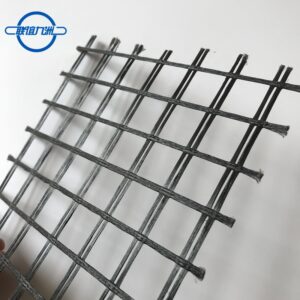
A geogrid is a geosynthetic product characterised by its open-aperture, grid-like structure — a regular array of interconnected longitudinal and transverse ribs forming rectangular, square or triangular openings (apertures), typically ranging from 10 to 100 mm in width. This open structure enables the geogrid’s primary engineering function of soil and aggregate reinforcement through mechanical interlock and tensile load transfer. When granular aggregate or compacted fill is placed over or around a geogrid, the aggregate particles penetrate the apertures and become locked in place around the grid ribs. This creates a composite soil-geogrid structure that has significantly higher shear resistance and bearing capacity than unreinforced soil or aggregate.
Geogrids are manufactured by three principal methods. Punched and drawn geogrids — the most common type — are produced by punching a regular pattern of holes into a polymer sheet, and then stretching the punched sheet uniaxially or biaxially to align the polymer molecular chains with the rib axes. This increases the tensile stiffness and ultimate strength of the geogrid. Woven geogrids are produced by weaving high-tenacity polyester or polypropylene yarns into a grid configuration and then coating or encapsulating the junctions to stabilise the structure. Welded or bonded geogrids are assembled from extruded polymer bars that are joined at their intersections. The tensile strength of commercial geogrids ranges from approximately 20 kN/m to over 200 kN/m in the primary load direction. Junction efficiency, defined by ASTM D6637 and ISO 10319 test methods, is a critical performance parameter representing the proportion of rib strength retained at grid nodes.
What Is a Geo Fabric (Geotextile)? Composition & Function
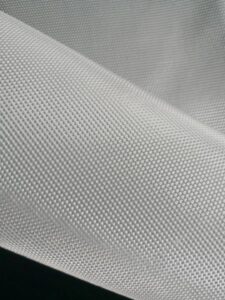
A geotextile, formally known as a geo fabric under the definitions of ASTM D4439 and ISO 10318-1, is a permeable, continuous, two-dimensional textile structure made from synthetic polymer fibres or filaments with no open apertures in the sense of a geogrid. Geotextiles are defined by their fabric continuity; they function as permeable barriers that allow water to pass while retaining soil particles. This performance characteristic is quantified by two key parameters: apparent opening size (AOS), which defines the largest soil particle that the fabric will retain (measured according to ASTM D4751); and permittivity, which defines the volumetric flow rate of water through the fabric per unit head difference (measured according to ASTM D4491).
Geotextiles are manufactured in two primary forms. Woven geotextiles are produced on standard textile looms by interlacing monofilament or multifilament yarns perpendicular to each other. Their regular, tight weave produces high tensile strength and relatively uniform pore sizes, making them well-suited to applications involving separation and reinforcement under sustained load. Nonwoven geotextiles are produced by bonding randomly oriented short staple or continuous filament fibres through needle-punching, thermal bonding or chemical bonding. Their random fibre arrangement creates a tortuous pore structure with excellent particle retention performance and high in-plane drainage capacity, making them the dominant choice for filtration, drainage and erosion control applications. The unit weight of nonwoven geotextiles typically ranges from 100 g/m² to 1,000 g/m², with higher unit weights providing greater filtration robustness and puncture resistance.
Geogrid vs. Geo Fabric — Core Comparison
| Structure | Open-aperture grid (10–100 mm openings) | Continuous permeable textile sheet |
| Primary function | Soil/aggregate reinforcement | Filtration, separation, drainage |
| Material | PP, HDPE, PET (extruded or woven) | PP or PET fibres (woven or nonwoven) |
| Tensile strength | 20–200+ kN/m | 10–100+ kN/m (woven); 5–40 kN/m (nonwoven) |
| Soil particle retention | None — particles pass freely through apertures | Yes — retains soil via AOS specification |
| Water flow | Unrestricted through open apertures | Controlled permeability (permittivity) |
| Key ASTM standards | D6637, D7737, ISO 10319 | D4759, D4751, D4491, D4533 |
| Typical applications | Road base reinforcement, retaining walls, embankments | Drainage wrap, erosion blanket, separation layer |
| Installation position | Between aggregate layers or at subgrade interface | Between soil and aggregate; around drainage pipe |
| Load transfer mechanism | Aggregate interlocking in apertures | Not a primary load-bearing mechanism |
Key Functional Differences: When Each Material Performs Best
The most important distinction between geogrid and geotextile fabric does not lie in their polymer chemistry or manufacturing origin, but in the specific geotechnical mechanism that each material exploits in the ground. A clear understanding of these mechanisms is the foundation of correct material selection.
Geogrids are ideal for reinforcement applications where the aim is to increase the tensile strength and stiffness of granular or cohesive soil systems that are weak in tension by nature. Soils and granular aggregates are strong in compression but weak in tension; they cannot resist the lateral spreading forces that develop beneath loaded pavements, within tall retaining walls or under the fill of steep embankments. When installed at the base of a granular road base course, a geogrid interacts with the aggregate above and below through aggregate interlock in its apertures. This effectively converts the geogrid’s tensile strength into a lateral confinement force that resists the aggregate spreading outwards under wheel load. As documented in AASHTO M288-17 and confirmed by decades of monitored performance data, the result is a measurable reduction in required aggregate base thickness — typically 20–40% for equivalent structural performance — and an extension to pavement service life.
Geo fabrics excel in filtration and separation applications where the engineering objective is to prevent two materials — typically a fine-grained subgrade soil and a coarser aggregate base — from mixing under dynamic or static loading while allowing free water movement across the fabric plane. Without a separation layer, the fines from a weak subgrade soil pump upward into the voids of an aggregate base under repeated traffic loading, contaminating and weakening the aggregate while simultaneously destabilizing the subgrade — a failure mechanism that destroys road bases rapidly on soft ground. A nonwoven geotextile with correctly specified AOS installs between subgrade and base course to block this fines migration while maintaining drainage continuity, extending pavement life without adding structural thickness. The same filtration principle governs the use of geotextile filter wraps around perforated drainage pipe, geotextile erosion control mats on cut slopes, and geotextile underlays in coastal revetment structures.
Geotextiles also provide a secondary reinforcement contribution in some woven fabric applications — particularly in very weak subgrade stabilization, where the fabric’s tensile strength helps distribute surface loads over a larger subgrade area — but this reinforcement is geographically diffuse and mechanistically different from the concentrated aggregate-interlock reinforcement mechanism of a geogrid. In applications where reinforcement is the dominant performance requirement, a geogrid will consistently outperform a geotextile of equivalent cost.
Application Matrix — Selecting Between Geogrid and Geo Fabric
| Unpaved road over soft subgrade | ✅ Primary choice | ✅ Separation layer | ✅ Geogrid + nonwoven GTX |
| Paved road base reinforcement | ✅ Primary choice | — | — |
| Mechanically stabilized earth (MSE) retaining wall | ✅ Required | — | — |
| Steep slope embankment reinforcement | ✅ Required | — | — |
| Drainage pipe filter wrap | — | ✅ Primary choice | — |
| Cut slope erosion control. | — | ✅ Primary choice | — |
| Separation between subgrade and base course | ✅ (for reinforcement) | ✅ (for separation only) | ✅ When both needed |
| Landfill liner drainage composite | — | ✅ (as filter/protection layer) | ✅ With geonet drainage |
| Coastal revetment / rip-rap underlayer | — | ✅ Filter fabric | — |
| Green roof drainage layer | — | ✅ Filter/separation | — |
| Railway subballast stabilization | ✅ Primary choice | ✅ Separation layer | ✅ Common in practice |
Can Geogrid and Geo Fabric Be Used Together?
In a significant proportion of real-world geotechnical applications — particularly on soft or variable subgrade soils — the engineering problem simultaneously demands both reinforcement and filtration/separation performance, and neither geogrid nor geo fabric alone is sufficient to address both requirements. The recognized engineering solution is the use of both materials together, either as separately specified and separately installed layers or as a pre-manufactured geocomposite in which a geogrid and a nonwoven geotextile are factory-bonded into a single product.
In unpaved road construction over soft subgrade, for example, a nonwoven geotextile is typically installed directly on the subgrade to prevent fines contamination of the base course, and a biaxial geogrid is placed immediately above the geotextile within or at the base of the aggregate fill to provide tensile reinforcement and lateral confinement of the aggregate. The two layers are complementary: the geotextile performs filtration and separation that the open-aperture geogrid cannot provide, while the geogrid provides reinforcement stiffness that the geotextile cannot match. When specified and installed correctly as a dual-layer system, this combination can reduce required aggregate fill thickness by 30–50% compared to unreinforced construction on equivalent subgrade, a saving that typically more than offsets the combined cost of both geosynthetic layers. Geocomposite products that bond a geogrid to a nonwoven geotextile simplify installation in this scenario by eliminating relative displacement between the two layers during aggregate placement and compaction.
Material Selection Guide: Engineering Decision Framework
Selecting correctly between geogrid, geo fabric, or a combination of both begins with a clear identification of the dominant geotechnical function required — a step that is prior to any consideration of product grades, weights, or tensile specifications. The following decision logic applies:
Use a geogrid when the primary engineering need is to increase the load-bearing capacity or tensile strength of a granular soil or aggregate system, to stabilize a retaining wall mass, to reinforce a steep slope or embankment, or to reduce differential settlement under applied surface loading. The subgrade California Bearing Ratio (CBR) value and the applied design load are the primary input parameters for geogrid selection, with product specification driven by required tensile modulus at 2% strain (not ultimate tensile strength alone) per ASTM D6637 or ISO 10319.
Use a geo fabric when the primary engineering need is to separate two soil layers of differing particle sizes, to filter water movement at a soil-aggregate interface while retaining soil particles, to provide in-plane drainage of water from within a soil mass, or to protect a slope, embankment face, or revetment from surface erosion. AOS selection is determined by the D₈₅ particle size of the adjacent soil per AASHTO M288-17 filter design criteria, and permittivity must equal or exceed the design hydraulic gradient requirements.
Use both — or a geocomposite — when the application involves both a weak subgrade requiring reinforcement and a soil condition requiring separation or filtration, as is typically the case in unpaved roads over silty or clayey subgrade, railway trackbed rehabilitation, and certain coastal protection scenarios.
Frequently Asked Questions
Q1: What is the main difference between geogrid and geotextile (geo fabric)?
The main difference is function and structure. A geogrid is an open-aperture polymer grid that reinforces soil and aggregate through mechanical interlock, while a geotextile (geo fabric) is a continuous permeable fabric sheet that performs filtration, separation, and drainage. Neither product effectively performs the primary function of the other, which is why they are frequently used together in demanding applications.
Q2: Can I use geo fabric instead of geogrid for road reinforcement?
Geo fabric alone is not an adequate substitute for geogrid in structural road base reinforcement applications. While woven geotextiles provide some tensile contribution on very soft subgrades, they lack the aperture geometry needed to interlock with aggregate particles and generate the lateral confinement mechanism that is the geogrid’s primary performance advantage. For road base reinforcement where tensile stiffness and aggregate confinement are the design objectives, a biaxial or triaxial geogrid is the correct specification.
Q3: Which is stronger — geogrid or geo fabric?
It depends on what is being measured. In tensile strength, high-end geogrids (100–200+ kN/m) exceed most woven geotextiles for structural applications. However, geotextile puncture resistance, tear strength, and in-plane drainage capacity (transmissivity) are not properties that geogrids possess at all, making direct strength comparisons less meaningful than function-specific performance comparison. The correct question is not “which is stronger?” but “which performs the required geotechnical function better?”
Q4: What is geogrid used for?
Geogrid is used primarily for soil reinforcement in applications including: mechanically stabilized earth (MSE) retaining wall construction; unpaved and paved road base stabilization over weak subgrade; steep slope and embankment reinforcement; railway subballast stabilization; and load-distribution beneath foundations and hardstanding areas on soft ground. Biaxial geogrids are used where reinforcement is needed in both plan directions (roads, hardstands); uniaxial geogrids are preferred for MSE walls and slopes where the primary load direction is defined.
Q5: What type of geo fabric is best for drainage applications?
Nonwoven needle-punched geotextiles are generally preferred for drainage applications because their random fibre structure provides high in-plane drainage capacity (transmissivity) and effective particle retention across a range of soil types. For drainage pipe filter wrapping, a nonwoven geotextile with AOS matched to the D₈₅ of the surrounding soil per AASHTO M288-17 criteria is the industry standard specification. Woven geotextiles are better suited to separation applications where high tensile strength under sustained load is important.
Q6: How do I choose between geogrid and geo fabric for my project?
Identify the dominant geotechnical function your project requires. If you need to increase the structural capacity of a granular layer, resist lateral forces in a retaining structure, or reinforce an embankment slope — specify a geogrid. If you need to prevent subgrade fines from contaminating an aggregate layer, filter water at a soil interface, control surface erosion, or wrap a drainage pipe — specify a geotextile. If your project requires both functions simultaneously (common in road construction on soft ground), specify both products in complementary layers or select a factory-bonded geocomposite that combines geogrid and nonwoven geotextile in a single product.
Conclusion
Rather than competing, geogrids and geo fabrics are complementary geosynthetic technologies, each engineered to exploit a distinct soil-material interaction mechanism that the other cannot replicate. Geogrids derive their engineering value from the mechanical interlock between their open-aperture structure and the surrounding aggregate particles. This generates tensile confinement forces that transform weak granular materials into reinforced systems with structural competence.
In contrast, geo fabrics derive their engineering value from their fabric continuity. This allows water to pass while arresting soil particle migration, performing a filtration and separation function that is fundamentally incompatible with the open structure of a geogrid. Selecting the correct material from these two product families requires clearly diagnosing the primary geotechnical function required by the application, followed by specifying the performance parameters — such as tensile modulus, AOS and permittivity — that govern in-service performance at a product level. In complex applications where both reinforcement and filtration are required, combining both materials in a properly designed dual-layer or geocomposite system delivers performance outcomes that neither material can achieve alone.
References:
Koerner, R.M. Designing with Geosynthetics, 6th ed. Xlibris Corporation, 2012.
Holtz, R.D., Christopher, B.R. & Berg, R.R. Geosynthetic Engineering. BiTech Publishers, 2008.
ASTM D4439. Standard Terminology for Geosynthetics. ASTM International. (Current edition)
ASTM D6637. Standard Test Method for Determining Tensile Properties of Geogrids. ASTM International.
AASHTO M288-17. Standard Specification for Geotextiles for Highway Applications. American Association of State Highway and Transportation Officials, 2017.
ISO 10318-1:2015. Geosynthetics — Part 1: Terms and Definitions. International Organization for Standardization.
