
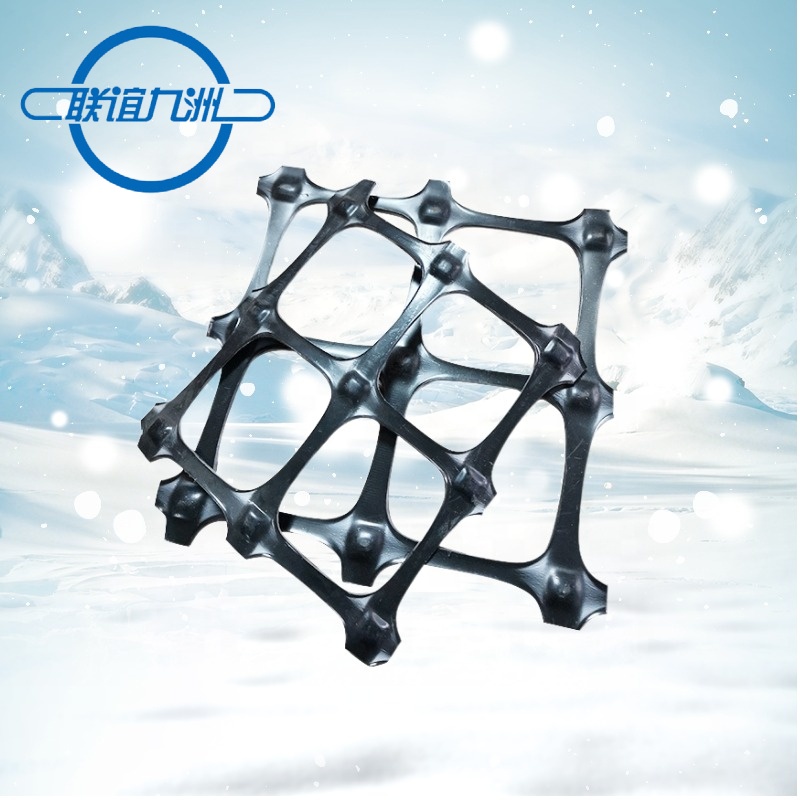

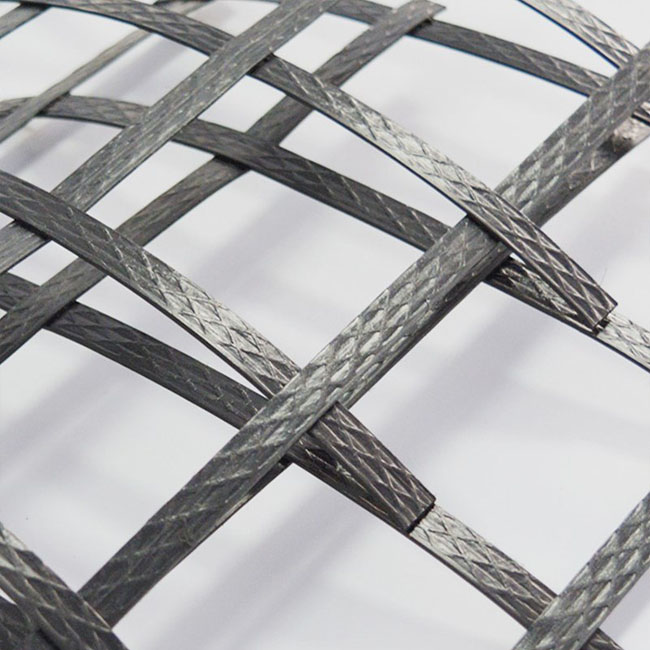
Quick Answer: Triaxial geogrid is a high-performance geosynthetic reinforcement material. Engineered with a triangular aperture structure, it distributes loads more uniformly in multiple directions than conventional geogrids. This improves aggregate confinement, reduces rutting, increases pavement life, and lowers construction costs for roads, railways, working platforms, and foundation stabilisation projects.
According to ISO 10318 – Geosynthetics: Terms and Definitions, the Federal Highway Administration (FHWA) Geosynthetic Design and Construction Guidelines, and technical publications from the Geosynthetic Institute (GSI), triaxial geogrids have become an important solution for modern infrastructure due to their superior stiffness, structural stability and long-term reinforcement performance.
Introduction
As transportation networks expand and infrastructure projects become more demanding, engineers face increasing pressure to build stronger foundations while keeping construction costs under control. Weak subgrades, repeated traffic loading and challenging soil conditions can lead to rutting, settlement and premature pavement failure. Traditional methods usually involve using thicker layers of aggregate to improve bearing capacity, but this approach increases the consumption of materials, transportation costs and construction time.
Geosynthetic reinforcement has transformed modern ground stabilisation by enhancing the interaction between aggregate and soil. Among these solutions, triaxial geogrid has gained widespread recognition for its ability to distribute loads in multiple directions rather than primarily along two principal axes. Its unique triangular aperture geometry creates more efficient aggregate confinement, resulting in improved structural performance under dynamic traffic loads.
Triaxial geogrids are now commonly used in the construction of highways, airports, railways, logistics yards, mining roads, container terminals, industrial platforms and renewable energy projects. Their combination of high mechanical performance, a long service life and cost-effectiveness has made them a preferred choice of reinforcement material for civil engineering projects worldwide.
What Is a Triaxial Geogrid?
A triaxial geogrid is a polymer-based geosynthetic reinforcement material with a triangular aperture pattern that provides nearly isotropic stiffness. Unlike biaxial geogrids, which reinforce loads primarily in the longitudinal and transverse directions, triaxial geogrids distribute stresses through multiple load paths. This makes them particularly effective for applications involving complex or multidirectional loading.
Most triaxial geogrids are made from high-quality polypropylene (PP). During production, polymer sheets are precisely punched with carefully designed hole patterns and then stretched under controlled temperature conditions. This process aligns the polymer molecules, significantly increasing tensile strength and stiffness while maintaining the necessary flexibility for field installation.
The resulting product consists of interconnected ribs and triangular apertures that hold aggregate particles in place. This interlocking mechanism minimises lateral movement within the granular base layer, enabling loads to be distributed more evenly over the underlying soil. Consequently, pavement deformation is reduced, bearing capacity improves and the required thickness of aggregate layers can often be decreased without compromising structural performance.
Due to their excellent resistance to chemical attack, biological degradation, ultraviolet exposure and long-term creep, triaxial geogrids are ideal for challenging infrastructure projects with extended design lifespans.

Main Specifications of Triaxial Geogrid
Selecting the appropriate triaxial geogrid requires understanding several key technical parameters. While specifications vary among manufacturers, the following characteristics are commonly evaluated during engineering design and material selection.
-
Material Composition
Most triaxial geogrids are produced from virgin polypropylene because it offers an excellent balance of strength, durability, chemical resistance, and environmental stability. Premium-grade polymers also improve long-term creep resistance under sustained loading.
-
Aperture Geometry
The defining characteristic of a triaxial geogrid is its triangular aperture structure. Compared with rectangular openings used in many biaxial products, triangular apertures create multidirectional load paths that enhance aggregate confinement regardless of traffic direction.
-
Tensile Performance
Although tensile strength remains important, engineers increasingly focus on junction strength, radial stiffness, and load distribution efficiency rather than relying solely on ultimate tensile values. These characteristics more accurately reflect field performance under repeated traffic loading.
-
Rib Thickness
The thickness of longitudinal ribs, transverse ribs, and junctions influences durability and structural integrity. Thicker ribs generally provide improved stiffness and resistance to installation damage while maintaining effective aggregate interlock.
-
Roll Dimensions
Standard roll sizes are designed to improve installation efficiency while minimizing material waste. Larger roll widths reduce the number of overlaps required during construction, helping lower labor costs and installation time.
-
Durability
High-quality triaxial geogrids are engineered to resist:
- Ultraviolet radiation
- Oxidation
- Chemical exposure
- Biological degradation
- Freeze-thaw cycles
- Moisture-related deterioration
These durability characteristics contribute to long-term reinforcement performance in a wide range of climatic conditions.
Typical Technical Specifications
The following table summarizes representative specifications commonly found in commercial triaxial geogrid products. Actual values vary according to manufacturer and product grade.
| Specification | Typical Range | Engineering Importance |
| Polymer Material | Virgin Polypropylene (PP) | High durability and long service life |
| Aperture Shape | Triangular | Multidirectional load distribution |
| Roll Width | 3.9–5.9 m | Faster installation and fewer overlaps |
| Roll Length | 30–75 m | Improved construction productivity |
| UV Resistance | High | Outdoor durability |
| Chemical Resistance | Excellent | Suitable for aggressive soil environments |
| Design Service Life | Up to 100 years (design dependent) | Long-term infrastructure performance |
Why Does Triaxial Geogrid Perform Better?
The superior performance of triaxial geogrids is primarily due to their unique load distribution mechanism. Rather than transferring stresses predominantly in two directions, their triangular geometry enables loads to spread radially across a larger area of the reinforced layer.
When vehicle wheels apply pressure to the pavement surface, aggregate particles naturally move laterally. The interconnected ribs of the triaxial geogrid restrain this movement, creating a mechanical interlock between the aggregate and the reinforcement layer. As lateral displacement decreases, the aggregate layer behaves more like a unified structural platform, capable of supporting heavier loads with less deformation.
This improved confinement generates several engineering benefits:
- Reduced rutting under repeated traffic loading
- Increased bearing capacity of weak subgrades
- Better stress distribution throughout the pavement structure
- Lower aggregate consumption
- Reduced long-term maintenance requirements
- Extended pavement service life
Because multidirectional traffic loads are common in areas such as intersections, container yards, industrial facilities and airport pavements, triaxial geogrids often outperform conventional biaxial reinforcement in these demanding applications.
What Determines the Price of Triaxial Geogrid?
The price of a triaxial geogrid can vary considerably depending on its technical specifications, the raw materials used, the manufacturing quality and the project requirements. While unit price is an important factor in the purchasing decision, engineers and contractors should consider the overall lifecycle value rather than focusing solely on the lowest quotation.
One of the primary cost drivers is polymer quality. High-grade virgin polypropylene generally offers superior tensile performance, environmental resistance and long-term durability compared to recycled materials. Although premium raw materials increase the initial purchase price, they often reduce maintenance costs and extend the service life of the reinforced structure.
Product performance also affects pricing. Geogrids with higher radial stiffness, stronger junction efficiency, enhanced UV resistance and improved creep resistance require more advanced manufacturing processes and stricter quality control. These characteristics contribute to better long-term field performance, particularly in heavily loaded transportation infrastructure.
Additional pricing factors include:
- Roll dimensions and material weight
- Quantity ordered
- International certification requirements
- Transportation distance
- Packaging specifications
- Project customisation
- Regional market demand
- Import duties and logistics costs
For large infrastructure projects, total project economics should consider reductions in aggregate consumption, faster installation, lower maintenance frequency and an extended pavement life, rather than focusing solely on the purchase cost of reinforcement materials.
Where Is Triaxial Geogrid Used?
The multidirectional reinforcement capability of triaxial geogrids makes them suitable for a wide range of civil engineering applications where load distribution and subgrade stabilization are critical.
-
Road Construction
Road base reinforcement remains one of the largest application sectors. Triaxial geogrids improve aggregate confinement, reduce rutting, and help maintain pavement smoothness under repeated traffic loading.
-
Highway Widening Projects
When new pavement sections are connected to existing roads, differential settlement can occur because of varying subgrade conditions. Triaxial geogrids improve structural continuity and reduce deformation at the interface.
-
Railway Foundations
Railway ballast experiences continuous cyclic loading from passing trains. Reinforcement improves ballast stability, minimizes particle migration, and reduces maintenance intervals.
-
Airport Pavements
Airport taxiways and runways must support extremely heavy wheel loads. Triaxial geogrids distribute these concentrated loads more efficiently, improving long-term pavement performance.
-
Industrial Yards and Logistics Centers
Container terminals, logistics parks, mining facilities, and heavy industrial platforms experience multidirectional traffic from cranes, forklifts, and heavy trucks. The isotropic reinforcement provided by triaxial geogrids is particularly effective under these conditions.
-
Working Platforms
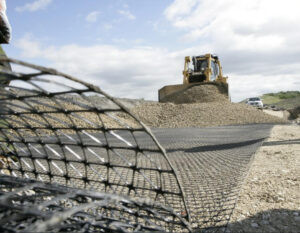
Temporary and permanent construction platforms built on weak soils benefit from increased bearing capacity and improved equipment mobility through geogrid reinforcement.
Installation Guide for Triaxial Geogrid
Proper installation is essential to achieve the full engineering benefits of triaxial geogrids. Even high-quality reinforcement materials cannot perform as intended if installation practices are inadequate.
A typical installation sequence includes:
- Prepare and level the subgrade by removing soft spots, organic material, and standing water.
- Compact the foundation to the specified density.
- Roll out the triaxial geogrid with the recommended overlap according to engineering drawings.
- Secure overlaps and joints where necessary to prevent movement during aggregate placement.
- Place aggregate carefully to avoid damaging the reinforcement.
- Compact the aggregate in controlled layers until the required density is achieved.
Proper construction supervision helps ensure that the designed reinforcement performance is fully realized throughout the pavement structure.
Common Mistakes When Selecting Triaxial Geogrid
Choosing the wrong reinforcement product can reduce project performance and increase long-term maintenance costs. Some of the most common specification mistakes include:
- Selecting products based solely on tensile strength without considering radial stiffness
- Ignoring junction efficiency and aggregate interlock characteristics
- Using unsuitable aperture sizes for the selected aggregate
- Overlooking long-term creep resistance
- Failing to evaluate installation damage resistance
- Purchasing low-cost materials without verified quality certifications
Engineering design should always consider the complete interaction between soil, aggregate, reinforcement, traffic loading, and environmental conditions rather than relying on a single material property.
Triaxial Geogrid Selection Guide
| Project Type | Recommended Performance Focus | Primary Benefit |
| Highway Construction | High radial stiffness | Improved pavement life |
| Railway Foundation | Aggregate confinement | Reduced ballast movement |
| Airport Pavement | High load distribution | Lower rutting risk |
| Container Yard | Multidirectional reinforcement | Better heavy-load performance |
| Mining Road | Durability and creep resistance | Longer service life |
| Working Platform | Bearing capacity improvement | Enhanced equipment stability |
During many international infrastructure projects, we at Feicheng Lianyi have found that selecting a triaxial geogrid based on comprehensive engineering performance—including radial stiffness, junction strength, aggregate compatibility, and long-term durability—consistently delivers better lifecycle value than evaluating material cost alone.
Frequently Asked Questions (FAQ)
- What is a triaxial geogrid?
A triaxial geogrid is a polypropylene geosynthetic reinforcement material with a triangular aperture structure that distributes loads in multiple directions to improve soil stabilization and pavement performance.
- What is the difference between biaxial and triaxial geogrids?
Biaxial geogrids primarily reinforce in two principal directions, while triaxial geogrids distribute loads radially through a triangular structure, offering more uniform reinforcement under multidirectional loading.
- How much does triaxial geogrid cost?
Pricing depends on material quality, mechanical properties, roll dimensions, certifications, order quantity, and transportation costs. Higher-performance products typically offer lower lifecycle costs through improved durability and reduced maintenance.
- Can triaxial geogrid reduce pavement thickness?
Yes. By improving aggregate confinement and load distribution, triaxial geogrids can often reduce the required aggregate thickness while maintaining or improving pavement performance, subject to project-specific engineering design.
- What materials are triaxial geogrids made from?
Most commercial triaxial geogrids are manufactured from high-quality virgin polypropylene because of its excellent strength, durability, chemical resistance, and long-term creep performance.
- How long does a triaxial geogrid last?
When properly designed and installed, high-quality triaxial geogrids can provide reinforcement performance for several decades, with many infrastructure projects designed for service lives approaching or exceeding 100 years under appropriate conditions.
Conclusion
Triaxial geogrids are one of the most effective geosynthetic reinforcement solutions for modern transportation and infrastructure projects, combining multidirectional load distribution with excellent aggregate confinement and long-term durability. Their distinctive triangular aperture geometry enables more uniform stress transfer than conventional biaxial reinforcement, helping engineers to improve pavement performance and reduce rutting, settlement and maintenance requirements.
While product prices vary according to material quality, mechanical properties and project specifications, evaluating a triaxial geogrid solely on initial cost can result in the substantial long-term benefits being overlooked. Factors such as radial stiffness, junction strength, polymer quality, durability and compatibility with aggregate play a far greater role in determining overall project value. Selecting the appropriate product and following proper installation practices enables project owners to reduce aggregate consumption, shorten construction time, enhance structural reliability and achieve lower lifecycle costs for roads, railways, airports, logistics facilities and other heavily loaded civil engineering applications.
