

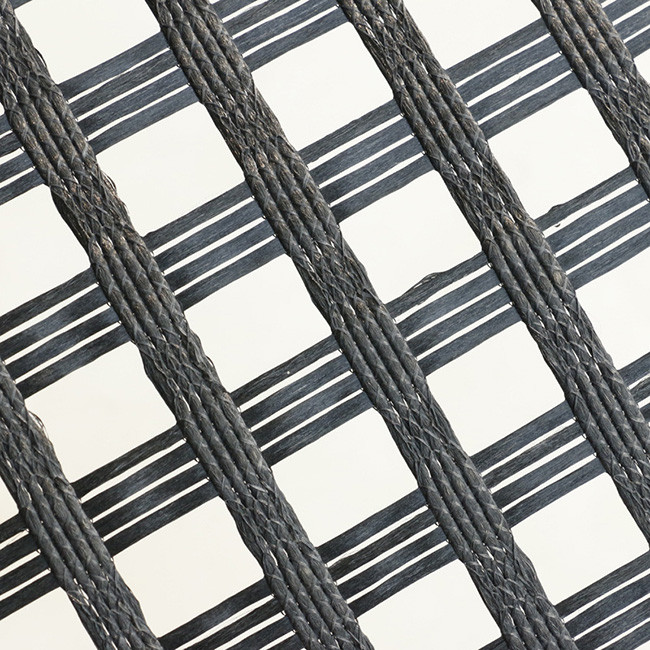

Geogrid Solutions for Global Road Construction: A Professional Guide to Selection & Application
Lianyi Geosynthetics – Your Trusted Partner in Infrastructure Reinforcement
Introduction: Building Roads That Last
In modern road construction, weak subgrades, heavy traffic loads, and extreme environmental conditions pose constant challenges to infrastructure longevity. From the frozen tundra of Siberia to the humid tropics of Southeast Asia, from desert highways to coastal roads—each environment demands a tailored reinforcement solution.
Geogrids have emerged as the gold standard for soil reinforcement, base stabilization, and asphalt pavement enhancement. By forming mechanical interlock with aggregates, geogrids significantly improve bearing capacity, shear resistance, and overall structural integrity.
At Lianyi Geosynthetics, we manufacture a comprehensive range of high-performance geogrids designed to meet the diverse demands of road construction projects worldwide. This guide will help you understand our product portfolio and select the optimal solution for your specific environmental and engineering requirements.
1. PP Biaxial Extruded Geogrid – The Foundation Reinforcement Specialist
Manufacturing Excellence
Our PP Biaxial Extruded Geogrid is manufactured from high molecular polypropylene through an advanced extrusion process, followed by longitudinal and transverse stretching–. This creates a monolithic, integrally formed structure where ribs and junctions are part of a single continuous network–.
Unlike assembled or welded grids, the integral structure eliminates the risk of node separation under load, delivering superior structural integrity and long-term reliability–.
Key Technical Specifications
| Parameter | Value |
|---|---|
| Tensile Strength Range | 15–50 kN/m (MD & TD) |
| Junction Efficiency | ≥ 95%– |
| Mesh Size | 31×31 mm – 39×39 mm |
| Roll Width | 2–6 m |
| Material | High molecular PP |
| Aperture | Square grid |
Performance Advantages
-
Superior Gravel Interlock: The precisely engineered aperture geometry and rib design facilitate exceptional mechanical interlock with granular soils, sands, and crushed stone–
-
High Modulus at Low Strain: Provides immediate stabilization function, enhancing foundation stiffness during service
-
Excellent Junction Efficiency: ≥95% junction efficiency ensures uniform load transfer across the entire grid network
-
Outstanding Installation Survivability: Robust construction resists damage during the construction phase
-
Chemical & Environmental Resistance: UV stabilized with resistance to chemical attack and biological degradation
Ideal Applications
-
Road Base Reinforcement: Soft subgrade stabilization for paved and unpaved roads
-
Industrial Yards & Working Platforms
-
Foundation Reinforcement
-
Car Parks & Access Roads
-
Small Retaining Walls
Selection Guide by Subgrade Condition
| Subgrade Type | CBR Value | Recommended Strength | Placement |
|---|---|---|---|
| Very Soft | ≤ 3% | 40–50 kN/m | At H/4 from top of granular layer |
| Medium | 3–5% | 30–40 kN/m | At H/3 from top |
| Stiff | ≥ 5% | 15–30 kN/m | Base-subbase interface |
Expert Tip: For soft subgrades (CBR ≤ 3%), higher tensile strength geogrids (40–50 kN/m) are recommended to provide adequate stabilization and load distribution.
2. Fiberglass Geogrid – Asphalt Reinforcement & Crack Prevention
Manufacturing Excellence
Our Fiberglass Geogrid is manufactured using alkali-free E-glass fiber roving through advanced warp-knitting technology, creating a directional structure that fully utilizes yarn strength–. The grid is then coated with polymer-modified bitumen, ensuring excellent compatibility and adhesion with asphalt layers–.
For enhanced performance, we offer composite varieties that integrate lightweight nonwoven geotextile with the fiberglass grid, providing dual functionality of reinforcement and waterproofing–.
Key Technical Specifications
| Parameter | Value |
|---|---|
| Tensile Strength Range | 25–400+ kN/m (MD & TD) |
| Elongation at Break | ≤ 3% |
| Mesh Size | 12.7×12.7 – 50×50 mm |
| Elastic Modulus | 76 GPa |
| Temperature Resistance | -100°C to +280°C |
| Coating Material | Polymer-modified bitumen– |
Performance Advantages
-
Ultra-High Tensile Strength: Up to 400+ kN/m with minimal elongation
-
Exceptional Temperature Stability: Performs reliably from -100°C to +280°C
-
Superior Asphalt Compatibility: Polymer-modified bitumen coating ensures strong bonding with asphalt layers–
-
Reflective Crack Control: Effectively minimizes both thermal and stress-related reflective cracking
-
Rutting Reduction: Reduces pavement rutting under high temperatures and intense wheel loads
-
Extended Pavement Life: Dramatically extends service life of roads, runways, and parking lots
-
Water Barrier Function (Composite Type): The integrated nonwoven geotextile provides anti-seepage and waterproofing protection–
Ideal Applications
-
Asphalt Pavement Reinforcement: New highway construction and overlays
-
Reflective Crack Control: Jointed concrete highways, airport runways, bridges
-
Road Maintenance & Repair: Severely cracked road rehabilitation
-
High-Traffic Pavements: Rutting control under heavy wheel loads
-
Composite Applications: With nonwoven geotextile for combined reinforcement and waterproofing.
Selection Guide by Pavement Condition
| Application Scenario | Recommended Product | Key Consideration |
|---|---|---|
| New asphalt pavement | Standard fiberglass geogrid | Place at base-asphalt interface |
| Cracked road overlay | Fiberglass geogrid + tack coat | Minimum overlay thickness: 50 mm |
| High-moisture areas | Composite (with nonwoven) | Provides water barrier function– |
| Extreme temperature regions | High-temperature resistant grade | Stable from -100°C to +280°C |
Expert Tip: For optimal performance, install fiberglass geogrid directly on the tack coat and place the overlying pavement immediately to ensure maximum bonding.
3. Polyester (PET) Geogrid – High-Strength Long-Term Reinforcement
Manufacturing Excellence
Our Polyester Geogrid is warp-knitted from high-tenacity polyester yarns, then coated with PVC or bitumen to enhance dimensional stability and protect against UV radiation and installation damage. The warp-knitted directional structure gives full play to yarn strength, delivering exceptional mechanical properties––.
Key Technical Specifications
| Parameter | Value |
|---|---|
| Tensile Strength Range (Biaxial) | 30–350+ kN/m (MD & TD) |
| Tensile Strength Range (Uniaxial) | 30–800+ kN/m |
| Elongation at Break | ≤ 13% |
| Mesh Size | 12–50 mm |
| Coating | PVC or Bitumen |
Performance Advantages
-
Exceptional Long-Term Tensile Strength: High tenacity polyester delivers superior strength and dimensional stability–
-
Low Creep Characteristics: Excellent long-term performance under constant load with minimal creep
-
Chemical & Biological Resistance: Resistant to soil microorganisms and chemicals with pH range 5–8
-
UV & Mechanical Damage Protection: PVC/bitumen coating provides robust protection
-
Flexibility Even in Extreme Cold: Easy installation even in freezing conditions
-
Excellent Grid-Soil Interaction: Aperture design optimized for aggregate interlock
Ideal Applications
-
Load-Bearing Layers: Roads, railways, and airport construction
-
Retaining Walls & Steep Slopes
-
Slope Stabilization
-
Landfill Engineering
-
Access Roads & Transportation Routes
-
Bridging Underground Voids or Sinkholes
Selection Guide by Load Requirement
| Traffic Category | Design Load | Recommended PET Strength |
|---|---|---|
| Light traffic roads | Low | 30–50 kN/m |
| Medium traffic roads | Moderate | 50–100 kN/m |
| Highways | Heavy | 100–200 kN/m |
| Heavy-duty / Airports | Extreme | 200–350+ kN/m |
Expert Tip: PET geogrids are the preferred choice for projects requiring long-term performance with minimal creep—ideal for permanent infrastructure and slope stabilization applications–.
4. PP Welded Geogrid – Cost-Effective Soil Stabilization
Manufacturing Excellence
Our PP Welded Geogrid is manufactured by stretching monolithic polypropylene flat bars and fusing them at the junctions using advanced heat-welding technology. This creates a robust grid structure ideal for soil stabilization applications–.
Key Technical Specifications
| Parameter | Value |
|---|---|
| Material | Stretched monolithic PP flat bars |
| Manufacturing | Heat-welded junctions |
| Strength Range | 20–40 kN/m–– |
| Applications | Soil stabilization, subbase reinforcement |
Performance Advantages
-
Cost-Effective Solution: Economical option for stabilization applications–
-
Soil Stabilization: Excellent for subbase stabilization of roads on soft soils–
-
Aggregate Confinement: Effective aggregate interlock and confinement–
-
Good Installation Survivability: Robust construction resists installation damage
Ideal Applications
-
Subbase Stabilization: Roads constructed on soft soils–
-
Soil Stabilization Projects–
-
Temporary Roads & Access Routes
Comparison: PP Extruded vs. PP Welded
| Feature | PP Extruded (Integral) | PP Welded |
|---|---|---|
| Structure | Monolithic, integral nodes– | Welded junctions– |
| Junction Strength | Higher (≥95% efficiency)– | Lower junction strength– |
| Load Transfer | Superior | Good |
| Typical Strength | 15–50 kN/m | 20–80 kN/m– |
| Best For | Pavement reinforcement, high-load areas– | Soil stabilization, soft subgrades– |
Expert Tip: For permanent road structures with heavy traffic, extruded geogrids generally show better performance. For stabilization applications and temporary roads, welded geogrids offer a cost-effective alternative–.
Comprehensive Selection Matrix
By Environmental Condition
| Environment | Recommended Geogrid | Rationale |
|---|---|---|
| Extreme Cold (Below -40°C) | PET Geogrid | Excellent flexibility in extreme cold |
| Extreme Heat (Above 50°C) | Fiberglass Geogrid | Stable up to 280°C |
| Wetlands / High Moisture | Fiberglass Composite (with nonwoven) | Water barrier function– |
| Aggressive Soils (Acidic/Alkaline) | PET or PP Geogrid | Chemical resistance (pH 5–8 for PET) |
| High UV Exposure | PET (PVC coated) or PP (UV stabilized) | UV protection |
| Heavy Traffic / Highways | PET or High-strength Fiberglass | High tensile capacity |
By Application
| Application | Primary Geogrid | Secondary Option |
|---|---|---|
| Subgrade Stabilization | PP Biaxial Extruded | PP Welded |
| Base Course Reinforcement | PP Biaxial Extruded | PET Geogrid |
| Asphalt Reinforcement | Fiberglass Geogrid | Fiberglass Composite |
| Crack Control | Fiberglass Geogrid | PET Geogrid (warp-knitted) |
| Slope Stabilization | PET Geogrid | PP Biaxial Extruded |
| Retaining Walls | PET Uniaxial | PP Biaxial Extruded |
| Waterproofing + Reinforcement | Fiberglass Composite | PET Composite |
Why Choose Lianyi Geosynthetics?
Global Quality Standards
Our products are manufactured in strict accordance with international quality standards, including:
-
ASTM D6637 – Standard Test Method for Determining Tensile Properties of Geogrids–
-
ISO 10319 – Tensile properties of geosynthetics
-
ISO 9001 – Quality management systems
Comprehensive Product Portfolio
From PP biaxial extruded geogrids to fiberglass asphalt reinforcement, from high-tenacity PET geogrids to cost-effective welded solutions—we offer a complete range to meet every project requirement–.
Customization Capabilities
We provide OEM services and customizable specifications including:
-
Tensile strength (15–400+ kN/m)
-
Mesh size and aperture geometry
-
Roll width and length
-
Coating materials (bitumen, PVC, acrylic, SBR)–
Global Export Experience
Our products have been exported to more than 40 countries and regions worldwide, serving infrastructure projects across diverse environmental conditions.
Installation Best Practices
For Subgrade/Base Reinforcement (PP & PET Geogrids)
-
Prepare subgrade – Level and compact to required density
-
Place geogrid – Unroll and position according to design
-
Overlap properly – Minimum overlap of 300–500 mm at joints
-
Place aggregate – Spread first layer (minimum 150 mm) without direct machinery contact on the grid
-
Compact – Compact in layers to achieve specified density
For Asphalt Reinforcement (Fiberglass Geogrid)
-
Apply tack coat – Ensure proper adhesion
-
Place geogrid – Install directly on tack coat
-
Immediate overlay – Place asphalt overlay promptly (within 24 hours)
-
Minimum thickness – Ensure minimum 50 mm overlay thickness
Conclusion: The Right Geogrid for Every Environment
Selecting the right geogrid is not just a technical decision—it is a long-term cost-saving strategy. By matching the geogrid’s properties to your specific environmental conditions, subgrade soil characteristics, and traffic load requirements, you can significantly extend pavement life, reduce maintenance costs, and ensure structural safety.
At Lianyi Geosynthetics, we are committed to providing high-quality, durable, and cost-effective geogrid solutions for infrastructure projects worldwide. Our team of experts is ready to assist you in selecting the optimal product for your specific needs.
