

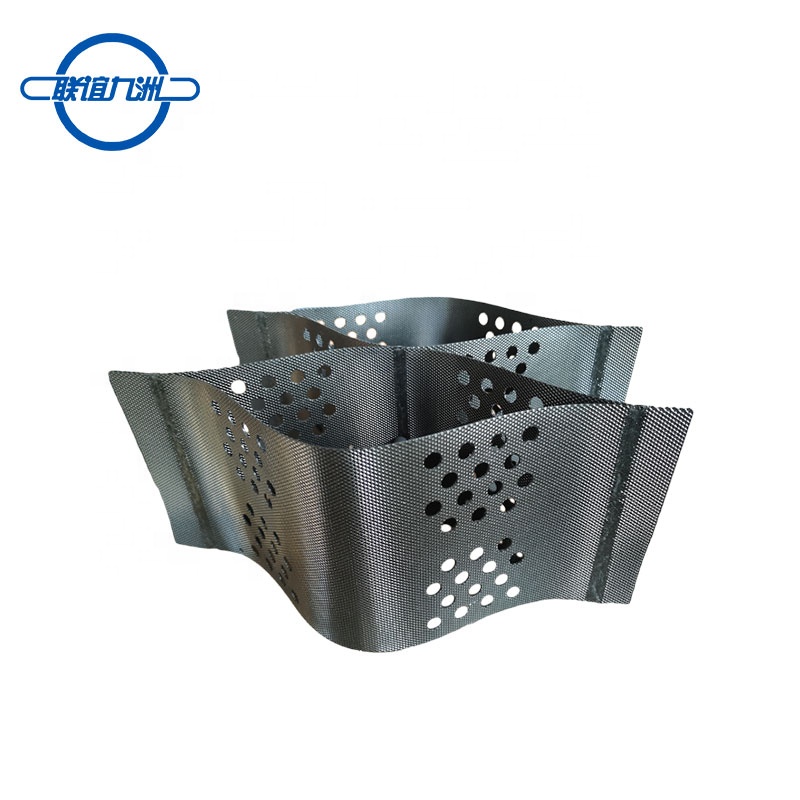

The key difference is that ‘geomembrane‘ is an umbrella term for various types of synthetic, impermeable liners, whereas ‘HDPE geomembrane’ refers to a specific type of geomembrane made from high-density polyethylene (HDPE).
In practice, the HDPE geomembrane is the most widely used variant thanks to its high durability, chemical resistance, and low permeability. Therefore, rather than being an alternative to geomembranes, HDPE is one of the most important materials used in their production.
Introduction: Why This Comparison Matters in Modern Engineering
In environmental engineering, infrastructure development, and water management projects, choosing the right liner system is crucial to ensure safety, compliance, and long-term performance. Confusion often arises because the terms ‘geomembrane’ and ‘HDPE geomembrane’ are sometimes used interchangeably in industry discussions.
However, from a technical and procurement perspective, it is essential to understand the distinction. Engineers must decide whether to use a geomembrane and, if so, which material type — HDPE, PVC, LLDPE, or others — best suits the application.
Leading suppliers such as Feicheng Lianyi offer a wide range of geomembrane solutions and emphasise that the choice of material directly affects durability, cost-efficiency, and environmental protection outcomes.
What Is a Geomembrane?
A geomembrane is a synthetic, low-permeability barrier used to control the migration of fluids or gases in engineering projects. They are widely used in landfill liners, reservoirs, mining operations, and wastewater containment systems.
Geomembranes are typically manufactured from polymeric materials, including:
- Polyethylene (PE);
- Polyvinyl chloride (PVC);
- Polypropylene (PP).
Their primary function is to prevent leakage, protect soil and groundwater, and ensure environmental safety.
Key characteristics of geomembranes include:
- Extremely low permeability
- High chemical resistance
- A long service life
- Flexibility depending on material type
Because geomembranes can be made from different materials, their performance varies significantly depending on composition.
What Is an HDPE Geomembrane?
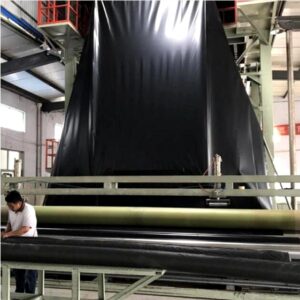
A high-density polyethylene (HDPE) geomembrane is a specific type of geomembrane made from a thermoplastic polymer known for its strength and chemical resistance.
HDPE geomembranes are the most widely used in the industry due to their durability and reliability in harsh environments.
Key properties:
- Density: ≥0.94 g/cm³
- Excellent chemical resistance
- High tensile strength
- Long lifespan (up to 50–100 years in buried conditions)
These characteristics make HDPE geomembranes ideal for demanding applications such as landfills, mining containment, and hazardous waste storage.
Core Difference: Geomembrane vs HDPE
The confusion can be resolved with one simple principle:
- Geomembrane = category
- HDPE = material within that category
Comparison Table
| Aspect | Geomembrane | HDPE Geomembrane |
| Definition | General liner category | Specific material type |
| Material Options | PE, PVC, PP, etc. | High-density polyethylene only |
| Flexibility | Varies by material | Moderate (less flexible than PVC) |
| Durability | Depends on type | Very high |
| Chemical Resistance | Varies | Excellent |
| Usage Scope | Broad | Heavy-duty applications |
This table clearly shows that HDPE geomembrane is a subset of the broader geomembrane category.
Material Composition and Structure
- Geomembranes (general)
Geomembranes are produced using different polymer formulations, which determine their flexibility, strength, and resistance properties.
For example:
- PVC geomembranes: flexible and easy to install
- LLDPE geomembranes: adaptable to uneven surfaces
- HDPE geomembranes: strong and chemically resistant
HDPE geomembrane
HDPE has a linear molecular structure with minimal branching, resulting in high density and crystallinity. This structure provides:
- Increased tensile strength
- Improved chemical resistance
- Lower permeability
Compared to other geomembrane materials, HDPE offers superior long-term performance.
Performance Comparison
| Property | General Geomembrane | HDPE Geomembrane |
| Tensile Strength | Medium–High | High |
| Flexibility | High (PVC/LLDPE) | Moderate |
| UV Resistance | Varies | Excellent |
| Chemical Resistance | Varies | Excellent |
| Lifespan | 15–50 years | 50–100 years |
HDPE geomembranes outperform most alternatives in durability and resistance, making them the preferred choice for critical containment systems.
Application Differences
In geotechnical engineering, geomembranes are essential barrier materials that are used to control fluid migration and protect the environment. However, not all geomembranes are the same: the material selected directly affects performance and risk management.¹
Geomembrane applications (general)
Typical uses:
- Water reservoirs
- Agricultural ponds
- Canal lining
- Temporary containment systems
Characteristics:
- Suitable for low-to-moderate risk environments
- Often chosen for cost-efficiency and ease of installation
- Materials may include PVC, LDPE, or other flexible polymers
Insight:
General geomembranes are widely used where basic waterproofing and containment are sufficient.
HDPE geomembrane applications
HDPE geomembranes are a specialised category designed for demanding and high-risk environments.
Key applications:
- Landfills and hazardous waste containment
- Mining tailings storage facilities
- Industrial wastewater treatment systems
- Oil and gas containment
Why HDPE is preferred:
- High chemical resistance: withstands aggressive substances
- Excellent durability: long service life under harsh conditions
- Low permeability: superior barrier performance
- UV and weather resistance: suitable for outdoor exposure
Key application insight
General geomembranes:
Best for standard containment and water management
HDPE geomembranes:
Critical for environmental protection and regulatory compliance in high-risk industries
Advantages of HDPE Geomembrane
In the field of geotechnical engineering, the high-density polyethylene (HDPE) geomembrane is widely recognised for its reliability in critical containment applications. Its properties make it the preferred solution in industries where environmental protection and long-term performance are paramount.
- Superior chemical resistance
Key capability:
Resistant to acids, alkalis, and a wide range of industrial chemicals
Why it matters:
- Prevents degradation in harsh environments
- Maintains structural integrity over time
Applications:
- Landfills
- Industrial wastewater systems
- Mining operations
- Long-term Durability
Performance:
- Service life can extend to several decades with proper installation.
- Resistant to UV radiation, weathering, and environmental stress.
Benefit:
Reliable long-term containment with minimal performance loss
- Low permeability
Core advantage:
Provides a near-impermeable barrier
Impact:
- Prevents leakage of hazardous substances
- Protects soil and groundwater
Insight:
This property is critical for environmental compliance and safety.
- Cost efficiency over time
Initial vs long-term:
- Higher initial cost compared to some alternatives
- Significantly lower maintenance and replacement requirements
Result:
- Reduced lifecycle costs
- Better ROI for large-scale projects
Final takeaway:
HDPE geomembranes deliver:
- Chemical resistance for harsh conditions
- Durability for a long service life
- Impermeability for environmental protection
- Cost efficiency over the lifecycle
These advantages make HDPE geomembranes the go-to solution for high-risk and long-term containment applications where performance and reliability cannot be compromised.
Why HDPE Dominates the Market?
In the field of geotechnical engineering, high-density polyethylene (HDPE) geomembranes have become the industry standard for containment applications. Its market dominance is no accident; it is driven by an optimal balance of performance, cost, and regulatory compliance.
- Proven reliability in large-scale projects
Track record:
It is widely used in landfills, mining, and water containment systems, and has demonstrated long-term performance in harsh environments.
Why it matters:
- Engineers and project owners prioritise materials with proven field data.
- Reduces risk in high-investment infrastructure projects.
- Strong regulatory acceptance
Global compliance:
- Meets stringent environmental protection standards
- Accepted in regulated industries such as waste management and mining
Impact:
Simplifies project approvals
Ensures alignment with environmental safety requirements
Insight:
As environmental regulations tighten worldwide, materials like HDPE that meet compliance standards will gain a clear advantage.
- Global availability and supply chain strength
Market factor:
Produced by numerous manufacturers worldwide, including Feicheng Lianyi.
Benefits:
- Stable supply and competitive pricing
- Easier sourcing for international projects
- Consistent quality standards across suppliers
- Balanced cost-to-performance ratio
Why HDPE stands out:
- High durability and chemical resistance
- Long service life → lower lifecycle costs
Result:
- Strong return on investment (ROI)
- Preferred choice for public and private sector projects
- Growing demand driven by environmental regulations
Trend:
- Increasing focus on leak prevention and environmental protection
- Expansion of waste management and water infrastructure projects
Outcome:
- Rising global demand for highperformance geomembranes
- Continued dominance of HDPE in both developed and emerging markets
Final takeaway:
HDPE geomembranes dominate the market because they offer proven reliability in critical applications, regulatory acceptance worldwide, and strong global supply availability.
- Proven reliability in critical applications
- Regulatory acceptance worldwide
- Strong global supply availability
- Excellent cost-performance balance
As sustainability and environmental compliance become more important, HDPE is set to remain the leading solution for containment systems worldwide.
Industry Trends in 2026
The geomembrane industry is evolving with several key trends:
- Increased use of recycled materials
- Development of textured and composite geomembranes
- Integration with geotextiles for enhanced performance
- Smart monitoring systems for leak detection
HDPE remains central to these innovations due to its adaptability and performance.
Common Misconceptions
In geotechnical engineering, failing to understand the differences between materials can lead to poor design choices and costly failures. Here are some common misconceptions clarified:
- ‘HDPE and geomembrane are the same.
Incorrect.
HDPE geomembrane is just one type of geomembrane.
Reality:
Geomembranes are a broad category of impermeable liners. Materials include HDPE, PVC, LDPE, and EPDM, among others.
Key point: HDPE is a subset, not the definition of all geomembranes.
- ‘All geomembranes perform equally.’
False.
Performance varies significantly depending on material composition and application conditions.
Differences include:
- Chemical resistance;
- UV stability;
- Flexibility vs rigidity;
- Lifespan and durability.
Example:
HDPE excels in harsh chemical environments, while PVC may be preferred for flexibility in certain installations.
- ‘Flexibility is always better.’
Not necessarily.
Reality:
Flexibility helps with installation and contouring, but durability, strength, and chemical resistance are often more critical in industrial settings.
Insight: In high-risk applications (e.g., landfills and mines), rigid, chemically resistant materials such as HDPE are often the safer choice.
Final takeaway:
Avoiding these misconceptions ensures:
- Better material selection
- Improved system performance
- Reduced environmental and financial risks
Bottom line:
Choose geomembranes based on application requirements, not assumptions, because performance differences can be substantial and critical to the success of the project.
FAQ: Geomembrane vs HDPE
- Is HDPE the same as geomembrane?
No. HDPE is a material used to make one type of geomembrane.
- Which is better: geomembrane or HDPE?
HDPE geomembrane is often better for heavy-duty applications, but the best choice depends on the project.
- What are geomembranes used for?
They are used for containment, waterproofing, and environmental protection.
- Why is HDPE geomembrane widely used?
Because of its durability, chemical resistance, and long lifespan.
- Are there alternatives to HDPE geomembrane?
Yes, including PVC and LLDPE geomembranes.
- How long does HDPE geomembrane last?
Typically 50–100 years under proper conditions.
Conclusion
The difference between a geomembrane and an HDPE geomembrane is essentially one of category versus material. The term ‘geomembrane’ refers to a broad class of impermeable liners, while ‘HDPE’ represents one of the most advanced and widely used materials within that class.
The real challenge for engineers and project decision-makers is not choosing between geomembranes and HDPE, but selecting the right geomembrane material for the specific application. Trusted suppliers like Feicheng Lianyi provide businesses with access to high-quality HDPE geomembrane solutions that are tailored to modern environmental and industrial demands.
