

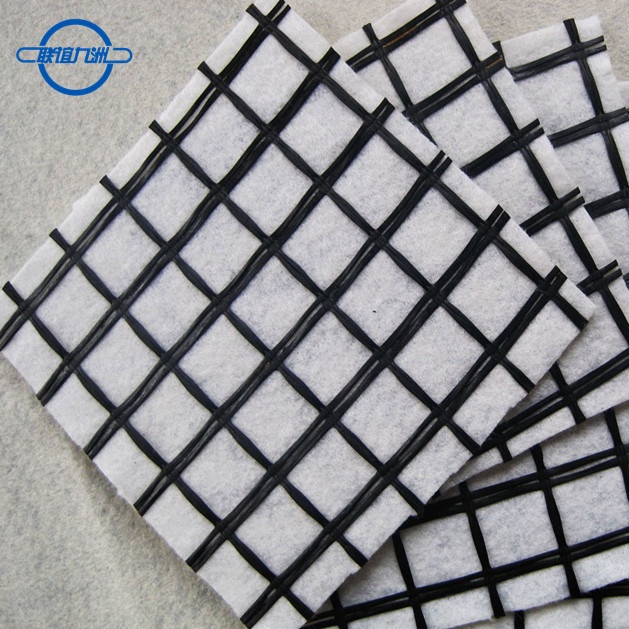

Both geocells and geogrids are geosynthetic reinforcement products used to improve soil performance, but they operate via different mechanisms. According to Koerner’s ‘Designing with Geosynthetics’ and the International Geosynthetics Society (IGS) Technical Guidelines, geogrids provide tensile reinforcement by interlocking with aggregate particles, whereas geocells create a three-dimensional confinement system that distributes loads and restricts lateral soil movement.
In practical engineering applications, geogrids are commonly used for base reinforcement, retaining walls, and pavement stabilisation, whereas geocells are more effective for weak subgrade stabilisation, slope protection, load support, and erosion control. It is therefore crucial to understand the differences between these technologies to select the most cost-effective and technically appropriate solution for infrastructure projects.
Introduction
As transportation networks expand and infrastructure projects increasingly encounter poor soil conditions, geosynthetic reinforcement materials have become an essential part of modern civil engineering. Soil stabilisation technologies are essential for the long-term performance and structural reliability of roads, railways, retaining walls, embankments, slopes, airports, ports, mining facilities, and renewable energy installations.
The most widely used reinforcement products are geocells and geogrids. Although both belong to the geosynthetics family and are often used for ground improvement, they differ significantly in terms of their design, load transfer mechanisms, installation methods, performance characteristics, and ideal applications.
One of the most common questions among engineers, contractors, procurement managers, and project owners is: What is the difference between geocells and geogrids?
The answer goes far beyond appearance. Geogrids reinforce soil through tensile interaction and aggregate interlock, whereas geocells create a three-dimensional confinement effect that transforms weak soils into stable, load-bearing structures. Each technology offers unique advantages depending on project requirements, soil conditions, loading conditions, environmental factors, and lifecycle cost considerations.
This comprehensive guide explores the differences between geocells and geogrids in detail, examining their structure, how they work, their applications, their benefits and limitations, design considerations, and emerging trends in geotechnical engineering.
What Is a Geocell?
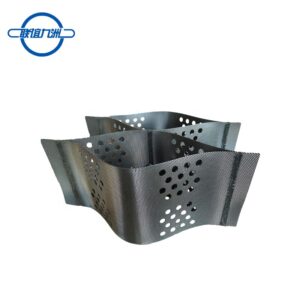
A geocell is a three-dimensional, honeycomb-like confinement system made from high-density polyethylene (HDPE), novel polymer alloys (NPAs), polypropylene (PP), or other engineered polymers.
Once expanded on site and filled with soil, aggregate, sand, recycled materials, or concrete, the interconnected cells created by geocells confine the infill materials and significantly improve load distribution.
Unlike traditional reinforcement methods that rely solely on tensile resistance, geocells provide the following benefits:
- Cellular confinement
- Lateral restraint
- Stress distribution
- Increased bearing capacity
- Reduced rutting
- Improved slope stability
- Enhanced erosion resistance
The cellular structure transforms loose materials into a semi-rigid composite layer capable of supporting substantially higher loads.
What Is a Geogrid?
A geogrid is a planar geosynthetic reinforcement material consisting of regularly spaced apertures connected by tensile ribs.
Geogrids are typically manufactured from one of the following materials:
- HDPE
- Polypropylene
- Polyester
- Polyvinyl alcohol (PVA)
Their primary function is to reinforce soil by creating a mechanical interlock between the grid structure and the aggregate particles.
As the apertures are filled with aggregate, load transfer occurs through friction and interlocking mechanisms.
This interaction improves:
- Tensile strength
- Load distribution
- Shear resistance
- Base stability
- Settlement control
Geogrids are widely used in transportation infrastructure, retaining wall construction, and pavement reinforcement.

Fundamental Structural Difference
The most obvious distinction between geocells and geogrids is their physical geometry.
| Feature | Geocell | Geogrid |
| Structure | Three-dimensional honeycomb | Two-dimensional grid |
| Reinforcement Mechanism | Cellular confinement | Tensile reinforcement |
| Load Distribution | 3D load dispersion | Planar load transfer |
| Soil Interaction | Confinement and stabilization | Aggregate interlock |
| Installation Thickness | Typically 75–300 mm | Typically, a single layer |
| Material Consumption | Higher | Lower |
This structural difference directly influences engineering performance.
How Geocells Work?
Geocells are effective because they create three-dimensional confinement.
When a load is applied to a layer reinforced with geocells:
The load enters the infill material.
The cell walls then restrict lateral movement.
This distributes vertical stresses over a wider area.
Soil confinement increases apparent stiffness.
The bearing capacity improves significantly.
This process creates a reinforced mattress effect.
This confinement mechanism is particularly valuable in weak soils, where traditional reinforcement methods may only provide limited improvement.
Geocells can transform soft subgrades into stable, load-bearing platforms, eliminating the need for excessive excavation or imported aggregate.
How Geogrids Work?
Geogrids rely on a different reinforcement principle.
When aggregate is placed over a geogrid, the particles interlock with the grid apertures.
The aggregate particles interlock with the grid apertures.
Tensile forces then develop within the grid ribs.
This results in load transfer across a larger area.
Lateral aggregate movement is reduced.
Structural stiffness increases.
The result is improved pavement performance and reduced deformation.
Geogrids function most effectively when they can establish a strong interlock with quality aggregate.
Comparing Reinforcement Mechanisms
It is important to distinguish between confinement and tensile reinforcement.
Geocell reinforcement
Geocells improve soil by:
- Passive confinement
- Hoop stress development
- Cellular stabilisation
- Load spreading
This creates a three-dimensional reinforced zone.
Geogrid reinforcement
Geogrids improve soil through:
- Tensile resistance
- Aggregate interlock
- Membrane support
- Load transfer
This creates a reinforced plane within the soil structure.
Due to these differences, the most suitable solution often depends on the specific project conditions.
Geocell vs Geogrid for Weak Soil Stabilization
Significant challenges are posed by weak subgrades for infrastructure projects.
Examples include:
- Soft clay;
- Peat;
- Organic soils;
- Saturated silts.
Under these conditions, geocells frequently outperform geogrids.
The reason is simple.
Weak soils often lack the strength required to utilise the tensile resistance of geogrids effectively.
Geocells, however, provide immediate confinement, regardless of subgrade quality.
Numerous field studies have demonstrated substantial reductions in settlement and rutting when geocells are installed over very weak soils.
For roads constructed over low-CBR soils, geocells can significantly reduce the required thickness of the aggregate.
Geocell vs Geogrid for Road Construction
The road construction industry is one of the largest markets for geosynthetic reinforcement.
Geogrid applications
Geogrids are commonly used for:
- Base reinforcement
- Subbase stabilisation
- Pavement life extension
- Reflective crack reduction
Geocell applications
Geocells are commonly used for:
- Access roads
- Haul roads
- Temporary roads
- Military roads
- Unpaved roads
- Extremely weak subgrades
The choice often depends on traffic loads and subgrade conditions.
Performance Comparison in Road Projects
| Performance Factor | Geocell | Geogrid |
| Weak Soil Support | Excellent | Good |
| Aggregate Reduction | Excellent | Moderate |
| Rutting Resistance | Excellent | Good |
| Construction Speed | Moderate | Fast |
| Initial Cost | Higher | Lower |
| Long-Term Stability | Excellent | Excellent |
| Load Distribution | Three-dimensional | Two-dimensional |
This comparison highlights why geocells are increasingly selected for challenging ground conditions.
Slope Protection Applications
Another area in which geocells and geogrids differ significantly is slope stabilisation.
Geocells for slopes
Geocells provide:
- Surface confinement
- Vegetation support
- Erosion control
- Hydraulic protection
They are commonly used on:
- Highway embankments
- Landfills
- Riverbanks
- Coastal protection projects
Geogrids for slopes Geogrids for slopes
Geogrids provide:
- Internal reinforcement
- Structural stabilisation
- Reinforced soil structures
They are typically installed within slope layers rather than on the surface.
Consequently, the two systems often serve complementary rather than competing functions.

Retaining Walls and Reinforced Soil Structures
Geogrids dominate the reinforced soil wall market.
Their high tensile strength enables engineers to construct the following:
- Mechanically stabilised earth (MSE) walls;
- Reinforced embankments;
- Bridge abutments.
Geocells are less frequently used for large retaining structures because their primary benefit lies in confinement rather than deep tensile reinforcement.
For walls exceeding several metres in height, geogrids are generally preferred.
Erosion Control Performance
As climate change contributes to more intense rainfall events, erosion protection has become increasingly important.
Geocells perform exceptionally well because they:
- Anchor infill materials;
- Reduce surface runoff velocity;
- Improve vegetation establishment;
- Protect against hydraulic erosion.
Geogrids alone provide limited erosion protection unless combined with additional materials, such as erosion control blankets or vegetation systems.
For surface erosion applications, geocells typically offer superior performance.
Installation Differences
The installation procedures differ considerably.
Geocell installation
The process generally includes the following steps:
- Site preparation
- Geotextile placement (if required)
- Geocell expansion
- Anchoring
- Infill placement
- Compaction
Geogrid installation
The process generally includes:
- Site preparation
- Geogrid rollout
- Overlap or connection
- Aggregate placement
- Compaction
Geogrids are generally faster to install due to their planar structure.
Cost Comparison
Cost remains an important project consideration.
| Cost Factor | Geocell | Geogrid |
| Material Cost | Higher | Lower |
| Transportation Cost | Moderate | Low |
| Installation Labor | Higher | Lower |
| Aggregate Savings | Higher | Moderate |
| Lifecycle Cost | Often Lower | Competitive |
Although geocells often involve higher upfront costs, aggregate savings and extended service life may improve overall project economics.
Environmental Sustainability Considerations
The selection of geosynthetics is increasingly influenced by sustainability.
Both geocells and geogrids contribute to sustainable construction in the following ways:
- Reducing aggregate consumption;
- Minimising excavation;
- Lowering transportation emissions;
- Extending infrastructure life.
However, geocells often deliver greater aggregate reductions in weak-soil applications.
This can substantially lower a project’s carbon footprint.
Modern products increasingly incorporate recycled polymers and advanced material technologies that further improve sustainability performance.
Emerging Trends in Geocell and Geogrid Technology
Several innovations are reshaping the geosynthetics industry.
- Advanced Polymer Alloys
New materials improve creep resistance and durability.
- Smart Infrastructure Integration
Sensor-equipped geosynthetics enable real-time performance monitoring.
- Digital Design Tools
Finite element modeling improves design accuracy.
- Carbon Reduction Initiatives
Engineers increasingly optimize geosynthetic solutions to reduce embodied carbon.
- Hybrid Reinforcement Systems
Projects increasingly combine geocells and geogrids to maximize performance.
These developments are expanding the role of geosynthetics in infrastructure development worldwide.
When Should You Choose Geocell?
Geocells are often the preferred solution when:
- Subgrade soils are extremely weak;
- Significant rutting is expected;
- Load distribution is critical;
- Aggregate availability is limited;
- Erosion protection is required;
- Slope stabilisation is necessary.
Their three-dimensional confinement mechanism provides substantial advantages under challenging conditions.
When Should You Choose Geogrid?
Geogrids are often preferred when:
- Tensile reinforcement is required;
- Pavement stabilisation is the primary goal;
- Retaining walls are being constructed;
- Installation speed is important;
- Project budgets are constrained;
- Aggregate interlock can be fully mobilised.
Their efficiency and versatility make them one of the most widely used geosynthetics globally.
Frequently Asked Questions (FAQ)
- What is the main difference between a geocell and a geogrid?
Geocells provide three-dimensional confinement of soil and aggregate, while geogrids provide two-dimensional tensile reinforcement through aggregate interlock.
- Is geocell stronger than geogrid?
Not necessarily. They serve different engineering functions. Geocells generally perform better in very weak soils, while geogrids excel in tensile reinforcement applications.
- Can geocell and geogrid be used together?
Yes. Many infrastructure projects combine both products to maximize stabilization, load distribution, and long-term performance.
- Which is better for road construction, geocell or geogrid?
The answer depends on soil conditions. Geogrids are often sufficient for moderate subgrades, while geocells are frequently preferred for extremely weak soils and heavy-load applications.
- Are geocells more expensive than geogrids?
Initial material and installation costs are generally higher for geocells, but aggregate savings and lifecycle benefits can offset these costs.
- Which system is better for erosion control?
Geocells typically provide superior erosion control because their cellular structure physically confines soil and vegetation.
Conclusion
It is essential to understand the difference between geocell and geogrid in order to select the right geosynthetic reinforcement solution. Although both technologies improve soil performance and infrastructure durability, they do so through fundamentally different mechanisms. Geogrids reinforce soil through tensile interaction and aggregate interlock, whereas geocells create a three-dimensional confinement system that improves load distribution and lateral stability.
Neither solution is universally superior. The optimal choice depends on project objectives, soil conditions, loading requirements, environmental considerations, and lifecycle costs. As infrastructure projects increasingly demand greater durability, sustainability, and resilience, geocell and geogrid technologies will remain indispensable tools in modern geotechnical engineering.
