
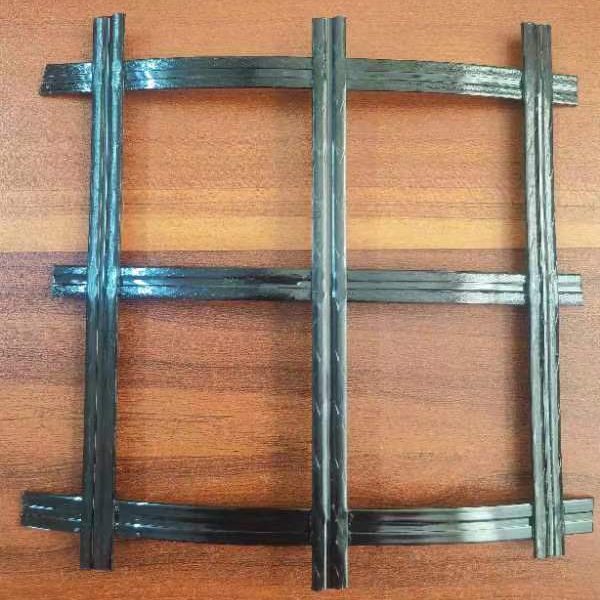


A PP triaxial geogrid is primarily used for soil stabilisation and aggregate confinement in load-bearing applications, particularly where traffic loads need to be distributed over weak or uneven subgrades. In pavement and platform construction, it improves the stiffness of the granular layer, reduces rutting, and extends service life by creating a mechanically stabilised aggregate layer, rather than merely acting as tensile reinforcement. Large-scale laboratory and field studies on triaxial geogrid systems have demonstrated measurable benefits, including reduced permanent deformation, lower vertical stress on weak subgrades, and enhanced bearing capacity in roads, working platforms, and unpaved access routes.
In practice, a PP triaxial geogrid is used when a project requires more than just separation. It is chosen to enhance the performance of unbound aggregate layers in roads, logistics yards, temporary haul roads, rail support layers, and construction platforms, particularly in cases where subgrade quality is poor, construction speed is a priority, or reducing aggregate thickness offers a cost advantage.
Introduction
In modern geotechnical and transportation engineering, one of the most common challenges encountered in projects is not the asphalt, concrete, or paving blocks on the surface, but the weakness of the soil beneath them. When a pavement structure is built on soft subgrade or low-quality fill, the weight of traffic tends to concentrate in the lower layers, causing rutting, differential settlement, pumping, and premature structural deterioration. Traditionally, engineers have addressed this issue by either increasing the thickness of imported aggregate or removing and replacing unsuitable soils. While both methods are effective, they can be costly, time-consuming, and carbon-intensive.
This is where PP triaxial geogrid technology has become important. Rather than relying solely on increased stone thickness, the geogrid is introduced into the aggregate layer to improve confinement and load distribution. The result is a mechanically stabilised layer that performs more efficiently under repeated wheel loads. Therefore, the question ‘What is a PP triaxial geogrid used for?’ is really a question about where load stabilisation, rut control, and subgrade improvement are needed in real infrastructure projects.
Although geogrids are often grouped as a single product family, not all geogrids perform the same function in the same way. Uniaxial geogrids are usually selected for tensile reinforcement in walls and slopes, while biaxial geogrids are widely used for planar reinforcement in pavement systems. Triaxial geogrids, particularly those made from polypropylene, are commonly associated with the stabilisation of unbound aggregate layers under multidirectional traffic loading. Understanding this distinction is key to understanding where the PP triaxial geogrid delivers value.
What Is a PP Triaxial Geogrid?
A polypropylene (PP) triaxial geogrid is a geosynthetic grid formed from PP and designed to have a triangular or triaxial aperture geometry. Unlike conventional biaxial geogrids, which provide stiffness primarily in two orthogonal directions, triaxial geogrids are designed to deliver more uniform stiffness and confinement behaviour across multiple in-plane directions. This makes it especially suitable for applications involving wheel loads, compaction loads, and stress paths that are not purely linear.
Polypropylene is widely used as a material because it offers a good balance of toughness, durability, chemical resistance, and long-term performance in buried civil engineering environments. From a structural standpoint, the triaxial aperture geometry improves the interlock between the grid and the surrounding aggregate. When compacted stone is placed over and into the grid, the particles lock into the apertures and are laterally restrained. This helps the aggregate layer behave as a stronger, more stable platform.
An important point to note is that PP triaxial geogrid is typically used for stabilisation rather than classic high-tensile reinforcement of walls or steep slopes. Its primary function is to enhance the performance of the granular layer above weak ground by controlling particle movement and distributing loads more effectively.
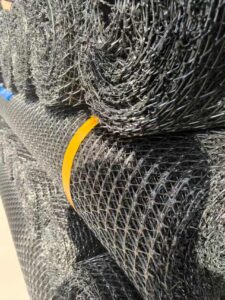
What Is a PP Triaxial Geogrid Used For?
The short answer is that PP triaxial geogrid is used to stabilize aggregate layers over weak or variable subgrades. But in engineering terms, that breaks down into several specific use cases.
-
Pavement Base Stabilization
The most common use of PP triaxial geogrid is in paved road construction, especially where the subgrade has limited bearing capacity or where the designer wants to improve the efficiency of the aggregate base. When installed within or at the bottom of the unbound base layer, the geogrid helps confine aggregate particles and reduce lateral spreading under wheel loads. This leads to lower rut depth, improved stiffness of the base course, and reduced stress transmitted into the subgrade.
Laboratory and field research on triaxial geogrid-reinforced pavement sections has shown improvements in resilient response and reductions in permanent deformation when compared with unreinforced sections. In some studies, triaxial geogrid reinforcement also improved the effective structural contribution of the base layer, which is one reason it is frequently considered in road optimization and pavement-thickness reduction strategies.
-
Unpaved Roads and Temporary Access Roads
PP triaxial geogrid is also widely used in unpaved roads, haul roads, temporary construction access routes, and working roads across soft ground. These applications are often more demanding than they look because the subgrade may be wet, highly variable, or repeatedly trafficked by heavy vehicles before any final pavement is built.
In these conditions, the grid helps create a more stable load-spreading layer so trucks and site vehicles do not punch deeply into the subgrade. The practical benefit is not just performance; it can also reduce the amount of imported stone needed to achieve a usable platform, which is particularly valuable on remote, muddy, or low-CBR sites. Recent model testing on unpaved road systems reinforced with triaxial geogrid has reported meaningful increases in bearing capacity and reductions in required crust thickness.
-
Working Platforms and Construction Platforms
On construction sites, cranes, piling rigs, concrete pumps, and heavy delivery vehicles often need to operate on temporary platforms before permanent pavement or foundations are completed. These working platforms must support repeated heavy loads without excessive rutting or loss of level. A PP triaxial geogrid can be installed within the platform aggregate to improve confinement and distribute equipment loads over a larger footprint.
This application is especially relevant where weak clay, fill, or moisture-sensitive subgrade would otherwise require a much thicker stone platform. In practice, the geogrid does not replace engineering verification of platform capacity, but it can contribute to a more robust and economical platform build-up when correctly designed.
-
Industrial Yards, Logistics Areas, and Container Handling Zones
Another important use is in industrial hardstands, storage yards, distribution centers, and container-handling areas where repeated trafficking from forklifts, trailers, reach stackers, or heavy goods vehicles can rapidly degrade an underdesigned base. These facilities often experience highly repetitive load cycles and turning stresses, making multidirectional aggregate confinement particularly valuable.
Because the triaxial geometry is designed to offer stiffness and confinement in more than two principal directions, PP triaxial geogrid can be attractive in yard applications where loading is not simply forward-and-back traffic but includes braking, turning, shunting, and localized heavy stacking.
Main Uses of PP Triaxial Geogrid
|
Application |
How PP Triaxial Geogrid Is Used | Main Benefit |
|
Paved roads |
Installed within or at the base/subbase interface of unbound aggregate layers | Reduces rutting, improves load distribution, and enhances pavement support |
|
Unpaved roads |
Used under aggregate surfacing over a weak subgrade | Improves trafficability and reduces stone loss into soft ground |
| Temporary haul roads | Stabilizes construction access routes for heavy vehicles | Creates a more durable platform with less deformation |
| Working platforms | Incorporated into aggregate platforms for cranes and heavy site equipment |
Improves bearing performance and platform stability |
| Industrial yards/logistics areas | Reinforces granular layers under repetitive heavy trafficking |
Limits lateral aggregate movement and supports long-term serviceability |
| Rail support/trackbed support zones | Used in selected ballast or sub-ballast stabilization applications |
Helps maintain layer stability and reduce deformation under repeated loading |
Main Application Scenarios for PP Triaxial Geogrid
-
Weak Subgrade Improvement in Road Construction
One of the clearest reasons to use PP triaxial geogrid is when the project is built over a weak subgrade—for example, soft clay, silty fill, wet subsoil, or low-CBR formation. In these cases, an unreinforced granular base can spread laterally under traffic, allowing rutting to accumulate quickly. The geogrid helps confine the stone, which in turn reduces deformation and improves the efficiency of the load path.
This is particularly useful in rural roads, access roads, municipal roads, industrial estate roads, and low- to medium-volume pavements where budget constraints make full subgrade replacement unattractive.
-
Aggregate Thickness Optimization
A second major use case is aggregate optimization. Where material haul distance is long, or aggregate is expensive, the ability to reduce base thickness without sacrificing performance can have a direct cost impact. Triaxial geogrid systems are often considered in designs seeking to optimize the granular layer, especially when supported by project-specific calculations or design methods from the supplier and the engineer of record.
It is important to be precise here: the geogrid does not magically eliminate the need for aggregate, nor does every project justify a thinner section. But where the subgrade is weak, and the design method supports it, a PP triaxial geogrid may help the base layer perform more efficiently, which can translate into a thinner or more durable pavement structure.
-
Rail and Intermodal Infrastructure
Although road applications are the most widely discussed, geogrids are also used in railway track support systems and intermodal freight infrastructure. In these environments, repeated cyclic loading can cause ballast and sub-ballast layers to degrade or deform. Geogrid stabilization is used to improve confinement and maintain the integrity of the granular layer under repeated traffic loading. Review literature on geogrid use in railroads highlights the growing role of geogrids in improving structural performance and serviceability of rail support layers.
-
Port, Mining, and Heavy-Duty Site Infrastructure
In ports, mining yards, and heavy industrial sites, the loading environment is often harsher than in ordinary road construction. High axle loads, repetitive trafficking, turning forces, and wet ground conditions all place severe demands on the aggregate layer. These are exactly the conditions where a stabilization geogrid can create value by helping the aggregate behave as a more coherent structural layer rather than a loose mass of stone.
For this reason, PP triaxial geogrid is often considered in container yards, heavy-duty access roads, laydown areas, mine haul-road support zones, and other projects where granular layer performance is critical to uptime and maintenance cost.
How PP Triaxial Geogrid Works in the Aggregate Layer?
In order to understand the purpose of a PP triaxial geogrid, it is necessary not only to list project types, but also to understand the mechanism. The grid works by interlocking with compacted aggregate and preventing particles from moving laterally. Under wheel loading, unbound aggregate tends to spread sideways. Once lateral spreading begins, rutting accelerates, and the layer loses structural efficiency.
However, when aggregate is compacted into and over the triaxial apertures, the grid restrains that movement. This creates a more stable aggregate matrix and helps distribute stress over a wider area of the subgrade. Consequently, the base layer becomes more efficient at carrying the load. The main benefits are therefore reduced rutting, improved bearing behaviour, and better long-term serviceability, rather than dramatic visible ‘reinforcement’ as with a retaining wall geogrid.
PP Triaxial Geogrid vs. Biaxial Geogrid: Why the Difference Matters
A common question in the procurement process is whether a PP triaxial geogrid is simply another version of a biaxial geogrid or serves a distinct engineering purpose. Both products can be used in pavement and platform applications, but they differ in terms of geometry and intended performance. A biaxial geogrid is generally designed with principal stiffness in two perpendicular directions, making it ideal for many reinforcement and stabilisation applications. By contrast, a triaxial geogrid is designed to provide greater multi-directional stiffness and confinement within the aggregate layer. This difference is important where traffic loads are not purely linear, and where aggregate particle movement occurs in multiple directions under repeated wheel passes, braking, turning, and compaction stresses.
In road and yard construction, this multidirectional behaviour is one reason why triaxial geogrids are often used for aggregate stabilisation rather than just planar reinforcement. The triangular aperture geometry is intended to create a more isotropic confinement effect within the unbound granular layer. For engineers, this means that the product is selected not only because it is ‘strong’, but also because it can improve the performance of the base course as a load-spreading platform. The most suitable option depends on project conditions, design method, and the supplier’s tested performance data. However, in soft subgrade and heavily trafficked aggregate systems, the distinction between biaxial and triaxial is technically meaningful rather than just marketing terminology.
What Benefits Does PP Triaxial Geogrid Provide?
-
Better Aggregate Confinement
The first and most widely cited benefit of PP triaxial geogrid is aggregate confinement. Unbound granular layers fail progressively when particles move laterally under load. By limiting that movement, the geogrid helps the aggregate maintain its structure under repeated traffic. In practical terms, that means a road base, platform, or yard can remain stiffer and more stable over time.
-
Reduced Rutting and Surface Deformation
Because the aggregate layer deforms less, rutting in the overlying structure is also reduced. This matters in both paved and unpaved systems. On an unpaved haul road, reduced rutting means better trafficability and lower maintenance. On a paved road, it can translate into slower structural deterioration and improved long-term pavement performance.
-
Improved Performance Over Weak Subgrades
One of the strongest use cases for PP triaxial geogrid is weak ground. If the subgrade is soft, saturated, or highly variable, the aggregate layer can punch downward and spread sideways unless it is stabilized. The geogrid helps the base layer bridge that weakness more effectively by improving load distribution. It does not turn poor soil into good soil, but it can make the granular layer above it perform more efficiently.
-
Potential Aggregate Thickness Optimization
Where project design allows it, a stabilized aggregate layer may achieve the required performance with less imported stone than an unstabilized section. This is often one of the biggest commercial reasons to consider triaxial geogrid in road and platform projects. However, the keyword here is design: any reduction in aggregate thickness should be justified by an appropriate engineering method, not assumed automatically.
-
Better Construction Trafficability
During construction, soft subgrades can become nearly unworkable after rain or repeated heavy-vehicle movement. By improving the stability of the working layer, a PP triaxial geogrid can help contractors maintain access and reduce pumping, stone contamination, and subgrade disturbance. That can shorten construction delays and lower rework costs.
PP Triaxial Geogrid Selection and Application Guide
|
Project Condition |
Why PP Triaxial Geogrid May Be Used | Key Design Consideration |
|
Weak subgrade under paved road |
Improves load distribution and base stabilization | Confirm CBR/subgrade strength and required pavement life |
|
Temporary haul road on soft ground |
Increases trafficability and reduces rutting | Check expected axle loads, traffic frequency, and stone thickness |
|
Crane or piling working platform |
Helps stabilize the granular platform under heavy equipment |
Platform design must still be verified by the engineer |
| Logistics yard/hardstand | Controls aggregate movement under repetitive turning and braking loads |
Consider load repetition, wheel pressure, and surface type |
| Rail support layer or ballast-related application | Helps improve confinement and reduce deformation in granular support layers |
Verify compatibility with rail design standards and maintenance strategy |
| Aggregate-thickness optimization project | May reduce the required stone depth when supported by the design method |
Use project-specific calculations rather than generic assumptions |
How to Choose a PP Triaxial Geogrid for a Project?
Selecting a PP triaxial geogrid should never be based on aperture shape alone. In practice, engineers and buyers need to look at the whole application system, because the same geogrid may perform differently depending on subgrade strength, aggregate quality, traffic loading, installation quality, and environmental conditions.
-
Check the Subgrade Condition First
The first question is not “Which geogrid is strongest?” but “What is the subgrade like?” A very soft clay formation, a moderately weak silty fill, and a competent granular subgrade are three very different design environments. Subgrade CBR, modulus, moisture condition, and variability all affect whether stabilization is needed and how much benefit the geogrid can provide.
-
Understand the Traffic and Load Pattern
A low-volume farm access road, a temporary haul road for dump trucks, and a container yard do not impose the same type of load. Load magnitude, wheel pressure, traffic repetition, turning behavior, and dynamic construction traffic all influence geogrid selection. This is one reason why triaxial systems are often favored in applications with multidirectional loading rather than purely straight-line traffic.
-
Evaluate Product Performance Data, Not Just Marketing Terms
Not all PP triaxial geogrid products are equivalent. Buyers should review relevant technical data such as junction strength, rib stiffness, aperture geometry, long-term durability, and—most importantly—project-relevant performance evidence. A supplier should be able to discuss not only product specifications but also the intended application envelope, installation requirements, and where the product fits within a recognized design approach.
-
Match the Supplier to the Application
For contractors and distributors, supplier selection often matters almost as much as product selection. A useful supplier can support the project with technical documentation, realistic product recommendations, and practical manufacturing consistency rather than just catalog claims. In the geosynthetics market, manufacturers such as Feicheng Lianyi are typically evaluated not only on the availability of PP triaxial geogrid itself, but also on whether they can support infrastructure applications with stable product quality, project-oriented specifications, and responsive supply capability.
FAQ: PP Triaxial Geogrid
- What is PP triaxial geogrid mainly used for?
It is mainly used for stabilizing unbound aggregate layers in roads, haul roads, working platforms, yards, and other load-bearing applications built over weak or variable subgrade.
- Can PP triaxial geogrid reduce aggregate thickness?
It can support aggregate optimization in some projects, but any thickness reduction should be justified by engineering design, subgrade data, and the supplier’s approved design method rather than assumed by default.
- What is the difference between triaxial and biaxial geogrid?
A triaxial geogrid is designed to provide more multi-directional confinement and stiffness within the aggregate layer, while a biaxial geogrid typically has principal strength/stiffness in two orthogonal directions.
- Is the PP triaxial geogrid suitable for weak clay subgrades?
Yes, weak clay is one of the most common situations where PP triaxial geogrid is considered, because it can improve the stability and load-spreading performance of the aggregate layer above the weak soil.
- Does PP triaxial geogrid replace geotextile separation?
Not always. In some projects, a geotextile may still be used for separation or filtration beneath the geogrid, depending on soil conditions, fines migration risk, and drainage requirements.
- Can PP triaxial geogrid be used in temporary construction roads?
Yes. It is widely used in temporary access roads, haul roads, and construction platforms to improve trafficability, reduce rutting, and help maintain a stable stone layer over soft ground.
Conclusion
So, what is a PP triaxial geogrid used for? In practical engineering terms, it is used to stabilise aggregate layers over weak or variable ground. It is particularly useful in road construction, for working platforms, haul roads, logistics yards, and rail-related support layers, as well as in other load-bearing infrastructure applications. Its purpose is not merely to separate materials, but also to enhance the structural efficiency of granular layers by increasing aggregate confinement, reducing lateral spread, and facilitating more effective load distribution into the subgrade.
This is why PP triaxial geogrid has become a valuable solution in projects where rutting, subgrade weakness, heavy traffic, or aggregate costs are major design concerns. When correctly selected and installed, it can improve pavement and platform performance, reduce maintenance pressure, and, in some cases, enable more efficient design of the aggregate layer. The key is to evaluate it as part of a full geotechnical and pavement system, not as a generic add-on but as a stabilisation component with a specific mechanical role.
