

Article Summary: Geogrids and geotextiles are primarily made from synthetic polymers, particularly polypropylene (PP), polyester (PET), and polyethylene (PE). However, their structures and formulations differ according to their intended engineering function. The Federal Highway Administration’s Geotechnical Engineering Circular No. 7 and the peer-reviewed publication Polymer Geogrids explain that geogrids are open-grid reinforcement products designed to interact with soil or aggregate, while geotextiles are permeable textile materials commonly used for separation, filtration, drainage, and reinforcement. A Review of Material, Design and Structure Relationships explains that geogrids are open-grid reinforcement products designed to interact with soil or aggregate. In contrast, geotextiles are permeable textile materials commonly used for separation, filtration, drainage, and reinforcement.
What Are Geogrid and Geotextile Materials?
Geogrids and geotextiles are two key types of geosynthetic materials used in civil engineering projects, including road construction, retaining structures, earthworks, drainage systems, and erosion control. Both are manufactured materials that are installed in contact with soil, aggregate, or other construction materials; however, they perform different functions due to their different physical structures. A geogrid consists of interconnected ribs that form regular openings, which allow the surrounding soil or aggregate particles to interlock with the grid. By comparison, a geotextile is a permeable fabric made from fibres, filaments, or yarns, and its pore characteristics can be selected to meet filtration, separation, and drainage requirements.
The most common raw materials are polypropylene, polyester, and polyethylene. These polymers are selected for their tensile properties, chemical resistance, durability, processability, and cost. However, the polymer alone does not determine product performance. Molecular structure, fibre or rib geometry, manufacturing method, coatings, stabilisers, and installation conditions all influence how a geosynthetic behaves over its intended service life. Consequently, two products made from the same base polymer may exhibit significantly different tensile strength, stiffness, permeability, creep resistance, and resistance to environmental exposure.
What Materials Are Geogrids Made Of?
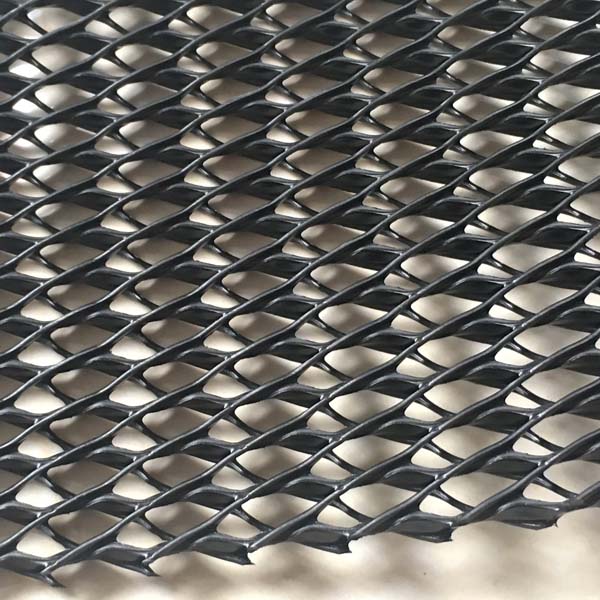
Geogrids are generally manufactured from high-performance polymeric materials that are formed into an open grid. The main polymers used are high-density polyethylene (HDPE), polypropylene (PP), and polyester (PET). HDPE and PP are commonly used in extruded geogrids, whereas polyester is widely used in flexible geogrids made from high-tenacity yarns. The most suitable material is chosen based on the required tensile strength, stiffness, long-term loading behaviour, chemical exposure, and direction of reinforcement.
- High-Density Polyethylene (HDPE)
HDPE is a popular material for geogrids used in soil reinforcement, retaining walls and on steep slopes, as well as for other applications requiring durable tensile elements. It can be processed into a continuous sheet that is punched with a regular pattern and stretched to form an integrated grid structure. This drawing process aligns the polymer molecules, developing the mechanical properties necessary for reinforcement. HDPE also offers good resistance to many chemicals commonly found in soil, making it ideal for use in challenging geotechnical environments.
One important consideration is long-term deformation under sustained load. A geogrid used in a retaining wall or reinforced embankment, for example, must retain sufficient strength throughout its design life rather than merely achieving a high short-term tensile strength in a laboratory test. Consequently, engineers assess creep behaviour, installation damage, chemical compatibility and environmental durability when specifying HDPE geogrids. The appropriate grade and grid geometry must be selected according to the design requirements and verified long-term performance data from the manufacturer.
- Polypropylene (PP)
Another major material used to manufacture geogrids is polypropylene, particularly for products designed for road-base stabilisation and reinforcement beneath pavements. It can be extruded and stretched into a rigid grid with openings that enable aggregate particles to engage with the ribs. When placed in the correct layer, this interaction can restrict lateral movement, improve load distribution and help maintain the stability of the reinforced layer.
PP is attractive due to its relatively low density, practical processing characteristics and resistance to many acids and alkalis. However, its performance can be affected by ultraviolet exposure, temperature, sustained stress and installation conditions. A geogrid left exposed at a construction site for longer than the permitted exposure period may deteriorate depending on its formulation and stabilisation package. For this reason, the material specification should include the required installation and exposure limits, as well as the relevant tensile and durability properties for the intended application.
- Polyester (PET)
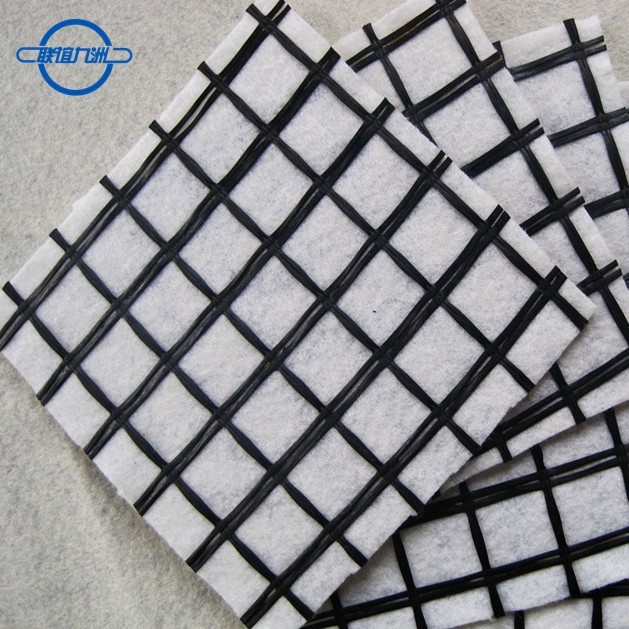
Polyester geogrids are typically made from high-tenacity PET yarns woven or knitted into a grid configuration. The yarns provide tensile strength, and the junction design and protective coating help the product to maintain its structure during handling, installation and use. Polyester geogrids are often selected for applications where high tensile strength and controlled long-term deformation are important, such as reinforced soil structures, retaining walls, and embankments, due to their superior performance compared with many polyolefin-based products.
However, PET is sensitive to its chemical environment, particularly under certain combinations of high alkalinity, temperature, and moisture. Therefore, its suitability should be assessed against the actual backfill and exposure conditions, rather than being assumed from tensile strength alone. Many polyester geogrids use a protective coating, such as a polymeric or bituminous formulation, to protect the yarns from abrasion and construction damage. The type and integrity of the coating matter because damaged or incompatible coatings can affect the durability of the reinforcement system.
What Materials Are Geotextiles Made Of?
Geotextiles are permeable textile products made from polymer fibres, filaments or yarns. The most common materials are polypropylene and polyester, while polyethylene, polyamide (nylon) and natural fibres are used in selected applications. Unlike geogrids, which are primarily designed to reinforce their open structure, geotextiles are engineered to manage the interaction between soil and water, and to reinforce soil in some designs. Their performance depends on the polymer composition and how the fibres are formed into a fabric.
The peer-reviewed article ‘Geotextile composition, application and ecotoxicology: a review’, published in the Journal of Hazardous Materials, notes that synthetic geotextiles commonly consist of polymers from the polyolefin and polyester families, along with additives that improve stability and performance. This distinction is important for procurement purposes, as specifying only ‘polypropylene geotextile’ or ‘polyester geotextile’ does not guarantee that a product will meet the hydraulic, mechanical, or durability requirements of a project.
- Polypropylene Geotextiles
Polypropylene is widely used in both woven and non-woven geotextiles due to its combination of low density, cost-effective manufacturing, and resistance to the chemicals commonly found in soil. It is commonly used in road construction, as a separation layer, for drainage applications, in erosion-control systems and in general civil engineering works. Depending on the product, polypropylene (PP) can be formed into continuous filaments, staple fibres, or slit-film tapes, each of which produces a different fabric structure and set of performance characteristics.
Polypropylene is particularly useful in applications where a geotextile needs to separate dissimilar materials while allowing water to pass through. For instance, a separator installed between a subgrade and a granular road base can help prevent fine soil particles from migrating into the aggregate layer. However, the selected product must still provide adequate tensile strength, puncture resistance, and filtration compatibility for the site conditions. UV exposure during storage or installation should also be controlled according to the product specifications since prolonged sunlight can reduce the performance of insufficiently stabilised polypropylene.
- Polyester Geotextiles
Polyester geotextiles are typically produced from PET fibres or filaments, and are employed in applications where their mechanical properties align with the design requirements. They are available in woven and non-woven forms, including products intended for reinforcement, filtration, separation and protection. Woven polyester fabrics offer high tensile strength at relatively low elongation, making them ideal for applications requiring controlled deformation. Nonwoven PET products can provide a porous structure that is well-suited to filtration, drainage and protection functions.
When selecting materials, attention must be paid to the chemical and environmental conditions surrounding the installed fabric. Polyester can be vulnerable to hydrolysis in the presence of certain combinations of moisture, temperature, and pH, so its long-term suitability should be verified in aggressive or highly alkaline environments. Designers should also compare the product’s tensile properties, elongation, apparent opening size, and water permeability with the project’s requirements. A strong fabric does not automatically make an effective filter: it must retain relevant soil particles without becoming excessively clogged or restricting the necessary water flow.
- Other Materials: Polyethylene, Polyamide, and Natural Fibers
Polyethylene is used in certain geotextile and geosynthetic products due to its chemical resistance and processing characteristics. Polyamide, commonly known as nylon, is less prevalent than polypropylene (PP) and polyethylene terephthalate (PET) in general geotextile production, but it may be used where specific mechanical or material properties are required. The performance of these alternatives should be assessed on their own merits rather than being treated as interchangeable with the more common polymers.
Natural fibres such as coir, jute and sisal are also used in certain erosion control and temporary stabilisation products. They can be useful where the establishment of vegetation and the provision of short-term surface protection are priorities, particularly on slopes exposed to rainfall and surface runoff. However, as they are biodegradable and their strength changes as they weather, natural fibres are not a direct substitute for durable synthetic geotextiles in applications requiring long-term structural performance. Their suitability therefore depends on the expected service period, moisture conditions, biological activity and the rate at which vegetation or another permanent protection system becomes established.

How Are Geogrids and Geotextiles Manufactured?
The manufacturing process transforms a base polymer into a structure with specific mechanical or hydraulic properties. For geogrids, the process is selected to create strong ribs and stable junctions; for geotextiles, it is selected to create a fabric with the required tensile properties, pore structure, and permeability. The production route therefore influences performance as much as the name of the raw material.
Common geogrid manufacturing methods include:
- Extrusion and stretching: A polymer sheet is extruded, punched with a regular pattern, and stretched in one or more directions. This process is commonly used for integrated HDPE and PP grids, with the orientation and aperture geometry influencing tensile behavior.
- Weaving or knitting high-tenacity yarns: PET or other suitable polymer yarns are formed into a grid structure. Protective coatings may be added to improve resistance to installation damage and help maintain dimensional stability.
- Welding or bonding grid elements: Some products are manufactured by joining separately formed polymer ribs or strips. Junction strength and consistency are critical because the connections must transfer load between the grid elements.
Common geotextile manufacturing methods include:
- Woven production: Yarns or tapes are interlaced in a regular pattern to form a fabric. Woven products are often selected where tensile strength and controlled elongation are important.
- Needle-punched nonwoven production: Fibers are mechanically entangled to form a porous fabric. These materials are frequently used for filtration, drainage, separation, and protection.
- Thermally bonded nonwoven production: Synthetic fibers or filaments are bonded using heat. The resulting structure depends on fiber type, bonding conditions, thickness, and the intended hydraulic and mechanical properties.
These methods produce products with different strengths, pore sizes, elongation characteristics, and resistance to construction damage. A buyer should therefore request the relevant product datasheet and test results, rather than relying on a description such as “woven geotextile” or “extruded geogrid” alone.
Key Differences in Composition, Structure, and Function
Although geogrids and geotextiles often use the same polymer families, they are not interchangeable. A geogrid’s open apertures are designed to engage with soil or aggregate and transfer tensile forces through its ribs and junctions. A geotextile’s fabric structure is designed to control the movement of soil particles and water, and it can also provide reinforcement where its tensile properties and installation arrangement are appropriate.
| Feature | Geogrid | Geotextile |
| Typical base materials | HDPE, PP, PET | Mainly PP and PET; also PE, polyamide, and selected natural fibers |
| Physical structure | Open grid of interconnected ribs | Woven, knitted, or nonwoven permeable fabric |
| Common manufacturing methods | Extrusion and stretching; yarn weaving or knitting; bonding or welding | Weaving; needle punching; thermal bonding |
| Primary engineering role | Soil or aggregate reinforcement and stabilization | Separation, filtration, drainage, protection, and sometimes reinforcement |
| Interaction with soil | Apertures allow aggregate interlock and transfer of tensile loads | Fabric pore structure retains soil particles while allowing water to pass, when properly selected |
| Key performance considerations | Tensile strength, junction strength, stiffness, creep, installation damage | Tensile and puncture strength, apparent opening size, permeability, clogging resistance |
| Typical applications | Road-base stabilization, reinforced slopes, retaining walls, embankments | Road separation, drainage layers, filtration, erosion control, membrane protection |
| Main specification risk | Choosing a grid that does not provide the required long-term reinforcement | Choosing a fabric whose pore size or permeability is incompatible with the soil and flow conditions |
The table highlights why material composition must be considered alongside structure and function. For instance, a PET geogrid and a PET geotextile may share a polymer base but have very different tensile behavior because one is designed as a load-bearing grid and the other as a fabric. Similarly, a PP geotextile with suitable pore characteristics may work well as a separator but cannot automatically replace a geogrid specified to stabilize an aggregate layer. Product selection should follow the engineering function, not simply the polymer name or purchase price.
How Do Additives and Protective Coatings Affect Performance?
The base polymer is just one component of a geosynthetic’s composition. Manufacturers may incorporate additives such as antioxidants, UV stabilisers, pigments and processing aids to help the product withstand manufacturing conditions, storage, installation and long-term exposure. The type and quantity of these additives vary depending on the product, and their presence does not necessarily provide unlimited resistance to sunlight, heat, or chemical attack.
Protective coatings are particularly relevant to certain geogrids made from polyester yarns. PVC, latex, bituminous materials, and other compatible coatings can be used to protect the yarns, improve durability during handling, and help maintain the grid’s integrity during installation. Coatings can also affect the product’s interaction with the surrounding soil and its abrasion resistance. However, a coating does not eliminate the need to evaluate the long-term behaviour of the underlying polymer or the tensile properties of the product as tested.
Environmental durability should be assessed under the actual project conditions. Important factors include ultraviolet exposure before burial, soil pH, groundwater chemistry, temperature, sustained tensile load, and the possibility of mechanical damage during placement and compaction. For projects with long design lives, engineers should review relevant durability data and reduction factors rather than comparing products based solely on short-term tensile strength.
How to Choose the Right Geogrid or Geotextile?
The correct material depends on what the geosynthetic must accomplish in the completed structure. Selecting a product based only on its polymer type may result in poor reinforcement, inadequate filtration, or premature deterioration. Before purchasing, the project team should establish the design function and check the product’s tested properties against the site conditions.
Use this practical checklist:
- Define the engineering function. Determine whether the product is required for reinforcement, separation, filtration, drainage, protection, or a combination of functions. Where reinforcement is the primary requirement, assess whether a geogrid is appropriate; where soil retention and water flow are central, evaluate a geotextile.
- Assess soil and water conditions. Consider soil particle-size distribution, permeability, groundwater chemistry, pH, and the possibility of clogging. For filtration applications, the fabric’s apparent opening size and water-flow capacity must be compatible with the surrounding soil.
- Check long-term mechanical properties. Review tensile strength, elongation, junction strength where applicable, creep resistance, and installation-damage performance. Design values should reflect the expected loading and service life rather than relying solely on ultimate laboratory strength.
- Verify environmental compatibility. Evaluate exposure to sunlight before burial, temperature, chemical conditions, and moisture. Ask for product-specific durability information where the environment may affect polymer performance.
- Confirm compliance and documentation. Request technical datasheets, test reports, installation instructions, and compliance with the applicable project specification or recognized standards. Check that the reported test methods and units are appropriate for the design requirements.
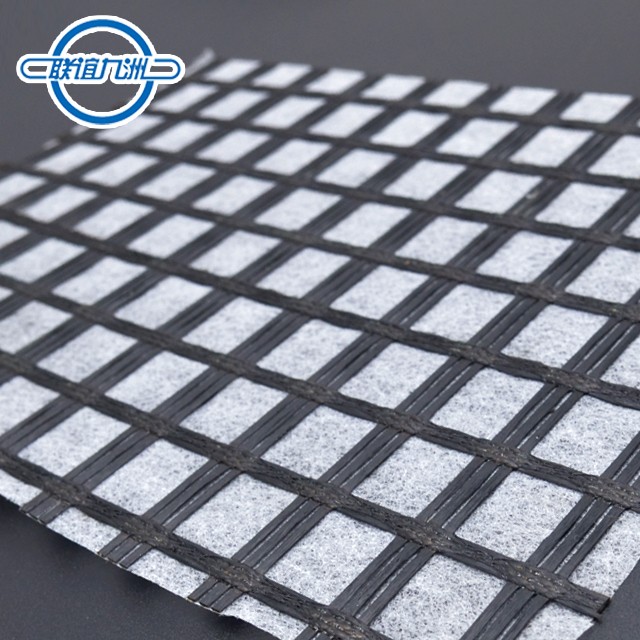
For a road project, for example, a geogrid may be specified to stabilize an aggregate base, while a geotextile may be used to separate the base from weak subgrade soil. Some designs use both products, with each performing a distinct role. The final specification should be prepared or reviewed by a qualified geotechnical or civil engineer, particularly where the geosynthetic is part of a retaining wall, reinforced slope, embankment, or other safety-critical structure.
Frequently Asked Questions
- What is the most common material used in geogrids?
Geogrids are commonly manufactured from polypropylene, high-density polyethylene, or polyester. The most appropriate material depends on the required tensile properties, long-term loading behavior, manufacturing design, and site conditions.
- Are geotextiles made of plastic?
Most synthetic geotextiles are made from polymer-based materials, particularly polypropylene and polyester, which are forms of plastic. Natural-fiber geotextiles made from materials such as coir or jute are also available for selected temporary or erosion-control applications.
- What is the difference between a geogrid and a geotextile?
A geogrid has an open grid structure designed primarily to reinforce soil or aggregate through mechanical interaction and tensile load transfer. A geotextile is a permeable fabric commonly used for separation, filtration, drainage, and protection, although some products also provide reinforcement.
- Is polypropylene or polyester better for geotextiles?
Neither polymer is universally better; polypropylene is widely used for economical, chemically resistant geotextiles, while polyester may be selected for specific mechanical requirements. The decision should account for soil chemistry, temperature, long-term durability, tensile performance, and the product’s intended function.
- Can geogrids and geotextiles be used together?
Yes, they can be combined when a design requires both reinforcement and separation or filtration. For example, a geogrid may stabilize a granular road base while a geotextile helps prevent fine subgrade soil from migrating into the aggregate.
- How long do geogrids and geotextiles last underground?
Their service life depends on polymer type, additives, coatings, soil chemistry, temperature, sustained loading, installation damage, and design requirements. For long-term infrastructure, use product-specific durability data and the applicable engineering design factors rather than assuming a fixed lifespan for every geosynthetic.
Conclusion
Although geogrids and geotextiles are primarily composed of polypropylene, polyester, and polyethylene, their performance is determined by more than just the selection of raw materials. Geogrids use an open, load-bearing structure to reinforce soil and aggregate, whereas geotextiles use woven, knitted, or non-woven fabrics for soil separation, filtration, drainage, and other related purposes. To achieve reliable results, engineers and buyers should consider the polymer, manufacturing process, structural design, additives, environmental compatibility, and verified performance data as a whole. The right choice is a product that meets the actual engineering requirements of a project over its intended service life.
