


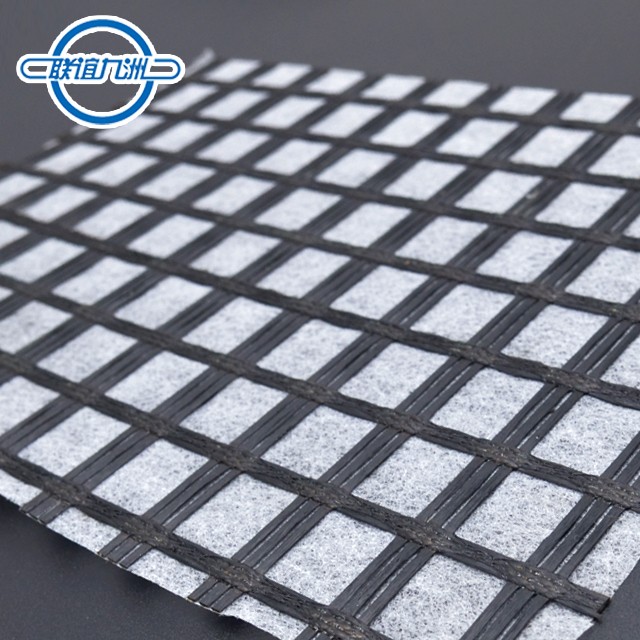
Geogrids and geotextiles serve different, yet sometimes complementary, functions in civil engineering. Geogrids are primarily used to reinforce soil and stabilise aggregate layers, while geotextiles are commonly selected for soil separation, filtration, drainage, and protection. The most suitable option depends on ground conditions, aggregate gradation, water movement, loading, and the required performance of the finished structure. According to the U.S. Federal Highway Administration (FHWA), geotextiles and geogrids can both improve pavement support; however, their respective roles differ. Geotextiles are particularly useful for separation and filtration, whereas geogrids rely on interaction with the surrounding aggregate to provide reinforcement.
What Is a Geogrid?
A geogrid is a geosynthetic reinforcement product consisting of an open grid structure made up of interconnected ribs and apertures. Common polymers include high-density polyethylene (HDPE), polypropylene (PP), and polyester (PET), though the specific resin, manufacturing method, and coating can vary between products. Unlike continuous fabrics, geogrids have openings that allow aggregate or suitable soil particles to engage with the grid. This interaction helps to restrain lateral movement, distribute loads, and improve the mechanical performance of a reinforced soil or aggregate layer.
Geogrids are frequently used beneath roads, car parks, railway formations, work platforms, retaining walls, reinforced slopes and embankments. In unpaved roads and pavement foundations, a properly selected geogrid can limit aggregate displacement and rutting by providing tensile resistance and promoting particle interlock. In retaining walls and reinforced soil slopes, geogrids are incorporated into the designed soil mass to resist tensile forces and contribute to overall stability. As these applications require different products and design approaches, a geogrid intended for road-base stabilisation should not be automatically considered suitable for retaining walls.
Main types of geogrid
- Uniaxial geogrid: Designed primarily to provide high tensile resistance in one principal direction. It is commonly used in retaining walls, reinforced soil slopes, and applications where reinforcement forces act predominantly in one direction.
- Biaxial geogrid: Designed to reinforce two principal directions, making it common in road-base stabilization and other applications involving loads distributed across a broader area.
- Triaxial or multidirectional geogrid: Uses a geometry intended to improve aggregate interaction across multiple directions. Its suitability depends on product performance data and the project’s design criteria.
The choice should not be based on grid shape or nominal tensile strength alone. Aperture size, rib stiffness, junction strength, tensile properties at relevant strains, long-term durability, installation damage resistance, and compatibility with the selected aggregate all influence performance. For structural reinforcement, engineers must also account for design life, creep, installation effects, and the strength reduction factors required by the applicable design method.

What Is a Geotextile?
A geotextile is a permeable, textile-like geosynthetic material that is used in contact with soil, rock, or other geotechnical materials. It is typically made from synthetic polymers, such as polypropylene or polyester, and is supplied in rolls for installation beneath or between layers of material. Depending on its construction and specified properties, a geotextile can be used for separation of dissimilar soils, retention of soil particles while allowing water to pass, assistance with drainage, protection of a geomembrane, or reinforcement.
The two main types are woven and non-woven geotextiles. Woven geotextiles are produced by interlacing yarns or tapes, and are often chosen for their tensile strength, dimensional stability, and separation properties. Nonwoven geotextiles are made by bonding fibres through processes such as needle punching or thermal bonding. Their pore structure and thickness can be engineered for filtration, drainage, cushioning, and protection purposes, making them frequently used for these applications. Neither type is automatically superior; the most suitable type depends on factors such as soil gradation, hydraulic conditions, installation stresses, and the required function.
Geotextiles are used in road construction, drainage trenches, erosion control systems, landfill sites, retaining wall drainage, railway projects, and landscaping. When placed beneath a road base, a suitable geotextile can prevent fine subgrade particles from migrating into the aggregate and reduce mixing between different layers. In drainage systems, they can retain surrounding soil while allowing water to enter a drain. To protect geomembranes, sufficiently thick, resilient nonwoven products can cushion the membrane against puncture, provided they meet the project’s protection requirements.
A critical distinction is that permeability alone does not make a geotextile a suitable filter. The product must allow the required water flow while retaining the relevant soil particles and resisting clogging over its intended service life. Its apparent opening size, permittivity, strength, and survivability should be evaluated against site-specific soil and drainage conditions, following the relevant project specification and engineering guidance.

Geogrid vs Geotextile: Key Differences
The most useful distinction is the primary engineering function. A geogrid is generally selected when reinforcement and aggregate interaction are central to the design; a geotextile is generally selected when separation, filtration, drainage, or protection is required. Some geotextiles can also provide reinforcement, and some geogrid systems contribute to stabilization, but these functions are not interchangeable by default. A project specification should identify the performance requirement rather than rely on a generic product label.
| Comparison factor | Geogrid | Geotextile |
| Physical structure | Open grid with interconnected ribs and apertures | Permeable woven or nonwoven textile |
| Primary function | Soil reinforcement and aggregate stabilization | Separation, filtration, drainage support, and protection |
| Interaction with aggregate | Apertures allow aggregate particles to interlock with the grid | Surface friction and fabric properties influence interaction |
| Soil separation | May help limit aggregate penetration, but is not usually a complete filter separator. | Commonly used to prevent mixing of adjacent soil and aggregate layers |
| Filtration | Not generally designed as a conventional soil filter | Can be designed to retain soil while allowing water to pass |
| Drainage | Not usually the primary drainage element | Certain products support filtration and drainage functions |
| Reinforcement | Main function for many geogrid products | Possible in selected applications, depending on strength and design |
| Typical applications | Road-base stabilization, reinforced slopes, retaining walls, working platforms | Road separation, drainage trenches, erosion-control filters, membrane protection |
| Key selection criteria | Tensile properties, stiffness, aperture geometry, junction strength, aggregate compatibility | Apparent opening size, permittivity, tensile strength, puncture resistance, clogging risk |
| Main design concern | Whether the reinforcement can mobilize the required interaction and tensile resistance | Whether filtration, flow, separation, and durability requirements are met |
The comparison reflects typical functions rather than absolute rules. Product-specific properties matter: a high-strength woven geotextile may contribute to reinforcement, while a geogrid may be part of a system that also provides separation. However, where the design requires reliable soil filtration, a geogrid should not be assumed to replace a suitable geotextile. FHWA guidance specifically notes that geogrids do not prevent fine subgrade material from pumping into the base in the same way as a properly selected geotextile separator.
When Should You Choose a Geogrid?
A geogrid should be considered when the engineering problem primarily concerns reinforcement, aggregate movement, or soil mass stability. For example, in a road built over weak ground, repeated vehicle loading can push aggregate particles laterally and produce rutting. An appropriately designed geogrid can restrain this movement through aggregate interlock and tensile resistance, thereby improving the behaviour of the composite foundation layer. However, the outcome depends on various factors, including subgrade strength, aggregate properties, grid characteristics, layer thickness, construction method and traffic loading. Therefore, installing a geogrid alone does not guarantee a particular reduction in pavement thickness or maintenance costs.
Geogrids are also commonly used in mechanically stabilised earth structures. In reinforced retaining walls and slopes, layers of geogrid are placed within compacted fill to resist tensile forces and stabilise the reinforced soil mass. These engineered systems require appropriate reinforcement length, spacing and connection details, as well as quality backfill, drainage and checks for internal and external stability. Road-base geogrids are not necessarily designed for the sustained loads or long-term conditions of retaining walls, so the intended application must be clearly identified before a product is specified.
A geogrid may be a strong candidate when:
- The project requires reinforcement of an aggregate base or working platform.
- The design depends on interaction between grid apertures and granular material.
- A retaining wall or reinforced slope needs tensile reinforcement within compacted fill.
- The engineering design specifies reinforcement stiffness, tensile capacity, and durability under defined loading conditions.
Before choosing a product, review the geogrid’s tensile properties at relevant strains rather than focusing only on ultimate tensile strength. Aperture dimensions should be compatible with the aggregate, and the product must tolerate installation stresses and long-term exposure. For weak subgrades, the design should also consider whether a separate geotextile is needed to prevent soil migration or provide filtration.
When Should You Choose a Geotextile?
A geotextile is typically used at the beginning of a project when the aim is to keep two materials separate, filter water, support drainage, or protect a sensitive layer. For example, beneath a granular road base, fine soil can migrate into the aggregate under construction traffic or repeated loading, which can contaminate the base and reduce its effective thickness. A properly specified geotextile separator can prevent this from happening while still allowing water to move through the fabric where required by the design. This is particularly important for fine-grained, wet, or easily disturbed subgrades, although the correct solution depends on the soil conditions and the entire pavement structure.
For drainage applications, the geotextile must retain the surrounding soil without becoming clogged, while also providing sufficient flow capacity for the expected hydraulic conditions. Fabrics that pass water readily but allow excessive soil loss or retain soil but restrict flow or clog over time are both unsuitable. Engineers therefore consider soil particle size distribution, apparent opening size, permittivity and long-term filtration behaviour. Drainage systems also require appropriate aggregate, pipe layout, outlets and maintenance provisions; a geotextile alone cannot compensate for an inadequately designed drainage path.
Geotextiles are also used to protect geomembranes in containment systems, separate layers in railway and road construction, and provide filters beneath riprap in erosion-control applications. The required weight, thickness, tensile strength, puncture resistance, and durability can vary considerably depending on the application. Therefore, a lightweight landscaping fabric should not be substituted for an engineered geotextile specified for a roadway or landfill simply because they are both described as geotextiles.
Choose a geotextile when the main requirement is to:
- Prevent unwanted mixing of adjacent soil and aggregate layers.
- Retain soil while allowing water to pass through a drainage or filtration system.
- Protect a geomembrane or other vulnerable layer from installation damage.
- Meet specified separation, filtration, or drainage requirements in a road, railway, or erosion-control project.
The appropriate product may be woven or nonwoven, depending on the application. Woven products are often considered where tensile properties and separation are important, while nonwoven products are frequently evaluated for filtration, drainage, and cushioning. These are general tendencies, not strict rules; the specification and verified product data should determine the final selection.
Can You Use Geogrid and Geotextile Together?
Yes, in many road, embankment, and working platform projects, using geogrids and geotextiles together can address two different engineering needs: reinforcement and separation or filtration. For instance, a geotextile can be placed directly over a fine-grained subgrade to prevent soil migration, while a geogrid can be installed within or beneath the aggregate layer to enhance interaction and stabilisation. This arrangement must be designed for the specific ground conditions, and using both products is not necessarily more effective or automatically necessary for every project.
This combination is particularly worth considering where a weak, wet subgrade must support construction equipment or repeated traffic. The geotextile can help preserve the boundary between soil and aggregate, while the geogrid can help restrain aggregate movement. While FHWA guidance recognises that geotextiles and geogrids can be used together in pavement systems, it also emphasises that their benefits depend on subgrade conditions, base thickness, and the intended function of each layer.
A practical selection framework is shown below
| Project requirement | Material to evaluate first | Important design consideration |
| Separate fine soil from granular base | Geotextile | Soil retention, opening size, survivability, and compatibility with the subgrade |
| Filter water entering a drainage system | Geotextile | Permittivity, apparent opening size, clogging potential, and flow requirements |
| Stabilize aggregate under road or working-platform loads | Geogrid | Aggregate interlock, grid stiffness, tensile properties, and subgrade strength |
| Reinforce a retaining wall or soil slope | Engineered geogrid or other specified reinforcement | Long-term design strength, pullout resistance, connection details, and global stability |
| Protect a geomembrane from puncture | Protective geotextile | Thickness, compressibility, puncture resistance, and contact conditions |
| Improve a weak subgrade while also preventing soil migration | Geogrid plus geotextile, where justified | Layer arrangement, drainage, aggregate thickness, installation sequence, and design verification |
This framework is intended for preliminary product selection, not final design. The responsible engineer should determine whether one material or a combined system is needed, specify the installation arrangement, and verify the required performance using the applicable standards and project-specific data.
How to Select the Right Product for Your Project?
Choosing between geogrid and geotextile should begin with the problem the material is expected to solve. A project that primarily needs filtration requires different properties from one that needs tensile reinforcement. Specifying a product solely by roll weight, nominal tensile strength, or price can lead to a mismatch between the material and its intended function.
Use these steps to guide procurement and engineering review:
- Define the primary function. Decide whether the requirement is reinforcement, separation, filtration, drainage, protection, or a combination of functions.
- Evaluate site conditions. Review subgrade strength, soil gradation, groundwater, expected water flow, aggregate size, traffic loads, and construction equipment.
- Check product performance data. For geogrids, examine tensile strength at relevant strains, stiffness, aperture geometry, junction strength, and durability. For geotextiles, examine apparent opening size, permittivity, tensile and puncture resistance, and installation survivability.
- Confirm durability requirements. Account for installation damage, ultraviolet exposure before burial, chemical compatibility, and long-term polymer performance under the expected site conditions.
- Follow the project specification. Verify the relevant ASTM, AASHTO, or other applicable requirements, along with any local engineering standards and design calculations.
- Compare total installed cost. Consider material price, transport, installation labor, aggregate requirements, construction delays, and maintenance—not just the cost per square meter.
Product testing and installation quality are just as important as the material category. FHWA reinforced-soil guidance, for example, discusses tensile testing, soil interaction, and durability-related requirements when selecting geosynthetic reinforcement. These considerations are particularly important for retaining walls and other applications where long-term structural performance is essential.
Frequently Asked Questions About Geogrid and Geotextile
- What is the main difference between geogrid and geotextile?
A geogrid is primarily used for soil reinforcement and aggregate stabilization through interaction between the grid and surrounding material. A geotextile is commonly used for separation, filtration, drainage, and protection.
- Is geogrid better than geotextile for road construction?
Geogrid can be useful when aggregate stabilization and reinforcement are required, while geotextile is often preferred when soil separation or filtration is the main concern. Some road projects benefit from using both, depending on subgrade conditions and the pavement design.
- Can geotextile replace geogrid?
A geotextile may provide some reinforcement in appropriately designed applications, but it should not automatically be treated as a substitute for a specified geogrid. The replacement must satisfy the project’s reinforcement requirements and be approved by the responsible engineer.
- Do geogrids allow water to pass through?
Geogrids have open apertures, so water can generally pass through the grid openings, but they are not normally selected as conventional soil filters. Where soil retention and controlled filtration are required, a suitable geotextile or another designed filter system may be necessary.
- Should I use woven or nonwoven geotextile?
Woven geotextiles are often considered for applications requiring tensile strength and separation, while nonwoven geotextiles are commonly used for filtration, drainage, and protection. The correct type depends on the soil, hydraulic conditions, mechanical requirements, and product specification.
- Can geogrid and geotextile be installed together?
Yes, they can be combined when the project requires both reinforcement and separation or filtration. Their positions and specifications should be determined by the engineering design rather than by a universal installation rule.
Conclusion
The choice between geogrid and geotextile is not about which material is stronger or better in all situations; it is about which material can fulfil the requirements of a given project. Geogrid should be chosen when reinforcement and aggregate stabilisation are the main objectives, while geotextile should be chosen when separation, filtration, drainage, or protection is the priority. Where weak ground conditions create multiple problems, a properly designed combination of materials may be more suitable than using either material alone.
The most reliable selection process for contractors, engineers, and geosynthetic buyers combines site investigation, verified product properties, applicable standards, and project-specific design. Matching the material to the soil, water conditions, loads, and installation method can improve construction performance and reduce the risk of premature failure.
