


Lianyi’s fiberglass geogrid requires proper installation to maximize its effectiveness in asphalt reinforcement. To achieve optimal results, it is crucial that the installation is carried out by experienced workers or by strictly adhering to the following rules:
Rules for Installing Lianyi’s Fiberglass Geogrid
1.Storage Information:
- Store at temperatures above – 29°C (- 20°F).
- Storage location should be dry, preferably covered and free of dust, dirt and moisture.
- Do not allow excessive mud, fluid concrete, asphalt, or other deleterious materials to get in contact with the reinforcementmesh materials
- If stored outdoors, the rolls must be covered with proper water proof covering.
2.Surface Preparation
- Ensure the base layer is smooth, clean, and free of loose debris, dirt, or oil.
- Fill any cracks, potholes, or uneven areas in the existing asphalt surface.
- Apply a uniform tack coat (bitumen emulsion or hot asphalt) to promote bonding between the geogrid and the asphalt layer.
3.Leveling Course Application:
- A minimum 0.75 in. (19 mm) thick asphalt concrete leveling course is required on milled surfaces or PortlandConcrete pavements.
Aminimum 0.75 in. (19 mm) thick application is needed to provide sufficient adhesion.
4. Geogrid Placement
- Unroll the geogrid carefully in the direction specified by the design plan, ensuring no damage occurs.
- Maintain proper alignment, ensuring the geogrid lies flat without wrinkles or folds.
- Overlap adjacent geogrid rolls by 5–15 cm (2–6 inches) to ensure continuous coverage. Use the overlap recommended in the project design.
5. Anchoring
- Temporarily secure the geogrid to the surface using staples, nails, or adhesive sprays to prevent shifting during installation.
- Avoid excessive tension or slack while stretching the geogrid. Keep it evenly taut.
6. Tack Coat Application
- Use the correct tack coat amount as specified by the project requirements.
- Ensure full coverage under the geogrid to improve adhesion to the base layer.
7. Overlay Application
- Place the asphalt overlay directly on the geogrid using a paver.
- Ensure the minimum thickness of the overlay is at least 40–50 mm (1.5–2 inches) to prevent geogrid exposure.
8. Compaction
- Use suitable rollers to compact the asphalt layer and ensure proper bonding.
- Avoid damaging the geogrid during rolling and compaction.
Additional Notes
- Weather Conditions: Avoid installation during heavy rain or extreme temperatures that may affect adhesion or asphalt placement.
- Experienced Workers: Employ trained personnel familiar with geogrid installation for efficient and high-quality results.
- Inspection: Regularly inspect the geogrid placement and alignment during installation.
** IMPORTANT**
- Ensure that the surface is clean and clear of all dust, dirt, and debris
•Ensure that the surface is level so that the Fiberglass geogrid stitched with nonwoven fabric can make solid contact with the base course. - Ensure that ALL surface preparation instructions have been completed as detailed.
•DO NOTplace Lianyi FiberglassGeogrid stitched with nonwoven fabric on surface when wet, or contaminated with oil, soil or excessive dust.
•DO NOT place asphalt during wet or freezing weather that prevents conformance with specified requirements.
•The width of the tack coat application must extend 75mm (3”) beyond the Lianyi Fiberglass geogrid stitched with nonwoven fabric on all sides.
Placement:
There are two primary ways that Lianyi Fiberglass Geogrid stitched with nonwoven fabric (Fiberglass geogrid Geocomposite for short ) can be placed on an asphalt surface:
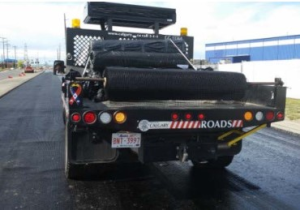
- Mechanical ** Highly Recommended**
- Using a pickup truck that has been modified so the Fiberglass geogrid Geocompositecan be mounted on the back.
•Used for full-width installations but can also be used fordetail repairs that are sufficiently large.
• Helps maintain tension during placement.
By following these guidelines, Lianyi’s fiberglass geogrid will deliver its full performance benefits, including enhanced pavement strength, reduced cracking, and extended service life.
