


Lianyi asphalt reinforcement fiberglass geogrid series includes three specialized types, each designed to enhance pavement performance and extend service life:
-
Fiberglass Geogrid
- High-tensile strength fiberglass mesh
- Coated with bitumen to improve bonding with asphalt
- Prevents reflective cracking and enhances load distribution
-
Fiberglass Geogrid Composite with Nonwoven Fabric (by Glue Bonding)
- Fiberglass geogrid combined with nonwoven fabric using adhesive glue
- Improves waterproofing and stress absorption
- Enhances asphalt reinforcement and prevents moisture penetration
-
Fiberglass Geogrid Knitted with Nonwoven Fabric (Impregnated with Bitumen Coating)
- Nonwoven fabric is knitted with fiberglass geogrid and fully impregnated with bitumen
- Ensures better adhesion and flexibility
- Enhances fatigue resistance and prevents premature cracking.
Road surface cracks can appear due to several reasons, often related to environmental factors, traffic loads, and the quality of construction materials and techniques. Below are the common causes:
1. Traffic Loads
- Heavy Vehicles: Repeated loads from heavy trucks or machinery can cause fatigue in the pavement, leading to cracking.
- Overloading: Roads not designed for excessive weights may crack under stress.
2. Temperature Variations
- Thermal Expansion and Contraction: Temperature fluctuations cause the pavement to expand and contract. Over time, this can lead to cracks.
- Freeze-Thaw Cycles: In cold climates, water seeps into cracks, freezes, and expands, worsening the damage.
3. Poor Construction or Design
- Inadequate Base Layer: If the subgrade or base layer is weak, it cannot support the surface, causing cracks.
- Improper Compaction: Poor compaction during construction can create voids, leading to instability and cracking.
4. Aging and Weathering
- Oxidation of Asphalt: Exposure to sunlight and air can cause the asphalt binder to become brittle, leading to cracking.
- Rain and Moisture: Water infiltration weakens the pavement structure and accelerates crack formation.
5. Subgrade Issues
- Settlement: Uneven settlement of the subgrade can cause cracks in the surface layer.
- Soil Movement: Expansive soils that shrink or swell with moisture changes can stress the pavement.
6. Improper Maintenance
- Delayed Repairs: Small cracks that are not repaired can widen and spread over time.
- Clogged Drainage: Poor drainage systems can lead to water accumulation and structural weakening.
7. Environmental Factors
- Tree Roots: Roots growing under the pavement can push upward, causing cracks.
- Natural Disasters: Earthquakes, landslides, or floods can damage the road structure.
To minimize cracking, proper design, quality materials, regular maintenance, and effective reinforcement solutions like fiberglass geogrids can significantly improve pavement performance and lifespan.
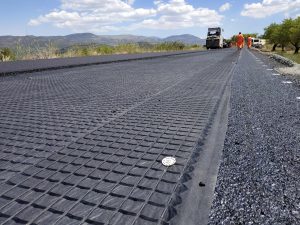
Fiberglass geogrids are designed to deliver exceptional tensile strength at very low strain levels, making them ideal for asphalt reinforcement. Here’s why this property is so important and how it benefits road construction and maintenance:
High Tensile Strength at Low Strain
- Tensile Strength:
- Fiberglass geogrids typically have tensile strengths ranging from 50 kN/m to 200 kN/m or higher, depending on the product type.
- This high strength allows them to resist tensile stresses caused by traffic loads and thermal movements effectively.
- Low Strain:
- Fiberglass geogrids exhibit minimal elongation, usually less than 3%, even under high tensile forces.
- This ensures that they start reinforcing the asphalt layers immediately when stress is applied, preventing deformation from the outset.
Why Low Strain Matters in Asphalt Reinforcement
- Immediate Stress Absorption: Unlike materials with high elongation, fiberglass geogrids engage quickly to distribute loads and prevent cracks from forming.
- Crack Mitigation: Their low strain ensures that cracks in the lower layers are arrested before propagating to the surface.
- Enhanced Structural Integrity: By providing consistent reinforcement without stretching excessively, they maintain the design integrity of the pavement.
Advantages of High Tensile Strength at Low Strain
- Prevents Reflective Cracking: Fiberglass geogrids reduce the chances of cracks from the base or subbase layers reaching the surface.
- Minimizes Rutting and Deformation: Even under heavy traffic, they maintain the shape and strength of the asphalt layer.
- Longer Pavement Life: Roads reinforced with fiberglass geogrids are more durable, reducing maintenance costs over time.
- Cost Efficiency: Their performance minimizes the need for frequent overlays and repairs, making them a cost-effective solution.
Lianyi’s fiberglass geogrids are highly effective in reinforcing asphalt layers and preventing deformation. Here’s how they work and the benefits they provide:
How Fiberglass Geogrids Reinforce Asphalt Layers
High Tensile Strength: Fiberglass geogrids have excellent tensile strength and low elongation, which allow them to absorb and distribute stresses across the asphalt layer, preventing localized stress concentrations.
Reduction of Reflective Cracking:
Reflective cracking often occurs due to underlying movements in the pavement, such as thermal expansion, traffic loads, or subgrade instability.
Fiberglass geogrids create a barrier within the asphalt layer, reducing the propagation of cracks from the lower layers to the surface.
Enhanced Load Distribution:
They distribute the load from traffic more evenly across the pavement, reducing the risk of rutting and other deformations.
This is particularly beneficial in areas with high traffic loads.
Improved Bonding:
When properly installed with tack coat or adhesive layers, fiberglass geogrids enhance the interlayer bonding, providing better stability to the asphalt layers.
Key Benefits of Fiberglass Geogrids
Prevention of Deformation:
By reducing rutting and uneven settlements, fiberglass geogrids maintain the structural integrity of the pavement.
Increased Pavement Lifespan:
Roads reinforced with fiberglass geogrids require less frequent repairs, significantly extending their service life.
Cost-Effective Maintenance:
By reducing the need for repeated repairs and overlays, they lower overall maintenance costs.
Adaptability:
Suitable for use in new constructions, rehabilitations, and overlays in highways, airport runways, parking lots, and more.
Environmentally Friendly:
Longer-lasting roads mean fewer resources are needed for repairs and reconstructions, reducing the environmental impact.
At Feicheng Lianyi Engineering Plastics Co., Ltd., we specialize in high-quality fiberglass geogrids designed to address these challenges. Our products adhere to ISO 9001, CE, and IGS certification standards, ensuring durability and performance for your projects.
