
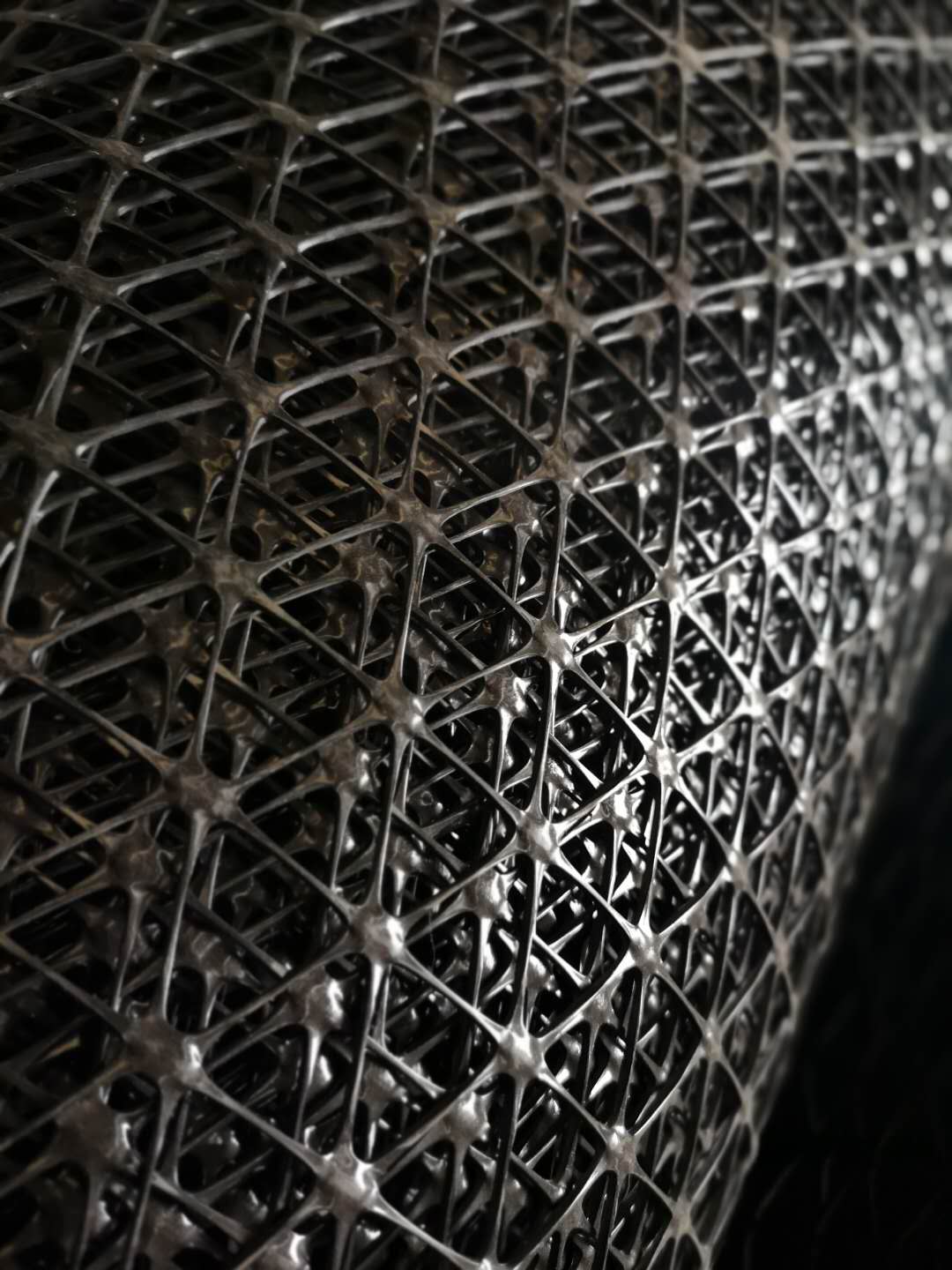


How to Choose Geogrids for Soft Soil Stabilization
Soft soil stabilization requires geogrids that enhance load distribution, reduce settlement, and improve shear strength. Below is a structured guide to selecting the optimal geogrids for such applications, supported by technical insights and industry practices.
1. Assess Soil Characteristics and Project Requirements
- Soil Type: Soft soils (e.g., clay, silt, organic soils) demand geogrids with high tensile strength and low elongation to prevent deformation. Fiberglass geogrids are ideal due to their high tensile strength (>80 kN/m) and low elongation (<4%) .
- Aperture Size: Match aperture dimensions to soil gradation. Coarse soils require larger apertures (e.g., 25.4×25.4 mm) for effective interlocking, while fine soils benefit from smaller apertures combined with nonwoven geotextiles for filtration.
- Load Conditions: For dynamic loads (e.g., highways), use biaxial geogrids (e.g., EnkaGrid MAX) to distribute multidirectional stresses. For static loads (e.g., embankments), uniaxial geogrids (e.g., EnkaGrid PRO) provide focused reinforcement.
2. Material Selection Based on Environmental and Mechanical Needs
- Polyester (PET) Geogrids:

polyester geogrid 60 30 - Advantages: High creep resistance, suitable for long-term loads.
- Applications: Retaining walls, bridge abutments.
- Coating: PVC coating enhances chemical resistance and durability in acidic/alkaline environments.
- Polypropylene (PP) Geogrids:
PP biaxial geogrid - Advantages: Cost-effective, UV-resistant.
- Applications: Temporary structures, erosion control .
- Fiberglass Geogrids:

fibreglass geogrid installation - Advantages: Exceptional tensile strength (up to 200 kN/m), minimal elongation.
- Applications: Pavement reinforcement, soft soil subgrades.
- Composite Geogrids:

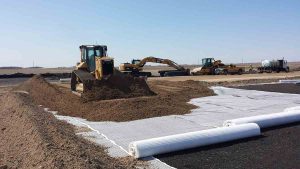
Biaxial Geogrid Composite installation - Examples: EnkaGrid MAX C (combines geogrid with nonwoven geotextile).
- Advantages: Dual functions of reinforcement and filtration, ideal for water-saturated soft soils.
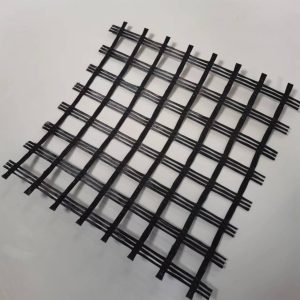
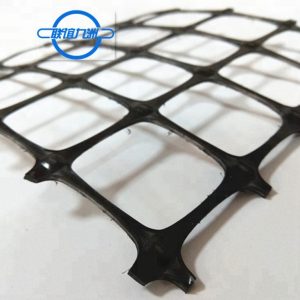
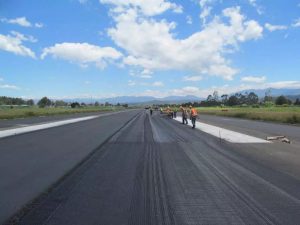
3. Design Considerations and Standards
- Design Methods:
- Use the Giroud-Han method or Leng-Gabr model to calculate required tensile strength and layer placement .
- For roads, integrate a 4-layer model (asphalt, base, subbase, subgrade) to optimize load distribution.
- Key Parameters:
- Tensile Strength: Ensure geogrid strength exceeds calculated horizontal forces from self-weight, wheel loads, and membrane effects.
- Junction Strength: Critical for extruded/welded geogrids (e.g., Lianyi Biaxial geogrid) to prevent rib separation during installation.
- Certifications: Verify compliance with ASTM D6637 (tensile testing) and ISO 10319 (wide-width tensile tests).
4. Environmental and Durability Factors
- Chemical Resistance:
- HDPE or PVC-coated geogrids resist corrosion in acidic/alkaline soils .
- UV Resistance:
- UV-stabilized polypropylene or polyester geogrids are essential for exposed applications (e.g., slope stabilization).
- Temperature Tolerance:
- Fiberglass geogrids withstand extreme temperatures (-100°C to 280°C), suitable for regions with thermal fluctuations.
5. Case Studies and Best Practices
- Embankments on Soft Soil:
- Fiberglass geogrids reduced settlement by 40% in a highway project by distributing stress uniformly .
- Road Base Stabilization:
- Biaxial geogrids (e.g., Lianyi BX) improved subgrade CBR values by 50% in liquefaction-prone areas .
- Slope Reinforcement:
- Composite geogrids with nonwoven layers (e.g., Lianyi BXC30-150) prevented erosion and enhanced vegetation growth in riverbank projects .
6. Supplier and Installation Tips
- Supplier Criteria:
- Prioritize manufacturers with ISO 9001 certification and project references.
- Request samples for on-site soil compatibility testing .
- Installation Guidelines:
- Ensure proper overlap (30–50 cm) and anchorage length to resist pullout forces .
- Use lightweight machinery on soft soils to avoid geogrid damage during placement .
Here’s a detailed breakdown of the reinforcement needs for each layer in a pavement structure (asphalt, base, subbase, and subgrade), along with tailored geogrid solutions:
1. Asphalt Layer (Surface Course)
Primary Function:
Directly withstands traffic loads (tires, temperature fluctuations) and prevents surface defects like cracking and rutting.
Reinforcement Needs:
- Crack Mitigation:
- Reflection Cracking: Geogrids must inhibit cracks from propagating upward from underlying layers.
- Thermal Cracking: High-temperature stability is critical to resist thermal expansion/contraction.
- Rut Resistance: Distribute wheel loads to reduce permanent deformation.
Recommended Geogrids:
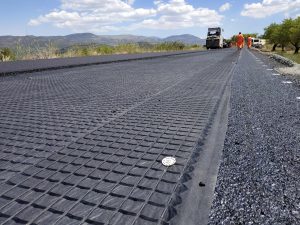
- Fiberglass Geogrids (e.g., Lianyi FG100):

Fiberglass Geogrid 100-100kN/m - High tensile strength (80–150 kN/m) and low elongation (<4%) to limit crack propagation.
- Bitumen-compatible coatings (e.g., polymer-modified asphalt) for strong interlayer bonding.
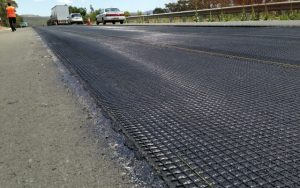
- Composite Geogrids ( lianyi GPM50):
Fiberglass Geogrid Composite - Combine fiberglass with nonwoven geotextiles for crack suppression and waterproofing.
Installation Tips:
- Place geogrid between asphalt layers (e.g., overlay applications).
- Ensure proper tack coat application for adhesion.
2. Base Course
Primary Function:
Distribute loads from the asphalt layer to the subbase, preventing shear failure and lateral spreading.
Reinforcement Needs:
- Load Distribution: Multidirectional reinforcement to spread vertical stresses.
- Lateral Confinement: Prevent aggregate migration under repeated loads.
Recommended Geogrids:
- Biaxial Geogrids (e.g., Lianyi PP BX Geogrids & Polyester biaxial Geogrid):
- Aperture size (25–40 mm) matches aggregate gradation for optimal interlock.
- High junction strength (>90% of rib strength) to resist installation damage.
- Triaxial Geogrids (e.g., Lianyi TriAx):
- Hexagonal apertures enhance multidirectional load distribution, reducing aggregate thickness by 20–30%.
Design Considerations:
- Use AASHTO MEPDG or Mechanistic-Empirical Design to calculate required modulus improvement.
3. Subbase Course
Primary Function:
Provide additional support to the base layer and prevent contamination from the subgrade.
Reinforcement Needs:
- Separation: Prevent mixing of subgrade soil with base aggregates.
- Drainage: Allow water to flow freely to avoid saturation.
Recommended Solutions:
- Composite Geogrid-Geotextiles (e.g., LIANYI Geogrid + Nonwoven Geotextile):
- Geogrid provides structural reinforcement, while geotextile filters fine particles.
- Woven Geotextiles: For projects prioritizing separation over reinforcement.
Applications:
- Weak subgrades (CBR <3%) or frost-prone areas.
4. Subgrade (Natural Soil)
Primary Function:
Serve as the foundation for all upper layers; must resist deformation under loads.
Reinforcement Needs:
- Bearing Capacity Improvement: Increase CBR values by confining soil particles.
- Settlement Control: Reduce long-term consolidation in soft soils (e.g., clay, silt).
Recommended Geogrids:
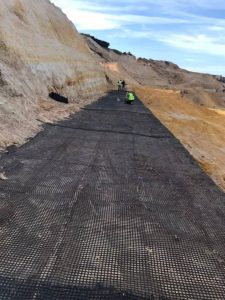
- High-Strength Uniaxial Geogrids (e.g., Lianyi Polyester UX Geogrid):

Polyester Uniaxial geogrid - Tensile strength >200 kN/m for deep soft soil stabilization.
- Large apertures (≥50 mm) to maximize soil-geogrid interlock.
- Geocells (e.g., Lianyi HDPE Geocell):
- 3D cellular confinement for ultra-soft soils (e.g., peat, organic clay).
Design Methods:
- Boussinesq’s Theory or PLAXIS Software to model stress distribution.
- Target post-reinforcement CBR >8% for highway applications.
Key Differences Across Layers
| Layer | Failure Mode | Geogrid Type | Critical Properties |
|---|---|---|---|
| Asphalt | Reflection cracking, rutting | Fiberglass, composites | High tensile strength, bitumen adhesion |
| Base | Aggregate migration | Biaxial/Triaxial | Aperture-aggregate compatibility, junction strength |
| Subbase | Contamination, saturation | Composite geogrid+geotextile | Filtration, separation |
| Subgrade | Settlement, bearing failure | Uniaxial geogrids | High tensile strength, large apertures |
Real-World Examples
- Asphalt Reinforcement:
- I-95 Highway (USA): Fiberglass geogrids extended pavement life by 50% by reducing reflective cracks.
- Subgrade Stabilization:
- Dubai Metro Project: Uniaxial geogrids improved soft sand subgrade CBR from 2% to 12%.
Standards & Testing
- Asphalt: ASTM D7864 (geogrid-asphalt interface shear test).
- Base/Subbase: ASTM D6637 (tensile strength), ISO 10318 (junction efficiency).
- Subgrade: ASTM D6913 (soil gradation analysis).
Conclusion
Tailor geogrid selection to each layer’s unique stress and environmental demands:
- Asphalt: Prioritize crack resistance and adhesion.
- Base: Optimize aggregate interlock and load spreading.
- Subbase: Focus on separation and drainage.
- Subgrade: Maximize soil confinement and bearing capacity.
By aligning geogrid properties with layer-specific requirements, you can significantly enhance pavement performance and longevity.
