

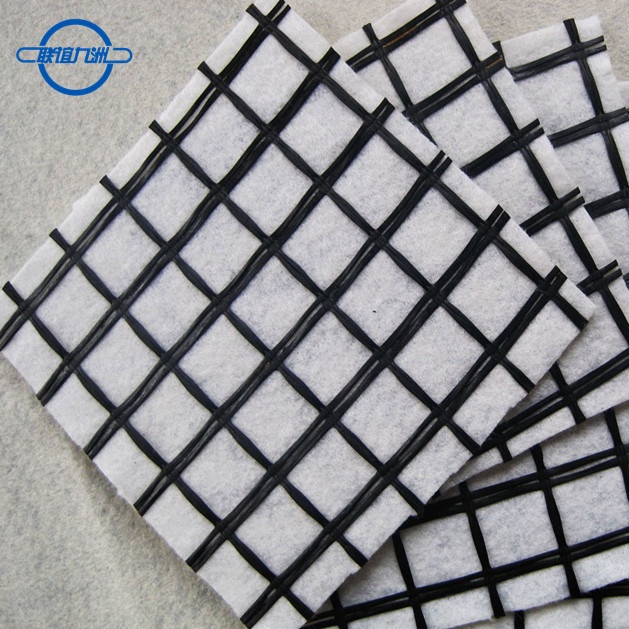

LIANYI Geogrids for Soil Reinforcement: Types, Mechanisms, and Selection Criteria
1. Types of Geogrids by Manufacturing Methods and Materials
Geogrids are categorized based on their manufacturing processes and materials, which influence their structural properties and applications.
Manufacturing Methods:
- Extrusion and Stretching (Oriented Geogrids):

PP biaxial geogrid - Process: A polymer sheet (HDPE or polypropylene) is extruded, perforated, and stretched uniaxially or biaxially to align polymer molecules, enhancing tensile strength.
- Types:
- Uniaxial: High strength in one direction (ideal for retaining walls).
- Biaxial: Balanced strength in both directions (suited for roads, foundations).
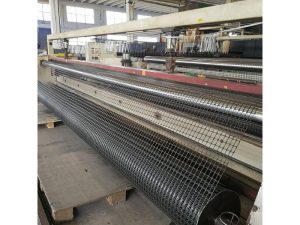
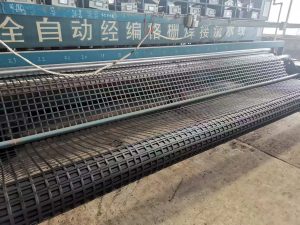
- Knitting/Weaving:

warp-knitting machine - Process: High-tenacity polyester yarns are knitted or woven into a grid, then coated with PVC or latex for durability.
- Characteristics: Flexible, high tensile strength, and resistant to creep. Used in slopes and embankments.
- Welding:
Ultra sonic welding production line 1 - Process: Thermoplastic strips (e.g., polypropylene) are welded at junctions to form a grid. Less common, used for lightweight applications like soil stabilization under light loads.
- Bonding:
- Process: Layers of materials (e.g., fiberglass and polymers) are bonded using adhesives or heat. Often used in composite geogrids for specialized applications.

Materials:
- Polyester (PET): High tensile strength, excellent resistance to creep, but degrades in alkaline environments. Common in knitted geogrids.
- Polypropylene (PP): Lightweight, chemically resistant, but lower UV and temperature resistance.
- High-Density Polyethylene (HDPE): Superior UV and chemical resistance, used in extruded geogrids for harsh environments.
- Fiberglass: Non-corrosive, high strength, used in asphalt reinforcement (e.g., pavement overlays).
- High Tensile Steel Wire: Extremely high strength but requires anti-corrosion coatings. Used in critical infrastructure like bridge abutments etcs.
2. Soil Stabilization Mechanism
Geogrids enhance soil stability through mechanical interaction and load distribution:
- Interlocking: Soil particles strike through geogrid apertures, creating a mechanical bond that restricts lateral movement.
- Confinement: Geogrids confine soil particles, increasing shear strength and reducing deformation under load.
- Load Distribution: Tensile capacity allows geogrids to redistribute vertical and horizontal stresses, reducing differential settlement and enhancing bearing capacity.
- Tension Membrane Effect: In soft soils, geogrids act as a tensioned membrane, bridging weak zones and dispersing loads.
3. Selecting the Right Geogrid
Key factors for selection include:
A. Application Requirements:
- Retaining Walls: Uniaxial geogrids (high longitudinal strength to resist earth pressure).
- Roads/Pavements: Biaxial geogrids (multidirectional load distribution to prevent rutting).
- Slopes: Knitted polyester geogrids (flexibility and high interface friction).
- Embankments Over Soft Soils: High-strength geogrids (e.g., fiberglass) to span weak areas.
B. Soil Characteristics:
- Aperture Size: Must match soil gradation (coarse soils require larger apertures for effective interlocking).
- Friction Angle: Select geogrids with surface texture/coating to optimize soil-geogrid friction.
C. Load Conditions:
- Static vs. Dynamic Loads: High-traffic areas (e.g., highways) need geogrids with high cyclic load resistance.
- Tensile Strength and Modulus: Ensure the geogrid’s strength exceeds design stresses, considering long-term creep (e.g., polyester for low-creep applications).
D. Environmental Factors:
- Chemical Exposure: HDPE for alkaline environments; polypropylene for acidic conditions.
- UV Resistance: HDPE or coated geogrids for exposed applications.
- Temperature: Avoid polypropylene in high-temperature settings.
E. Durability and Lifespan:
- Creep Resistance: Polyester and fiberglass excel in long-term load retention.
- Degradation Risks: Use steel geogrids with epoxy coatings in corrosive environments.
F. Installation Considerations:
- Flexibility: Knitted geogrids adapt to uneven surfaces.
- Junction Strength: Critical for welded/extruded geogrids to prevent rib separation during installation.
4. Examples and Standards
- ASTM D6637/D6638: Standard test methods for geogrid tensile properties.
- ISO 10319: Wide-width tensile testing for geosynthetics.
Conclusion:
Geogrid selection is a balance of engineering requirements, environmental conditions, and material properties. Proper design ensures optimal performance in applications ranging from infrastructure projects to environmental stabilization, enhancing both safety and cost-efficiency.
Feicheng Lianyi Engineering Plastics Co., Ltd. combines advanced manufacturing capabilities with engineering-driven solutions to address soil stabilization challenges. By offering a full range of geogrids (uniaxial, biaxial, knitted, composite) and tailoring products to project requirements, Lianyi positions itself as a reliable partner for infrastructure developers, contractors, and geotechnical engineers.
For tailored geogrid specifications or collaboration opportunities, Lianyi’s team can provide detailed technical data sheets and project references.
