
Introduction: Why Fiberglass Geogrid Matters in Geotechnical Engineering
Today, modern geotechnical and pavement engineering employs fiberglass geogrid (also known as glass-fiber geogrid or simply geogrid) as a significant component of infrastructure support. Unlike conventional polymer geogrids (created from polypropylene or polyester), fiberglass geogrids have a unique combination of superior tensile strength, low stretchiness, long durability, and consistent dimensional stability. These properties make them uniquely suited for applications that require crack resistance, reflective protection against cracking, and load distribution.
Additionally, domestic Chinese suppliers also highlight the effectiveness of their products in enhancing the strength of asphalt roads, increasing road width, and stabilizing soft soil.
In this extensive article, we will discuss: the technical aspects of its enhancement effects, the various benefits of engineering, design considerations, installation practices, standards, limitations, and future trends.

What Is a Fiberglass Geogrid? Definition and Key Properties
-
Definition and Basic Construction
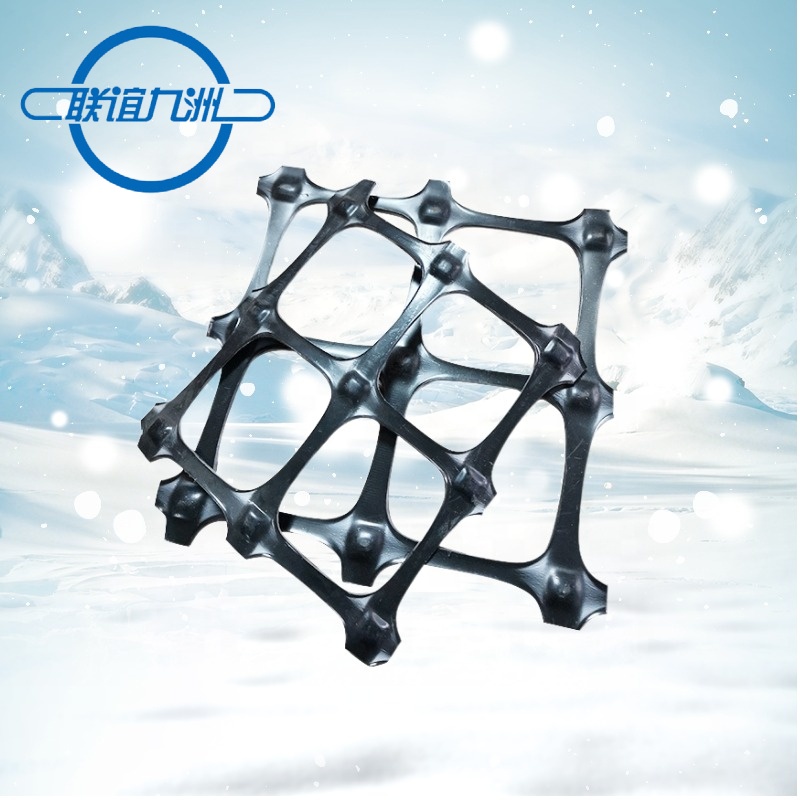
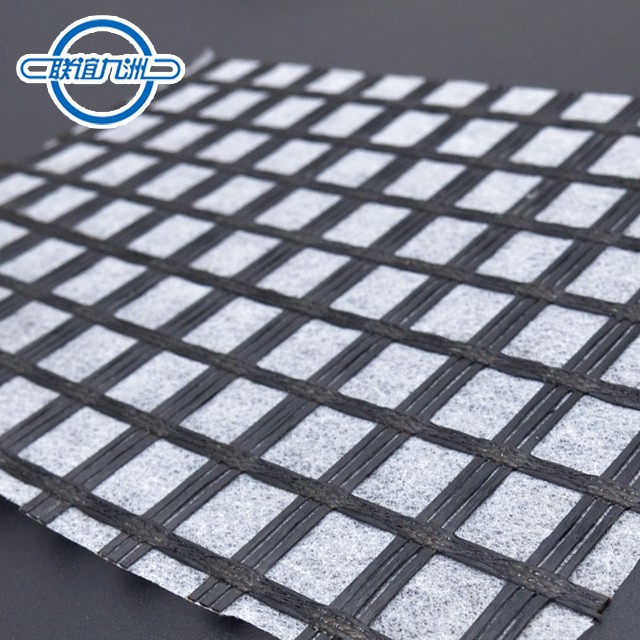
A fiberglass geogrid is a synthetic material that is composed of glass fibers that are resistant to alkali. These fibers are woven into a grid (mesh) structure and typically coated with a polymeric or bituminous coating to shield the fibers and increase their durability.
The Chinese national standard GB/T 21825-2008 describes a fiberglass geogrid as being composed of glass fiber yarns that are not twisted, surface-treated, and used as asphalt reinforcement.
-
Mechanical and Physical Properties
Some of the most significant technical attributes that describe the capabilities of fiberglass geogrids include:
- High stretchiness: Fiber glass has a high stretchiness ratio per mass.
- Low elongation / low creep: Because of the stiffness of the glass fibers, these geogrids have a low degree of elongation when loaded, which leads to a consistent, long-term stability of the dimensional properties.
- High modulus: The elastic modulus of fiberglass is high, which causes the material to have a high stress transfer capacity in soil or pavement structures. Saint-Gobain states that the GlasGrid products have a higher modulus of elasticity than steel is weight.
- Thermal stability: According to some Chinese manufacturers, fiberglass geogrids can withstand a wide range of temperatures, e.g., -100 °C to +280 °C in specific specifications.
- Chemical and environmental durability: The fibers are often resistant to alkali, and the coating also shields them from moisture, ultraviolet degradation, aging, and chemical assault.
- Low creep and long-term performance: Because of the minimal molecular distortion, fiberglass geogrids still have the ability to maintain their consistency under long-term use.
These properties make fiberglass geogrid uniquely beneficial for applications that require high demand and a long lifespan.
The Purpose of Fiberglass Geogrid in Civil Engineering Applications
-
Pavement Support and Reply Crack Avoidance
One primary purpose of fiberglass geogrid is to augment asphalt surfaces and reduce the incidence of reflective cracking. Saint-Gobain’s own description follows:
- Stress transport: The geogrid conveys stress across the cracks in the underlying ground, which reduces the stress concentration and delays the propagation of cracks.
- Lifetime extension: the average service life of an asphalt coating can be increased by up to 300 percent compared to standard overlays.
- Crack delay: By augmenting the interface between the old and new pavement layers, the geogrid will help to decouple the stress and delay of the reflective crack by as much as 2–3 times.
This is beneficial to the fiberglass geogrid regarding its rehabilitation and maintenance projects, including:
- Overlapping of aged asphalt roofs
- Widening of the roads/increasing the number of lanes, where existing pavements may fail at the joints.
- Runways at the airport/taxiway can be particularly costly and dangerous.
-
Base Support and Soil Softening
Other than overlays, fiberglass geogrid is also employed in the soil as a reinforcing component:
- Several Chinese companies utilize it as a means of road base enhancement, particularly on slim or weak subgrades, this will distribute the load more uniformly and lessen the differential settlement.
- It increases the long-term viability of soft soil by functioning as a tensile barrier within the soil mass, which facilitates the control of settlement and improves the structural stability.
- In composite base designs, fiberglass grids can function as the “geotextile skeleton” that interacts with the aggregate; this prevents the lateral movement of the grid and improves the distribution of load.
-
Control of the crack in composite pavements
When building a composite pavement (for example, concrete plus asphalt overcoat), fiberglass geogrid is typically placed between the layers to:
- Reduce the reflection of cracks from the concrete into the asphalt coating
- Avoid thermal and shrinkage cracking by taking in stress.
Increase the bond between the geogrid and the asphalt, as well as the interface between the geogrid and the aggregate; this will improve the asphalt’s performance and bond with the geogrid.
-
long-term stability and environmental resistance.
Also, fiberglass geogrid is appreciated for its sustainability in adverse environments:
- Wide temperature tolerance is indicative of a reliable vehicle in both temperate climates (asphalt is softened) and tropical climates (thermal expansion can strain the pavement).
- Chemical stability, Alkali-resistant glass fibers are resistant to degradation in alkaline environments, and the coating is concerned with resistance to moisture, ultraviolet exposure, and aging.
- This long-term stability is the exact reason why geogrids have a long lifespan, which is of paramount importance in the design of infrastructure projects and the estimation of their lifespans.
Design and Engineering Considerations for Using Fiberglass Geogrid
To achieve the intended goal of a fiberglass geogrid, engineers and designers must consider several critical factors.
-
Selecting the Right Specification
- Tensile strength: Depending on the application (overlay support, base stabilization), different strengths (KN/m) are necessary. For example, suppliers sell grades like EGA50-50, EGA100-100, and different levels of strength.
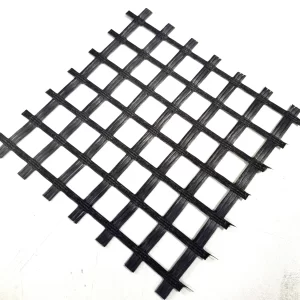
- Grid spacing/mesh design: The size of the aperture (e.g., 12.5×12.5 mm, 25.4×25.4 mm) affects the way the geogrid interacts with aggregate or asphalt.
- Creep and long-term modulus: Engineers should choose a geogrid that has a consistent long-term modulus and creep behavior in conjunction with the project’s expected life span.
- Coating: Decide between a self-adhesive (bitumen/polymer-coated) or non-adhesive geogrid, based on the method of construction and the bond requirements.
- Standard following: Use a geogrid that is compliant with recognized standards like GB/T 21825-2008 in China.
-
The Different Methods of Installation and the Quality Control associated with them.
- Anchoring/fixing: During the installation process, the geogrid’s ends must be properly fixed to prevent movement during the paving process.
- Overlay strategy: In pavement overposição, the geogrid should be positioned before the new asphalt coating is laid; the asphalt must fully cover the grid to transfer stress effectively.
- Seaming/laps: The proper amount of overlap between the geogrid’s sheets promotes consistent tensile strength; a lack of overlap can lead to specific failures.
- Tensioning: While fiberglass geogrid typically has a low stretchiness, a small amount of tension is present during installation that ensures flatness and performance.
- Compaction and paving: The underlaying aggregate or adhesive must be compacted with care to avoid causing damage to the grid.
-
Performance Testing and Durability Review
Engineers typically execute long-term performance verification via:
- Tensile tests on geogrid samples (chanting aged or weathered samples that are available).
- Interface tests that assess the shear strength of the interface between geogrid and asphalt or other materials to verify bonding and stress transfer.
- Fatigue testing it’s especially important to use in road overlays that are subject to repetitive loads.
- Long-term surveying, for significant projects that require infrastructure, periodic testing, or surveys, may assess the continued effectiveness of the geogrid.
Advantages and Limits of Using Fiberglass Geogrid
-
Advantages / Key Benefits
Based on product literature and industry data, the main advantages of fiberglass geogrid are:
- Superior strength-to-weight ratio: High tensile strength with minimal bulk.
- Long-term dimensional stability: Low creep ensures the grid remains effective under long-term loading.
- Crack resistance: Excellent for suppressing reflective cracking and preventing crack propagation in pavement overlays.
- Durability: Resistant to thermal cycles, aging, chemical degradation, and long service life.
- Flexible design: Available in different grid sizes, widths, tensile strengths, and coatings.
- Cost-effective life-cycle: While initial cost may be higher than some polymer geogrids, the long-term benefits (reduced maintenance, fewer cracks, longer pavement life) can justify the investment.
-
Limitations and Challenges
However, it’s not a one-size-fits-all solution. Key limitations include:
- Handling and installation sensitivity: Glass fiber can be more brittle than polymer geogrids, requiring careful handling to avoid damage during installation.
- Cost: Higher performance grades and coatings can significantly increase cost compared to cheaper polymer geogrids.
- Bonding requirements: To transfer stress effectively, good adhesion between geogrid and asphalt or concrete is needed — poor bonding reduces effectiveness.
- Repair/replacement: If damaged, repairing a fiberglass geogrid layer in situ is more complex than some polymer alternatives.
- Standardization: Depending on the region, not all projects or codes may explicitly specify fiberglass geogrids, requiring additional design justification.
Real-World Applications and Case Studies
To demonstrate the purpose and value of fiberglass geogrid, consider these common engineering applications:
- Highway Overlays: In road repairs, after removing the top layer of road material, engineers employ fiberglass geogrid to replace the asphalt. This grid functions as a stress-supplying membrane that reduces the incidence of reflective cracks, increases the life of the pavement, and reduces the cost of maintenance over the long haul.
- Airport Runways: Because of its thermal stability and high strength, fiberglass geogrid is employed beneath the overlay of the airport to maintain the stability of joints and reduce the amount of reflective damage caused by heavy aircraft traffic.
- Soft-Soil Subgrade on Emphatics: On sloping ground, geogrid layers are incorporated into the fill to provide extra tensile strength, which reduces the differential settlement and improves the global stability.
- Composite Pavement Structures: In pavement design that combines a concrete base and asphalt overcoat, fiberglass geogrid is positioned at the interface to prevent the propagation of cracks through the concrete into the overcoat.
These instances demonstrate the mechanical properties of the geogrid, which are high strength, low stretch, and have a consistent modulus, and are utilized to enhance performance and longevity.
Installation Best Practices and Quality Assurance
-
Installation Directions
Ensure the substrate is hygienic, compacted, and lacks large debris before installing the geogrid.
Unroll the geogrid and allow it to unwind; lightly tension, but avoid overstretching.
Fasten the geogrid into place using anchoring devices, staples, or other methods recommended by the supplier, especially at the seams and edges.
Overlap joints that are correctly sized — a specific width of Lap (as specified by the manufacturer) is necessary to ensure that the load is transferred.
During the paving process or overlay, make sure all of the new asphalt or concrete is embedded into the ground: the new concrete or asphalt should completely cover the geogrid.
-
Quality Control and Testing
Test the tensile strength of sample rolls before installing them to make sure they meet the specified strength requirements.
Conduct pull-out tests to assess the bond strength between the geogrid and the overlying layer.
Watch the temperature and climate during installation; extreme heat or cold can adversely affect the handling or performance.
After installation, inspect visually to assess damage, folds, or misalignment.
During the construction, maintain a record of the following: batch numbers, roll lengths, overlap information, anchoring methods, and any additional necessary actions.
Standards and Compliance
-
National Rules
In China, the standard GB/T 21825-2008 describes the technical requirements, procedures, and quality controls associated with fiberglass geogrids.
Though this rule is listed as “deprecated,” it still has a historically significant impact on material specifications, testing methods, and design parameters.
-
Certifications for manufacturers
Famous manufacturers like Feicheng Lianyi guarantee that their GlasGrid products will meet stringent standards of quality and performance. Their geogrids are completely mechanical tests and have long-term performance data that supports their continued use.
When determining the type of fiberglass geogrid that should be employed in a project, the documentation of the supplier regarding the tensile strength, modulus, length, and long-term behavior is required.
Economic & Life-Cycle Value of Fiberglass Geogrid
One of the most impressive uses of fiberglass geogrid is its long-term economic benefit in infrastructure, which is particularly popular in the construction industry.
- Reduced maintenance: By postponing the appearance of reflective cracks and reducing the number of cracks that propagate, the frequency of repairs or resurfacing decreases significantly.
- Resource savings: The use of a geogrid as a reinforcing element can help to reduce the thickness of the coating while still maintaining performance, which diminishes the total amount of asphalt or concrete needed.
- Long-term performance: Because of its long durability, the reinforcement is still effective for many years to come, which reduces the need for early replacement.
- Sustainability: Less frequent maintenance and a longer service life lead to a lower consumption of resources, a smaller carbon footprint, and more sustainable pavement design.
Challenges and Future Trends in Fiberglass Geogrid Use
-
Future Additions
- The risk of injury: Handling of glass fiber grids is dangerous; improper conduct can cause fibers to be damaged or adversely affect performance.
- Cost sensitivity: For projects with limited budgets, the increased cost of fiberglass geogrid may become an obstacle to overcome when compared to cheaper polymer geogrids.
- Design approval: Some engineers may not be aware of the long-term behavior of glass-fiber geogrid, which necessitates the need for education and demonstration projects.
- Constant updates: Regional standards may be behind the innovation, which would lead to potential problems with specifications in new or complex projects.
-
Future Trends
- Innovative coating techniques: New compounds or oils to augment the interface’s bond, resistance to ultraviolet light, and longevity.
- Hybrid reinforcement systems: Combining fiberglass geogrid with other synthetic materials (e.g., geotextiles, geocells) to maximize the performance of a specific application.
- Sustainability scope: The utilization of recycled or low-alkaline glass fibers, as well as LCA to assess the environmental benefits of a product.
- Digital design and simulation: Engineers who employ finite-element or discrete-element simulation tools to accurately simulate the interaction between fiberglass geogrid and pavement over time.
- Prefabricated geogrid arrangements: Pre-laminated sheets or combinations that are custom-designed for specific projects. This diminishes the risk of failure and increases the speed of installation.
Summary and Key Takeaways
The Purpose of Fiberglass Geogrid is evident:
Replication and Load Sharing: It increases the tensile strength and consistency of asphalt overcoats and soil-based structures.
Crack Mitigation: Significantly delays or decreases the degree to which pavement is reflected by transferring stress to it.
Long-term durability: High modulus, low creep, and chemical and thermal stability that is long-lasting.
Structural stabilization: Increases the capacity of weak foundations and decreases the settlement of embankments.
Economic Value: Less frequent cleaning, longer service life, and potential savings on material costs all contribute to the overall cost of life.
Sustainability: Less frequent repairs and more durable reinforcements contribute to a more sustainable infrastructure.
Best Practices:
Indicate the proper grade, tensile strength, size of opening, and coating.
Ensure effective placement, anchoring, overlap, and embeddedness.
Conduct quality control, tensile test, pull-out test, and inspection.
Use the design life cycle to explain the incremental expense with long-term savings.
Work with experienced vendors (e.g., Feicheng Lianyi) to access information regarding performance and technical support.
