


Abstract:
A geogrid is a geosynthetic material that is commonly used in civil engineering to strengthen soil, stabilize slopes, and enhance the structural performance of infrastructure like roads, railways, retaining walls, and embankments.
Research published by the International Geosynthetics Society (IGS) and the Federal Highway Administration (FHWA) indicates that geogrids improve soil confinement and load distribution by means of interlocking mechanisms between aggregate particles and the grid structure.
In modern geotechnical engineering, geogrids have become essential materials due to their durability, high tensile strength, and cost-effectiveness.
This detailed guide examines the definition, structure, manufacturing process, working principles, engineering uses, installation methods, and market trends of geogrids. It helps everyone gain a better understanding of geogrids.
Introduction to Geogrids
In geotechnical engineering, soil by itself frequently does not possess the mechanical strength necessary to sustain heavy infrastructure. For many years, engineers have been exploring methods to strengthen soil structures to enhance stability, durability, and load-bearing capacity. Among the most successful solutions devised in recent decades is the geogrid.
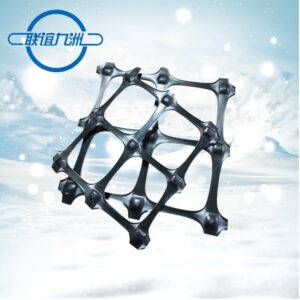
A geogrid is a geosynthetic material made from polymers that features a grid-like pattern, enabling soil, aggregate, or other granular materials to lock into its openings. This interaction forms a composite system in which the geogrid spreads out stress and reinforces the adjacent soil mass.
Typically, geogrids are produced using high-strength polymers like polypropylene (PP), polyethylene (HDPE), or polyester (PET). These materials offer outstanding tensile strength, resistance to chemicals, and durability in challenging environmental conditions.
The main function of geogrids is to reinforce soil. When embedded in soil layers, they enhance structural stability by stopping lateral shifts and boosting load distribution effectiveness. As worldwide infrastructure needs expand, geogrids have become essential materials in contemporary construction endeavors.
The History and Evolution of Geogrids
The development of geogrids is closely connected to the evolution of geosynthetics. In the early 20th century, engineers tested natural reinforcement materials like bamboo, wood, and steel mesh to stabilize soil. However, these materials frequently faced issues such as corrosion, degradation, or inadequate strength.
The introduction of polymer-based materials in the 1950s and 1960s marked the beginning of modern geosynthetics. Geotextiles were among the earliest products used for soil stabilization. Engineers soon realized that materials with higher tensile stiffness and open grid structures could offer improved reinforcement.
The initial commercial geogrids were developed in the late 1970s. These early products resulted from stretching polymer sheets to create a stiff grid structure. As manufacturing technologies advanced, various types of geogrids with specialized properties for different applications emerged.
Today, geogrids are categorized into several types, including uniaxial, biaxial, and triaxial geogrids, each optimized for specific engineering needs.
Types of Geogrids
Geogrids can be classified based on their structure, strength direction, and manufacturing process.
Main Types of Geogrids and Their Characteristics
| Type of Geogrid | Structure | Main Strength Direction | Typical Applications |
| Uniaxial Geogrid | Rectangular apertures | One direction | Retaining walls, steep slopes |
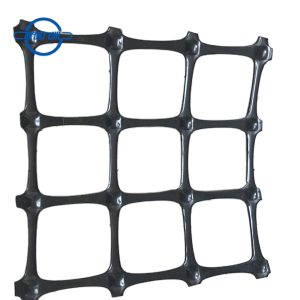
| Biaxial Geogrid | Square apertures | Two directions | Road base reinforcement |
| Triaxial Geogrid | Triangular apertures | Multi-directional | Pavement stabilization |
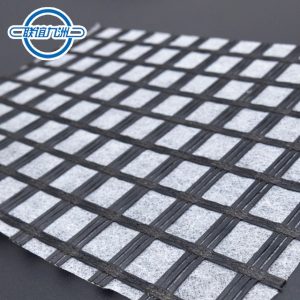
| Woven Polyester Geogrid | Textile structure | High tensile strength | Soil reinforcement |
| Fiberglass Geogrid | Fiber-reinforced | Asphalt reinforcement | Pavement crack control |
Uniaxial Geogrids
Uniaxial geogrids are engineered to have high tensile strength in a single direction. They are frequently utilized for reinforcing retaining walls and stabilizing steep slopes, where loads are mainly exerted in one direction.
Biaxial Geogrids
Biaxial geogrids offer equal tensile strength in both the longitudinal and transverse directions. They are commonly employed in road construction and subgrade stabilization.
Triaxial Geogrids
Triaxial geogrids have a triangular aperture pattern that spreads loads more uniformly in various directions. This design boosts structural stability and increases effectiveness in pavement systems and applications with heavy loads.
Raw Materials Used in Geogrid Manufacturing
The performance of a geogrid largely depends on the materials used during manufacturing. The most common materials include:
- Polypropylene (PP)
- High-density polyethylene (HDPE)
- Polyester (PET)
- Fiberglass
- Polyvinyl alcohol (PVA)
Each material offers unique advantages such as chemical resistance, tensile strength, or temperature tolerance.
Comparison of Geogrid Materials
| Material | Tensile Strength | Durability | Chemical Resistance | Common Use |
| Polypropylene | High | Excellent | Strong | Road reinforcement |
| HDPE | Moderate | Very high | Excellent | Landfills |
| Polyester | Very high | High | Good | Retaining structures |
| Fiberglass | High | Moderate | Moderate | Asphalt layers |
Manufacturing Process of Geogrids
Geogrids are produced through sophisticated polymer processing methods aimed at improving tensile strength and structural stability.
Step 1: Polymer Sheet Extrusion
The process starts with the extrusion of polymer sheets, where raw polymer pellets are melted and shaped into flat sheets.
Step 2: Punching Apertures
Specialized machines create evenly spaced holes in the sheets. These apertures establish the grid pattern.
Step 3: Molecular Orientation
The sheet is stretched in one or two directions at controlled temperatures. This process aligns polymer molecules and significantly enhances tensile strength.
Step 4: Heat Stabilization
The heat treatment process stabilizes the oriented structure and enhances durability.
Step 5: Quality Testing
Before being released to the market, finished geogrids are subjected to tensile testing, dimensional stability assessments, and durability evaluations.
How Geogrids Work?
The effectiveness of geogrids lies in their soil reinforcement mechanism.
When a geogrid is embedded within a soil layer, aggregate particles lock into the openings of the grid. This mechanical locking stops sideways movement and spreads loads over a wider area.
The reinforcement mechanism involves three main processes:
- Confinement of aggregate
- Improved load distribution
- Reduced soil deformation
Soil Reinforcement Mechanisms of Geogrids
| Mechanism | Description | Engineering Benefit |
| Interlocking | Aggregate particles lock within grid apertures | Increased stability |
| Confinement | Prevents lateral movement of soil | Improved bearing capacity |
| Load distribution | Spreads the load across a wider area | Reduced rutting |
Through these mechanisms, geogrids transform weak soil layers into high-performance reinforced systems capable of supporting heavy loads.
Major Applications of Geogrids
Geogrids are extensively utilized in various civil engineering fields.
- Road Construction
They strengthen road foundations, decreasing rut formation and increasing pavement durability.
- Railway Infrastructure
Stable foundations are essential for railway tracks. Geogrids enhance ballast containment and lower maintenance needs.
- Retaining Walls
In reinforced soil walls, geogrids serve as tensile reinforcement components that support the soil mass behind the wall face.
- Slope Stabilization
Geogrids assist in preventing landslides and erosion on steep inclines.
- Airport Runways
Heavy aircraft loads demand strong foundations. Geogrids enhance load distribution in runway structures.
Typical Geogrid Applications
| Application | Purpose | Benefit |
| Roads | Base reinforcement | Longer pavement life |
| Railways | Ballast stabilization | Reduced maintenance |
| Retaining walls | Soil reinforcement | Structural stability |
| Slopes | Erosion control | Improved safety |
Advantages of Using Geogrids
Geogrids offer multiple engineering and economic advantages.
- Reinforced soil structures can bear greater loads.
- The use of locally available materials with geogrids decreases transportation expenses.
- Foundations reinforced with geogrids help pavements and retaining walls last longer.
- Geogrids contribute to environmental sustainability by decreasing the requirement for thick aggregate layers, thus reducing material use and carbon emissions.
Installation Methods of Geogrids
Proper installation is essential for optimal performance.
Step 1: Subgrade Preparation
The soil surface needs to be leveled and compacted.
Step 2: Geogrid Placement
The geogrid is unrolled and positioned as per design specifications.
Step 3: Aggregate Placement
Granular material is laid over the geogrid.
Step 4: Compaction
Heavy machinery compacts the aggregate to ensure interlocking.
Maintaining proper tension and overlap between geogrid sections is crucial to preserving structural continuity.
Geogrids vs Other Geosynthetics
Geogrids are often compared with other geosynthetic materials such as geotextiles and geomembranes.
| Material | Primary Function | Structure |
| Geogrid | Reinforcement | Grid |
| Geotextile | Filtration & separation | Fabric |
| Geomembrane | Barrier | Sheet |
Each material serves different engineering purposes, but they are often used together in complex projects.
Global Market Trends for Geogrids
The global geogrid market is expanding rapidly due to growing infrastructure development. Governments worldwide are investing heavily in highways, railways, and urban construction.
Emerging economies in Asia, the Middle East, and Africa are key contributors to the demand for geogrids. Advances in technology, including high-strength polymer formulations and automated extrusion lines, are enhancing the performance of products.
Future Innovations in Geogrid Technology
Future developments may include:
- Smart geogrids with embedded sensors
- Recyclable geosynthetic materials
- Advanced polymer composites
- AI-assisted infrastructure monitoring
These innovations will further enhance the role of geogrids in sustainable infrastructure development.
FAQ: Geogrid Frequently Asked Questions
- What is a geogrid made of?
Geogrids are typically made from polymers such as polypropylene, polyester, or polyethylene, which provide high tensile strength and durability.
- What is the main function of a geogrid?
The primary function of a geogrid is soil reinforcement, improving load distribution, and preventing soil movement.
- Where are geogrids commonly used?
Geogrids are widely used in roads, railways, retaining walls, slopes, landfills, and airport runways.
- How long do geogrids last?
High-quality geogrids can last 50–100 years, depending on environmental conditions and installation methods.
- What is the difference between a geogrid and a geotextile?
Geogrids reinforce interlocking structures, while geotextiles mainly serve filtration and separation purposes.
Conclusion
In modern civil engineering and infrastructure development, geogrid has become an essential material for improving soil stability, enhancing structural integrity, and extending the lifespan of construction projects.
By integrating high-strength polymer grids into soil layers, engineers can significantly increase load-bearing capacity while reducing settlement, deformation, and long-term maintenance costs.
Compared with traditional reinforcement methods, geogrids provide a lightweight, durable, and cost-efficient solution that addresses both structural and environmental challenges in geotechnical design.
As global infrastructure demands continue to grow, the importance of geosynthetic materials will increase further. Among these, geogrids are recognized as one of the most effective reinforcement options currently accessible.
Geogrids enhance structural safety, decrease material usage, and promote sustainable building methods, assisting engineers in creating more durable and resilient infrastructure for the future.
