


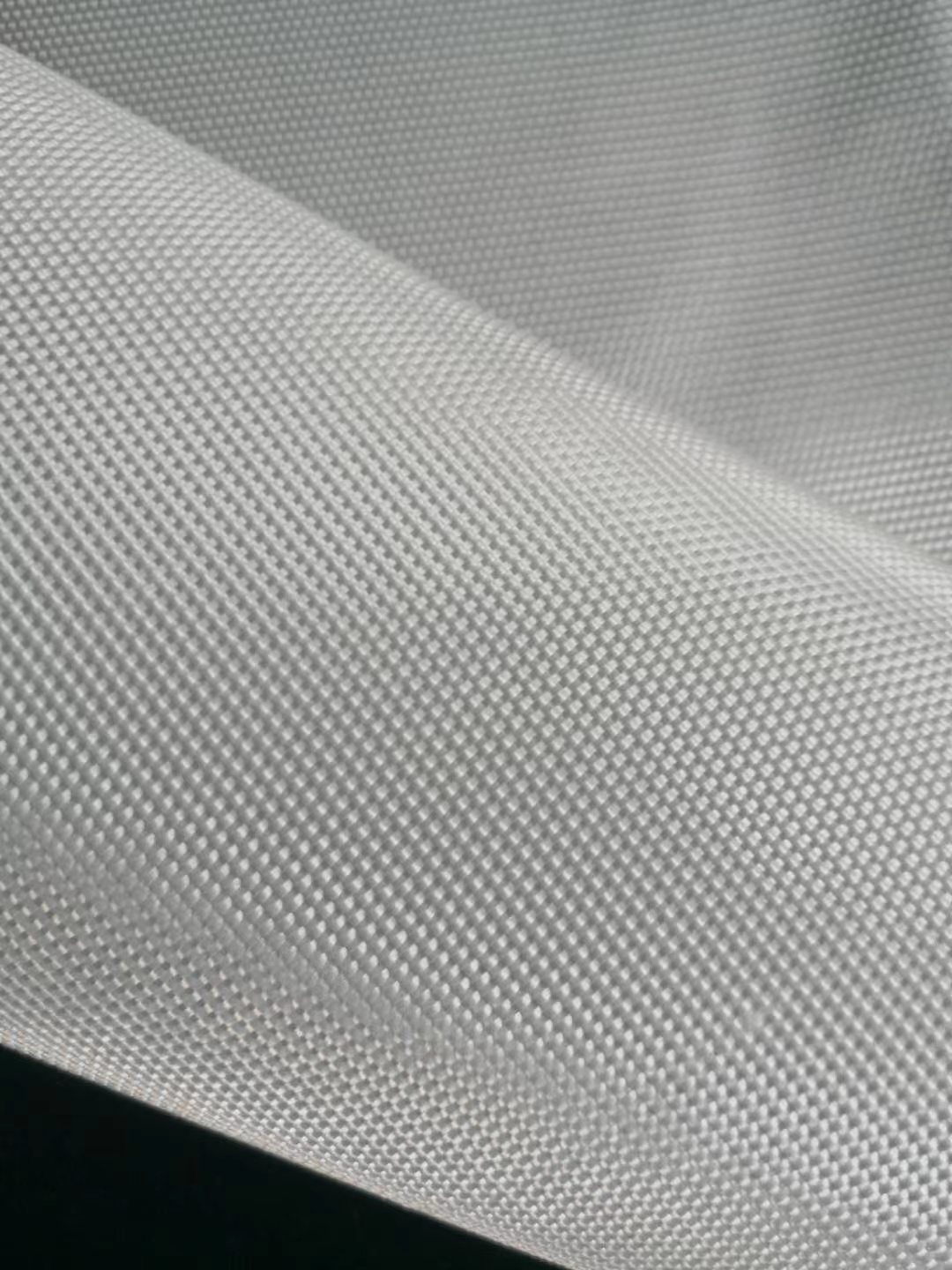
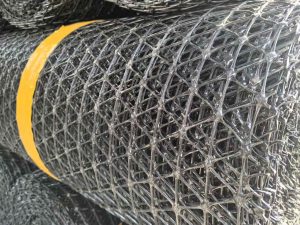
Triaxial geogrid is a high-performance geosynthetic material characterized by its three-dimensional, hexagonal aperture structure, designed to provide superior soil reinforcement and stabilization. Below is a comprehensive overview of its manufacturing processes, applications, benefits, quality control, and Feicheng Lianyi Engineering Plastics Co., Ltd.’s role in advancing this technology:
1. Manufacturing Process
Feicheng Lianyi utilizes advanced polymer engineering techniques to produce triaxial geogrids, ensuring consistency and durability. The process involves:
- Material Selection:
- Polypropylene (PP) resins are chosen for their tensile strength, chemical resistance, and flexibility.
- Extrusion and Sheet Formation:
- Polymer pellets are melted and extruded into flat sheets through precision-controlled extruders.
- Punching and Stretching:
- Punching: Sheets are perforated with a hexagonal aperture pattern using high-precision punching machines.
- Orientation: The punched sheets are stretched biaxially (longitudinal and transverse directions) under controlled heat to align polymer molecules, enhancing tensile strength and dimensional stability.
- Heat Setting:
- The stretched geogrid undergoes heat treatment to lock in the molecular structure, ensuring resistance to creep and environmental stress.
- Coating (Optional):
- For specialized applications, coatings (e.g., bitumen, UV-resistant layers) are applied to improve adhesion with asphalt or resist UV degradation.
- Slitting and Rolling:
- Final products are cut into standard roll sizes (e.g., 2–6 m width, 30–50 m length) for easy transport and installation.
Key Technologies:
- Feicheng Lianyi employs German-engineered extrusion lines and computer-controlled stretching ovens for uniform product quality.
- Proprietary aperture design software optimizes the hexagonal grid geometry for load distribution.
2. Applications
Triaxial geogrids are widely used in:
- Road and Railway Construction:
- Base reinforcement to reduce rutting and extend pavement life.
- Subgrade stabilization over soft soils.
- Slope and Embankment Stabilization:
- Prevents soil erosion on steep slopes or retaining walls.
- Landfill Engineering:
- Reinforces cover systems and waste containment layers.
- Mining and Heavy-Duty Platforms:
- Stabilizes access roads and haulage routes under extreme loads.
- Landscaping:
- Supports green roofs and vegetated retaining structures.
3. Benefits
- Enhanced Load Distribution: Hexagonal structure evenly distributes stresses, reducing localized failures.
- High Tensile Strength: Up to 30 kN/m (depending on grade), suitable for heavy-duty applications.
- Flexibility: Conforms to uneven surfaces without compromising integrity.
- Chemical Resistance: Inert to soil alkalinity, acids, and hydrocarbons.
- Longevity: Resists UV degradation, biological attack, and creep for 50+ years.
4. Advantages Over Conventional Geogrids
Triaxial geogrids and biaxial geogrids are both used for soil stabilization and reinforcement, but their structural designs and performance characteristics lead to distinct advantages in specific applications. Here’s a comparison focused on the advantages of triaxial geogrids over biaxial geogrids for reinforcement purposes:
1. Structural Design Differences
- Biaxial Geogrid:
- Rectangular or square apertures oriented in two primary directions (longitudinal and transverse).
- Strength is concentrated along the machine (warp) and cross-machine (weft) directions.
- Triaxial Geogrid:
- Hexagonal or triangular apertures designed to distribute loads multi-directionally (three or more axes).
- Engineered using a punched-and-drawn polymer sheet (e.g., polypropylene) for isotropic strength.
Advantages of Triaxial Geogrids in Reinforcement
① Enhanced Load Distribution
- Triaxial geogrids spread stresses equally in all directions, minimizing localized deformation (e.g., rutting in pavements).
- Ideal for dynamic loads (e.g., highways, airports) where forces come from multiple angles.
- Biaxial geogrids, while strong in two directions, may underperform in non-aligned stress scenarios.
② Superior Interlock with Aggregate
- Hexagonal apertures create a 360° mechanical interlock with soil/aggregate particles, improving confinement.
- Biaxial geogrids rely on rectangular apertures, which may limit interlock efficiency in non-linear stress paths.
③ Reduced Aggregate Thickness
- Triaxial geogrids allow for thinner aggregate layers (up to 30% reduction) while maintaining structural integrity.
- This reduces material costs and construction time compared to biaxial geogrids, which often require thicker layers for equivalent performance.
④ Resistance to Installation Damage
- The multi-directional structure of triaxial geogrids is less prone to aperture distortion during installation.
- Biaxial geogrids can experience aperture misalignment if not placed precisely along the intended stress axes.
⑤ Improved Long-Term Performance
- Better resistance to creep (long-term deformation) due to isotropic load distribution.
- Reduced risk of reflective cracking in asphalt overlays compared to biaxial grids, which may concentrate stresses.
⑥ Flexibility in Uneven Terrain
- Triaxial geogrids conform more easily to irregular subgrades, reducing the need for extensive site preparation.
- Biaxial geogrids require flatter surfaces to align with primary stress directions.
Typical Applications
| Triaxial Geogrid | Biaxial Geogrid |
|---|---|
| High-traffic pavements (roads, runways) | Retaining walls |
| Rail track ballast reinforcement | Slope stabilization (2D load paths) |
| Base reinforcement over soft soils | Embankments over stable ground |
| Erosion control in dynamic environments | Landfill liners/covers |
Material Considerations
- Triaxial Geogrids: Often made from polypropylene for flexibility and chemical resistance.
- Biaxial Geogrids: Typically use polypropylene, polyester or HDPE for high tensile strength in two axes.
When to Choose Triaxial Over Biaxial
- Projects requiring multi-directional load distribution (e.g., roads with heavy, shifting traffic).
- Sites with variable subgrade conditions or uneven terrain.
- Cost-sensitive projects aiming to reduce aggregate use without compromising stability.
For unidirectional or planar reinforcement (e.g., retaining walls), biaxial geogrids remain cost-effective and fit-for-purpose.
5. Quality Control at Feicheng Lianyi
The company adheres to rigorous quality assurance protocols:
- Material Testing: Raw polymers are tested for melt flow index (MFI) and purity.
- In-Process Checks:
- Aperture consistency, thickness, and tensile strength monitored during stretching.
- Final Product Certification:
- Tensile Strength (ASTM D6637): Ensures compliance with design specifications.
- Junction Efficiency (ISO 10319): Measures node strength (≥90% efficiency).
- UV Resistance (ASTM D4355): Validates durability for exposed applications.
- Certifications: ISO 9001, CE, SGS, and GRI-GM17 (Geosynthetic Research Institute).
6. Feicheng Lianyi’s Competitive Edge
- Customization: Offers geogrids in varying strengths (10–30 kN/m), aperture sizes (30–50 mm), and coatings (e.g., asphalt-compatible).
- Production Capacity: Operates 15+ dedicated geogrid lines with an annual output of 20 million m².
- Technical Support: Provides engineering design assistance for complex projects.
- Global Reach: Exports to 50+ countries, including participation in major infrastructure projects (e.g., Belt and Road Initiative).
- Sustainability Focus: Uses recyclable materials and energy-efficient manufacturing processes.
7. Case Study Highlight
Feicheng Lianyi’s triaxial geogrids were used in the reinforcement of a highway in Southeast Asia built on soft clay. The geogrid reduced aggregate thickness by 40%, saved 15% in project costs, and improved long-term stability.
Conclusion
Triaxial geogrids from Feicheng Lianyi Engineering Plastics Co., Ltd. combine cutting-edge manufacturing, rigorous quality control, and versatile performance to address modern geotechnical challenges. Their products are trusted globally for infrastructure resilience, cost efficiency, and environmental compliance.
