


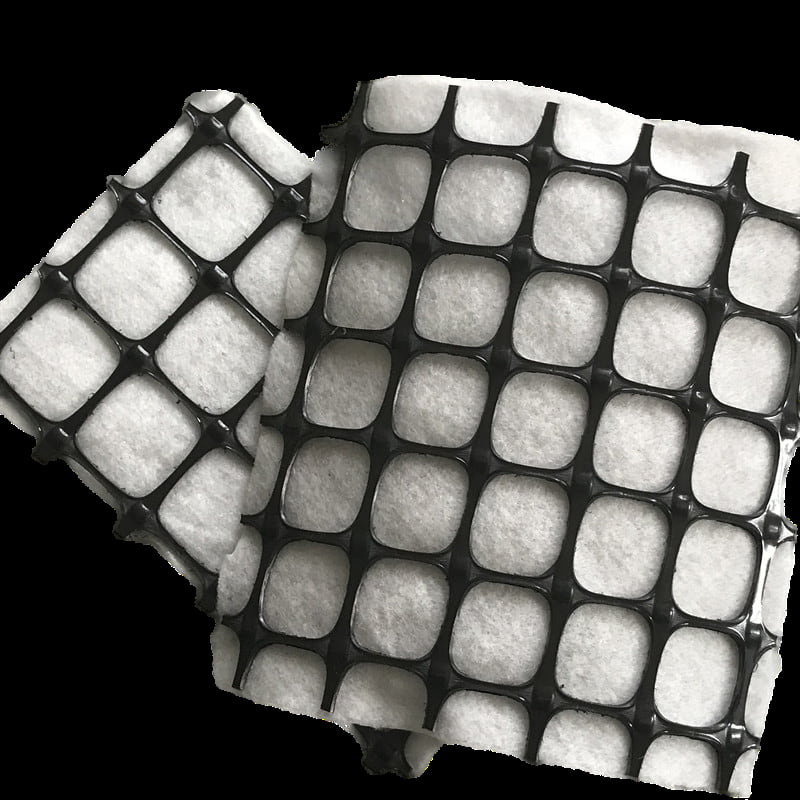
Triaxial geogrid is an advanced geosynthetic reinforcement material with a triangular aperture structure that distributes loads more uniformly in multiple directions than traditional biaxial geogrids.
Research published by the International Geosynthetics Society and ASTM International indicates that triaxial geogrid systems can significantly improve the confinement of soil, the stability of pavements, the bearing capacity, the resistance to rutting, and the long-term durability of infrastructure in road construction, retaining walls, railways, embankments, and foundation reinforcement projects. Triaxial geogrid solutions are increasingly being adopted in modern infrastructure engineering because of their high structural efficiency, reduced aggregate consumption, extended pavement lifespan, and superior multidirectional load performance.
Introduction: Why Triaxial Geogrid Has Become Critical in Modern Soil Reinforcement
Modern civil engineering projects are increasingly complex, involving weak subgrades, heavy traffic loads, unstable soil conditions, environmental stress, and longterm durability requirements for infrastructure. As transportation systems expand globally and construction projects move into softer or more challenging terrain, engineers need advanced reinforcement technologies that can improve ground stability while keeping construction costs and environmental impact under control.
One of the most significant innovations in modern geotechnical engineering is Triaxial Geogrid technology.
Unlike traditional reinforcement materials, triaxial geogrid systems are specifically engineered to provide multidirectional load distribution. Their triangular rib structure improves soil confinement and aggregate interlock more effectively than the designs of conventional biaxial grids.
Today, Triaxial Geogrid materials are widely used across infrastructure sectors including:
| Infrastructure Sector | Typical Applications |
| Highway construction | Base reinforcement |
| Railways | Ballast stabilization |
| Airports | Runway stabilization |
| Retaining walls | Soil reinforcement |
| Mining roads | Heavy load support |
| Industrial yards | Load distribution |
| Embankments | Slope stabilization |
| Port infrastructure | Foundation support |
Traditional soil stabilisation methods often relied heavily on thick layers of aggregate and costly excavation procedures.
However, modern infrastructure projects increasingly require solutions that offer the following:
- Lower construction costs;
- Faster installation;
- Improved load capacity;
- Reduced material consumption;
- Extended pavement lifespan;
- Better sustainability performance.
This has accelerated the global adoption of geosynthetic reinforcement technologies.
Triaxial geogrid differs fundamentally from earlier geogrid systems because its triangular aperture geometry creates nearly isotropic stiffness characteristics.
This means that load forces can be distributed more evenly in multiple directions rather than primarily along two perpendicular axes.
The result is improved:
- Aggregate confinement
- Stress distribution
- Rut resistance
- Structural stability
- Soil interaction
Modern roadway systems experience increasingly aggressive conditions, including:
- Heavy truck traffic
- Repeated dynamic loading
- Freezethaw cycles
- Water infiltration
- Subgrade deformation
Without adequate reinforcement, these conditions may cause:
- Rutting
- Cracking
- Differential settlement
- Premature pavement failure
Triaxial geogrid systems help to minimise these risks significantly.
Another major advantage is sustainability.
By improving structural efficiency, triaxial geogrid reinforcement often reduces the amount of aggregate required for construction.
This lowers:
- Material transportation
- Quarry resource consumption
- Carbon emissions
- Excavation requirements
Manufacturers such as Feicheng Lianyi continue to support global infrastructure projects by providing advanced geogrid technologies designed for challenging geotechnical conditions and modern engineering standards.
As the global transportation infrastructure continues to expand, triaxial geogrid has become one of the most important reinforcement solutions in contemporary civil engineering.

What Is Triaxial Geogrid?
Triaxial geogrid is a polymer-based geosynthetic reinforcement material with a triangular aperture structure that provides multidirectional load distribution and soil stabilisation.
Unlike traditional biaxial geogrids, which primarily reinforce in two directions, triaxial geogrid systems distribute stresses more evenly across multiple load paths.
The material is typically manufactured from high-density polyethylene (HDPE) or polypropylene polymers using processes involving:
- Extrusion
- Punching
- Stretching
- Molecular orientation
The triangular geometry is the defining feature of Triaxial Geogrid technology.
This structure improves:
- Aggregate interlock
- Soil confinement
- Mechanical stability
- Load transfer efficiency
The following table summarizes core structural characteristics.
| Property | Triaxial Geogrid Characteristic |
| Aperture shape | Triangular |
| Load distribution | Multidirectional |
| Main materials | PP or HDPE |
| Reinforcement mechanism | Aggregate confinement |
| Typical applications | Roads and foundations |
Traditional reinforcement materials often create directional weaknesses because stress concentrates along limited axes.
Triaxial geogrid systems address this issue by providing more uniform radial stiffness.
This improves performance under dynamic traffic loading conditions.
The material primarily functions by stabilising aggregate layers.
When compacted aggregate interacts with the apertures in the geogrid, the particles become mechanically confined.
This interlocking effect restricts lateral movement and improves load transfer throughout the reinforced structure.
Modern triaxial geogrid systems are engineered for:
- High tensile stiffness
- Longterm creep resistance
- Chemical durability
- Environmental stability
- UV resistance
Another major advantage is installation efficiency.
Compared with traditional deep excavation stabilisation methods, geogrid reinforcement can significantly reduce construction complexity.
As the field of geotechnical engineering continues to evolve towards more efficient and sustainable infrastructure systems, triaxial geogrid technology remains at the heart of modern soil reinforcement innovation.
How Does Triaxial Geogrid Work in Soil Reinforcement?
The performance of triaxial geogrids depends on the interaction between their structure and the surrounding aggregate or soil materials.
The primary reinforcement mechanism is a mechanical interlock.
When aggregate particles are compacted over the geogrid, they penetrate the apertures and are laterally restrained by the ribs.
This creates a stabilised composite layer with significantly improved structural behaviour.
The reinforcement process generally involves:
- Aggregate confinement
- Load redistribution.
- Reduced lateral movement
- Increased bearing capacity
- Lower vertical deformation
The following table explains the primary engineering mechanisms.
| Reinforcement Mechanism | Engineering Benefit |
| Aggregate interlock | Improved stability |
| Load distribution | Reduced stress concentration |
| Lateral confinement | Rut resistance |
| Tensile reinforcement | Enhanced structural capacity |
| Base stabilization | Longer pavement life |
One of the most important advantages of triaxial geogrid is its multidirectional stiffness.
Traffic loads rarely act in only one direction.
Vehicles generate the following forces:
- Braking forces;
- Turning stresses;
- Dynamic vibration;
- Repeated impact loading.
Traditional biaxial systems may not distribute these forces evenly.
The triangular structure of Triaxial Geogrid improves radial load transfer and minimises localised stress accumulation.
Another critical factor is subgrade stabilisation.
Weak soils often deform under repeated loading.
This deformation may cause:
- Rutting
- Surface cracking
- Aggregate displacement
- Structural settlement
By reinforcing the aggregate layer, Triaxial Geogrid reduces the stress transmitted to the underlying subgrade.
This significantly improves longterm pavement performance.
Modern pavement engineering increasingly relies on mechanistic design models that recognise the structural contribution of geogrid reinforcement within load-bearing systems.
Major Applications of Triaxial Geogrid
Triaxial geogrid technology has numerous applications in infrastructure and geotechnical engineering.
One of the largest application areas is road construction.
Highway pavements experience continuous heavy traffic loads that can weaken base layers over time.
Triaxial geogrid helps to improve:
- Base course stability
- Pavement lifespan
- Rut resistance
- Load distribution
Another major application is railway stabilisation.
Railway ballast undergoes intense dynamic loading due to train movement.
Geogrid reinforcement improves ballast confinement and reduces track deformation.
The following table summarizes key applications.
| Application | Primary Benefit |
| Highways | Reduced rutting |
| Railways | Ballast stabilization |
| Retaining walls | Soil reinforcement |
| Embankments | Slope stability |
| Airports | Heavy load support |
| Mining roads | Aggregate confinement |
Triaxial geogrid reinforcement is also beneficial for industrial yards and container terminals because these areas support extremely heavy, repetitive loading.
In soft-soil environments, triaxial geogrid systems can significantly reduce the required depth of excavation.
This lowers construction costs while accelerating project timelines.
Retaining wall systems increasingly incorporate geogrid reinforcement to improve:
- Soil mass stability
- Retaining structure integrity
- Longterm settlement control
Feicheng Lianyi provides geosynthetic reinforcement solutions designed for various infrastructure applications where long-term structural performance and durability are critical.
As the demand for infrastructure grows globally, the use of triaxial geogrid continues to expand into increasingly specialised engineering applications.

Advantages of Triaxial Geogrid Compared with Traditional Reinforcement Methods
Modern infrastructure engineering increasingly favours geosynthetic reinforcement due to its efficiency advantages over traditional stabilisation methods.
One major advantage of triaxial geogrid is reduced aggregate consumption.
As the reinforced layer distributes loads more effectively, engineers can reduce the required thickness of the base.
This creates multiple benefits, including:
- Lower transportation costs
- Reduced quarry material usage
- Faster construction
- Lower carbon emissions
The following table compares reinforcement approaches.
| Reinforcement Method | Main Limitations | Triaxial Geogrid Advantage |
| Thick aggregate layers | High material cost | Reduced base thickness |
| Soil replacement | Extensive excavation | Minimal subgrade removal |
| Chemical stabilization | Environmental concerns | Mechanical reinforcement |
| Traditional biaxial grids | Directional load limits | Multidirectional stability |
Another major advantage is an improved pavement lifespan.
By minimising longterm structural deterioration, Triaxial Geogrid systems reduce rutting and aggregate displacement.
This reduces the frequency of maintenance and lifecycle costs.
Another important benefit is installation speed.
Geogrid systems can often be deployed rapidly using relatively simple construction procedures.
This is especially valuable for:
- Remote projects
- Emergency road stabilisation
- Fast-track infrastructure development
Environmental performance is also becoming increasingly important.
Triaxial geogrid systems support sustainable infrastructure construction by reducing the demand for raw materials and improving longterm durability.
As governments worldwide prioritise sustainable civil engineering practices, the importance of geosynthetic reinforcement technologies continues to grow.
Installation Process and Construction Best Practices
Proper installation is essential for maximising the performance of Triaxial Geogrid.
Although installation procedures vary depending on project conditions, most applications follow a similar set of construction stages.
The process generally includes the following steps:
- Subgrade preparation
- Surface grading.
- Geogrid placement
- Aggregate spreading
- Compaction
- Final grading
Subgrade preparation is particularly important.
Weak or uneven surfaces may reduce the efficiency of reinforcement.
The following table outlines key installation considerations.
| Installation Stage | Important Considerations |
| Subgrade preparation | Remove soft spots |
| Geogrid placement | Maintain flat tension |
| Aggregate placement | Avoid equipment damage |
| Compaction | Achieve proper density |
| Overlap zones | Ensure continuity |
The placement of aggregate must be carefully controlled to prevent construction equipment from damaging exposed geogrid materials directly.
The quality of compaction also strongly influences longterm performance.
Proper aggregate confinement only occurs when sufficient compaction has been achieved.
Modern infrastructure projects are increasingly using mechanised installation systems to improve efficiency and consistency.
Engineering design should also consider the following:
- Traffic loading
- Soil strength
- Environmental conditions
- Drainage systems
- Longterm creep behaviour
Feicheng Lianyi supports infrastructure reinforcement projects with geogrid products that are engineered for demanding construction environments and longterm geotechnical stability.
Material Properties and Technical Performance
The effectiveness of triaxial geogrids depends heavily on the properties of the materials used and the structural design.
Modern geogrids are designed to maintain their performance in severe environmental and loading conditions.
Critical performance characteristics include:
- Tensile stiffness;
- Junction strength;
- Aperture geometry;
- Creep resistance;
- Chemical stability.
The following table summarizes important technical properties.
| Technical Property | Engineering Importance |
| Tensile stiffness | Load transfer efficiency |
| Junction integrity | Structural durability |
| Aperture stability | Aggregate interlock |
| UV resistance | Outdoor longevity |
| Chemical resistance | Soil compatibility |
Longterm creep resistance is particularly important because infrastructure systems are under load for decades.
Modern polymer engineering can significantly improve durability under sustained stress conditions.
Environmental resistance is also very important.
Triaxial geogrid materials must withstand exposure to the following:
- Moisture
- Temperature variation
- Soil chemicals
- Freezethaw cycles
- Oxidation
Advanced manufacturing processes help optimise polymer orientation and structural integrity.
This improves the longterm reliability of reinforcement across demanding civil engineering projects.
Sustainability and future trends in triaxial geogrid technology
Sustainability is becoming one of the most important priorities in infrastructure engineering worldwide.
Traditional road construction methods often require large amounts of aggregate and extensive excavation work.
Triaxial geogrid reinforcement can help to reduce environmental impact by:
- Lower material consumption;
- Reduced transportation emissions;
- Longer pavement lifespan;
- Reduced maintenance frequency.
Another major trend involves digital infrastructure design.
Modern engineers are increasingly using:
- Finite element modelling;
- AI-assisted pavement analysis;
- Digital twin simulation;
- Geotechnical monitoring systems.
These technologies improve geogrid optimisation and long-term performance prediction.
Future innovations may include:
- Smart geogrids with sensors;
- Recycled polymer reinforcement;
- Advanced composite geosynthetics;
- Higher-performance molecular engineering.
As global infrastructure demand continues to increase, triaxial geogrid technology will likely remain one of the most important reinforcement solutions in sustainable geotechnical engineering.
FAQ About Triaxial Geogrid
- What is Triaxial Geogrid used for?
Triaxial Geogrid is used for soil reinforcement, pavement stabilization, aggregate confinement, and load distribution in civil engineering projects.
- How is Triaxial Geogrid different from biaxial geogrid?
Triaxial geogrids use triangular apertures that provide multidirectional load distribution, while biaxial geogrids primarily reinforce in two directions.
- What are the advantages of Triaxial Geogrid?
Major advantages include improved load distribution, reduced rutting, longer pavement life, lower aggregate usage, and enhanced soil stabilization.
- Which industries use Triaxial Geogrid?
Industries including transportation infrastructure, mining, railways, airports, retaining wall construction, and industrial yard development use Triaxial Geogrid systems.
- Can Triaxial Geogrid reduce construction costs?
Yes. By improving structural efficiency and reducing aggregate requirements, Triaxial Geogrid can significantly lower project costs.
- Is Triaxial Geogrid environmentally friendly?
Yes. It supports sustainable construction by reducing excavation, material consumption, transportation needs, and maintenance frequency.
Conclusion
Triaxial geogrid has become one of the most advanced and effective geosynthetic reinforcement technologies in modern civil engineering and infrastructure construction. Thanks to its unique triangular aperture structure and multidirectional load distribution capability, Triaxial Geogrid significantly improves soil confinement, aggregate stabilisation, bearing capacity and long-term pavement performance compared to traditional reinforcement systems. Its ability to reduce rutting and minimise deformation extends the lifespan of infrastructure, making it an essential solution for highways, railways, airports, industrial yards, retaining walls, embankments and foundation stabilisation projects worldwide.
Its growing adoption reflects broader industry trends towards sustainable construction, cost-efficient infrastructure development, and advanced geotechnical engineering. By reducing aggregate thickness requirements, minimising excavation, lowering transportation demand and extending maintenance intervals, Triaxial Geogrid systems directly contribute to improved environmental performance and lower lifecycle construction costs. Manufacturers such as Feicheng Lianyi continue to support infrastructure innovation by providing geosynthetic reinforcement technologies that are designed for challenging engineering conditions and modern performance standards.
As transportation networks expand globally and infrastructure projects increasingly encounter weak soils, high traffic volumes, and stricter sustainability requirements, Triaxial Geogrid technology will likely play an even larger role in future civil engineering design. Advances in polymer science, digital modeling, smart monitoring systems, and highperformance geosynthetics are expected to further improve reinforcement efficiency and long-term infrastructure resilience. In modern geotechnical engineering, Triaxial Geogrid remains one of the most reliable and strategically important solutions for soil reinforcement and structural stabilization.
