
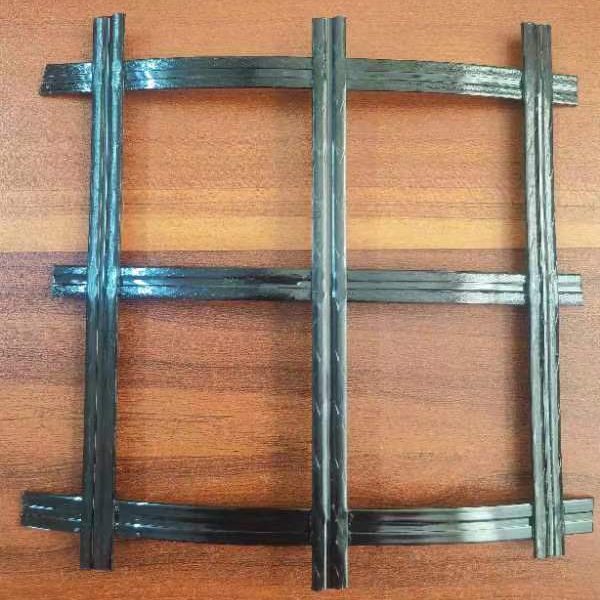


Steel Plastic Composite Geogrid – High Strength Reinforcement for Demanding Projects
In the world of civil engineering and construction, the quest for stronger, more durable, and more efficient reinforcement materials has led to significant technological advancements. Among these, the steel plastic composite geogrid stands out as a next-generation reinforcement solution that combines the superior tensile strength of steel with the exceptional durability and chemical resistance of polyethylene (PE). This innovative material is specifically engineered to deliver outstanding performance in the most demanding applications, including soil stabilization, retaining walls, embankments, and heavy-load bearing foundations.
Advanced Manufacturing Process: Precision Engineering for Superior Performance
Steel-PE Strip Production
The manufacturing process begins with high-tensile steel wires that are meticulously arranged in an even pattern to ensure uniform strength distribution. These steel wires are then fed through a specialized extrusion system where they are coated with a precisely measured layer of high-density polyethylene (HDPE). This coating process is not merely a covering but a fusion of materials that creates steel-plastic composite strips with exceptional properties. The result is a product that maintains the formidable toughness and strength of steel while gaining the corrosion resistance, flexibility, and longevity of polyethylene.
Grid Formation
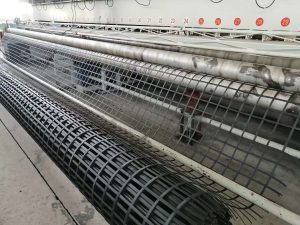
The coated strips are then carefully aligned in both longitudinal and transverse directions to form a grid pattern. Using state-of-the-art welding technology, the intersections are bonded under controlled heating and pressure conditions. This critical step ensures strong junction strength—a vital characteristic that prevents slippage between strands and maintains the structural integrity of the grid under stress. The precision of this process guarantees consistent aperture sizes and geometric stability throughout the entire geogrid.
Roll Collection
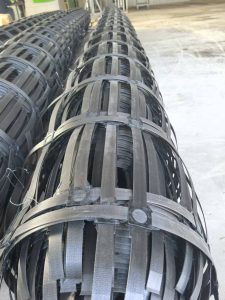
After rigorous quality control checks to verify tensile strength, junction efficiency, and coating integrity, the finished geogrid is collected into large rolls. This packaging method facilitates easy handling, efficient transportation, and straightforward installation on construction sites, significantly reducing labor requirements compared to traditional reinforcement methods.
Key Features & Advantages: Unmatched Engineering Benefits
Exceptional Tensile Strength
The integration of high-strength steel wires provides exceptional load-bearing capacity, with tensile strengths far exceeding those of traditional polymer geogrids. This makes steel plastic composite geogrids capable of supporting extremely heavy loads without deformation or failure, even in challenging soil conditions.
Superior Junction Integrity
The advanced welding techniques used in manufacturing create intersections with junction strengths that approach 90-95% of the base material strength. This nearly perfect efficiency ensures that the geogrid performs as a unified system rather than individual strands, providing consistent reinforcement across the entire structure.
Enhanced Durability and Longevity
The polyethylene coating provides a protective barrier that shields the steel core from corrosion, alkalinity, acidity, and other environmental factors that typically degrade reinforcement materials. This protection ensures a service life that can extend beyond 50 years, even in aggressive soil conditions or harsh environmental exposures.
Minimal Creep Characteristics
The steel core within the composite structure ensures minimal deformation under sustained loading, a critical factor for long-term structural stability. This low creep property makes steel plastic composite geogrids particularly suitable for permanent structures where maintaining dimensional stability is essential.
Optimal Soil Interaction
The rigid rib structure and textured surface create high friction coefficients and mechanical interlock with soil particles and aggregates. This interaction significantly improves load distribution and stability, preventing lateral movement and settlement while enhancing overall structural integrity.
Applications: Versatile Solutions for Diverse Challenges
Highway and Railway Foundations
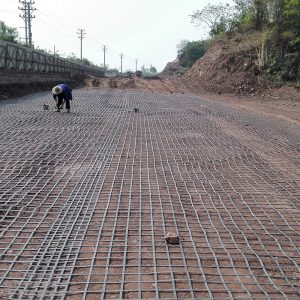
In transportation infrastructure, steel plastic composite geogrids provide stable base reinforcement that reduces rutting and extends the service life of paved surfaces. They effectively distribute wheel loads over a wider area, minimizing differential settlement and reducing maintenance requirements for highways, railways, and airport runways.
Steep Slope Reinforcement
For slope stabilization projects, these geogrids offer the necessary tensile strength to maintain slope integrity while allowing for vegetation growth. This combination provides both structural stability and environmental benefits, preventing erosion and landslides in excavated or natural slopes with angles up to 70 degrees.
Retaining Walls and Abutments
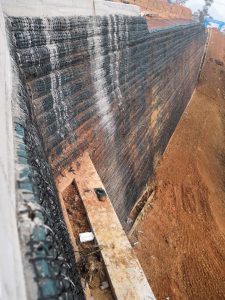
The high modulus and strength characteristics make steel plastic composite geogrids ideal for mechanically stabilized earth (MSE) walls. They enable the construction of vertical or near-vertical retaining structures with significant height capabilities while reducing the footprint compared to conventional gravity walls.
Embankments Over Soft Soil
When constructing embankments over soft, compressible soils, these geogrids provide the necessary tensile reinforcement to bridge weak areas and distribute loads evenly. This application prevents differential settlement, reduces the required fill material, and accelerates construction timelines by improving stability during construction.
Mining and Port Projects
In heavy industrial settings such as mining operations, port facilities, and container yards, steel plastic composite geogrids deliver the exceptional load-bearing capacity needed to support extremely heavy equipment, storage piles, and traffic. Their resistance to chemical degradation makes them suitable for environments with potential exposure to fuels, oils, and other industrial chemicals.
Installation Considerations and Best Practices
Proper installation is crucial to maximizing the performance of steel plastic composite geogrids. The material should be placed on a properly prepared subgrade free from sharp protrusions that might damage the coating. During placement, the geogrid should be tensioned slightly to eliminate wrinkles but not overstressed. Adequate overlap between adjacent rolls (typically 6-12 inches) ensures continuity of reinforcement throughout the structure. Fill material should be placed and compacted according to specifications, with initial layers placed carefully to avoid displacement of the geogrid.
Environmental Benefits and Sustainability
Beyond their technical advantages, steel plastic composite geogrids contribute to sustainable construction practices. By enabling the use of local fill materials and reducing the need for imported high-quality aggregates, they significantly lower transportation-related carbon emissions. The extended service life of structures reinforced with these geogrids reduces the frequency of repairs and reconstructions, leading to long-term resource conservation. Additionally, the material’s resistance to chemical degradation prevents soil contamination and maintains environmental quality.
Conclusion: The Future of Geosynthetic Reinforcement
Steel plastic composite geogrid represents a significant advancement in geosynthetic technology, offering engineers and designers a superior solution for challenging reinforcement applications. By combining the best properties of steel and polyethylene, this innovative material delivers unmatched strength, durability, and performance across a wide range of civil engineering projects. As construction demands continue to evolve toward more challenging environments and higher performance requirements, steel plastic composite geogrids stand ready to meet these challenges with reliability and efficiency, making them an indispensable tool for modern infrastructure development.
