


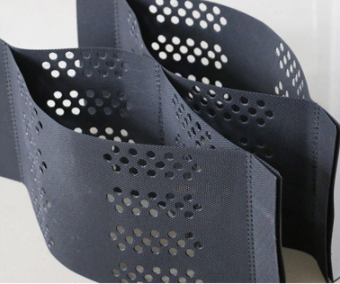
As a core material in soil reinforcement structures, polyester geogrid boasts stable performance and a wide range of applications, making its role in infrastructure construction indispensable. Furthermore, it offers advantages such as long life, high load-bearing capacity, and easy installation, making it widely used in highway, railway, and environmental protection applications.
What is Polyester Geogrid?
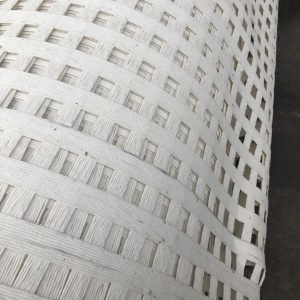
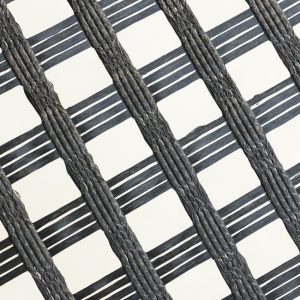
Polyester geogrid is a geosynthetic material made from high-strength polyester filaments woven into a grid structure and coated to create a stable, integrated structure. Its core function is to enhance the tensile and shear strength of the soil, providing greater stability for foundations or pavements. Unlike traditional reinforcement methods such as steel or concrete, polyester geogrid is lightweight and flexible, and also highly corrosion-resistant, capable of long-term use in harsh environments such as acid, alkali, and salt spray.
The production process involves spinning polyester fibers, knitting the mesh, and applying a protective coating. Different coatings (such as PVC and asphalt) can be customized for different project environments.
What are the uses of polyester geogrid?
Polyester geogrids are used in two main areas: foundation reinforcement and structural stabilization:
Bearing enhancement: Distributes concentrated loads over a wider area to prevent localized settlement.
Prevents structural deformation: Suppresses movement, cracking, and subsidence of pavements or embankments.
Improves soft soil foundations: Increases the overall frictional resistance of the soil, thereby improving the bearing capacity of soft soil. Extending project life: Reducing maintenance frequency and costs.
Real-world examples show that the use of polyester geogrids can reduce highway subgrade settlement by over 30%, significantly delaying the onset of pavement cracks.
Polyester Geogrid Applications
Polyester geogrids have a wide range of applications, covering virtually all engineering areas requiring soil stability and load-bearing properties:
Transportation engineering
Highway and railway subgrade reinforcement
Airport runway stabilization layers
Water conservancy projects
River bank protection and embankment reinforcement
Erosion and landslide prevention
Municipal engineering
Underground garage roof backfill
Urban road subsidence prevention
Environmental engineering
Landfill anti-seepage systems
Slope landscaping support
How to choose a polyester geogrid model?
Selection requires comprehensive consideration of strength, elongation, coating, mesh size, and other indicators.
Key Parameters:
Tensile Strength: Generally ranges from 20 kN/m to 200 kN/m, depending on load requirements.
Elongation at Break: A value below 13% is more suitable for projects requiring high stability. Aperture Size: Should match the particle diameter of the filler material.
Coating Type: PVC coatings are acid and alkali resistant, while asphalt coatings are more suitable for integration with asphalt pavement.
Are there any standard specifications for polyester geogrids?
In domestic and international engineering applications, polyester geogrids must comply with the following mainstream standards:
GB/T 17689-2008 “Geosynthetics – Geogrids”
ASTM D6637 “Standard Test Method for Tensile Properties of Geogrids”
ISO 10319 “Geosynthetics – Tensile Test Methods”
These standards specify the product’s physical properties, test methods, and quality acceptance requirements to ensure project safety and durability.
Functions of Polyester Geogrids
Improve bearing capacity: Stabilizes the ground structure and effectively increases the tensile strength of the foundation.
Controls settlement: Prevents land subsidence and reduces the risk of subsidence in soft soils.
Protective structure: Provides protection, effectively reducing damage caused by water flow and wind erosion.
Extends service life: Effective use and maintenance can reduce costs.
Optimizes stress distribution: Evenly distributes stress, avoiding overload in certain areas and preventing localized stress concentrations in the structure.
Features of polyester geogrids
High strength-to-weight ratio
Resistant to chemicals and UV rays
Low elongation and excellent stability
High flexibility and easy installation
Suitable for a wide temperature range (-40°C to +60°C)
Comparison of polyester geogrids with other types
| Type | Material | Tensile Strength | Durability | Flexibility | Common Applications |
| Polyester Geogrid | High-strength polyester fibers | High | Excellent | Good | Roadbed reinforcement, slope protection |
| Fiberglass Geogrid | Alkali-resistant fiberglass | Very High | Good | Lower | Asphalt pavement reinforcement |
| Biaxial Geogrid | Polypropylene or HDPE | Medium | Very Good | Excellent | Soft soil improvement, foundation reinforcement |
Polyester Geogrid Usage Guide
Pre-construction Preparation: Remove sharp objects and debris from the paving surface to ensure smoothness.
Laying Method: Straighten and level, securing with U-shaped staples as necessary.
Overlap Requirements: ≥ 30cm vertically, ≥ 20cm horizontally.
Backfill and Compaction: Use layered backfill to avoid direct compaction of the primary paving layer by heavy rollers.
Protective Measures: Avoid prolonged exposure to strong sunlight uncovered.
Frequently Asked Questions
Q1: Is polyester geogrid resistant to salt spray in coastal projects?
A: High-quality PVC-coated polyester geogrid can withstand long-term use in high-salt spray environments and has superior corrosion resistance to ordinary polypropylene geogrid.
Q2: Can it be laid directly on damp ground?
A: Yes, but ensure good drainage to prevent water accumulation that affects backfill compaction.
Q3: Compared with fiberglass geogrid, which has a longer lifespan?
A: Polyester geogrid has a longer lifespan in humid and acidic/alkaline environments.
Conclusion
Polyester geogrid, as a core product of modern geotechnical reinforcement, has been widely used in highway, railway, water conservancy, and municipal engineering due to its advantages of high strength, low elongation, corrosion resistance, and convenient construction. Scientific selection and standardized construction can significantly improve the stability and durability of projects. In the future, with the development of green building materials and sustainable engineering concepts, polyester geogrid will play a role in more ecological and environmental protection projects.
