
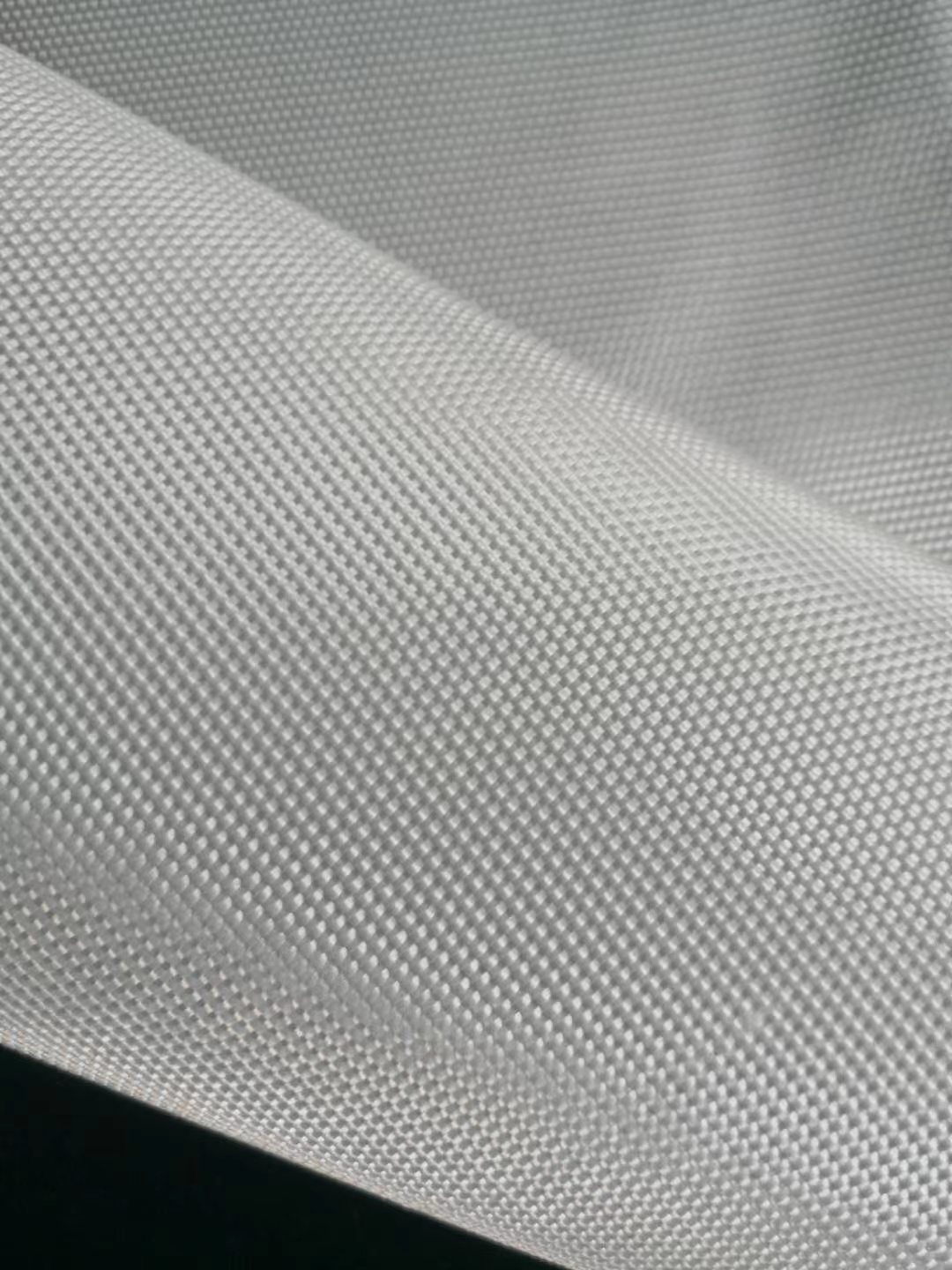


Polyester Geogrids: Applications, Benefits, and Future Prospects
Polyester geogrids, manufactured through warp knitting and polymer coating of high-tenacity polyester yarns, are versatile geosynthetic materials widely used in civil engineering. Their biaxial (multi-directional) and uniaxial (single-directional) variants offer distinct advantages tailored to specific applications. Below is a detailed breakdown of their uses, installation benefits, and future trends.
1. Applications of Polyester Geogrids
Biaxial Polyester Geogrid
Biaxial geogrids provide equal strength in both longitudinal and transverse directions, making them ideal for multi-directional load distribution:
- Road/Railway Bases:
- Stabilizes weak subgrades (e.g., soft clay, sandy soils) by interlocking with aggregates.
- Reduces pavement thickness by 30% while extending service life.
- Example: Used in India’s Mumbai-Pune Expressway to prevent rutting under heavy truck traffic.
- Slope Reinforcement:
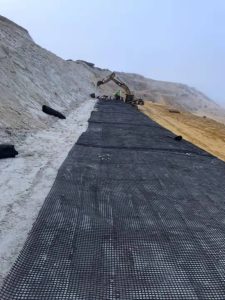
- Reinforces steep slopes (up to 70°) in highways or mining sites.
- Prevents landslides in tropical regions with high rainfall.
- Landfill Engineering:
- Reinforces liner systems and stabilizes waste slopes.
- Resists chemical degradation from leachate (pH 3–12).
Uniaxial Polyester Geogrid
Uniaxial geogrids offer high strength in one primary direction, optimized for linear tensile reinforcement:
- Retaining Walls:
- Constructs Mechanically Stabilized Earth (MSE) walls up to 30m tall.
- Example: Dubai’s Al Sufouh Road MSE walls withstood 50°C temperatures.
- Embankments over Soft Soil:
- Distributes vertical loads over weak soils (e.g., peat, marshland).
- Reduces differential settlement by 70% in coastal highway projects.
- Erosion Control:
- Anchors geotextiles or gabions in riverbanks and coastal defenses.
2. Benefits During Installation & Usage
Installation Advantages
- Lightweight & Flexible:
- Rolls are easy to handle (e.g., 5m × 50m rolls weigh ~50kg), reducing labor costs.
- Conforms to uneven terrain without tearing.
- UV & Weather Resistance:
- Pre-coated with UV-stabilized polymers (e.g., PVC, acrylic) for 6+ months of outdoor exposure.
- Rapid Deployment:
- Requires minimal overlap (10–15cm for biaxial, 20cm for uniaxial).
- Compatible with mechanical or manual fixing (e.g., U-pins, sandbags).
Performance Benefits
- High Tensile Strength:
- Biaxial: 30–1200 kN/m in both directions (ASTM D6637).
- Uniaxial: 50–1200 kN/m in primary direction.
- Low Creep:
- Polyester’s low creep strain (<3% at 50% ultimate strength) ensures long-term stability.
- Chemical Resistance:
- Withstands hydrocarbons, salts, and biological degradation.
- Sustainability:
- Reduces aggregate consumption by 40% and lowers CO₂ emissions compared to concrete solutions.
3. Future of Polyester Geogrids
Innovation Trends
- Smart Geogrids:
- Integration of optical fiber sensors to monitor strain and temperature in real time.
- Example: Pilot projects in EU smart highways for predictive maintenance.
- Recyclable Materials:
- Development of 100% recyclable polyester geogrids aligned with circular economy goals.
- Bio-Based Coatings:
- Eco-friendly coatings (e.g., bio-polymers) to replace PVC, reducing environmental impact.
- Hybrid Composites:
- Combination with geotextiles or geomembranes for multifunctional solutions (e.g., drainage + reinforcement).
Market Growth Drivers
- Infrastructure Expansion: Global demand for geogrids will grow at 8.9% CAGR (2023–2030), driven by Asia-Pacific urbanization (Grand View Research).
- Climate Resilience: Governments invest in flood-resistant roads and erosion control, favoring polyester’s durability.
- Cost Efficiency: Polyester geogrids are 20–30% cheaper than fiberglass alternatives for equivalent strength.
4. Technical Comparison: Biaxial vs. Uniaxial
| Parameter | Biaxial Geogrid | Uniaxial Geogrid |
|---|---|---|
| Strength Direction | Equal in X-Y axes | Primary direction only |
| Typical Use Cases | Road bases, slopes | Retaining walls, embankments |
| Tensile Strength | 30–1200 kN/m (both axes) | 50–1200 kN/m (primary axis) |
| Overlap Requirement | 10–15cm | 20cm |
Why Choose Polyester Geogrids?
- Proven Durability: 50+ year design life in harsh environments.
- Certifications: Compliant with ASTM, ISO, and EN standards.
- Customization: Adjust aperture size (10–50mm), strength, and coating type.
Polyester geogrids are a cost-effective, high-performance solution for modern infrastructure challenges. Their adaptability and evolving technology position them as a cornerstone of sustainable construction. For tailored specifications, share your project requirements!
