


Abstract
Geogrid-reinforced retaining walls are widely acknowledged in contemporary geotechnical engineering as a cost-effective and structurally efficient method for soil stabilization and slope retention.
The Federal Highway Administration (FHWA) – Mechanically Stabilized Earth Walls and Reinforced Soil Slopes Design Guidelines and research published in Geotextiles and Geomembranes (Koerner, 2012) indicate that geogrid reinforcement greatly enhances load distribution, tensile strength, and the long-term durability of retaining wall systems.
This guide offers a thorough, field-oriented explanation of the installation process for geogrid in retaining walls, integrating engineering principles, construction best practices, and practical site considerations to achieve optimal performance.
What Is a Geogrid and Why Does It Matter in Retaining Walls?
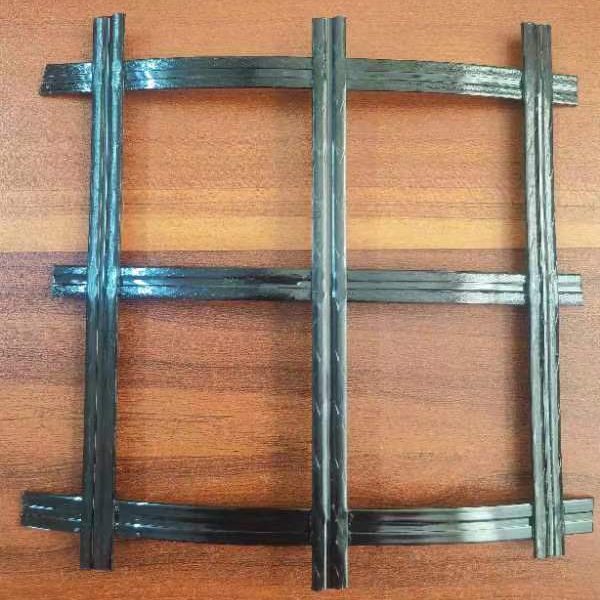
Geogrid is a geosynthetic material made from polymers designed to strengthen soil by offering tensile strength that soil alone cannot provide. Unlike conventional retaining techniques that depend only on mass or stiff structures, systems reinforced with geogrid form a mechanically stabilized earth (MSE) structure, in which soil and reinforcement function together as a unified composite.
In retaining wall construction, geogrid layers penetrate the backfill, securing the wall face and spreading loads across a broader area. This decreases lateral earth pressure and improves overall stability. The outcome is a structure that is not only more robust but also more adaptable and resistant to settlement or seismic activity.
Types of Geogrids Used in Retaining Walls
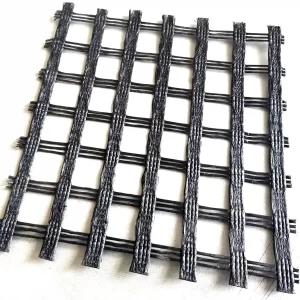
Before installation, selecting the correct geogrid type is critical. Different geogrids are designed for specific load conditions, soil types, and project requirements.
Geogrid Type Comparison
| Type | Structure | Strength Direction | Typical Application |
| Uniaxial Geogrid | Linear ribs | One direction | Retaining walls |
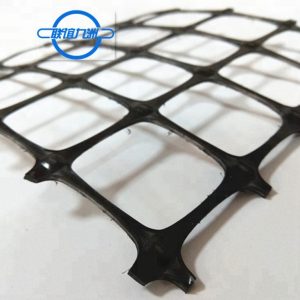
| Biaxial Geogrid | Grid pattern | Two directions | Subgrade stabilization |
| Triaxial Geogrid | Triangular | Multi-directional | Heavy load distribution |
For retaining walls, uniaxial geogrids are most commonly used because they provide high tensile strength perpendicular to the wall face.
Pre-Installation Planning and Site Preparation
Proper installation starts well before the placement of the initial geogrid layer. Engineering design, soil assessment, and site preparation are all essential for ensuring durability over time.
Important factors to consider include soil bearing capacity and compaction properties, drainage conditions and groundwater levels, wall height and surcharge loads, as well as frost depth and climate factors.
The foundation trench needs to be dug to the required depth and properly compacted to create a stable foundation. Any organic matter, loose soil, or debris must be cleared away to avoid future settlement.
Step-by-Step Installation Process of Geogrid
Installing geogrid for a retaining wall demands accurate implementation. Every layer needs to be properly aligned, tensioned, and integrated into the compacted fill.
Step 1: Excavation and Base Preparation
Dig out the area following the design specifications, making sure the depth and width are correct. The base must be leveled and compacted with mechanical tools to reach the necessary density.
A leveling pad, often made of crushed stone or concrete, is placed to support the initial course of wall blocks or facing units.
Step 2: Set the First Row of Retaining Wall Blocks
Position the first row of blocks carefully, making sure they are level in both horizontal and vertical directions. This layer sets the alignment for the entire wall.
Step 3: Fill in behind the wall blocks with granular material and compact it in layers
Usually 150–200 mm thick. Adequate compaction is crucial to facilitate efficient load transfer between the soil and geogrid.
Step 4: Lay the Geogrid
Roll out the geogrid perpendicular to the wall face. The geogrid should be placed flat, with no wrinkles or folds.
Geogrid Placement Guidelines
| Parameter | Requirement |
| Orientation | Perpendicular to the wall face |
| Tension | Pulled taut |
| Overlap | As specified (usually 150–300 mm) |
| Length | Based on wall height (typically 0.7–1.0 × wall height) |
The geogrid must extend into the retained soil to provide anchorage.
Step 5: Secure the Geogrid
Fix the geogrid in place using pins, stakes, or the weight of backfill material. The geogrid remains must be under tension during this process.
Step 6: Add Next Block Layer and Repeat
Install the next course of blocks, ensuring proper alignment with the geogrid connection. Repeat the process of backfilling, compacting, and laying geogrid layers at specified intervals.
Geogrid Spacing and Layer Configuration
The spacing between geogrid layers depends on wall height, soil properties, and load conditions.
Typical Layer Spacing
| Wall Height | Geogrid Spacing |
| < 3 m | Every 0.6–0.8 m |
| 3–6 m | Every 0.4–0.6 m |
| > 6 m | Engineered design required |
Closer spacing increases stability but also cost, so optimization is essential.
Backfill Material Selection
Using the right backfill material is essential when installing a Geogrid system in retaining walls.
Key considerations:
Granular Soils Preferred: Well-graded gravel or crushed stone offers better interlocking with geogrids.
Good Drainage Properties: Materials should permit water to pass through easily to decrease hydrostatic pressure.
Low Plasticity: Avoid clay-rich soils because they retain water and diminish reinforcement effectiveness.
Proper Compaction: Backfill must be compacted in layers to ensure structural stability and load distribution.
Drainage Considerations
Effective drainage is crucial for the long-term performance of geogrid-reinforced retaining walls.
Best practices:
Install Drainage Layers: Use gravel backfill or drainage composites behind the wall.
Incorporate Drain Pipes: Perforated pipes help remove accumulated water.
Use Filter Fabrics: Prevent fine particles from clogging drainage systems.
Control Surface Water: Proper grading and drainage channels reduce water infiltration.
Poor drainage can lead to increased pressure and potential wall failure, even with high-quality geogrids.
Common Installation Mistakes to Avoid
Improper installation can greatly diminish the performance of a Geogrid system.
Common mistakes include:
Insufficient Embedment Length: Failing to extend the geogrid adequately into the backfill decreases reinforcement strength.
Improper Tensioning: Loosely installed geogrid layers can cause uneven load distribution.
Using Inappropriate Backfill: Fine or cohesive soils hinder interlock and reduce effectiveness.
Poor Compaction: Insufficient compaction results in settlement and instability.
Ignoring Design Specifications: Deviating from engineered plans can compromise safety.
Advantages of Using Geogrid in Retaining Walls
Geogrids offer several structural and economic advantages in the construction of retaining walls.
Notable benefits include:
Improved Soil Reinforcement: They enhance load distribution and contribute to greater stability of the retaining structure.
Cost Effectiveness: Their use diminishes the requirement for extensive concrete components, thereby reducing overall expenses.
Flexibility: Geogrids accommodate minor ground movements, minimizing the risk of cracking.
Accelerated Installation: The construction process is streamlined relative to conventional retaining wall systems.
Long-Term Durability: These materials exhibit resistance to environmental deterioration and chemical exposure, ensuring sustained performance over time.
Advanced Engineering Considerations
For large-scale or critical projects, advanced design factors must be considered, including:
- Pullout resistance
- Connection strength
- Global stability analysis
- Seismic loading
- Creep behavior of polymers
Professional engineering design is required for walls above certain heights or in complex conditions.
Real-World Applications
Geogrid-reinforced retaining walls are commonly employed in civil engineering projects. Typical uses involve stabilizing slopes and embankments in highway and road construction, as well as supporting track foundations in railway infrastructure.
Commercial Developments: Landscaping and structural retaining walls
Residential Projects: Garden walls and erosion control systems
Industrial Sites: Soil stabilization in heavy-load environments
Cost vs Performance Analysis
When evaluating a Geogrid solution, balancing cost and performance is essential.
Cost Factors:
- Material quality and type of geogrid
- Installation complexity
- Backfill material requirements
- Labor and equipment costs
Performance Considerations:
- Load-bearing capacity
- Soil compatibility
- Durability and lifespan
- Environmental conditions
Overall Insight:
Overall, insight suggests that although initial costs may differ, geogrid systems often offer better long-term value because of reduced material usage, faster construction, and lower maintenance needs compared to traditional retaining wall methods.
Future Trends in Geogrid Technology
The development of Geogrid technology is being driven by increasing demands for sustainable infrastructure, higher-performance materials, and smarter construction practices. As civil engineering evolves, geogrids are becoming more advanced, efficient, and adaptable to complex environments.
- High-Performance Polymer Materials
Future geogrids will increasingly use advanced polymers with enhanced strength, durability, and environmental resistance.
Improved tensile strength for heavy-load applications
Better resistance to UV exposure, chemicals, and aging.
Longer service life in harsh environmental conditions.
- Sustainable and Recyclable Solutions
Sustainability is a major focus in infrastructure development.
Development of recyclable and eco-friendly geogrid materials.
Reduced carbon footprint during manufacturing.
Integration with recycled aggregates and green construction practices.
- Smart Geogrids with Embedded Sensors
The integration of smart technologies is changing traditional materials.
Sensors embedded to track strain, stress, and deformation.
Data is collected in real-time for structural health monitoring.
Systems are in place to provide early warnings of possible failures.
- Improved Manufacturing Technologies
Advances in production methods are improving the quality and consistency of geogrids.
Techniques such as precision extrusion and stretching are used.
There is improved control over the grid’s shape and how strength is distributed.
Increased production efficiency and reduced material waste.
- Integration with Digital Engineering (BIM & AI)
Geogrid design and application are becoming more data-driven.
Use of Building Information Modeling (BIM) for optimized design.
AI-based simulations for predicting long-term performance.
Enhanced project planning and risk assessment.
- Multi-Functional Geogrids
Future geogrids will serve multiple purposes beyond reinforcement.
Combined reinforcement and drainage capabilities.
Integration with geotextiles and other geosynthetics
Improved performance in erosion control and slope stabilization
- Expansion into new applications
Geogrids are increasingly used in a wider range of engineering fields.
Renewable energy projects (e.g., wind and solar farm foundations)
Coastal protection and climate-resilient infrastructure
Urban development and smart city projects
FAQ: Geogrid Installation for Retaining Walls
Q1: How long should the geogrid extend behind the wall?
Typically, 70–100% of the wall height, depending on design requirements.
Q2: Can a geogrid be installed on slopes?
Yes, but slope stabilization requires specific design considerations.
Q3: Is geogrid better than geotextile for retaining walls?
Yes, for reinforcement purposes, as the geogrid provides higher tensile strength.
Q4: Do all retaining walls need geogrid?
No, only walls exceeding certain heights or load conditions require reinforcement.
Q5: What is the lifespan of a geogrid?
High-quality geogrids can last 50–100 years under proper conditions.
Conclusion
The installation of geogrid for retaining walls constitutes a meticulous procedure that integrates engineering design principles, material selection, and appropriate construction methodologies.
When implemented effectively, geogrid-reinforced systems demonstrate enhanced strength, adaptability, and durability over conventional retaining structures.
Given the increasing demands on infrastructure, geogrid technology is poised to remain a fundamental component within contemporary geotechnical engineering practice.
