


Introduction: The Strategic Role of PP Biaxial Geogrid in Modern Infrastructure
In rapidly growing markets, especially in China, PP (polypropylene) biaxial geogrid has become the critical component of a geosynthetic material for use in road construction, slope protection, wall retention, and embankment. As the number of urbanized people, infrastructure, and demand for cost-effective, yet durable, solutions continues to grow into 2025, the importance of geogrid reinforcement is increasing.
What is the reason for the popularity of PP biaxial geogrid?
It increases the tensile strength of the material in two different directions (longitudinal and transverse), which enables a stronger association with soil or other aggregates.
The substance (polypropylene) possesses chemical resistance, long-term stability, and stability under ultraviolet light or in the environment.
Chinese manufacturers have increased production capacity, offering competitive prices while also meeting international standards (ISO, CE) and providing high-performance products.
In this comprehensive guide for 2025, we will discuss:
- The technical definition and creation of PP biaxial geogrid.
- Key properties and principles
- Large-scale uses of Chinese and global technology
- Specification and selection criteria
- Installation, quality control, and longevity
- Chinese manufacturers and leading product lines.
- Trends, difficulties, and expectations
What Is PP Biaxial Geogrid? Manufacturing, Structure & Mechanics
-
Definition and Essential Composition
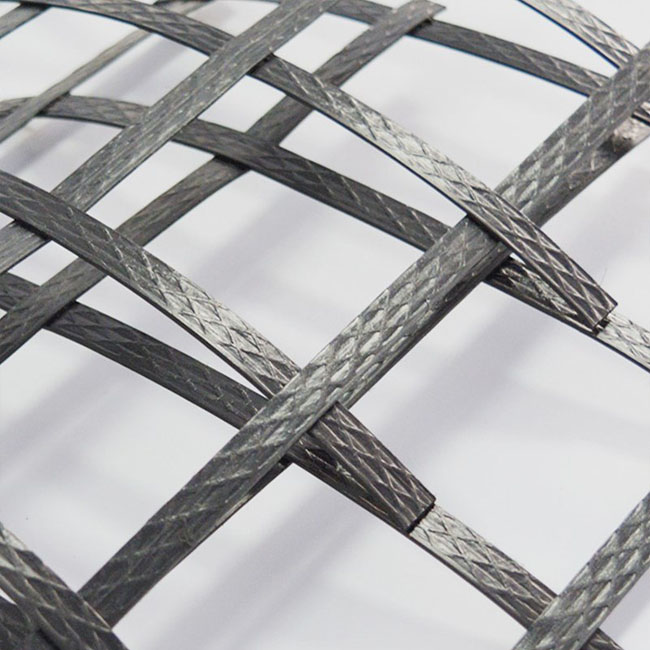
A PP biaxial geogrid is a synthetic material that is made from polypropylene and is processed through extrusion, which results in the creation of holes, punches, and biaxial stretching (i.e., longitudinal + transverse).
Its grid-like design has ribs that are oriented both ways; this design results in a mesh that has a high tensile strength and promotes effective soil interaction.
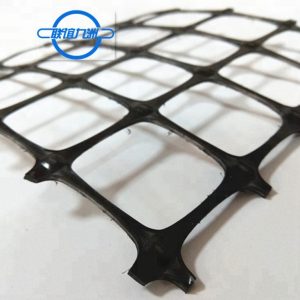
Feicheng Lianyi (a manufacturer from China) said that the geometry of the square aperture and the design of the nodes in the geometry maximize the interaction with the soil or granular filler, which improves the strength of the bond.
-
The manufacturing process
The key steps in the manufacturing of a PP biaxial geogrid are typically:
- Extrusion: The polypropylene resin is melted and then extruded into a flat sheet.
- Punching: The sheet is extruded in a pattern that creates holes, or apertures, in a regular configuration.
- Biaxial Stretching: The sheet is first stretched in the longitudinal direction, followed by the transverse direction. This orients the molecular chains and increases the strength of the ribs.
- Cooling and Maintenance: The grid is stretched and maintained in this configuration, occasionally heated to maintain the shape and improve the mechanical properties.
This procedure produces the high modulus and low stretchiness properties that make biaxial geogrids beneficial for soil enhancement. For instance, Taian Modern Plastic Co. states that the TMP biaxial geogrid has the greatest tensile strength in both directions, with a consistent efficiency of nodes and dimensional stability.
-
Material Attributes: What is the reason for choosing Polypropylene?
PP is commonly employed for creating biaxial geogrids because of its benefits:
Chemical resistance: PP is resistant to many toxic chemicals present in soil, including acids, alkalis, and salts.
Low creep: When designed correctly, PP geogrids can maintain their long-term strength when loaded.
Lightweight: Easy to transport and has a simple handle.
Effectiveness: Other polymers have a poor ratio of performance to price, but PP has a good one.
Recyclability: PP can be reused, which promotes long-term infrastructure concerns.
Mechanical & Physical Properties of PP Biaxial Geogrid
Understanding the mechanical properties is crucial to determining the appropriate type of geogrid.
-
Tensile strength and behavior
The tensile strength in both the longitudinal and transverse directions is considered a significant characteristic.
The elongation at break is typically low (often 13-16%) in Chinese products with high strength.
-
The efficiency of the junction and its flexibility are both considered
The efficiency of the junction is the degree to which the nodes (where the ribs intersect) participate in the transfer of load; typical values are around 90% for high-quality products.
Flexural rigidity (the stiffness of the rib) is another measurement; increased stiffness increases the distribution of load, but it may also reduce conformability.
-
Stability and Durability of the Aperture
Aperture stability (resistance to deformation of the opening under load) is crucial; if apertures collapse, soil interlock declines.
Long-term stability: Some suppliers claim that PP biaxial geogrids have an effective retention rate of 95% following installation in tests that specialize in this property.
Other attributes include UV resistance and carbon black incorporation, which are intended to increase the resistance of Chinese geogrids to aging.
Primary Applications & Use Cases of China PP Biaxial Geogrid
PP biaxial geogrids are commonly employed in a variety of projects for civil engineering and infrastructure. Key uses include:
-
Base Road and Rail Construction
One of the most important uses is to strengthen the sub-base of roads and railway tracks.
By placing a geogrid layer beneath or within the granular base, engineers can enhance the distribution of loads, reduce the deformation of the subgrade, and increase the life of the pavement.
Chinese manufacturers create strong geogrids that can support heavy traffic and good soil (e.g., 30 kN, 40 kN).
-
Slope stabilization and retention structures
On inclines, biaxial geogrid increases the fill’s resistance and prevents it from sliding; it’s also beneficial for erosion control.
In retaining walls, the geogrid layers serve as a barrier to prevent backfill from escaping, reduce the pressure of earth, and increase the stability of the structure.
-
Walkways and Soft-Soil Support
In soft soil regions, geogrids can augment the weak subgrade by forming a composite soil-geogrid structure.
They also facilitate a decrease in differential settlement and increase load-bearing efficiency.
-
Control of erosion and landfill applications
While not the primary purpose, PP biaxial geogrid can contribute to the control of erosion by maintaining soil and reducing surface movement.
In landfills or caps, geogrids facilitate the distribution of weight, minimize differential settlement, and maintain the integrity of the soil.
-
Other Infrastructure Activities
Airports, parking spaces, and industrial facilities: geogrids augment large area pavements.
Slope-lined structures: geogrids serve as a supplement to vegetation growth.
The enhancement of soil in constrained zones with rail.
Specification & Selection Criteria: Engineering Guidelines
When determining aPP’s biaxial geogrid for a particular project, the following factors are important:
-
Geotechnical Design necessities
Conduct geotechnical research to determine the subgrade’s strength, type of soil, and the expected loads.
Estimate the tensile load per layer based on the expected forces involved (bearing, traffic, slope).
Select a relevant grade of geogrid (e.g., BX2020, BX3030) that meets the required strength and design length.
-
Geogrid Mechanical Specifications
Tensile strength: the maximum kN/m that can be achieved in both MD and TD.
Elongation: Smaller values of elongation are indicative of greater stiffness; check the 2% 5% strain range.
Efficiency of the nodes: High-efficiency nodes facilitate the effective transmission of loads.
Aperture height: must correspond with the soil’s grain size and ensure effective interlock. As described by Feicheng Lianyi, the sizes of openings are adjustable for project planning.
-
Robustness and Environmental Conditions
Confirm the UV resistance, long-term behavior, and damage resistance (e.g., the percentage of retention following installation) from the manufacturer’s specifications sheet.
For projects that are exposed, assess their aging potential and consider geogrids that have carbon black or other additives to shield them from the ultraviolet light.
For chemically aggressive soils, make sure the PP rating is appropriate.
-
Roll Size & Handling
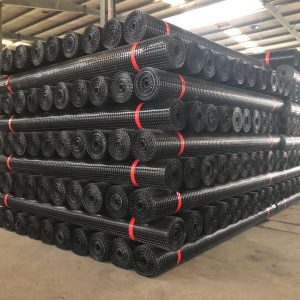
Confirm the roll’s width and length: Chinese vendors commonly offer widths of 1-6 meters and lengths of 75 meters or more.
Review the weight of each roll, the logistics of handling, and the method of installation (anchoring, overlap).
-
Quality Assurance and Standards
Look for products that follow international rules (e.g., ASTM D6637, GRI-GG2) or ISO certification. For instance, Feicheng Lianyi states that they follow the ISO and other quality systems.
Request data on stretchiness, tensile strength, elongation, efficiency of junction, and long-term creep properties.
On-site verification: following the birth, assess the integrity of the roll, the label, and the traceability of the batch.
Installation & Construction Best Practices
Effective installation is crucial to the long-term success of PP-biaxial geogrid.
-
Site Preparation
Excavate and slope the ground’s elevation to the intended one; make sure it’s level and steady.
Subsoil that is compacted to the intended density; soft spots may need to be stabilized before being placed with geogrid.
If necessary, place a flooring layer (e.g., granular dirt) to minimize the damage caused by the geogrid during installation.
-
Geogrid Approach
Unroll the geogrid along the intended alignment, making sure the MD and TD vectors correspond to the intended reinforcement path.
Overlap the adjacent rolls by around, the typical amount that is overlapped is 0.3 m or more, based on the design’s specifications.
Anchor or stake the grid in place temporarily to prevent it from shifting during the placement of the backfill.
-
Backfilling
Use controlled placement of the backfill to avoid damaging the geogrid: the dump’s fill was placed in a controlled manner, using a bulldozer to spread it, and avoiding sharp aggregates.
Compact the fill material into thin stripes, as specified by the design (typically 150 mm or less per layer), to minimize the damage to the ribs.
Complete a series of compaction tests as prescribed by the geotechnical design to verify the required density and consistency.
-
Quality Assurance and Verification
During installation, watch for geogrid tears, punctures, excessive tension, or misalignment.
After compacting, make a visual inspection and possibly a pull test of the geogrid at the sample locations to verify that it is embedded properly.
Document the parameters of the document’s installation, including: the roll number, the overlap, the compaction data, and any damage observed.
Durability, Maintenance & Long-Term Behavior
-
Constant Creep and the retention of strength
The biaxial geogrid inPP is intended to withstand tensile forces that will last over decades, but engineers must take into account creep (deformation that is dependent on time).
It’s crucial to design the geogrid layers so that the operational stress is still within the acceptable range without causing a loss of performance.
-
UV, chemical, and temperature resistance
For sunlight-exposed applications, choose products with carbon black or stabilizers that prevent the degradation of ultraviolet light.
In chemically aggressive soils, make sure that the composition of the PP geogrid and its additives will not adversely affect the local soil chemistry.
Extreme temperature fluctuations (freeze-thaw) can adversely affect the performance of geogrids; long-term testing or documented data should be considered.
-
Inspection and Maintenance
After installation, regular updates of exposed geogrid (e.g., in embankments, slopes) should assess the damage, exposure, or aging of the UV.
If geogrid’s failures are encountered (e.g., tearing), remedies include utilizing geogrid’s overlays or targeted supplements.
Maintain written documentation of the installation, conditions, and findings of inspection to support lifecycle management.
Challenges, Risks & How to Mitigate Them
While the biaxial geogrid from PP has many advantages, engineers and specialists must recognize potential problems:
-
Damage during installation
Risk: Violent backfill, sharp aggregates, or negligent handling can adversely affect the ribs or nodes.
Mitigation: Employees will be trained in the proper way to fill in the gaps, have sufficient overlap, and will be tested on-site.
-
Additions and long-term changes
Risk: Over-design stress or extra pounds may lead to excessive creep that decreases the effectiveness of the reinforcing material.
Mitigation: Employ the manufacturer’s creep rate; limit the design strain; consider multiple layers or additional reinforcement.
-
Environmental degradation
Risk: Ultraviolet exposure, chemical aggression, or extreme temperatures may adversely affect the polymer.
Mitigation: Indicate UV-stabilized varieties, verify chemical compatibility, and assess the material’s capacity for specific environmental conditions.
-
Low-quality products or counterfeits
Variation: The quality of manufacturing is variable; uncertified or low-quality geogrids may not perform as expected.
Mitigation: collaborate with trusted Chinese manufacturers, demand test documentation (ASTM, ISO), inspect packaging labels, and follow the batch traceability.
-
The cost of the product should be balanced with its performance
Cost: The choice of a low-cost geogrid may lead to early failure or poor performance.
Mitigation: Life cycle cost of analysis, consider the long-term viability and cost of replacement.
Trends & Outlook in 2025 for China PP Biaxial Geogrid
Future-oriented analysis of the Chinese PP biaxial geogrid market suggests several upcoming trends:
Sustainability: Increasing demand for recycled PP geogrids, and providers promoting green production methods.
More powerful, smaller products: New grades that are intended for heavy infrastructure (roads, rail) increase the tensile strength of the product while controlling its elongation.
Smart Geosynthetics: The Rise of Real-Time Performance Monitoring via In Situ Signals and Deformation.
Large-scale infrastructure demand: China’s extensive spending on transportation, urbanization, and Belt & Road projects has led to an increase in demand.
Costs of production optimization and local supply chains: Chinese manufacturers have continued to increase their production, which has led to a decrease in costs for domestic and international projects that are civil projects.
Conclusion
PP’s biaxial geogrid, which is primarily produced in China, has a significant impact on soil stabilization, infrastructure support, and large-scale civil engineering. Its dual-headed tensile strength, long durability, and cost-efficiency make it ideal for roads, slopes, embankments, and structural supports.
For 2025, professionals must be careful about selecting the appropriate geogrid type, understanding its mechanical behavior, installing it with precision, and maintaining long-term performance through inspection and maintenance. By partnering with manufacturers that are reputable in China, utilizing modern geosynthetic technology, and adhering to design principles that are relevant to the real world, engineers and project owners can gain both performance and economic benefits.
