
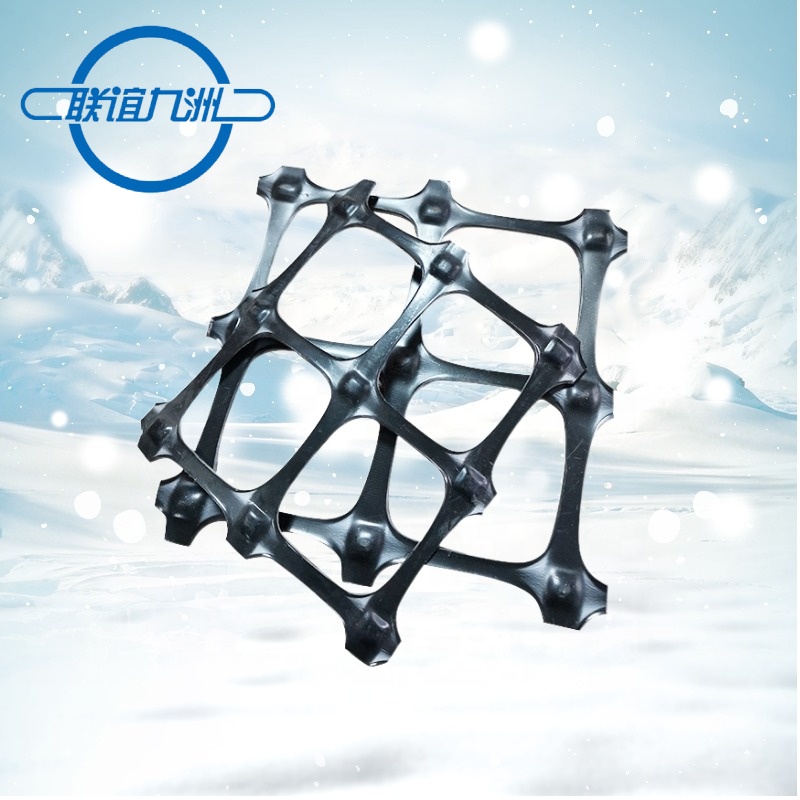


Article Summary: A biaxial geogrid is a polymer reinforcement material designed to provide tensile resistance in two perpendicular directions. It helps to stabilise aggregate layers, improve load distribution, and reduce deformation in roads, pavements, working platforms, and other civil engineering projects.
According to guidance from the U.S. Federal Highway Administration (FHWA) on geosynthetic-reinforced soil and ASTM D6637, selecting a suitable biaxial geogrid involves evaluating factors such as tensile strength, strain behaviour, junction performance, resistance to installation damage, and site conditions, rather than simply comparing ultimate tensile strength.
What Is a Biaxial Geogrid?
A biaxial geogrid is an open-grid geosynthetic material used to reinforce soil and granular materials by creating a mechanical bond between its ribs and the surrounding aggregate. It has tensile properties designed for two main directions, known as the machine direction (MD) and cross-machine direction (CD). This allows it to resist lateral movement and distribute loads over a wider area. Unlike geotextiles, which are generally continuous textile sheets, geogrids have open apertures through which aggregate particles can interlock with the grid structure.
This interaction is particularly beneficial in pavement foundations and other applications where repeated loading can displace aggregate particles laterally, resulting in rutting or uneven settlement. When the aperture geometry, aggregate grading, grid stiffness, and installation conditions are compatible, the geogrid can restrict lateral aggregate movement and improve the mechanical stability of the reinforced layer. However, it does not eliminate the need for suitable drainage, compaction, and foundation design, or prevent settlement.
The term ‘biaxial’ describes reinforcement behaviour in two directions; it is not a universal strength rating or a guarantee that the product will perform identically under every load. Two products with the same nominal ultimate tensile strength can differ in terms of stiffness at low strain, aperture dimensions, junction strength, polymer formulation, and resistance to construction damage. These differences can significantly impact field performance.

How Does a Biaxial Geogrid Work?
The main mechanism is the interaction between the grid and the surrounding granular material. When subjected to wheel loads or other applied forces, the aggregate particles within the base layer tend to move and rearrange. A geogrid that has been properly selected helps to restrain this movement by interlocking at the apertures and providing tensile resistance along its ribs. This allows stresses to spread more effectively through the reinforced structure.
Three mechanisms are particularly important:
- Aggregate interlock: The aperture size and shape allow suitably graded aggregate to engage with the grid ribs, limiting excessive lateral displacement.
- Tensile restraint: When the surrounding material attempts to deform, the grid develops tensile forces that help resist movement within the reinforced layer.
- Load distribution and deformation control: By improving the stability of the aggregate layer, the grid can reduce localized deformation and help maintain a more uniform load-bearing platform.
The extent of these benefits depends on the soil strength, aggregate gradation, geogrid stiffness, placement depth, compaction, and loading conditions. On a weak subgrade, the reinforcement may help maintain construction access and reduce rutting, but the design must still account for bearing capacity, drainage, and potential long-term settlement. For this reason, engineers should evaluate a geogrid as part of a complete pavement or ground-improvement system rather than as a standalone solution.
Biaxial Geogrid Specifications: Which Parameters Matter?
When specifying a biaxial geogrid, it is important to consider a combination of mechanical properties, geometry, durability, and installation requirements. The most useful technical data sheet will identify the test method and direction for each reported value, enabling consistent product comparisons. ASTM D6637 is a widely used test method for measuring the tensile properties of geogrids using single- or multi-rib tensile testing. However, project specifications may require additional tests to assess junction performance, durability, and installation damage.
- Tensile Strength at Different Strains
Ultimate tensile strength is defined as the maximum tensile load that a geogrid can sustain per unit width under specified test conditions. This is typically reported in kilonewtons per metre (kN/m), with distinct values for MD and CD if the strengths differ. However, ultimate strength alone does not indicate how much the grid stretches under service-level loading. Tensile strength at 2% and 5% strain helps engineers to assess the stiffness of the material and its resistance to deformation at lower strains, which is particularly relevant for pavement reinforcement.
- Aperture Size and Junction Strength
The size of the aperture affects how the grid interacts with the aggregate. If the openings are too small or large for the selected fill material, the desired mechanical interlock may not develop effectively. The appropriate aperture size depends on the grading of the aggregate, the shape of the particles, the geometry of the grid, and the construction methods; it should not be chosen based on a generic rule without considering the materials used for the project.
Junction strength and efficiency describe the integrity of the points where ribs connect. These connections must transfer loads without failing prematurely, particularly during aggregate placement, compaction, and repeated service loading. A grid with a high nominal tensile strength but weak junctions or poor resistance to damage during installation may not deliver the expected performance in the field.
- Polymer, Stiffness, and Durability
Different geosynthetic products use polypropylene (PP), high-density polyethylene (HDPE), and polyester (PET). PP is commonly used in extruded biaxial grids for stabilising granular bases, while HDPE is also used in geogrid manufacturing. Polyester products are often engineered for high-strength reinforcement applications. The product structure and manufacturing process are as important as the polymer name, so materials should be compared based on their actual test results and intended service conditions.
Relevant factors may include flexural stiffness, resistance to installation damage, and resistance to oxidation, hydrolysis, or UV. Grids exposed to sunlight during storage or installation require appropriate protection, while those intended for long-term burial need durability data suited to the soil chemistry, temperature, stress conditions, and design life. The necessary tests and acceptance limits should be determined by project requirements and applicable standards.
The table below illustrates a practical way to read typical product specifications. The strength ranges are examples of commercially available PP biaxial geogrid grades, not universal design requirements; actual values and acceptance criteria must be confirmed against the selected product’s current technical data sheet and project specification.
| Specification | Common way it is reported | Why it matters |
| Polymer type | PP, HDPE, or PET | Helps assess manufacturing structure, durability, and application suitability |
| Ultimate tensile strength | kN/m in MD and CD; examples include 15/15, 20/20, 30/30, and 40/40 | Indicates tensile capacity under the specified test method |
| Tensile strength at 2% and 5% strain | kN/m at defined strain levels | Helps evaluate low-strain stiffness and deformation control |
| Aperture size | mm, often given as length × width | Influences aggregate interlock and load transfer |
| Junction performance | Test result under a specified method | Indicates how well connected ribs transfer load |
| Flexural stiffness | Reported using the applicable test method and units | Helps characterize handling and in-plane grid stability |
| UV and chemical durability | Retained properties or test-specific results | Supports assessment of exposure and long-term service conditions |
| Roll dimensions | Width and length in meters | Affects coverage, handling, overlap, and installation planning |
Main Types of Biaxial Geogrid
Biaxial geogrids can be categorized by polymer, manufacturing method, and product configuration. These categories overlap: a PP grid, for example, may be an extruded monolithic product, while other products use welded or woven structures. For procurement, it is more useful to specify the material, structure, mechanical properties, and relevant test standards than to rely on a broad product label alone.
PP (polypropylene) biaxial geogrids are typically produced by extruding a polymer sheet, creating apertures in the material and stretching it in two directions. This process creates an oriented grid structure that is designed to provide tensile resistance along both axes. PP geogrids are widely used to reinforce unbound aggregate bases in roads, car parks, access roads, construction platforms and other applications where aggregate interlock is important for performance.
Typical commercial grades include nominal equal-strength designations such as 15/15, 20/20, 30/30 and 40/40 kN/m, although the available range differs by manufacturer. The relevant test method and the values at specified strains must be checked against a nominal designation, as it should not be interpreted as a complete performance specification.

- HDPE Biaxial Geogrid
HDPE geogrids are manufactured for geotechnical reinforcement applications where the product structure and polymer properties suit the design. HDPE offers chemical resistance in many soil environments, but the long-term suitability of a particular grid also depends on formulation, stress-cracking resistance, creep behavior, installation conditions, and project-specific exposure.
When evaluating an HDPE product, check whether its strength and durability data match the intended application. Do not assume that two grids made from different polymers are interchangeable merely because their ultimate tensile strength values are similar.
- Polyester and Welded Biaxial Geogrids
Polyester geogrids are often associated with high-strength soil reinforcement and may be made from high-tenacity yarns with a protective coating. Some are engineered for retaining structures, embankments, or other applications where tensile performance and long-term design behavior are central. Welded geogrids, meanwhile, connect separate ribs at junctions, so the junction properties and manufacturing quality need particular attention.
These products should not be treated as automatic substitutes for extruded PP grids used in pavement base stabilization. The design mechanism, tensile response, aperture geometry, and installation details may differ. The engineer should select the structure that fits the load case and design method, then verify its properties against the project specification.
Common Uses of Biaxial Geogrid
- Road and Highway Construction
One of the best-known applications for biaxial geogrid is road construction. In flexible pavements, the grid is typically positioned within or beneath the aggregate base layer to enhance aggregate interlocking, restrict lateral spreading, and control rutting under repeated traffic loads. On weak subgrades, this reinforcement can help to create a more stable working platform for construction equipment and may reduce the amount of aggregate required if the project-specific design allows for it.
However, the actual benefit depends on factors such as the pavement structure, traffic loading, subgrade strength, drainage, and construction quality. It should not be assumed that geogrid will justify a thinner base course for every project; any reduction in aggregate thickness must be supported by an appropriate design method and verified site conditions.
- Parking Lots, Industrial Yards, and Access Roads
Parking areas, freight yards, container storage areas, and temporary access roads can experience repeated loading from cars, trucks, forklifts, and construction equipment. When the subgrade is weak or variable, aggregate layers may deform unevenly and require frequent grading or repairs. A suitable biaxial geogrid can improve the stability of the granular layer, helping the surface remain more serviceable under repeated loads.
For these applications, designers should consider not only traffic intensity but also turning movements, concentrated wheel loads, water conditions, and the consequences of surface deformation. Industrial yards with heavy axle loads may require a different grid grade and pavement design from a lightly trafficked parking area.
- Construction Platforms and Working Surfaces
Temporary construction platforms often need to support cranes, piling rigs, haul trucks, or other heavy equipment before a permanent pavement is installed. A biaxial geogrid can reinforce the aggregate working layer and help maintain a stable surface over suitable subgrades. This can improve access and reduce construction disruption, particularly where the underlying soil is soft or prone to rutting.
Temporary use does not mean the design can be informal. Platform stability, bearing capacity, drainage, equipment loading, and construction traffic still need assessment, especially where failure could endanger workers or heavy machinery. The grid must also be installed and covered in a way that prevents displacement or damage during aggregate placement.
- Embankments, Slopes, and Foundation Improvement
Biaxial geogrids can be incorporated into embankment and foundation systems where reinforcement in two directions is required. Depending on the geometry and design approach, they can help stabilise granular layers and support reinforced soil construction. However, for retaining walls or steep reinforced slopes, the type and orientation of the reinforcement must be chosen according to the required tensile forces, connection details, pull-out resistance, and overall stability checks.
The Federal Highway Administration (FHWA) guidance on geosynthetic-reinforced soil emphasises selecting materials for the specific design and verifying their tensile properties and other relevant characteristics. It is important to note that a grid that performs well in a road base may not automatically meet the requirements for a reinforced retaining structure.

How to Select and Install Biaxial Geogrid?
Choosing a suitable product requires the design team, contractor, and supplier to agree on the performance criteria before ordering. A practical selection process should include four steps:
- Define the application and ground conditions. Establish the subgrade strength, groundwater and drainage conditions, design loads, traffic levels, and expected service life. Identify whether the main objective is aggregate stabilization, construction access, or structural soil reinforcement.
- Compare tested properties. Review tensile strength in both directions, strength at relevant strain levels, aperture dimensions, junction performance, durability, and installation-damage resistance. Confirm that values are reported using the test methods required by the project.
- Check compatibility with aggregate and construction equipment. Select a grid geometry that works with the proposed fill and ensure the material can be spread, compacted, and covered without excessive damage or displacement.
- Verify the complete installation detail. Confirm roll orientation, overlaps or connections, edge treatment, anchoring where required, aggregate cover thickness, and the permitted equipment movement during placement.
| Project requirement | What to specify or verify | Common mistake to avoid |
| Road base stabilization | Subgrade condition, aggregate grading, traffic loading, strength at specified strains | Choosing solely by ultimate tensile strength |
| Weak-ground working platform | Equipment loads, rutting limits, drainage, construction sequence | Assuming the grid eliminates the need for ground assessment |
| Reinforced embankment or wall | Design tensile loads, orientation, pullout resistance, connections, global stability | Using a pavement grid without checking structural design requirements |
| Long-term buried service | Polymer durability, installation damage, chemical exposure, design life | Treating UV resistance as a complete measure of buried durability |
| Large-area installation | Roll width, roll length, overlap details, handling and coverage rates | Ignoring seams, wrinkles, or movement during aggregate placement |
During installation, the prepared subgrade must meet the project’s requirements in terms of grading and surface condition. The geogrid should be unrolled in the specified direction and kept reasonably flat. It should also be secured as required by the installation design. Aggregate should not be placed by dragging equipment directly over an exposed grid unless the manufacturer’s instructions and the project specification explicitly permit it. The fill should then be spread and compacted using the approved construction sequence. Inspections should document any damage, overlaps, and corrective actions.
When procuring a biaxial geogrid grade, we at Feicheng Liany recommend reviewing the intended application, site conditions, roll dimensions, and project-required test values together. A technically suitable product should be supported by traceable technical data and quality documentation rather than simply a catalogue strength number.
Common Specification and Design Mistakes
A common mistake is to compare products based solely on the highest advertised tensile strength. A 40/40 kN/m grid is not necessarily the best choice for every road or platform because factors such as its low-strain response, aperture structure, aggregate compatibility, and installation characteristics also influence performance. Over-specifying a product can increase material costs without providing proportional engineering benefits, while under-specification can leave the project vulnerable to deformation or premature damage.
Another common error is to treat biaxial geogrid as a substitute for drainage, soil preparation, or compaction. Water can weaken the supporting soil, and poorly graded or inadequately compacted aggregate can prevent the reinforcement system from functioning properly. Designers should also distinguish between product certification and project compliance; a certificate or test report does not prove that a grid satisfies every requirement of a particular road authority or construction contract.
Finally, avoid copying specification values from an unrelated project. Requirements differ across countries, agencies, pavement designs, and loading conditions. Project documents should specify the applicable standards and test methods, required properties and acceptance criteria, and the quality assurance evidence required.
Biaxial Geogrid FAQs
- What is a biaxial geogrid used for?
A biaxial geogrid is mainly used to reinforce aggregate layers and stabilize soil in roads, parking areas, working platforms, and selected embankment or foundation systems. Its open-grid structure helps aggregate interlock with the ribs, improving load distribution and limiting lateral movement when correctly designed and installed.
- What is the difference between biaxial and uniaxial geogrid?
A biaxial geogrid is designed to provide tensile reinforcement in two principal directions, while a uniaxial geogrid has its primary tensile capacity concentrated along one direction. Biaxial products are commonly used in aggregate stabilization. In contrast, uniaxial grids are often selected for applications such as reinforced soil walls and steep slopes where a dominant tensile direction is required.
- What tensile strength should a biaxial geogrid have?
The required tensile strength depends on the application, design method, ground conditions, and project specification, with commercial PP products available in grades such as 15/15, 20/20, 30/30, and 40/40 kN/m. Engineers should also review strength at specified strains, aperture size, junction properties, and installation-damage resistance instead of selecting by ultimate strength alone.
- Is polypropylene biaxial geogrid suitable for road construction?
Yes, polypropylene biaxial geogrid is widely used to stabilize granular base and subbase layers in road and pavement projects. Its suitability depends on the product’s tested properties, aggregate compatibility, subgrade conditions, and the requirements of the pavement design.
- Can biaxial geogrid reduce aggregate thickness?
A properly designed geogrid reinforcement system may allow aggregate thickness to be reduced in some projects while maintaining the required performance. Any reduction should be justified by an accepted design method and site-specific engineering assessment rather than assumed as a standard benefit.
- How is biaxial geogrid installed?
The prepared subgrade is checked, the grid is unrolled in the specified orientation, and the material is kept flat and secured according to the installation plan. Compatible aggregate is then placed and compacted using approved equipment and procedures to avoid displacing or damaging the grid.
Conclusion
Biaxial geogrid is an important geosynthetic material used to improve the stability of granular layers and to support more reliable road, pavement, platform and ground-reinforcement systems. Effective selection requires a combined assessment of tensile properties, strain behaviour, aperture geometry, junction integrity, polymer durability and compatibility with soil and aggregates. Using project-specific specifications and disciplined installation procedures enables engineers and contractors to make better decisions regarding performance, construction efficiency and long-term maintenance.
