


Stronger Roads Start Here: The Power of Fiberglass Geogrid Interlayers
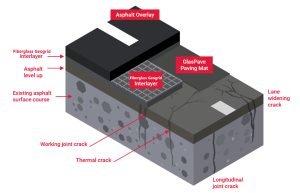
Extend the life of your asphalt pavements with Fiberglass Geogrid Interlayer Technology — engineered for performance, built for durability.
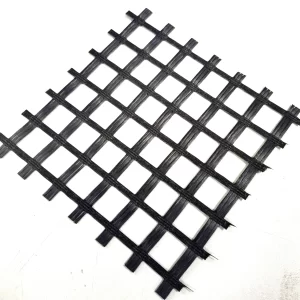
Our fiberglass geogrids are specially designed to reinforce asphalt layers, delivering unmatched crack resistance and long-term stability. By effectively reducing reflective cracking and distributing load stress, they help preserve pavement integrity even under heavy traffic and extreme conditions.
The fiberglass geogrid interlayer plays a pivotal role in asphalt reinforcement by addressing common pavement issues and enhancing durability. Here’s a structured breakdown of its key functions:
-
Reflective Crack Mitigation
-
Mechanism: Distributes stress from underlying cracks (e.g., in old pavement or base layers) across a wider area, reducing concentrated stress at crack tips.
-
Outcome: Prevents existing cracks from propagating through new asphalt overlays, extending service life.
-
-
Improved Load Distribution
-
Mechanism: High tensile strength of fiberglass allows it to absorb and spread traffic-induced stresses, reducing localized deformation.
-
Outcome: Minimizes rutting and fatigue cracking, particularly under heavy vehicle loads.
-
-
Thermal Stress Resistance
-
Mechanism: Accommodates thermal expansion/contraction of asphalt by providing flexible reinforcement.
-
Outcome: Reduces thermal cracking caused by temperature fluctuations.
-
-
Moisture and Chemical Resistance
-
Mechanism: Fiberglass is inherently resistant to water, alkalis, and chemicals, acting as a barrier against infiltration.
-
Outcome: Protects base layers from water damage and chemical corrosion, preventing potholes and base failures.
-
-
Enhanced Structural Capacity
-
Mechanism: Acts as a tensile reinforcement layer, compensating for asphalt’s brittleness.
-
Outcome: Increases pavement stiffness and load-bearing capacity without requiring thicker asphalt layers.
-
-
Ease of Installation
-
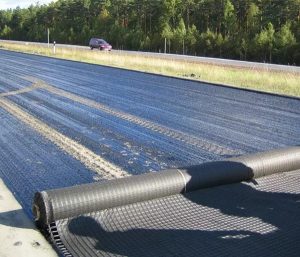
Mechanism: Lightweight and flexible, allowing quick placement between asphalt layers during paving.
-
Outcome: Reduces construction time and costs while ensuring compatibility with standard paving equipment.
-
-
Cost-Effectiveness
-
Outcome: Extends pavement lifespan and reduces long-term maintenance needs, offering significant lifecycle cost savings.
-
Additional Considerations:
-
Fiberglass geogrids are often coated with bitumen or polymers to improve adhesion to asphalt layers.
-
Their low elongation properties ensure minimal deformation under stress, maintaining structural integrity.
-
Widely used in highways, airport runways, and parking lots where durability under heavy loads is critical.
In summary, fiberglass geogrid interlayers are a multifunctional solution that enhances pavement performance by combining crack resistance, load distribution, and environmental durability, ultimately leading to longer-lasting, cost-effective roadways.
Choosing the right geogrid and related products for asphalt reinforcement depends heavily on the pavement design, traffic load, climate, and construction goals. Here’s a practical guide tailored to different scenarios:
?️ How to Choose Geogrid & Related Products for Asphalt Reinforcement (Based on Design Requirements)
1. For Pavement Rehabilitation (Reflective Crack Control)
-
Recommended Product: Fiberglass Geogrid or Fiberglass Geogrid + Lightweight Nonwoven Fabric Composite

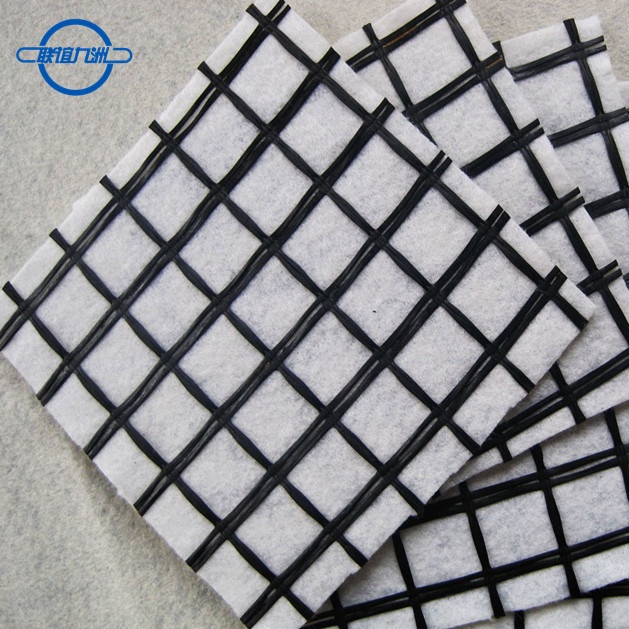
fiberglass geogrid geogrid knitted with nonwoven fabric composite -
Why: High tensile modulus at low strain helps stop reflective cracks from propagating.
-
Ideal For:
-
Overlay projects
-
Urban streets
-
Roads with existing cracks or joints
-
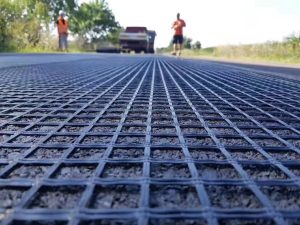
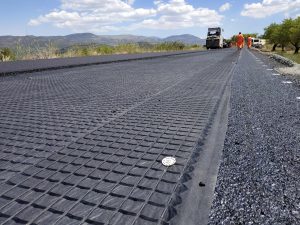
2. For New Pavement Design (Base and Asphalt Layer Reinforcement)
-
Recommended Product: Biaxial PP Geogrid in subgrade + Fiberglass Geogrid Interlayer
Biaxial Geogrid Composite -
Why:
-
PP Biaxial Geogrid reinforces the base course and improves load distribution.
-
Fiberglass geogrid strengthens the asphalt layer and prevents cracking.
-
-
Ideal For:
-
Highways and major roads
-
Industrial zones
-
Heavy-duty pavements
-

3. For High-Moisture Environments
-
Recommended Product: Fiberglass Geogrid + PET/PP Nonwoven Fabric (Self-adhesive optional)

High Strength Fiberglass Geocomposite -
Why: Fabric adds waterproofing and bonding with asphalt, reducing water intrusion that causes weakening and stripping.
-
Ideal For:
-
Coastal roads
-
Areas with poor drainage
-
Freeze-thaw zones
-

4. For High-Temperature Asphalt Applications
-
Recommended Product: High-temperature-resistant Fiberglass Geogrid
Fiberglass Asphalt Geogrid -
Why: Withstands installation temperatures (up to 200–220°C) without deformation or loss of strength.
-
Ideal For:
-
Hot-mix asphalt installations
-
Airports or locations with intensive compaction heat
-
5. For Ultra-Thin Overlay (<50 mm)
-
Recommended Product: Ultralight Fiberglass Geogrid with Thin Nonwoven Fabric

fiberglass geogrid with thin nonwoven fabric -
Why: Thin structure avoids lifting asphalt thickness while still reinforcing and waterproofing.
-
Ideal For:
-
Surface rehabilitation projects with limited overlay depth
-
Bridge decks and overpasses
-
? Add-on Selection Tips
| Feature | Benefit | Consider If… |
|---|---|---|
| Self-Adhesive Geogrid | Easy installation, better tack coat bonding | You need fast, clean application |
| Bitumen Coating | Improves bonding to asphalt | Needed in high shear zones |
| Composite with Nonwoven Fabric | Adds waterproofing and extra tensile layer | Working in moisture-sensitive zones |
Collaboration with Engineers
-
Data to Provide:
-
Traffic load spectra (ESALs).
-
Subgrade CBR and moisture content.
-
Historical climate data (temperature ranges, freeze-thaw cycles).
-
-
Ask Engineers:
-
Should we use mechanistic-empirical (ME) design for geogrid optimization?
-
Is a composite pavement (geogrid + SAMI) needed for severe cracking?
-
Case Study Snapshot
Project: Highway Overlay in Coastal Region
-
Challenge: Saltwater exposure + heavy truck traffic.
-
Solution:
-
Geogrid: Bitumen-coated fiberglass grid (100 kN/m strength).
-
Add-ons: PET nonwoven fabric for drainage + corrosion-resistant tack coat.
-
-
Result: No reflective cracks after 5 years; 30% reduction in rutting vs. unreinforced sections.
Final Checklist Before Installation
✅ Verify geogrid roll orientation (machine vs. cross direction).
✅ Confirm tack coat compatibility with geogrid coating (e.g., bitumen vs. polymer).
✅ Conduct a site-specific trial (10–20 meters) to test bonding and compaction.
By aligning your geogrid selection with project-specific stressors (traffic, climate, existing defects) and leveraging composite systems where needed, you’ll maximize pavement durability while minimizing lifecycle costs. Always pair material choices with rigorous quality control during installation! ?
