


Abstract
Geosynthetic materials have transformed modern civil engineering by providing efficient solutions for soil stabilisation, drainage, filtration, and environmental protection. Two of the most widely used categories are geotextile and geocomposite materials, which are often misunderstood or used interchangeably.
According to the literature on geotechnical engineering, geotextiles are permeable synthetic fabrics designed to perform functions such as filtration, separation, reinforcement, and drainage in soil systems. Geocomposites, on the other hand, are engineered systems that combine two or more geosynthetic components — such as geotextiles, geonets, or geomembranes — to deliver multiple functions simultaneously and improve overall performance efficiency.
Introduction: Why This Comparison Matters in Modern Engineering?
In today’s infrastructure and environmental engineering landscape, the selection of materials directly affects the durability, cost-efficiency, and long-term performance of projects. The choice between geotextile and geocomposite is no longer simply a technical decision; it is a strategic one that affects:
- Drainage efficiency
- Structural integrity
- Installation cost
- Lifecycle performance
With increasing demand for integrated solutions, geocomposites are gaining popularity. However, geotextiles remain indispensable due to their simplicity and cost-effectiveness.
Manufacturers such as Feicheng Lianyi have made significant contributions to advancing both product categories by offering bespoke solutions for road construction, landfill engineering, and erosion control.
What Is a Geotextile?
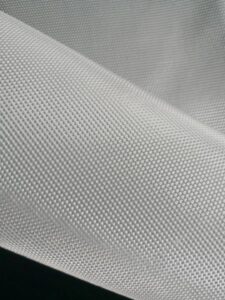
A geotextile is a permeable textile material typically made from synthetic polymers, such as polypropylene or polyester. It is used in contact with soil or rock in civil engineering applications.
Structure and manufacturing
Geotextiles are produced using three primary methods:
- Woven geotextiles: Interlaced yarns for high tensile strength
- Nonwoven geotextiles: Needlepunched fibres for filtration and drainage
- Knitted geotextiles: Specialised applications
Their fabric-like structure allows water to pass through while retaining soil particles.
Core functions
Geotextiles perform five fundamental functions:
- Separation
- Filtration
- Drainage
- Reinforcement
- Protection
These functions make geotextiles highly versatile for use in applications such as roads, railways, embankments, and erosion control systems.
Key advantages
- Cost-effective solution
- Easy installation
- Wide availability
- Proven performance in standard applications
What Is a Geocomposite?
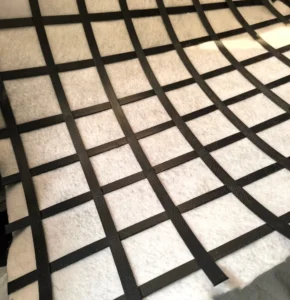
A geocomposite is an engineered material made up of two or more geosynthetic components that are combined to create a single product with enhanced or multiple functions.
Typical components:
- Geotextiles
- Geonets
- Geogrids
- Geomembranes
A common configuration is geotextile + geonet, where:
The geotextile provides filtration, and the geonet provides drainage.
Functional integration
Unlike geotextiles, geocomposites are designed to deliver multifunctional performance in one system.
- drainage and filtration
- reinforcement and separation
- protection and containment
This integration reduces the need for multiple layers of materials.
Key advantages:
- Higher performance efficiency
- Reduced installation complexity
- Optimised material usage
- Enhanced durability
Core Differences Between Geocomposite and Geotextile
Fundamental Differences
| Parameter | Geotextile | Geocomposite |
| Structure | Singlelayer textile | Multilayer composite system |
| Composition | Synthetic fibers (PP, PET) | Combination of geosynthetics |
| Functionality | Single or limited functions | Multifunctional |
| Complexity | Simple | Advanced engineered system |
| Cost | Lower | Higher initial cost |
| Performance | Standard | Enhanced and optimized |
Functional Performance Comparison
- Filtration and separation
Geotextiles are highly effective at filtration thanks to their porous structure, which allows water to flow through while retaining soil particles.
Geocomposites enhance this process further by integrating additional layers to improve filtration and drainage simultaneously.
- Drainage efficiency
Geotextiles allow planar flow, but their drainage capacity is limited.
Geocomposites significantly outperform them by incorporating drainage cores (such as geonets), which enable horizontal fluid flow across the structure.
- Reinforcement capability
Geotextiles offer moderate reinforcement depending on their tensile strength.
Geocomposites, when combined with geogrids, provide superior load distribution and soil stabilisation.
- Durability and longevity
Geocomposites typically exhibit better long-term performance due to:
- Reduced stress concentration;
- Integrated protective layers;
- Improved resistance to environmental factors.
Application Scenarios: When to Use Each Material
ApplicationBased Selection
| Application | Recommended Material | Reason |
| Road construction | Geotextile / Geocomposite | Cost vs performance balance |
| Landfill drainage | Geocomposite | Superior drainage system |
| Erosion control | Geotextile | Simplicity and cost efficiency |
| Retaining walls | Geocomposite | Reinforcement + drainage |
| Railway subgrade | Geotextile | Separation and stabilization |
| Mining projects | Geocomposite | Multifunctional requirements |
Cost vs Performance TradeOff
From a B2B procurement perspective, the choice between geotextile and geocomposite often comes down to total lifecycle value, not just initial cost.
Cost Analysis
| Cost Factor | Geotextile | Geocomposite |
| Material Cost | Low | Medium–High |
| Installation Cost | Low | Moderate |
| Maintenance | Moderate | Low |
| Lifecycle Cost | Medium | Lower (longterm) |
Although geocomposites require higher upfront investment, they often reduce longterm costs by minimizing maintenance and replacement needs.
Manufacturing and Quality Considerations
Geocomposites and geotextiles are essential materials in civil engineering and are used extensively in drainage, filtration, reinforcement, and protection systems. Their performance depends heavily on precise manufacturing and rigorous quality control.
Raw material selection
Material quality directly affects durability and performance in field conditions.
Key considerations:
- Polymer type (e.g., polypropylene, polyester, or polyethylene)
- UV resistance and chemical stability
- Recycled vs. virgin material ratio
Insight:
High-quality polymers can significantly extend the lifespan of geocomposites, particularly in harsh environments such as landfills and coastal projects.
Manufacturing processes
Different production methods can have a significant impact on product performance.
For geotextiles:
- Needlepunched nonwoven
- Woven (high tensile strength)
- Thermal bonding
For geocomposites:
- Multilayer lamination (e.g., geonet + geotextile)
- Heat or adhesive bonding
- Drainage core integration
Insight:
Consistency in bonding and layer integration is crucial for longterm structural integrity.
Physical and mechanical properties
Performance must meet engineering specifications.
Key parameters:
- Tensile strength and elongation
- Permeability and water flow rate
- Puncture resistance
- Thickness and mass per unit area (GSM)
Insight:
Incorrect parameter selection can lead to system failure (e.g., clogging or collapse).
Quality control and testing
Strict testing ensures compliance with project requirements.
Common standards:
- ASTM test methods
- ISO standards
- EN standards
Key tests:
- Tensile testing
- Filtration efficiency
- UV ageing test
- Creep and durability testing
Insight:
Reliable suppliers provide full test reports and traceability.
Production consistency and scalability
For large infrastructure projects, consistency is essential.
Key considerations:
- Batch-to-batch uniformity
- Production capacity
- Lead time reliability
Insight:
Inconsistent quality can compromise entire engineering systems.
Environmental and Installation Considerations
Manufacturing must align with real-world application needs.
Key factors:
- Resistance to biological clogging
- Soil compatibility
- Ease of installation (flexibility, roll size)
Insight:
Design must consider field conditions, not just lab performance.
Summary Table
| Aspect | Key Focus | Impact |
| Raw Materials | Polymer quality | Durability |
| Manufacturing | Process consistency | Structural integrity |
| Mechanical Properties | Strength, permeability | Performance |
| Quality Testing | Standards compliance | Reliability |
| Production Capacity | Stability, scalability | Project success |
| Installation Fit | Soil & environment match | Longevity |
Industry Trends and Innovations
The industry is evolving rapidly due to demands for sustainability, infrastructure growth, and material innovation.
- Sustainable and recycled materials
Environmental regulations are encouraging the use of eco-friendly materials.
Trends:
- Recycled polypropylene and polyester
- Reducing the carbon footprint of manufacturing
- Circular economy initiatives
Impact:
Sustainability is becoming a key selection criterion in public projects.
- High-performance composite structures
Multifunctional materials are replacing single-layer solutions.
Trends:
- Drainage and filtration integrated systems
- Reinforcement and separation hybrid materials
- Lightweight yet high-strength composites
Impact:
Reduces installation complexity and improves efficiency.
- Smart geosynthetics
Technology integration is entering the sector.
Trends:
- Sensors embedded in geotextiles
- Realtime monitoring of stress and moisture
- Data-driven infrastructure management
Impact:
Enables predictive maintenance and improved safety.
- Advanced manufacturing technologies
Production is becoming more precise and automated.
Trends:
- A driven quality inspection
- Automated fibre distribution control
- Improved bonding technologies
Impact:
Enhances consistency and reduces defects.
- Increased infrastructure demand
Global infrastructure expansion is driving growth.
Key sectors:
- Road and railway construction
- Landfills and environmental protection
- Coastal and erosion control projects
Impact:
Demand for high-quality geosynthetics continues to rise.
- Standardisation and certification evolution
Regulations are becoming stricter and more unified.
Trends:
- More rigorous ASTM/ISO compliance
- Project-specific certification requirements
- Increased third-party testing
Impact:
Only compliant manufacturers will remain competitive in global markets.
FAQ: Geocomposite vs Geotextile
- What is the main difference between a geocomposite and a geotextile?
Geotextiles are single-layer fabrics, while geocomposites combine multiple geosynthetic materials to perform several functions simultaneously.
- Which is better for drainage applications?
Geocomposites are superior due to integrated drainage cores.
- Are geocomposites more expensive?
Yes, but they often reduce overall project costs by improving efficiency and durability.
- Can geotextiles replace geocomposites?
In simple applications, yes. But for complex projects, geocomposites are more effective.
- What materials are geotextiles made of?
Typically, polypropylene or polyester fibers.
- Where are geocomposites commonly used?
Landfills, mining, road construction, and environmental engineering.
Conclusion
It is essential to understand the difference between geocomposite and geotextile materials in order to make informed engineering and procurement decisions.
Geotextiles offer simplicity, cost-effectiveness, and versatility, while geocomposites provide advanced, multifunctional performance. For modern infrastructure projects where performance, durability, and efficiency are critical, geocomposites are increasingly becoming the preferred solution. However, geotextiles remain indispensable for standard and cost-sensitive applications.
Manufacturers such as Feicheng Lianyi continue to drive innovation in both categories, helping global B2B buyers to optimise project outcomes.
