


Abstract
A geogrid and a geomembrane are both considered to be geosynthetic materials that play a crucial role in civil engineering projects. However, it is imperative to recognise that these two materials are designed for distinct purposes.
Geogrids are primarily used for soil reinforcement and load distribution, while geomembranes function as impermeable barriers for containment and environmental protection.
Engineers must comprehend the structural disparities, material properties, and application scenarios of these materials if they are to optimise performance, durability, and cost-efficiency in infrastructure and environmental projects.
Introduction: Why Understanding Geogrid vs Geomembrane Matters?
In contemporary civil engineering and environmental protection projects, geosynthetics have become an essential material for enhancing soil behaviour, ensuring containment, and increasing long-term durability. Of these materials, geogrid and geomembrane are frequently specified, but often misunderstood or incorrectly substituted.
On initial observation, both materials appear to be polymer-based sheets or structures employed in ground engineering. However, it should be noted that their functional roles are entirely different. A geogrid strengthens soil by interacting mechanically with aggregates, while a geomembrane serves to isolate or contain substances by acting as a barrier.
This distinction is not merely of an academic nature. The selection of inappropriate materials can result in structural failure, environmental contamination, or elevated maintenance costs. The present article offers a thorough, engineering-focused comparison, the aim of which is to provide a more in-depth analysis than is typical of the top-ranking pages.
What Is a Geogrid?
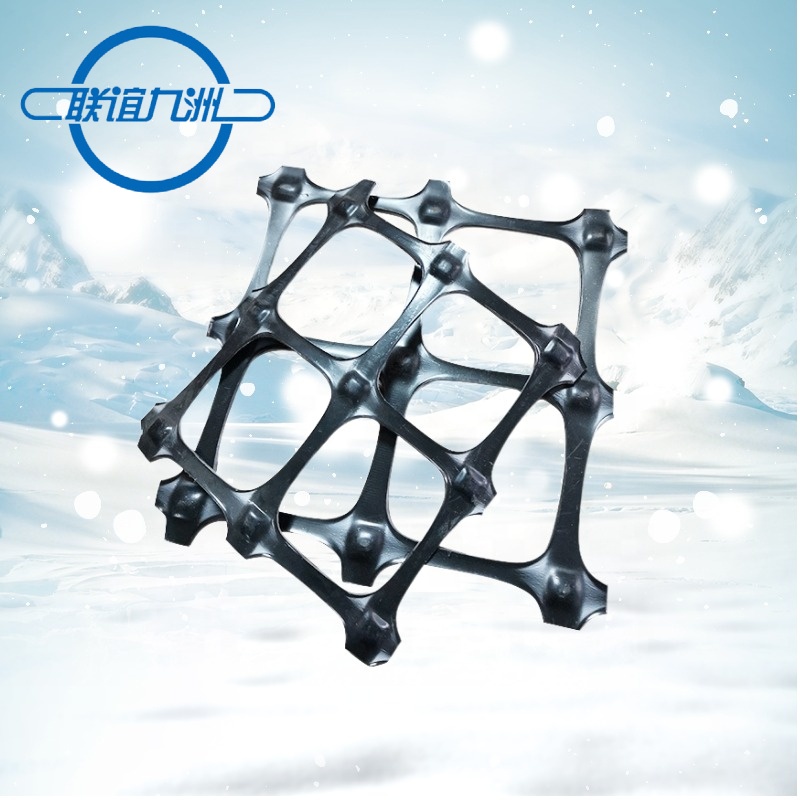
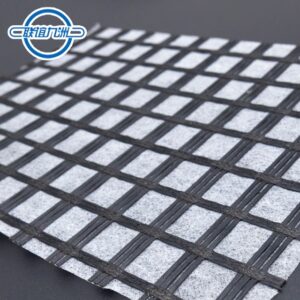
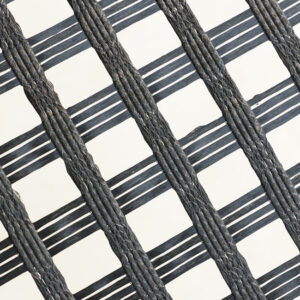
A geogrid is defined as a geosynthetic material consisting of a network of interconnected ribs forming open apertures. Its primary function is to enhance soil strength and augment its load-bearing capacity.
Structural characteristics:
Geogrids are typically composed of the following materials:
- High-density polyethylene (HDPE)
- Polypropylene (PP)
- Polyester (PET)
They are manufactured through extrusion, weaving, or welding processes, resulting in a grid-like structure that allows soil particles to interlock within the apertures.
The function of the role is as follows:
The primary function of a geogrid is soil reinforcement. The following properties of soil are enhanced by this process:
The enhancement of shear strength, the reduction of deformation, and the distribution of loads in a more uniform manner are the primary benefits of geogrids. These characteristics render them particularly well-suited for applications where soil stability is paramount.
What Is a Geomembrane?
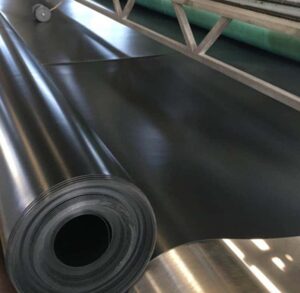
A geomembrane is defined as a continuous, impermeable synthetic membrane used to control fluid migration in a structure, system, or project.
Structural characteristics
Geomembranes are typically composed of the following materials:
- High-density polyethylene (HDPE)
- Low-density polyethylene (LDPE)
- Polyvinyl chloride (PVC)
In contrast to geogrids, geomembranes are solid sheets with no perforations. They are designed to prevent the passage of liquids or gases.
Functional Role
The primary purpose of a geomembrane is to provide containment and protection as a barrier. Its utilisation is extensive, encompassing the following domains:
- The primary function of the system is to prevent leakage in landfills.
- It is also employed to line reservoirs and ponds.
- Finally, it is used to protect groundwater from contamination.
Core Differences Between Geogrid and Geomembrane
Structural and Functional Comparison
| Aspect | Geogrid | Geomembrane |
| Structure | Open grid with apertures | Solid, continuous sheet |
| Primary Function | Soil reinforcement | Fluid containment/barrier |
| Permeability | Permeable | Impermeable |
| Material Interaction | Interlocks with soil | Isolates materials |
| Mechanical Role | Load distribution | Separation and sealing |
| Typical Thickness | Thin but rigid | Thin but flexible |
How Geogrids Work: Soil Reinforcement Mechanism?
Geogrids are special materials used to strengthen soil and make it more stable. The way they work is by using tension and making sure the weight is spread evenly.
- Tensile Reinforcement Geogrids are made of strong polymers arranged like a grid
When they are put into the ground, they stop the soil from spreading out when there is pressure on them. The soil particles stick together with the grid openings, which makes a system of soil and geogrids.
- Load distribution mechanism
Geogrids are used to transfer loads from soft soil to stronger layers. This reduces differential settlement and improves overall structural stability.
- Interlocking and Confinement
Soil particles pass through the spaces of the geogrid.
Interlocking stops particles from moving, making it stronger.
It works well for embankments, retaining walls, and steep slopes.
- Real-World Example
Geogrids are used in road construction over soft subgrades. They spread the traffic load over a wider area, which minimises rutting and increases the lifespan of the road.
How Geomembranes Work: Barrier and Containment Mechanism?
Geomembranes are waterproof sheets used mainly for sealing and containment. How they work depends on the properties of the physical barrier and how chemically resistant they are.
- It won’t let liquids or gases through
Made from high-density polyethylene (HDPE), polyvinyl chloride (PVC), or polypropylene
It stops soil and groundwater from being polluted.
- Containment Mechanism
Creates a barrier that is continuous over soil or waste materials
Seams are welded or bonded to ensure there are no leakage paths
Works effectively in landfills, reservoirs, and chemical containment systems
- Chemical and Environmental Resistance
It can resist acids, alkalis, and UV degradation.
It can withstand different temperatures and environmental stress.
It is long-lasting and reliable.
- Here is an example from the real world:
In a municipal landfill:
Geomembrane stops liquid from getting into the soil.
When it is used with other materials, such as geotextiles and geogrids, it creates a protection system with many layers.
Application Scenarios: Where Each Material Is Used?
Geogrid Applications
Geogrids are used in many ways:
Geogrids are used to make roads, railways, airport runways, and embankments stronger and longer-lasting.
Geomembrane Applications
Geomembranes are important for:
Things like landfill liners and caps, water reservoirs and canals, mining heap leach pads, wastewater treatment facilities, and agricultural ponds need reliable containment to stop the environment from being contaminated.
Performance Comparison in Engineering Projects
Mechanical vs Hydraulic Performance
| Performance Factor | Geogrid | Geomembrane |
| Tensile Strength | High | Moderate |
| Flexibility | Moderate | High |
| Permeability | High | Extremely low |
| Chemical Resistance | Moderate | High |
| Durability | Long-term structural | Long-term containment |
Advantages and Limitations
Geogrid
Advantages:
- High tensile strength and load distribution
- Improves soil stability and reduces deformation
- Lightweight and easy to install
Limitations:
- Does not provide waterproofing
- Performance depends on proper soil interaction
- Limited use in containment applications
Geomembrane
Advantages:
- Excellent impermeability and chemical resistance
- Suitable for environmental protection applications
- Long service life with proper installation
Limitations:
- Susceptible to puncture or mechanical damage
- Requires careful installation and subgrade preparation
- Limited structural reinforcement capability
Combined Use: Geogrid and Geomembrane in Integrated Systems
In many engineering projects, geogrids and geomembranes are used together to make things stronger and keep them in place.
- This is a normal example of what happens when things are put in a landfill site.
- Geomembrane: used to contain leachate (liquid that can seep through the soil into the groundwater)
- Geogrid: used to stabilise slopes (keep them from slipping) and support loads (weighing things down)
Road construction over soft soil:
- Geogrid: makes the base stronger
- Geomembrane: keeps out moisture or separates materials
Mining and storing tailings (waste material from mining):
- Geomembrane stops dangerous materials from leaking.
- Geogrid makes embankments stronger.
- The system has these benefits:
- It is more stable and durable.
- It is better for the environment.
- It needs less maintenance and costs less over its lifetime.
- It is designed to work well in complicated engineering situations.
Cost Considerations and Lifecycle Value
While geomembranes are typically more expensive per unit area due to their specialized function, geogrids can reduce overall project costs by minimizing the need for additional materials.
Cost Comparison Table
| Factor | Geogrid | Geomembrane |
| Initial Cost | Moderate | High |
| Installation Cost | Moderate | High (requires sealing) |
| Maintenance | Low | Moderate |
| Lifecycle Value | High | Very high (critical for containment) |
Common Mistakes in Material Selection
Using the wrong geogrids and geomembranes can cause problems and make the project more expensive.
- Confusing Functions
Using a geogrid where impermeability is required
Using a geomembrane where structural reinforcement is needed
- Ignoring Soil and Site Conditions
Failing to consider soil type, load conditions, and environmental factors
Leads to inefficient or unstable designs
- Problems during installation
The surface was not properly prepared for the geomembrane, which could cause it to puncture.
The geogrids were not tensioned or anchored properly.
- Problems with the way the system is designed
Materials are treated on their own rather than as part of a system that works as a whole.
- Decisions based on cost, without thinking about how well things will work
Using lower-cost materials without thinking about how they will perform in the long term can lead to higher maintenance and repair costs.
Future Trends (2026–2030)
- Smart Geosynthetics
Using sensors to check for stress, strain, and leakage as it happens.
- Sustainable Materials
Using materials that can be easily recycled and are kind to the environment.
- Hybrid Systems
These are made of one material that has both reinforcement and barrier functions.
- Advanced Manufacturing
Making things stronger and better by using nanotechnology and precision engineering.
FAQ: Geogrid vs Geomembrane (Popular Search Questions)
- What is the main difference between geogrid and geomembrane?
Geogrid is used for soil reinforcement, while geomembrane is used for fluid containment and waterproofing.
- Can geogrid replace geomembrane?
No. Geogrids do not provide impermeability and cannot replace geomembranes in containment applications.
- Are geomembranes waterproof?
Yes, geomembranes are designed to be impermeable and prevent liquid or gas flow.
- Where is geogrid most commonly used?
In road construction, retaining walls, and soil stabilization projects.
- Can both materials be used together?
Yes, they are often combined in projects like landfills and embankments.
- Which is more durable?
Both are durable but serve different purposes; durability depends on application conditions.
- How long do geomembranes last?
High-quality geomembranes can last several decades with proper installation.
- Is geogrid environmentally friendly?
It can reduce material usage and improve efficiency, contributing to sustainability.
Conclusion
Geogrids and geomembranes are different in the way they are used: geogrids are used to make things stronger, while geomembranes are used to contain things. Geogrids make soil stronger and more stable, while geomembranes are important for protecting the environment because they do not let through.
It is very important to understand these differences so that you can choose the right material and make sure that your project is a success. As infrastructure demands grow more complex, the smart use of different materials will continue to shape the future of civil engineering.
