

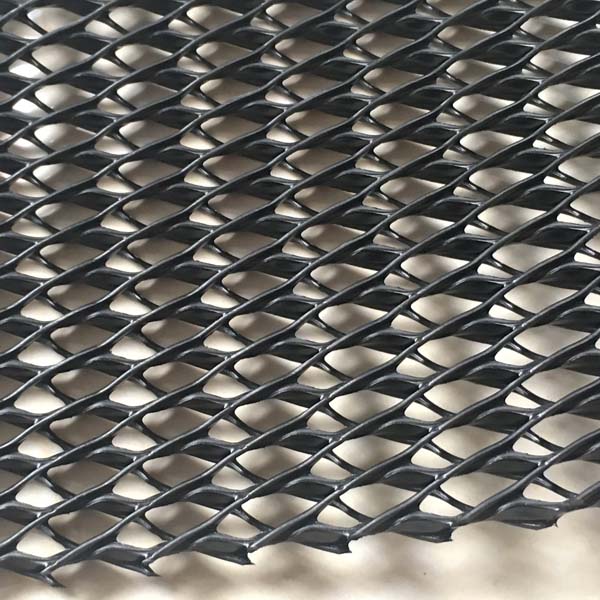

Geogrids play a crucial role in modern civil engineering and construction, providing essential support for soil reinforcement, stabilization, and erosion control. These materials are designed with grid-like structures that enhance the load-bearing capacity of soils. There are various types of geogrids, each offering unique properties suited for specific applications. In this article, we will explore four significant types of geogrids: Fiberglass Geogrid, Polyester Geogrid, PP Biaxial Geogrid, and Welded Geogrid. Each type is distinguished by its material composition, manufacturing process, and structural properties, making them suitable for different engineering needs.
1. Fiberglass Geogrid
What is Fiberglass Geogrid?
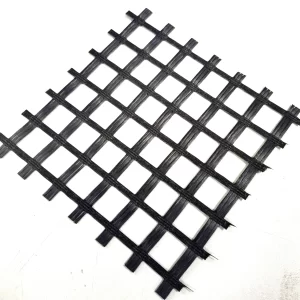
Fiberglass geogrid is a geosynthetic material made from fiberglass yarns coated with a polymer, usually bituminous mixtures. The yarns are arranged in a grid-like pattern, offering high tensile strength and flexibility. Fiberglass geogrids are known for their resistance to high temperatures and their ability to prevent cracking in asphalt pavements.
Key Properties of Fiberglass Geogrid
- High Tensile Strength: Fiberglass geogrid has excellent tensile strength, which helps to enhance the load-bearing capacity of roadways and pavements.
- Thermal Stability: Due to the fiberglass composition, these geogrids have high resistance to thermal expansion and contraction, making them ideal for regions with significant temperature fluctuations.
- Chemical Resistance: Fiberglass geogrids exhibit good resistance to chemicals and do not degrade in the presence of oils, acids, or alkalis.
- Flexibility: The grid structure allows it to conform to the underlying surface, providing even support and reinforcement across the area.
Applications of Fiberglass Geogrid
Fiberglass geogrids are mainly used in road construction for asphalt pavement reinforcement, as they prevent reflective cracking and extend the life of the pavement. They are also applied in the rehabilitation of existing roadways, parking lots, and airport runways. Additionally, fiberglass geogrids can be used for soil stabilization in various civil engineering projects.
2. Polyester Geogrid
What is Polyester Geogrid?
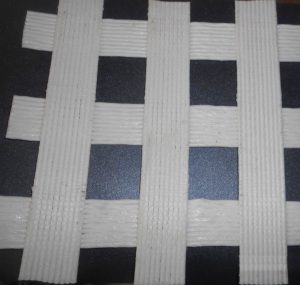
Polyester geogrid, also known as PET geogrid, is manufactured using high-strength polyester fibers that are coated with a polymer to improve durability. The fibers are oriented in a grid pattern, providing reinforcement for soil and other construction materials. Polyester geogrids are known for their excellent creep resistance and high tensile modulus, making them suitable for long-term applications.
Key Properties of Polyester Geogrid
- High Creep Resistance: Polyester geogrids are designed to maintain their structural integrity over time, even under continuous loading. This property makes them ideal for projects that require long-term stability.
- Excellent Tensile Strength: These geogrids provide significant tensile reinforcement, helping to stabilize slopes, embankments, and retaining walls.
- Low Elongation: Polyester geogrids exhibit minimal elongation under stress, ensuring that they provide effective reinforcement without excessive stretching.
- Corrosion Resistance: The polymer coating protects the polyester fibers from environmental factors, such as moisture and chemicals, that could cause degradation.
Applications of Polyester Geogrid
Polyester geogrids are commonly used in retaining wall construction, slope stabilization, and the reinforcement of embankments. They help to improve the stability of structures by providing lateral support and preventing soil displacement. In addition, they are used in base reinforcement for roadways and railways, where they contribute to distributing loads more evenly and extending the life of the infrastructure.
3. PP Biaxial Geogrid
What is PP Biaxial Geogrid?
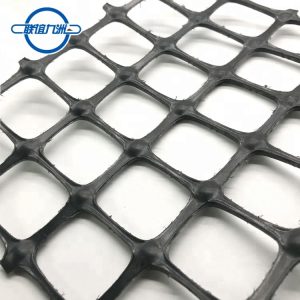
PP biaxial geogrid is a type of geosynthetic material made from polypropylene (PP) that is stretched in both longitudinal and transverse directions to create a biaxial structure. This process enhances the material’s tensile strength in two perpendicular directions, making it suitable for applications that require load distribution in multiple directions.
Key Properties of PP Biaxial Geogrid
- High Tensile Strength in Two Directions: The biaxial stretching process gives the geogrid strength in both longitudinal and transverse directions, allowing it to distribute loads more effectively across a surface.
- Lightweight and Easy to Handle: PP biaxial geogrid is lightweight, making it easy to transport and install. This property contributes to reduced labor costs and faster installation times.
- Chemical and Biological Resistance: Made from polypropylene, this geogrid is resistant to chemicals, bacteria, and UV radiation, making it suitable for outdoor use and harsh environments.
- Enhanced Load-Bearing Capacity: The ability to distribute loads in two directions helps to improve the stability of road foundations, reducing deformation and extending the lifespan of the pavement.
Applications of PP Biaxial Geogrid
PP biaxial geogrid is commonly used in road construction for subgrade stabilization, base reinforcement, and pavement improvement. It helps to distribute the weight of vehicles, reducing the likelihood of rutting and cracking. Additionally, it is used in railway construction, parking lots, and airport runways to enhance soil stabilization. In erosion control projects, PP biaxial geogrid can also be employed to stabilize slopes and prevent soil displacement.
4. Welded Geogrid
What is Welded Geogrid?
Welded geogrid is made from intersecting steel or polymer strips that are welded together at their junctions to form a rigid grid structure. This type of geogrid is typically used in applications that require additional structural support and high load-bearing capacity. The welded intersections provide extra strength, making these geogrids suitable for demanding construction projects.
Key Properties of Welded Geogrid
- High Structural Rigidity: The welded intersections ensure that the geogrid maintains its shape and provides robust support, even under heavy loads.
- Excellent Load Distribution: Welded geogrids can distribute loads over a wide area, reducing the stress on underlying soils and preventing settlement.
- Durability in Harsh Conditions: These geogrids are resistant to mechanical damage and are suitable for use in construction projects with heavy traffic or high loading conditions.
- Variety of Materials: Welded geogrids can be made from various materials, including steel and polymer-coated strips, to suit different project requirements and environmental conditions.
Applications of Welded Geogrid
Welded geogrids are often used in the construction of retaining walls, bridge abutments, and heavy-duty foundations where additional reinforcement is necessary. They are also applied in mining projects and other industrial applications that require high load-bearing capacity and structural integrity. Additionally, welded geogrids can be used for ground stabilization in areas with soft or weak soils to prevent settlement and improve load distribution.
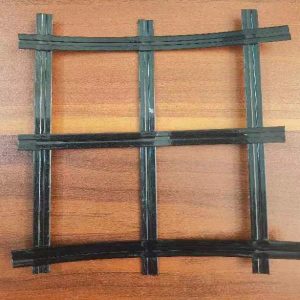
Comparison of the Four Geogrid Types
| Geogrid Type | Key Features | Common Applications |
|---|---|---|
| Fiberglass Geogrid | High thermal stability, chemical resistance | Asphalt reinforcement, road rehabilitation |
| Polyester Geogrid | High creep resistance, minimal elongation | Retaining walls, slope stabilization, base reinforcement |
| PP Biaxial Geogrid | Tensile strength in two directions, lightweight | Subgrade stabilization, pavement improvement |
| Welded Geogrid | High structural rigidity, variety of materials | Retaining walls, heavy-duty foundations, mining projects |
Conclusion
Each type of geogrid—Fiberglass, Polyester, PP Biaxial, and Welded—offers unique advantages that cater to specific construction and engineering needs. Fiberglass geogrid is ideal for asphalt pavement reinforcement, while polyester geogrid’s high creep resistance makes it suitable for retaining walls and slopes. PP biaxial geogrid is effective for multi-directional load distribution in road and railway construction, whereas welded geogrid provides extra rigidity for demanding projects. Understanding the properties and applications of each type helps engineers and project managers select the most appropriate geogrid for their projects, ensuring enhanced stability, durability, and cost-effectiveness.
