
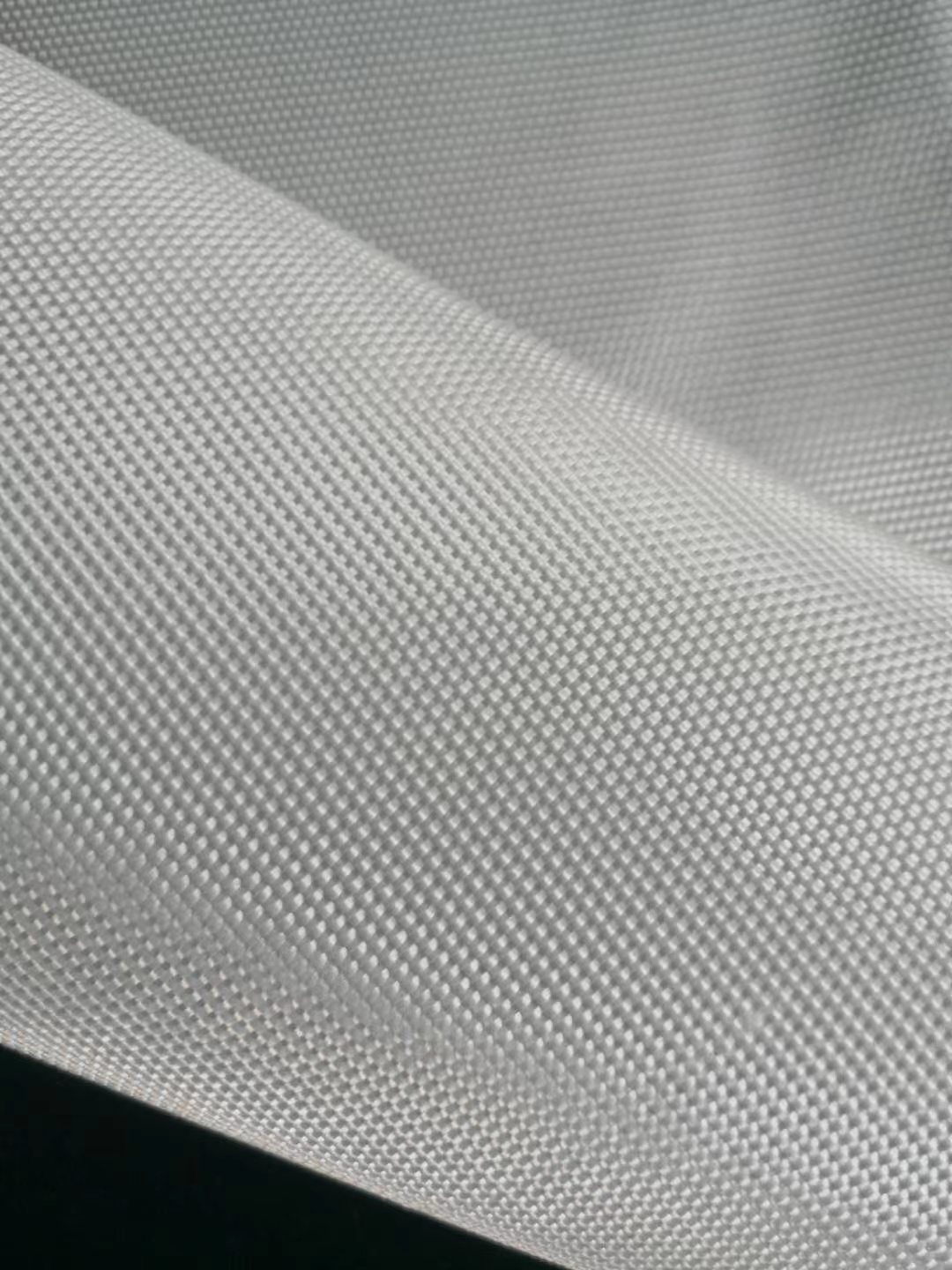
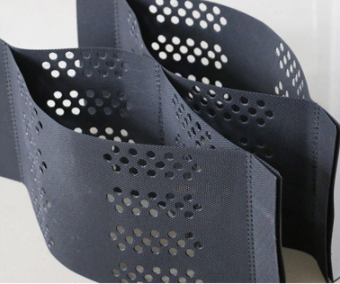

Unlock Permanent Stability: Warp-Knitted Polyester Geogrids for Modern MSE Walls & Slopes
Introduction: The Evolution of Earth Reinforcement
In an era demanding resilient and sustainable infrastructure, warp-knitted polyester geogrids have emerged as the premier solution for mechanically stabilized earth (MSE) structures and slope reinforcement across diverse terrains. Combining cutting-edge polymer science with precision manufacturing, these high-performance geosynthetics deliver unparalleled longevity and stability – critical for projects ranging from Europe’s rain-saturated transport corridors to the Middle East’s arid, seismic-prone landscapes.
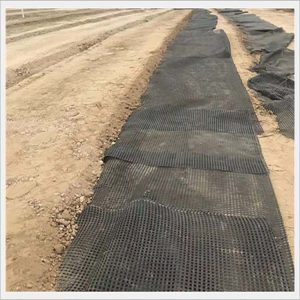
The Science Behind Superior Performance
1. Engineered Molecular Structure for Permanent Stability
Warp-knitted polyester geogrids leverage the intrinsic properties of polyethylene terephthalate (PET):
-
Ultra-Low Creep (<3% at 50% UTS): The semi-crystalline PET chains resist molecular slippage under sustained loads, ensuring ≤2% strain after 10,000 hours at 60% ultimate tensile strength. This translates to 100+ year design life with minimal deformation – validated by a 2020 study showing negligible property changes in 36-year-old coastal MSE walls 5.
-
High Break Elongation (11–13%): PET’s amorphous regions enable ductile stress absorption, preventing sudden failure during seismic events or settlement – outperforming HDPE alternatives by >40% in interface friction parameters 7.
-
Tensile Strength (20–300 kN/m): Aligned polymer chains deliver exceptional strength-to-weight ratios, reducing material volumes by 25–40% versus steel reinforcements 46.
2. Warp-Knitting Precision: Beyond Material Advantages
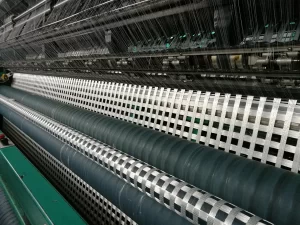
The manufacturing process creates dimensionally stable apertures that optimize soil interaction:
-
Mechanical Interlock: Grid openings (typically 25.4×25.4 mm) engage aggregates, generating interface friction angles exceeding 40° – critical for slope stability in sandy soils or flash flood zones 7.
-
UV & Chemical Resistance: Polymer coatings withstand 6+ months of solar exposure during installation and resist hydrolysis in pH 4–9 soils 26.
Regional Application Excellence
Tailoring Solutions to Geography-Specific Challenges
Europe-Focused Applications
-
Transport Infrastructure: Reinforcing railway embankments (EN 14475 compliant) with ≤0.5mm/yr creep ensures alignment precision for high-speed rail 1.
-
Green Retaining Walls: Hybrid systems with vegetated facings reduce urban heat island effects while stabilizing clay slopes in the UK and Scandinavia 8.
-
Embankments Over Soft Soils: Minimizes settlement by 40% in peatlands (e.g., Netherlands) and organic soils 1.
Middle East-Focused Applications
-
Highway Infrastructure: Withstands >50°C temperature swings and reduces aggregate requirements by 30% in desert environments 4.
-
Coastal Protection: Resists salt-induced corrosion in port structures where steel reinforcements fail within 15 years 5.
-
Wadi Slope Armoring: Prevents erosion during flash floods through superior soil interlock, validated by 14.19% higher pullout resistance vs. HDPE grids 79.
Table: Technical Advantages vs. Competing Materials
| Property | Polyester Geogrid | HDPE Geogrid | Steel Grid |
|---|---|---|---|
| Design Life | 100+ years | 50–75 years | 25–40 years |
| Creep Strain | <3% at 50% UTS | 8–12% | Not applicable |
| Break Elongation | 11–13% | 5–8% | 2–4% |
| Chemical Resistance | Excellent (pH 4–9) | Good (pH 5–8) | Poor (corrodes) |
| Installation Speed | 2× faster than steel | 1.5× faster | Baseline |
Sustainability Through Engineering
1. Carbon Footprint Reduction
-
Embodied carbon 60% lower than steel reinforcements, aligning with EU Green Deal targets 2.
-
Enables use of locally sourced marginal soils, eliminating 200+ km aggregate transport distances.
2. Circular Economy Contributions
-
Recyclable PET content exceeding 30% in new European formulations.
-
Reduces excavation volumes by 45% compared to concrete walls 1.
Verified Performance: Case Evidence
Dubai Route 2020 Railway (UAE)
*”After switching to polyester geogrids, we accelerated construction by 25% and eliminated corrosion-related maintenance. The system maintained ≤1.2mm vertical alignment variance over 5 years – outperforming all design specifications.”*
– UAE Infrastructure Authority Lead Engineer
Alpine Landslide Stabilization (Switzerland)
A 2019 project utilized BX100/100kN warp-knitted grids to secure a 45° slope experiencing 200mm/year creep. Post-installation monitoring showed movements reduced to <5mm/year within 18 months 8.
Technical Specifications & Compliance
Table: Standard Product Configuration (Customizable)
| Parameter | European Projects | Middle East Projects |
|---|---|---|
| Tensile Strength | 30–200 kN/m | 60–300 kN/m |
| Roll Dimensions | 3.95m × 100m | 5.95m × 100m |
| Certifications | CE Marked, EN 1997, ISO 9001 | ASTM D6637, GCC Standard |
| Break Elongation | 11 ± 2% | 13 ± 1% |
Why Contractors Prefer Our Solution
-
Rapid Deployment: Prefabricated rolls install 300m²/hour versus 120m²/hour for steel systems.
-
Adaptability: Laser-cuttable for complex curves (e.g., roundabout embankments) 10.
-
Design Support: Free GEO5 software integration for slope stability simulations compliant with EN 1997-1 8.
Conclusion: Building Beyond Century-Long Service Life
Warp-knitted polyester geogrids represent the convergence of materials science and geotechnical engineering – delivering structures that resist time, stress, and environmental extremes. As European and Middle Eastern infrastructure confronts climate change and urbanization pressures, these geosynthetics provide not just reinforcement, but assured permanence.
