
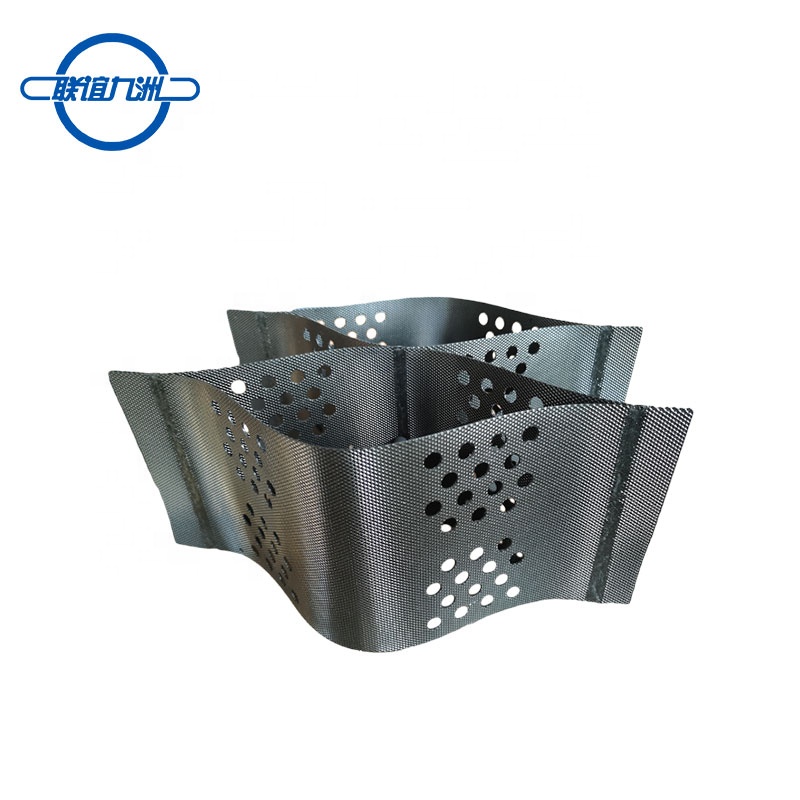

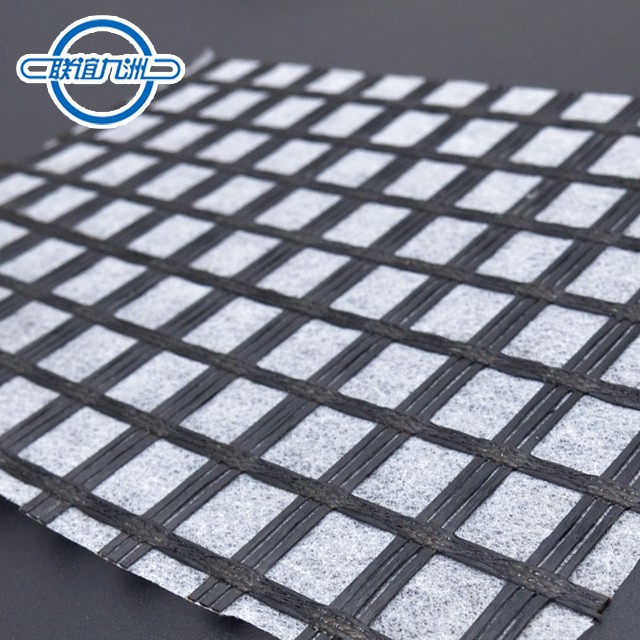
Polyester geogrid is a material widely used in the construction industry. Chinese construction-grade polyester geogrid offers superior performance and can be used in a variety of applications. This article provides a comprehensive overview of polyester geogrid to help you better understand and utilize it effectively.
What is polyester geogrid?
Polyester geogrid is a reinforced geosynthetic material made from high-strength polyester fibers (PET) woven or bonded into a mesh structure, then coated with a polymer. Its primary function is to improve the overall stability of soil structures and enhance the bearing capacity and tensile strength of engineering structures such as foundations, roadbeds, retaining walls, and slopes.
Due to its high tensile strength, excellent corrosion resistance, and flexibility, polyester geogrid is widely used in infrastructure projects such as highways, railways, airports, municipal administration, and water conservancy projects. It is an indispensable reinforcement material in modern foundation reinforcement.
What are the specifications of polyester geogrid?
Polyester geogrid specifications are primarily categorized by parameters such as tensile strength, mesh size, width, and weight. The following are common mainstream specifications:
| Specification Model | Longitudinal Strength (kN/m) | Transverse Strength (kN/m) | Aperture Size (mm) | Roll Width (m) | Roll Length (m) |
| PET15-15 | 15 | 15 | 12.7 × 12.7 | 1–6 | 50–100 |
| PET30-30 | 30 | 30 | 12.7 × 12.7 | 1–6 | 50–100 |
| PET50-50 | 50 | 50 | 25.4 × 25.4 | 1–6 | 50–100 |
| PET100-100 | 100 | 100 | 25.4 × 25.4 | 1–6 | 50–100 |
| PET200-200 | 200 | 200 | 40 × 40 | 1–6 | 50–100 |
Note: Some manufacturers can customize special specifications, such as irregular apertures, widened widths, and UV-resistant coatings.
What is the tensile strength of polyester geogrid?
Polyester geogrid is known for its high tensile strength and low elongation, making it one of the strongest geosynthetics.
Longitudinal and transverse tensile strengths typically range from 15–200 kN/m, adapting to a wide range of engineering requirements, from light to heavy loads.
Elongation is less than 13%, maintaining good dimensional stability.
Excellent creep resistance maintains structural strength under long-term loads.
Strong impact resistance makes it suitable for uneven pressures that may occur during fill construction.
This makes polyester geogrid extremely safe and reliable in complex working conditions, such as slopes, soft soils, and high-fill roadbeds.
What are the application scenarios for polyester geogrid?
Polyester geogrids are suitable for the following infrastructure applications:
- Highway and railway projects
Roadbed reinforcement, settlement and crack prevention
Pavement reflective crack control
Railway track reinforcement and retaining wall support
- Slope and retaining wall projects
Reinforced earth retaining wall stabilization
Slope landscaping and protection
Stress distribution in geotechnical structures
- Water conservancy and port projects
Riverbank slope protection and dam foundation stabilization
Sediment and soft foundation treatment
Drainage layer support for seepage structures
- Municipal and environmental protection projects
Landfill anti-seepage structure reinforcement
Underground pipeline foundation structure protection
Anti-settlement construction in underground spaces
Features of Polyester Geogrids
Polyester geogrids are widely used in numerous projects due to their unique material and structural advantages:
High Tensile Strength: High-strength PET fiber provides strong load-bearing capacity
Corrosion Resistance: Acid, alkali, and salt resistant, suitable for complex soil environments
UV Resistance: Special coating treatment enhances UV resistance
Dimensional Stability: The grid structure is stable and resists deformation during construction
Excellent Interface Friction: Excellent soil adhesion and high shear resistance.
Lightweight and Flexible: Easy to transport, lay, and cut, reducing construction costs.
Environmentally Friendly: Releases no harmful substances and complies with green construction standards.
The Main Functions of Polyester Geogrids
The core functions of polyester geogrids in practical engineering projects include:
Increasing bearing capacity: improving the overall stability of the soil structure and dispersing stress concentrations;
Preventing uneven settlement: particularly suitable for soft foundation and backfill projects;
Limiting displacement and deformation: controlling lateral flow of soil;
Improving crack resistance: effectively suppressing reflective cracks in the pavement;
Extending structural life: reducing maintenance costs;
Improving construction conditions: adapting to special design requirements such as high fill, steep slopes, and long spans.
Comparison of Polyester Geogrids and PP/HDPE Geogrids
Common geogrid materials on the market include polyester (PET), polypropylene (PP), and high-density polyethylene (HDPE). They differ significantly in performance and application scenarios:
| Comparison Factors | Polyester (PET) | Polypropylene (PP) | HDPE |
| Tensile Strength | High (15–200kN/m) | Medium (≤80kN/m) | Medium |
| Creep Resistance | Excellent | Moderate | Poor |
| Chemical Resistance | Good (acid/alkali) | Excellent | Good |
| UV Resistance | Enhanced (coated) | Poor | Moderate |
| Flexibility | High | Moderate | Low |
| Cost | Moderate | Low | Low |
| Best Use Cases | Long-term reinforcement | Temporary or light loads | Economic applications |
Overall, polyester geogrids are more suitable for projects requiring high strength, long-term stability, and durability, while PP and HDPE geogrids are mostly used in projects with limited budgets or temporary structures.
Polyester Geogrid Usage and Maintenance Guide
To ensure the stable performance and longevity of polyester geogrids in projects, the following installation and maintenance recommendations should be followed:
Instructions:
Subgrade Preparation: Before construction, remove debris and compact the existing ground surface to ensure a smooth subgrade.
Laying Direction: Lay along the principal stress direction according to design requirements, minimizing transverse joints.
Overlap Method: Generally, the overlap length should be no less than 20 cm and can be secured with U-shaped staples.
Reverse Tensioning: Pre-tensioning can be applied after laying to enhance the overall tensile effect.
Backfill Method: Backfill material should be medium-coarse sand or gravel with a particle size of less than 30 mm, compacted in layers.
Protective Measures: Backfill should be performed as soon as possible after laying to avoid prolonged exposure to sunlight or rain.
Maintenance Recommendations:
Regularly inspect the integrity of the grid;
Prevent damage to the grid from vehicles running over it;
Keep it dry during storage to avoid high temperatures and acid and alkali contamination;
Avoid cutting the laid area with sharp tools to prevent tearing at corners.
Conclusion
Polyester geogrid, as a superior reinforcement material, demonstrates strong application value in various engineering fields, including transportation, water conservancy, environmental protection, and construction, thanks to its high tensile strength, durability, and ease of installation. Compared to traditional materials, it offers stronger structural support and a longer service life, making it particularly suitable for use in high-intensity, long-term service environments.
When selecting a polyester geogrid, consider its strength grade, width, construction process, and project requirements, and ensure that the installation complies with standard specifications to achieve optimal results.
