


Article Summary: Geogrids and geotextiles are geosynthetic materials used in civil engineering and geotechnical construction projects to enhance soil performance, regulate water flow, and safeguard infrastructure. Geogrids are primarily used for soil reinforcement and aggregate confinement, whereas geotextiles have a wider range of applications, including separation, filtration, drainage, erosion control and reinforcement in selected cases. The Federal Highway Administration (FHWA) identifies their applications in pavement systems, embankments, foundation soils, retaining structures, and drainage facilities in its Geotechnical Engineering guidance.
What Are Geogrids and Geotextiles?
Geogrids and geotextiles are two of the most widely used types of geosynthetic material. Both are typically made from synthetic polymers and installed in contact with soil, aggregate, or other construction materials. They improve the performance of engineered systems by reducing reliance on thicker soil layers, additional excavation, or conventional structural materials. Although they are often discussed together, they have different structures, engineering functions, and typical applications.

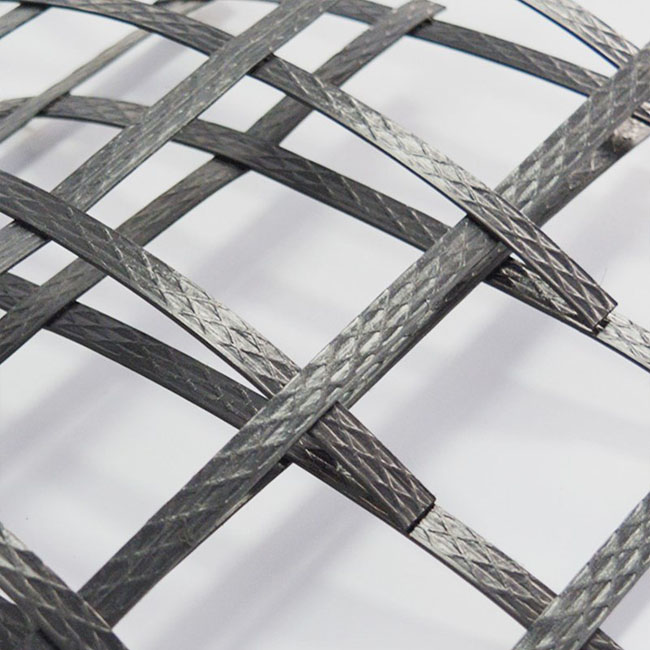
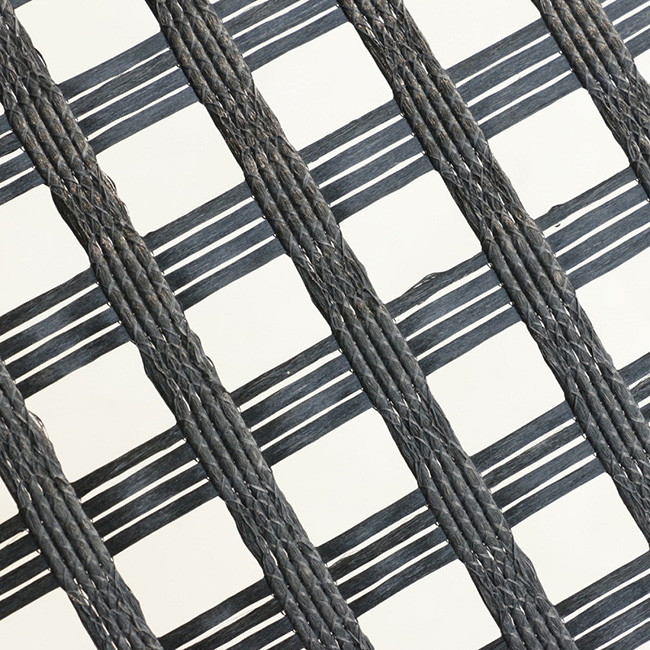
Geogrids are grid-shaped polymer products with regularly spaced apertures. They are typically made from high-density polyethylene (HDPE), polypropylene (PP), or polyester (PET), depending on the design of the product and its intended application. Their open structure allows the surrounding soil or aggregate particles to interact with the grid ribs. When properly selected and installed, this interaction creates mechanical interlock and lateral restraint, helping to distribute loads and improve the stability of reinforced soil structures.
Geotextiles, by contrast, are permeable textile materials supplied in rolls. They are generally classified as either woven or non-woven. Woven geotextiles are produced by interlacing yarns or tapes, and are often chosen for applications requiring dimensional stability and tensile strength.
Geotextiles, by contrast, are permeable textile materials supplied in rolls. They are generally classified as either woven or non-woven. Woven geotextiles are produced by interlacing yarns or tapes, and are often chosen for applications requiring dimensional stability and tensile strength. Nonwoven geotextiles are commonly manufactured by bonding or needle-punching fibres to create a porous structure useful for filtration, separation and drainage. Depending on their construction and properties, geotextiles can also provide reinforcement and erosion protection.

The most important distinction is functional: geogrids are generally selected when tensile reinforcement and aggregate interlock are central to the design, whereas geotextiles are frequently selected when soil separation, water passage, and particle retention are required. FHWA guidance also explains that a geogrid may not prevent fine subgrade particles from pumping into an aggregate base, meaning a separate geotextile layer may be necessary where both reinforcement and filtration are required.
How Are Geogrids and Geotextiles Used in Road Construction?
Road construction is one of the most well-established applications of geogrids and geotextiles. Road foundations often contain natural soils that vary in strength, moisture content, and drainage characteristics. When subjected to repeated traffic loading, weak subgrades can deform, causing the aggregate layers to move laterally and fine particles to migrate into the road base. These issues can result in rutting, uneven settlement, reduced pavement performance and increased maintenance costs.
Geosynthetics are installed within the pavement structure to address weaknesses in the soil and aggregate system. Their function depends on the design, but common applications include subgrade separation, base reinforcement, stabilisation, filtration and drainage.
Geogrids for Road Base Reinforcement
Geogrids are typically positioned at the interface between the subgrade and the granular base, or within the aggregate layer, to enhance the mechanical performance of the road foundation. The apertures in the geogrid allow aggregate particles to interlock with it, which limits excessive lateral movement under wheel loads. This helps the aggregate layer to maintain its structural integrity and improves load distribution across weaker ground.
On construction sites, geogrids are particularly important for access roads, haul roads, temporary working platforms, industrial yards and sections of pavement built over soft or variable subgrades. In suitable conditions, reinforcement may enable engineers to optimise aggregate thickness or improve construction access. However, proper subgrade assessment, drainage design and pavement thickness calculations are still necessary.
Geotextiles for Separation and Filtration
Geotextiles are frequently installed between fine-grained subgrade soil and the granular road base. Their separation function reduces the mixing of these materials during construction and under repeated traffic loading. This helps preserve the intended thickness and grading of the aggregate layer, rather than allowing it to become contaminated by softer underlying soil.
Filtration is another important function. A suitable geotextile allows water to pass through while retaining soil particles within specified limits. This is particularly useful where groundwater or rainfall can move through the pavement foundation. The fabric must be selected to match the soil gradation and expected hydraulic conditions; simply choosing a heavier or thicker fabric does not guarantee effective filtration.
Using Geogrids and Geotextiles Together
Some road projects require both reinforcement and separation. In such cases, a geogrid can be used to confine the aggregate, while a geotextile can be used to control the movement of fine soil particles. Depending on the product and engineering specification, the materials may be installed as separate layers or supplied as a combined geocomposite.
It is important to understand the difference between the two materials because they do not automatically perform each other’s functions. The Federal Highway Administration’s (FHWA) pavement guidance specifically notes that geogrids can help prevent aggregate from penetrating soft subgrade soil; however, they do not necessarily prevent subgrade fines from pumping upwards into the base. Therefore, a geotextile separator may be needed to address this mechanism separately.
Applications in Retaining Walls and Reinforced Soil Structures
Geogrids are widely used in mechanically stabilised earth (MSE) retaining walls and reinforced soil slopes. In these structures, layers of geogrid are placed horizontally within compacted backfill at specified vertical intervals. The geogrids then interact with the surrounding soil to provide tensile resistance, helping the soil mass behave as a more stable composite structure.
In a typical reinforced soil retaining wall, the geogrid extends from the facing into the retained fill. The length, tensile strength, spacing, connection details, and design life of the geogrid must be determined based on factors such as earth pressures, surcharge loads, groundwater conditions, soil properties, and applicable design requirements. The facing may consist of concrete panels, modular blocks, or other engineered systems. The geogrid is not merely a fabric placed behind a wall; it forms part of a designed structural system.
Geogrids are also used to construct reinforced soil slopes in situations where a conventional steep slope would be unstable or require a larger footprint. By incorporating reinforcement between compacted soil layers, engineers can increase the achievable slope angle while maintaining stability. These systems are used in highway embankments, site development, road widening, and projects where space is limited.
Geotextiles can be incorporated into retaining walls and reinforced slopes for filtration and drainage purposes. For instance, a geotextile filter can be positioned between the soil and the drainage aggregate zone to minimise the migration of fine particles while enabling water to pass through. In certain designs, high-strength geotextiles can also act as tensile reinforcement; however, their long-term deformation behaviour and interaction with the soil must be considered.
Use in Embankments and Construction Over Soft Ground
Building embankments on soft clay, peat, loose saturated soil or other weak foundation materials can be challenging. The weight of the fill can put excessive stress on the underlying ground, potentially causing settlement, lateral spreading, or failure of the bearing capacity. Geogrids and geotextiles can be incorporated into the foundation system to improve construction performance and mitigate these risks.
Geogrids are typically installed at the base of an embankment to provide tensile reinforcement and enhance load distribution. They can restrain the lateral movement of granular fill and contribute to embankment stability, particularly during staged construction. Where several reinforcement layers are required, their spacing and tensile properties should be determined through engineering analysis rather than being selected based on generic installation rules.
Geotextiles are frequently used beneath embankments as separation and filtration layers. They prevent soft foundation soil from mixing with the placed fill and maintain the drainage function of granular layers. Depending on the project, high-strength woven geotextiles may also be used for reinforcement purposes.
These applications are particularly relevant to highway approaches, railway embankments, industrial platforms, port facilities, and land development on weak ground. The Federal Highway Administration’s (FHWA) geosynthetic design guidance identifies embankments on soft soils, foundation reinforcement, and roadway applications as major areas where geosynthetics can provide engineering benefits.
Drainage and Filtration in Civil Engineering Projects
Water management is essential to the long-term performance of roads, retaining walls, foundations, slopes, and underground structures. If water accumulates behind a retaining wall or within a pavement foundation, it can increase pore-water pressure, weaken soil, transport fine particles, and accelerate deterioration. Geotextiles are commonly used in drainage systems because they can allow water to pass while limiting the movement of surrounding soil.
Subsurface and Foundation Drainage
Nonwoven geotextiles are often installed around perforated drainage pipes, within drainage trenches, or between soil and drainage aggregate. In these arrangements, the geotextile acts as a filter: water enters the drainage zone while soil particles are retained. This helps reduce the risk of drainage aggregate or pipe openings becoming clogged by migrating fines.
Typical field applications include:
- French drains and perforated pipe trenches.
- Foundation perimeter drainage systems.
- Retaining wall back-drainage layers.
- Roadside and pavement edge drains.
- Drainage blankets beneath embankments.
- Subsurface drainage around sports fields and landscaped areas.
The geotextile must be compatible with the surrounding soil and the expected water flow. Its apparent opening size, permittivity, and resistance to clogging are important selection considerations. If the openings are too large, soil may pass through; if the filtration system is poorly matched to the soil, excessive clogging may restrict water flow. FHWA’s geotechnical guidance emphasizes specifying the intended geotextile function and considering soil and performance parameters when designing subsurface drainage.
Geocomposites for Integrated Drainage
In applications where both filtration and in-plane water transport are required, engineers may specify geocomposite drainage products. These commonly combine a geotextile filter layer with a drainage core, such as a geonet or molded polymer structure. The geotextile retains soil particles, while the core provides a pathway for water to flow toward an outlet.
Such products are used behind retaining walls, beneath pavement systems, around foundations, and in other locations where conventional granular drainage layers may be difficult to install or where space is limited. The drainage capacity must be evaluated under the expected compressive load, because the core can deform and its flow capacity may change under pressure.
Erosion Control on Slopes, Riverbanks, and Coastal Areas
Soil erosion occurs when exposed soil particles are removed by rainfall, surface runoff, flowing water, or wave action. If left uncontrolled, erosion can undermine embankments, damage drainage infrastructure, expose foundations, and increase the amount of sediment entering nearby waterways.
Geotextiles are used in erosion control systems to protect soil surfaces, support filtration beneath protective materials, and retain soil while allowing water to pass through. For instance, a geotextile can be placed under riprap on a riverbank or in a drainage channel. The stone layer absorbs or dissipates the energy of flowing water, while the underlying geotextile prevents fine soil from being washed out through the gaps between the stones.
On slopes, geotextiles and related erosion-control products can be installed under vegetation, erosion-control blankets, or other surface protection systems. Their role depends on the product design: some provide temporary surface protection during the establishment of vegetation, while others serve as permanent filter or protection layers. Geogrids may also be used in engineered slope reinforcement where the design requires tensile support within the soil mass.
When it comes to riverbank protection, drainage channels, and coastal engineering, the selection process must take into account flow velocity, hydraulic conditions, soil gradation, stone size, installation stresses, and expected service life. A geotextile selected for a low-flow drainage trench should not be used automatically beneath heavy riprap or in high-energy hydraulic conditions. The Federal Highway Administration’s (FHWA) geosynthetic guidance identifies erosion control, including geotextiles beneath riprap, as an established application.
Geogrids and Geotextiles in Railways, Landfills, and Other Infrastructure
In addition to roads and retaining structures, geogrids and geotextiles are used in a variety of specialised infrastructure applications. While their functions remain broadly consistent, the design requirements change according to factors such as loading, soil conditions, water movement and environmental constraints.
In railway construction: Geotextiles can separate subgrade soil from ballast or sub-ballast, reducing contamination by fine particles. Geogrids may be used in selected trackbed stabilisation applications to improve aggregate confinement and support load distribution. The design must account for repeated dynamic loading, ballast characteristics, drainage and track geometry.
Landfill engineering: Geotextiles are commonly used as filter and protection layers in landfill drainage and lining systems. They can protect geomembranes from being punctured by adjacent materials and help to separate soil or drainage aggregate from other layers. Geogrids can be used in certain reinforcement applications, including stability systems for slopes and access areas. However, they should not be confused with geomembranes, which provide the main low-permeability barrier in many containment systems.
Mining and industrial sites: Geogrids can reinforce haul roads, working platforms, and access routes for heavy equipment. Geotextiles can provide separation and filtration beneath aggregate layers or around drainage systems. This is particularly useful where ground conditions vary across a large site and construction traffic is concentrated in specific areas.
Bridge approaches: Geosynthetic reinforcement can be used in reinforced soil systems that support bridge abutments and approach fills. The FHWA’s Design and Construction Guidelines for Geosynthetic Reinforced Soil Abutments and Integrated Bridge Systems describe construction methods using closely spaced reinforcement and compacted granular fill. Its guidance also addresses reinforcement placement in the integrated approach zone to help manage the transition between the roadway and bridge.
Geogrids vs. Geotextiles: Which Material Should Be Used?
The choice between geogrids and geotextiles should begin with the engineering problem, not simply the product category or price. If the main requirement is tensile reinforcement and aggregate interlock, a geogrid is often the more direct option. If the project needs soil separation, filtration, or protection against particle migration, a geotextile is usually more appropriate. Some projects require both products because reinforcement and filtration are separate design functions.
| Project Requirement | Common Material Choice | Main Function |
| Reinforcing a retaining wall or steepened slope | Geogrid; high-strength geotextile in selected designs | Tensile reinforcement and soil stability |
| Improving an aggregate road base | Geogrid or reinforcement geocomposite | Aggregate confinement and load distribution |
| Separating soft subgrade from road aggregate | Woven or nonwoven geotextile | Separation and reduction of material mixing |
| Filtering water in a drainage trench | Usually nonwoven geotextile | Water passage and soil particle retention |
| Protecting soil beneath riprap | Suitable geotextile filter | Filtration and erosion protection |
| Reinforcing an embankment over weak soil | Geogrid or designed reinforcement geotextile | Tensile resistance and stability |
| Protecting a geomembrane | Protective geotextile | Cushioning and puncture protection |
| Combining filtration and drainage | Geocomposite | Integrated filtration and water transport |
The following material characteristics help guide the initial selection. They are general tendencies, not substitutes for project-specific design.
| Characteristic | Geogrids | Geotextiles |
| Physical structure | Open grid with ribs and apertures | Woven or nonwoven permeable textile |
| Primary role | Soil reinforcement and aggregate confinement | Separation, filtration, drainage, and protection |
| Interaction with soil | Mechanical interlock and tensile resistance | Particle retention, interface interaction, and water passage |
| Common materials | HDPE, PP, PET | PP, PET, and other specified polymers |
| Typical field locations | Retaining walls, reinforced slopes, road bases, embankments | Road subgrades, drainage trenches, beneath riprap, foundations |
| Key design properties | Tensile strength, stiffness, aperture geometry, junction strength, creep resistance | Tensile strength, apparent opening size, permittivity, permeability, puncture resistance |
| Combined use | Often paired with geotextiles where filtration is also needed | Can be paired with geogrids where reinforcement is also needed |
What Should Engineers Consider Before Installation?
Even a technically suitable geosynthetic can underperform if it is selected or installed incorrectly. The product must be designed around the soil conditions, construction method, and expected service loads. Engineers and contractors should consider the following factors before materials arrive on site.
- Investigate the ground conditions. Review soil classification, particle-size distribution, subgrade strength, groundwater level, drainage conditions, and expected settlement. These parameters help determine whether the project needs reinforcement, separation, filtration, or several functions at once.
- Define the required performance properties. For geogrids, relevant properties may include tensile strength in the required direction, tensile stiffness, junction strength, aperture geometry, and long-term creep behavior. For geotextiles, engineers commonly evaluate tensile and puncture strength, apparent opening size, permittivity, and resistance to installation damage.
- Check durability and design life. Polymer type, ultraviolet exposure before burial, chemical conditions, temperature, and long-term loading can affect product performance. The design should consider installation damage, creep, and relevant durability reduction factors rather than relying solely on short-term tensile strength.
- Prepare the installation surface. Remove sharp debris and unsuitable materials, correct major irregularities, and prepare the subgrade in accordance with the project specification. Rolls should be placed in the correct direction and position, with overlaps or connections specified by the design.
- Control aggregate placement and compaction. Construction equipment should not damage exposed geosynthetics. Fill placement, trafficking, lift thickness, and compaction procedures should follow the manufacturer’s instructions and project requirements. Wrinkles, folds, displacement, and inadequate overlaps can compromise the intended performance.
- Inspect and document the work. Verify product identification, roll condition, installation location, overlap dimensions, connections, and cover thickness. Photographs and inspection records provide useful evidence for quality assurance before the geosynthetic is covered.
FHWA’s Geosynthetic Design and Construction Guidelines emphasize that material selection, testing, specification, and construction procedures must be considered together. In practice, this means a product should be selected according to its design function and verified against the project’s applicable standards and specifications, rather than chosen by weight or tensile strength alone.
Frequently Asked Questions About Geogrids and Geotextiles
- What are geogrids and geotextiles used for in construction?
Geogrids are mainly used to reinforce soil, stabilize aggregate layers, and improve the performance of retaining walls, slopes, and embankments. Geotextiles are commonly used for soil separation, filtration, drainage, erosion control, and selected reinforcement applications.
- What is the main difference between geogrids and geotextiles?
Geogrids have an open grid structure that allows soil or aggregate particles to interlock with the ribs, providing tensile reinforcement and confinement. Geotextiles are permeable textile sheets designed to perform functions such as separating soil layers, retaining particles, and allowing water to pass.
- Can geogrids and geotextiles be used together?
Yes. They are often combined when a project requires both soil reinforcement and separation or filtration. For example, a road foundation may use a geogrid to confine aggregate and a geotextile to prevent fine subgrade particles from migrating into the base.
- Are geotextiles suitable for road construction?
Yes. Geotextiles are widely used beneath roads to separate soft subgrade soil from granular base materials, reduce contamination, and support drainage. The correct fabric must be selected according to soil gradation, water flow, loading, and installation conditions.
- Which geogrid is best for soil stabilization?
The appropriate geogrid depends on soil conditions, aggregate characteristics, loading, and the required reinforcement mechanism. Engineers should evaluate tensile strength, stiffness, aperture geometry, junction strength, and long-term durability rather than selecting a product based on tensile strength alone.
- How long do geogrids and geotextiles last underground?
Their service life depends on polymer type, soil chemistry, temperature, installation damage, loading, and environmental exposure. A properly specified and installed geosynthetic can provide long-term performance, but its design life should be assessed using project-specific durability requirements and relevant reduction factors.
Conclusion
Geogrids and geotextiles play an important role in modern civil engineering, improving the interaction between soil, aggregate and water. Geogrids are particularly valuable for reinforcing road bases, retaining walls, embankments and reinforced slopes, while geotextiles provide essential separation, filtration, drainage and erosion control in transportation, drainage and environmental infrastructure.
However, the most effective solution is not necessarily to choose one material over the other. Many field applications require a combination of geosynthetics, with each layer performing a clearly defined engineering function. By evaluating ground conditions, hydraulic requirements, mechanical properties, installation procedures, and long-term durability, engineers can select the right geogrid or geotextile system to ensure reliable infrastructure performance.
