

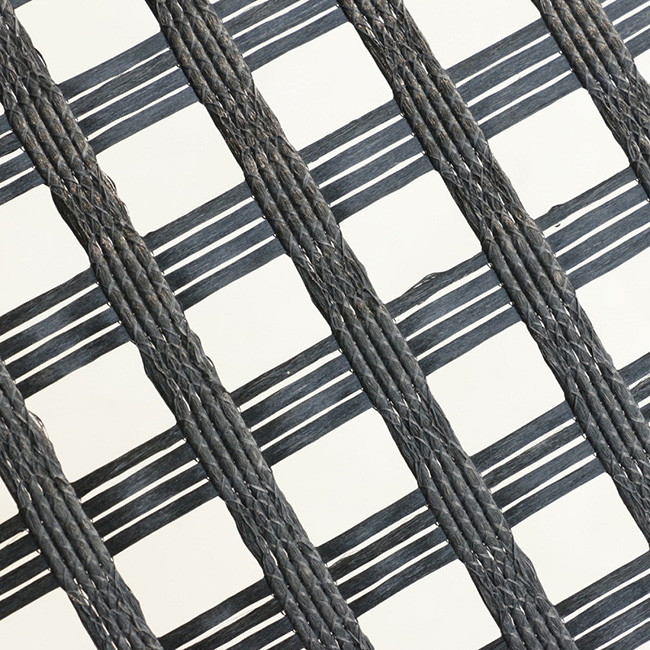


記事要約: ジオグリッドおよびジオテキスタイルは、土壌の性能向上、水流の制御、インフラの保護を目的として、土木工事や地盤工学分野で使用されるジオシンセティック材料です。ジオグリッドは主に土壌補強や骨材の拘束に用いられるのに対し、ジオテキスタイルは分離、ろ過、排水、侵食防止、場合によっては補強など、より幅広い用途を持ちます。米国連邦道路管理局(FHWA)は、その地盤工学に関するガイドラインにおいて、これらの材料が舗装システム、盛土、基礎地盤、擁壁構造物、および排水施設での応用例として挙げています。.
ジオグリッドとジオテキスタイルとは何か?
ジオグリッド そして ジオテキスタイル は、最も広く使用されている二種類のジオシンセティック材料です。両者は通常、合成ポリマーから製造され、土壌、骨材、または他の建設資材と接触するように施工されます。これらは、より厚い土層や追加の掘削、従来の構造材料への依存を減らすことで、人工構造物の性能を向上させます。しばしば一緒に議論されることが多いものの、それぞれ異なる構造、工学的機能、および典型的な用途を持っています。.

ジオグリッドは、規則的に配置された開口部を持つ格子状のポリマー製品です。製品設計や用途に応じて、高密度ポリエチレン(HDPE)、ポリプロピレン(PP)、またはポリエステル(PET)で作られるのが一般的です。その開放的な構造により、周囲の土壌や骨材粒子が格子の肋部と相互作用します。適切に選定・施工された場合、この相互作用によって機械的嵌合と横方向の拘束が生じ、荷重を分散させながら補強された土壌構造物の安定性を高めます。.
一方、ジオテキスタイルはロール状に供給される透水性のある織物材料です。一般的には織布型と不織布型に分類されます。織布型ジオテキスタイルは糸やテープを編み込んで製造され、寸法安定性や引張強度が求められる用途でよく選ばれます。.
一方、ジオテキスタイルはロール状に供給される透水性のある織物材料です。一般的には織布型と不織布型に分類されます。織布型ジオテキスタイルは糸やテープを編み込んで製造され、寸法安定性や引張強度が求められる用途でよく選ばれます。. 不織布ジオテキスタイル は、繊維を接着またはニードルパンチ加工して多孔質構造を作り、ろ過、分離、排水に役立てるよう一般的に製造されます。構造や特性に応じて、ジオテキスタイルは補強や侵食防止の機能も果たします。.

最も重要な違いは機能面にあります。ジオグリッドは、引張補強と骨材の嵌合が設計の中心となる場合に選ばれるのに対し、ジオテキスタイルは土壌の分離、水の通過、粒子の保持が必要な場合に頻繁に選ばれます。FHWAのガイドラインでは、ジオグリッドだけでは細かい路盤粒子が骨材層へポンプアップするのを防げない可能性があるため、補強とろ過の両方が必要な箇所では、別途ジオテキスタイル層が必要になる場合があることも説明されています。.
ジオグリッドとジオテキスタイルは道路建設でどのように使われるのか?
道路建設は、ジオグリッドとジオテキスタイルの最も確立された用途の一つです。道路の基礎には、強度、含水率、排水特性が異なる自然土壌が含まれることがよくあります。繰り返しの交通荷重がかかると、弱い路盤が変形し、骨材層が横方向に移動したり、微細な粒子が路盤へ混入したりすることがあります。これらの問題は、わだち掘れ、不均一な沈下、舗装性能の低下、さらにはメンテナンスコストの増加を引き起こす可能性があります。.
ジオシンセティック材料は、土壌および骨材システムの弱点を改善するために舗装構造内に施工されます。その機能は設計によって異なりますが、一般的な用途には路盤の分離、基層の補強、安定化、ろ過、排水などが含まれます。.
道路基層補強用ジオグリッド
ジオグリッドは通常、路盤と粒状基層の界面、または骨材層内部に配置され、道路基礎の力学的性能を向上させます。ジオグリッドの開口部により骨材粒子が嵌合し、車輪荷重下での過度な横方向の動きを抑制します。これにより骨材層は構造的整合性を保ち、弱い地盤上での荷重分散を改善します。.
建設現場では、ジオグリッドはアクセス道路、運搬道路、仮設作業プラットフォーム、産業用ヤード、および軟弱または変化の大きい路盤の上に建設される舗装区間において特に重要です。適切な条件下では、補強により骨材の厚さを最適化したり、施工上のアクセスを改善したりすることが可能です。ただし、依然として適切な路盤評価、排水設計、舗装厚さの計算が必要です。.
分離およびろ過用ジオテキスタイル
ジオテキスタイルは、細粒の路盤土壌と粒状の道路基層の間に頻繁に施工されます。その分離機能により、施工中および繰り返しの交通荷重下での両材料の混合を低減します。これにより、柔らかい下層土による汚染を防ぎ、意図した骨材層の厚さと級配を維持することができます。.
ろ過も重要な機能の一つです。適切なジオテキスタイルは水を透過させつつ、土壌粒子を所定の限界内で保持します。これは地下水や降雨が舗装基礎を通過する可能性がある場所で特に有用です。生地は土壌の粒度分布や予想される水理条件に適合するよう選定する必要があり、単に重いまたは厚い生地を選ぶだけでは効果的なろ過が保証されるわけではありません。.
ジオグリッドとジオテキスタイルの併用
一部の道路プロジェクトでは、補強と分離の両方が必要となります。このような場合、ジオグリッドで骨材を拘束し、ジオテキスタイルで微細な土壌粒子の移動を制御することが可能です。製品や工学仕様によっては、これらの材料を別々の層として施工することも、一体型のジオコンポジットとして供給することもできます。.
両材料は互いの機能を自動的に代替するわけではないため、その違いを理解することが重要です。米国連邦道路管理局(FHWA)の舗装ガイドラインでは、ジオグリッドが軟弱な路盤土壌への骨材の浸透を防ぐのに役立つことは指摘されていますが、路盤の微細粒子が基層へ逆流するのを必ずしも防げるわけではありません。そのため、このメカニズムを別途対処するには、ジオテキスタイル製の分離材が必要となる場合があります。.
擁壁および補強土構造物における応用
ジオグリッドは、機械的安定化土(MSE)擁壁や補強土斜面で広く使用されています。これらの構造物では、指定された垂直間隔で圧密された裏込め土の中に水平にジオグリッド層が配置されます。ジオグリッドは周囲の土壌と相互作用して引張抵抗を提供し、土塊がより安定した複合構造として振る舞うのを助けます。.
典型的な補強土擁壁では、ジオグリッドは表層から補強された填土へと延びています。ジオグリッドの長さ、引張強度、間隔、接続詳細、および設計寿命は、土圧、積載荷重、地下水条件、土壌特性、適用される設計要件などの要因に基づいて決定する必要があります。表層はコンクリートパネル、モジュールブロック、またはその他の人工構造物で構成されることがあります。ジオグリッドは単なる壁の背後に置かれる生地ではなく、設計された構造システムの一部を形成しています。.
ジオグリッドは、従来の急傾斜では不安定だったり、より大きな敷地面積を必要とするような状況において、補強土斜面を構築するためにも使用されます。圧密された土壌層間に補強を組み込むことで、エンジニアは安定性を維持しつつ、実現可能な勾配角を増やすことができます。これらのシステムは高速道路の盛土、サイト造成、道路拡幅、およびスペースが限られているプロジェクトで利用されています。.
Geotextiles can be incorporated into retaining walls and reinforced slopes for filtration and drainage purposes. For instance, a geotextile filter can be positioned between the soil and the drainage aggregate zone to minimise the migration of fine particles while enabling water to pass through. In certain designs, high-strength geotextiles can also act as tensile reinforcement; however, their long-term deformation behaviour and interaction with the soil must be considered.
Use in Embankments and Construction Over Soft Ground
Building embankments on soft clay, peat, loose saturated soil or other weak foundation materials can be challenging. The weight of the fill can put excessive stress on the underlying ground, potentially causing settlement, lateral spreading, or failure of the bearing capacity. Geogrids and geotextiles can be incorporated into the foundation system to improve construction performance and mitigate these risks.
Geogrids are typically installed at the base of an embankment to provide tensile reinforcement and enhance load distribution. They can restrain the lateral movement of granular fill and contribute to embankment stability, particularly during staged construction. Where several reinforcement layers are required, their spacing and tensile properties should be determined through engineering analysis rather than being selected based on generic installation rules.
Geotextiles are frequently used beneath embankments as separation and filtration layers. They prevent soft foundation soil from mixing with the placed fill and maintain the drainage function of granular layers. Depending on the project, high-strength woven geotextiles may also be used for reinforcement purposes.
These applications are particularly relevant to highway approaches, railway embankments, industrial platforms, port facilities, and land development on weak ground. The Federal Highway Administration’s (FHWA) geosynthetic design guidance identifies embankments on soft soils, foundation reinforcement, and roadway applications as major areas where geosynthetics can provide engineering benefits.
Drainage and Filtration in Civil Engineering Projects
Water management is essential to the long-term performance of roads, retaining walls, foundations, slopes, and underground structures. If water accumulates behind a retaining wall or within a pavement foundation, it can increase pore-water pressure, weaken soil, transport fine particles, and accelerate deterioration. Geotextiles are commonly used in drainage systems because they can allow water to pass while limiting the movement of surrounding soil.
Subsurface and Foundation Drainage
Nonwoven geotextiles are often installed around perforated drainage pipes, within drainage trenches, or between soil and drainage aggregate. In these arrangements, the geotextile acts as a filter: water enters the drainage zone while soil particles are retained. This helps reduce the risk of drainage aggregate or pipe openings becoming clogged by migrating fines.
Typical field applications include:
- French drains and perforated pipe trenches.
- Foundation perimeter drainage systems.
- Retaining wall back-drainage layers.
- Roadside and pavement edge drains.
- Drainage blankets beneath embankments.
- Subsurface drainage around sports fields and landscaped areas.
The geotextile must be compatible with the surrounding soil and the expected water flow. Its apparent opening size, permittivity, and resistance to clogging are important selection considerations. If the openings are too large, soil may pass through; if the filtration system is poorly matched to the soil, excessive clogging may restrict water flow. FHWA’s geotechnical guidance emphasizes specifying the intended geotextile function and considering soil and performance parameters when designing subsurface drainage.
Geocomposites for Integrated Drainage
In applications where both filtration and in-plane water transport are required, engineers may specify geocomposite drainage products. These commonly combine a geotextile filter layer with a drainage core, such as a geonet or molded polymer structure. The geotextile retains soil particles, while the core provides a pathway for water to flow toward an outlet.
Such products are used behind retaining walls, beneath pavement systems, around foundations, and in other locations where conventional granular drainage layers may be difficult to install or where space is limited. The drainage capacity must be evaluated under the expected compressive load, because the core can deform and its flow capacity may change under pressure.
Erosion Control on Slopes, Riverbanks, and Coastal Areas
Soil erosion occurs when exposed soil particles are removed by rainfall, surface runoff, flowing water, or wave action. If left uncontrolled, erosion can undermine embankments, damage drainage infrastructure, expose foundations, and increase the amount of sediment entering nearby waterways.
Geotextiles are used in erosion control systems to protect soil surfaces, support filtration beneath protective materials, and retain soil while allowing water to pass through. For instance, a geotextile can be placed under riprap on a riverbank or in a drainage channel. The stone layer absorbs or dissipates the energy of flowing water, while the underlying geotextile prevents fine soil from being washed out through the gaps between the stones.
On slopes, geotextiles and related erosion-control products can be installed under vegetation, erosion-control blankets, or other surface protection systems. Their role depends on the product design: some provide temporary surface protection during the establishment of vegetation, while others serve as permanent filter or protection layers. Geogrids may also be used in engineered slope reinforcement where the design requires tensile support within the soil mass.
When it comes to riverbank protection, drainage channels, and coastal engineering, the selection process must take into account flow velocity, hydraulic conditions, soil gradation, stone size, installation stresses, and expected service life. A geotextile selected for a low-flow drainage trench should not be used automatically beneath heavy riprap or in high-energy hydraulic conditions. The Federal Highway Administration’s (FHWA) geosynthetic guidance identifies erosion control, including geotextiles beneath riprap, as an established application.
Geogrids and Geotextiles in Railways, Landfills, and Other Infrastructure
道路や擁壁構造物に加えて、ジオグリッドやジオテキスタイルはさまざまな特殊なインフラ用途でも使用されます。その機能はおおむね一貫していますが、設計要件は荷重、地盤条件、水の動き、環境制約などの要因によって変化します。.
鉄道建設において:ジオテキスタイルは路盤土とバラストまたは下部バラストを分離し、微細粒子による汚染を低減できます。ジオグリッドは特定の軌道床安定化用途で使用され、骨材の拘束性を向上させ、荷重分布を支援します。設計では繰り返し動荷重、バラスト特性、排水、軌道幾何形状を考慮する必要があります。.
埋立工学:ジオテキスタイルは埋立地の排水およびライニングシステムにおいて、一般的にフィルタ層や保護層として使用されます。隣接材料によるジオメンブレンの穿刺を防ぎ、土壌や排水用骨材を他の層から分離するのに役立ちます。ジオグリッドは斜面やアクセスエリアの安定化システムなど、特定の補強用途で使用できます。ただし、多くの遮蔽システムで主要な低透水性バリアを提供するジオメンブレンとは混同しないでください。.
鉱山および産業用地:ジオグリッドは重機用の運搬道路、作業プラットフォーム、アクセス経路を補強できます。ジオテキスタイルは骨材層の下や排水システム周辺で分離・ろ過機能を提供できます。これは、広大な敷地内で地盤条件が変化し、建設車両の通行が特定エリアに集中する場合に特に有用です。.
橋梁アプローチ:ジオシンセティック補強材は、橋台やアプローチ盛土を支える補強土システムに使用できます。米国連邦高速道路管理局(FHWA)の「ジオシンセティック補強土橋台および統合型橋梁システムに関する設計・施工ガイドライン」では、間隔の狭い補強材と圧縮された粒状充填材を用いた施工方法が説明されています。また、道路と橋梁の接続部における移行管理を支援するため、統合型アプローチゾーンでの補強材配置についても指針が示されています。.
ジオグリッド対ジオテキスタイル:どちらの材料を選ぶべきか?
ジオグリッドとジオテキスタイルの選択は、単なる製品カテゴリーや価格ではなく、まずエンジニアリング上の課題から始めるべきです。主な要求事項が引張補強と骨材の相互嵌合作用である場合は、ジオグリッドがより直接的な選択肢となることが多いです。プロジェクトで土壌の分離、ろ過、または粒子移動からの保護が必要な場合は、通常ジオテキスタイルの方が適しています。一部のプロジェクトでは、補強とろ過が別々の設計機能であるため、両方の製品が必要となります。.
| プロジェクト要件 | 一般的な材料選択 | 主な機能 |
| 擁壁や急傾斜地の補強 | ジオグリッド;一部の設計では高強度ジオテキスタイルも使用 | 引張補強と土壌安定性 |
| 骨材舗装路盤の改良 | ジオグリッドまたは補強用ジオコンポジット | 骨材の拘束と荷重分布 |
| 軟弱路盤と道路骨材の分離 | 織布または不織布ジオテキスタイル | 材料混合の分離と抑制 |
| 排水トレンチ内の水のろ過 | 通常は不織布ジオテキスタイル | 水の通過と土壌粒子の保持 |
| 捨石の下の土壌保護 | 適切なジオテキスタイルフィルター | ろ過と侵食防止 |
| 軟弱地盤上の盛土補強 | ジオグリッドまたは設計された補強用ジオテキスタイル | 引張抵抗と安定性 |
| ジオメンブレンの保護 | 保護用ジオテキスタイル。 | クッション効果と穿刺防止 |
| ろ過と排水の併用 | ジオコンポジット | 統合型ろ過と水輸送 |
以下の材料特性は初期選定の参考になります。これらは一般的な傾向であり、プロジェクト固有の設計の代替にはなりません。.
| 応答が主方向と異なる可能性あり | ジオグリッド | ジオテキスタイル |
| 物理的構造 | リブと開口部を備えたオープングリッド | 織布または不織布の透水性繊維素材 |
| 主な役割 | 土壌補強と骨材拘束 | 分離、ろ過、排水、保護 |
| 土壌との相互作用 | 機械的嵌合作用と引張抵抗 | 粒子保持、界面相互作用、水の通過 |
| 一般的な材料 | HDPE、PP、PET | PP、PETおよびその他の指定ポリマー |
| 典型的な現場位置 | 擁壁、補強斜面、路盤、盛土 | 道路路盤、排水トレンチ、捨石下、基礎 |
| 主要な設計特性 | 引張強度、剛性、開口部形状、接合部強度、クリープ耐性 | 引張強度、見かけ上の開口サイズ、透磁率、透水性、穿刺抵抗 |
| 併用 | ろ過も必要な場合はジオテキスタイルと組み合わせて使用されることが多いです。 | Can be paired with geogrids where reinforcement is also needed |
What Should Engineers Consider Before Installation?
Even a technically suitable geosynthetic can underperform if it is selected or installed incorrectly. The product must be designed around the soil conditions, construction method, and expected service loads. Engineers and contractors should consider the following factors before materials arrive on site.
- Investigate the ground conditions. Review soil classification, particle-size distribution, subgrade strength, groundwater level, drainage conditions, and expected settlement. These parameters help determine whether the project needs reinforcement, separation, filtration, or several functions at once.
- Define the required performance properties. For geogrids, relevant properties may include tensile strength in the required direction, tensile stiffness, junction strength, aperture geometry, and long-term creep behavior. For geotextiles, engineers commonly evaluate tensile and puncture strength, apparent opening size, permittivity, and resistance to installation damage.
- Check durability and design life. Polymer type, ultraviolet exposure before burial, chemical conditions, temperature, and long-term loading can affect product performance. The design should consider installation damage, creep, and relevant durability reduction factors rather than relying solely on short-term tensile strength.
- Prepare the installation surface. Remove sharp debris and unsuitable materials, correct major irregularities, and prepare the subgrade in accordance with the project specification. Rolls should be placed in the correct direction and position, with overlaps or connections specified by the design.
- Control aggregate placement and compaction. Construction equipment should not damage exposed geosynthetics. Fill placement, trafficking, lift thickness, and compaction procedures should follow the manufacturer’s instructions and project requirements. Wrinkles, folds, displacement, and inadequate overlaps can compromise the intended performance.
- Inspect and document the work. Verify product identification, roll condition, installation location, overlap dimensions, connections, and cover thickness. Photographs and inspection records provide useful evidence for quality assurance before the geosynthetic is covered.
FHWA’s Geosynthetic Design and Construction Guidelines emphasize that material selection, testing, specification, and construction procedures must be considered together. In practice, this means a product should be selected according to its design function and verified against the project’s applicable standards and specifications, rather than chosen by weight or tensile strength alone.
Frequently Asked Questions About Geogrids and Geotextiles
- What are geogrids and geotextiles used for in construction?
Geogrids are mainly used to reinforce soil, stabilize aggregate layers, and improve the performance of retaining walls, slopes, and embankments. Geotextiles are commonly used for soil separation, filtration, drainage, erosion control, and selected reinforcement applications.
- What is the main difference between geogrids and geotextiles?
Geogrids have an open grid structure that allows soil or aggregate particles to interlock with the ribs, providing tensile reinforcement and confinement. Geotextiles are permeable textile sheets designed to perform functions such as separating soil layers, retaining particles, and allowing water to pass.
- ジオグリッドとジオテキスタイルは一緒に使用できますか?
Yes. They are often combined when a project requires both soil reinforcement and separation or filtration. For example, a road foundation may use a geogrid to confine aggregate and a geotextile to prevent fine subgrade particles from migrating into the base.
- Are geotextiles suitable for road construction?
Yes. Geotextiles are widely used beneath roads to separate soft subgrade soil from granular base materials, reduce contamination, and support drainage. The correct fabric must be selected according to soil gradation, water flow, loading, and installation conditions.
- Which geogrid is best for soil stabilization?
The appropriate geogrid depends on soil conditions, aggregate characteristics, loading, and the required reinforcement mechanism. Engineers should evaluate tensile strength, stiffness, aperture geometry, junction strength, and long-term durability rather than selecting a product based on tensile strength alone.
- ジオグリッドとジオテキスタイルは地下でどれくらい持つか?
Their service life depends on polymer type, soil chemistry, temperature, installation damage, loading, and environmental exposure. A properly specified and installed geosynthetic can provide long-term performance, but its design life should be assessed using project-specific durability requirements and relevant reduction factors.
結論
Geogrids and geotextiles play an important role in modern civil engineering, improving the interaction between soil, aggregate and water. Geogrids are particularly valuable for reinforcing road bases, retaining walls, embankments and reinforced slopes, while geotextiles provide essential separation, filtration, drainage and erosion control in transportation, drainage and environmental infrastructure.
However, the most effective solution is not necessarily to choose one material over the other. Many field applications require a combination of geosynthetics, with each layer performing a clearly defined engineering function. By evaluating ground conditions, hydraulic requirements, mechanical properties, installation procedures, and long-term durability, engineers can select the right geogrid or geotextile system to ensure reliable infrastructure performance.
