

Article Summary:
A polyester geogrid is a synthetic material with high strength that is primarily utilized for the distribution of weight and structural support in geotechnical and civil engineering.
Polyester (PET) geogrids are commonly utilized because of their high tensile strength, low creep rate, and long-lasting nature.
Similarly, Geosynthetics Engineering by Koerner focuses on the polyester geogrids as a reliable reinforcing component in walls, embankments, slopes, and pavement systems, especially when a long lifespan and stability are needed.
This article clarifies what polyester geogrid is, how it functions, where it’s used, how it differs from other geogrids, and how engineers should choose the right polyester geogrid for practical applications.
Introduction: Why Polyester Geogrid Matters in Modern Infrastructure
As infrastructure projects become more significant, heavier, and more complex, traditional soil stabilization methods are no longer appropriate alone. Engineers are increasingly utilizing geosynthetics to enhance the performance of soil, reduce the cost of construction, and increase the life of the structure. Among these materials, polyester geogrid has become one of the most popular reinforcements for use in civil engineering.
From highways and railways to retaining walls and embankments, polyester geogrids are employed to address issues associated with low soil quality, excessive settlement, slope instability, and concentration of loads. Understanding what polyester geogrid is and why it’s important is crucial to both civil engineers and contractors, project owners, and infrastructure planners.
What Is Polyester Geogrid? A Clear Definition
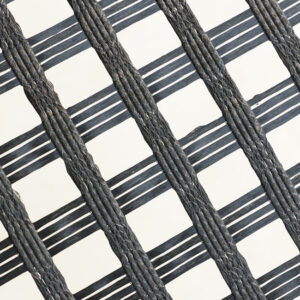
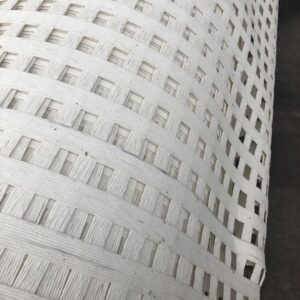
A polyester geogrid is a biaxial or uniaxial grid-shaped geosynthetic material that is manufactured from high-tensile polyester (PET) fibers. These fibers are typically covered with a protective polymer layer that enhances the fibers’ durability and resistance to environmental degradation.
Structurally, a polyester geogrid has the following composition:
- Regular, spaced, longitudinal, and transverse stripes
- High stretchiness in one or two vectors
- Openings that allow soil to interlock
Unlike geotextiles, which are comprised of a single sheet that covers the ground, geogrids are built with a mechanical interlock between the soil particles and the grid openings that facilitates efficient transfer of loads.
Why Polyester Is Used in Geogrids?
Polyester is selected as the material for geogrid because of its balanced mechanical and chemical properties.
Key benefits of material include:
- High tensile strength at a low stretchiness ratio
- Extremely tough creep behavior under steady states
- Constant modulus of elasticity
- Biological degradation resistance
Compared to other polymers, polyester has a long lifespan even when subjected to constant stress, which makes it ideal for permanent structures in civil engineering.
How Polyester Geogrid Works: Reinforcement Mechanism?
The efficacy of polyester geogrid is based on the way it interacts with soil.
- Soil and Geogrid Interlock
When soil is compacted around a polyester geogrid, particles are transported to the interior of the soil and are locked into place. This induces a resistance that is proportional to the frictional force; this transfers the load from the less powerful soil to the more powerful reinforcing layer.
- Load Sharing
Polyester geogrids concentrate the load over a larger area, which reduces the stress on the underlying ground. This is of great importance in foundations, pavements, and embankments.
- Isolation Effect
By preventing the lateral movement of soil, polyester geogrids increase the stiffness of the structure and reduce the deformation of the structure, which increases the overall stability of the structure.
Types of Polyester Geogrids
Polyester geogrids are typically categorized by the primary direction of their load.
- Uniaxial Polyester Terrain
High tensile strength in a single direction
Utilized to hold onto walls and sloping terrain.
Perfect for resisting lateral earth pressure.
- Biaxial Polyester Terrain
Able to withstand both horizontal and vertical forces.
Utilized in the enhancement of pavement strength and the distribution of loads.
Helps to maintain a variety of directional stability.
Each type is designed to fit into specific projects.
Common Applications of Polyester Geogrid
- Maintaining Walls
Polyester geogrids are commonly utilized in mechanically supported earth (MSE) retaining walls. Their tendency to low creep helps to maintain the long-term stability of the wall.
- Walkways on Wet Basics
In regions with insufficient subgrade, polyester geogrids augment embankments by improving the distribution of loads and decreasing settlement.
- Street and Walkway Repair
By augmenting the foundation and sub-foundation layers, polyester geogrids:
Reduce the amount of time spent roaming around
Increase the life of the pavement
Lower costs of operation
- Slope stabilization
Polyester geogrids enhance the resistance of slopes against erosion and sliding, which is especially true of transportation and land development projects.
- Rail and airport infrastructure
The high tensile strength and long durability of polyester make it appropriate for use on railways and paths that are subject to repeated static pressure.
Comparison: Polyester Geogrid vs Other Geogrids
| Property | Polyester Geogrid | Polypropylene Geogrid | Fiberglass Geogrid |
| Tensile Strength | Very High | Moderate | High |
| Creep Resistance | Excellent | Moderate | Very Good |
| Long-Term Stability | Excellent | Good | Moderate |
| Flexibility | Good | Good | Low |
| Typical Applications | Walls, embankments | Roads, separation | Asphalt reinforcement |
This comparison reflects performance trends commonly discussed in geosynthetics engineering literature and supplier technical data.
Polyester Geogrid vs Geotextile
Polyester geogrids and geotextiles are both commonly employed synthetic materials in the civil engineering and infrastructure industries. While they may seem to function the same, they have different purposes for structural and functional purposes. Understanding their dissimilarities helps scientists and contractors choose the appropriate solution for each situation.
- Theaterial’s Composition and Design
Polyester Terrain
constructed from polyester (PET) fibers with a high tensile strength
Formed into a rectangular grid with openings
Coated (often with PVC or asphalt) to improve the chemical resistance and durability of the coating.
Developed primarily fortress
Geotextile
manufactured as a continuous stripe (woven, nonwoven, or knitted)
composed of polyester or polypropylene fibers
No open space; functions as a permeable fabric.
Designed to be separated, filtered, drained, and safeguarded.
- Primary Function
| Aspect | Polyester Geogrid | Geotextile |
| Main role | Soil reinforcement | Separation, filtration, drainage |
| Load distribution | Excellent | Limited |
| Tensile strength | Very high | Moderate |
| Interaction with soil | Interlocking through apertures | Surface friction |
- Mechanical Performance
Polyester Terrain
High tensile strength in low stress situations
Excellent long-term tensile strength
Efficient transfers of large amounts of cargo over flat to steep elevations.
Ideal for structures that require structural support.
Geotextile
Lower stretchiness compared to geogrids
Increased tensile strength
Adept at handling non-structural loads
Often paired with aggregates that serve as a means of separation and purification.
- Drainage and Filtration Ability
Geotextiles facilitate the passage of water while also retaining soil particles. This is ideal for creating drainage layers, controlling erosion, and utilizingfiltration.
Polyester geogrids cannot filter or drain due to their open design and lack of fine structure.
- Common Examples
Polyester’s versatility
Other methods of enhancing road and railway stability
Preserving walls and sloping fields
The stabilizing effect of soil on soft ground
Base and supplementary layers
Geotextile Utilization
Separation of road and pedestrian areas
Drainage systems and trenches
Controlling erosion and protecting slopes.
Protection for geomembranes.
- Robustness and environmental resistance
Both substances have a strong durability that is different in strength:
Polyester geogrids have a long-term capacity to support heavy loads and will resist creep under a sustained force.
Geotextiles have a successful record in chemical resistance and porosity, but they may be more susceptible to degradation under high mechanical stress if applied incorrectly.
- Installation Considerations
Geogrids are precisely positioned and pulled in order to ensure effective soil contact.
Geotextiles are simpler to install and will adapt to uneven ground well.
In many instances, both are incorporated into projects: geotextile is employed to differentiate and collect drainage, while geogrid is employed to strengthen and differentiate projects.
- Cost and Project Efficiency
Polyester geogrids have a higher initial cost, but they reduce the overall cost of the project by allowing for a thinner aggregate layer and increased load performance.
Geotextiles are typically more cost-effective and versatile in non-reinforcement positions.
Key Performance Parameters of Polyester Geogrid
Polyester geogrid (PET geogrid) is commonly employed in soil reinforcement, distribution of loads, and structural support in civil engineering projects. Its effectiveness is determined by several critical parameters that determine its suitability, consistency, and long-term behavior under stress.
- Shear Force
Measured in kN/m
Indicates the magnitude of the geogrid’s capacity to withstand pressure.
Available in a variety of grades of strength for different purposes.
High tensile strength is crucial to embankments, walls, and foundations.
- Tensile Modulus (Stiffness)
Indicates the capacity to withstand stressful conditions
High modulus promotes effective stress transfer at low levels of strain.
Essential for reducing settlements and enhancing structural stability.
- Strain at the Minus 10
Expressed as a percentage (%)
Indicates the length of the final stretch before failure.
Polyester geogrids have low stretchiness, which enables the early release of reinforcement.
Provides a consistent return on investment with working conditions.
- Creepiness
Describe the long-term effects of sustained stress.
Polyester has a high creep capacity, which makes it appropriate for permanent structures.
Essential for projects that have a long design life expectancy (50-120 years).
- Junction Stiffness and Integrity
Indicates the degree to which intersections are compacted.
Effective boundaries that transfer stress effectively across the grid.
Low strength of the junction can cause the area to fail in a localized manner, despite the tensile strength being high.
- Robustness and environmental resistance
Advantages include its proven efficiency in chemical warfare, biological warfare, and humidity.
Often paired with other materials to increase its resistance:
Ultraviolet radiation
Damage to the installation
Alkaline or acidic soils
Provides long-term structural stability
- The size and shape of the Aperture
Impairs the soil’s porosity and capacity to transfer load.
The size of the optimized aperture is beneficial for the interaction with the surrounding material.
Proper geometry promotes increased efficiency and stability of reinforcement.
- The damage resistance of the installation
The capacity to withstand mechanical pressure during installation and compaction.
Reviewed through the reduction of design factors.
High damage resistance promotes consistent performance following installation.
- Long Term Design Capacity (LTDC)
Derived from the ultimate tensile strength of the reduced material:
Creep
Damage to the installation
Environmental deterioration
Indicates the maximum practical strength that can be attained over the lifetime of the design.
- Standard of Compatibility
Must be built according to the relevant technical standards for geotechnics and the project’s specifications.
The performance data should be backed by laboratory testing and certification.
Predictable behavior in engineered structures.
Standards and Design Guidelines
Polyester geogrids are typically constructed and tested according to international regulations, such as:
ASTM’s standards for stretch testing.
The testing of ISO geosynthetics by means of stress.
The FHWA and AASHTO guidelines for design are both inclusive and diverse.
Violation of these standards will lead to predictable failure in infrastructure projects.
Installation Considerations and Best Practices
Effective installation is pivotal in ensuring that polyester geogrids (PET geogrids) achieve their intended long-term stability, durability, and strength. Even superior-quality geogrids can have a lack of performance if the installation guidelines are not followed correctly. These considerations and recommended practices are commonly employed in geotechnical engineering projects.
- Site Preparation
Ensure the soil is flat, consistent, and lacks sharp objects.
Remove trash, exposed rocks, and building debris
Repair the weak or ineffective areas before placing the geogrid.
A solid base that is well-prepared reduces the damage that can be caused by the installation and improves the interaction between the soil and the geogrid.
- Adequate Orientation and Alignment
Install the geogrid with the primary direction of strength that is perpendicular to the primary direction of load.
Avoid twisting, folding, or misalignment during placement.
Maintain the same alignment across the entire installation area.
Incorrect orientation adversely affects the efficiency of reinforcement and the capacity of structural support.
- Tension and placement
Flatten the geogrid’s surface and make it taut, without wrinkles or slack.
Use the lightest amount of tension that is necessary—do not overdo it.
An anchor or firm ground to prevent rotation during repairs
Constant contact with the subgrade promotes effective weight transfer.
- Overlap and jointing necessities
Consciously follow the specifications for the length of the project (typically 200-500 mm).
Overlaps should be positioned in the direction of object transport.
Mechanical interfaces or joints that require high stress may need to be used.
Too little overlap can cause separation and diminished reinforcing effectiveness.
- Backfill material selection
Use a variety of well-graded, specific fill materials that are compatible with the size of the geogrid’s apertures.
Avoid large aggregates that may harm the geogrid.
The fill should be spotless and lack any organic content; it should also be able to be compacted.
Effective backfill promotes long-term viability and interlock.
- Backfilling and Compaction Practices
Return fill dirt to your original position to avoid pulling or pushing the geogrid.
Maintain a consistent fill thickness before the equipment operates to compact.
Employ regulated compaction techniques, especially near the geogrid component.
Over-exposure or excessive compaction on the exposed geogrid can lead to harm.
- Device Restrictions
Avoid using heavy vehicles to drive directly on exposed geogrid.
Employ low-pressure equipment that requires low ground if early access is necessary.
Observe the specific equipment’s loading requirements.
Controlling the equipment decreases the risk of damage during installation.
- Protection from Environmental Exposure
Limit the amount of time spent in the sun before covering the ground.
Avoid exposure to hazardous chemicals or temperatures.
Cover the installed geogrids with fill dirt immediately.
These measures facilitate the preservation of material integrity and long-term viability.
- Quality Control and Monitoring
Examine the geogrids for tears, cuts, or abrasion before and after installation.
Ensure the alignment, length of the overlap, and the anchoring.
Document the procedure for installing documents and note any deviation.
Regular audits make sure that design and standards are followed.
- Coordination with the Design department and the Standardization department
Maintain standards relevant to the project and the design of the building.
Ensure that the methods of installation are compatible with the design factors employed in the design.
Communicate with the engineers when the conditions on the site are different than what was expected.
Effective communication helps to bridge the design and construction gaps.
FAQ: Polyester Geogrid Explained
- What is the purpose of polyester geogrid?
Polyester geogrid is employed in the soil as a reinforcing component in retaining walls, embankments, slopes, pavements, and other structures that support loads.
- Why are polyester polymers more popular than other polymers?
Polyester has a high tensile strength, low creep, and long stability, which makes it ideal for permanent structures.
- Is polyester geogrid appropriate for soft soil?
Yes. It’s particularly beneficial in increasing the distribution of loads and decreasing the amount of settlement in the subgrade that is weak.
- Can polyester plastic be combined with other synthetic materials?
Yes. It’s frequently combined with geotextiles or geomembranes to enhance the strength, division, and drainage of soil simultaneously.
- How long does polyester geogrid last?
When constructed and placed correctly, polyester geogrids can have a long lifespan.
Conclusion: Understanding the Role of Polyester Geogrid
What is the purpose of polyester geogrid, and how is it utilized? Essentially, it’s a high-performance geosynthetic material that increases the stability of soil, distributes loads more evenly, and has superior long-term performance that is superior. Its combination of durability, strength, and adaptability is what makes polyester geogrid the foundation of modern geotechnical technology.
As the demands of infrastructure continue to increase, polyester geogrids will still be of great importance to construct safer, more durable, and more sustainable earth structures.
