

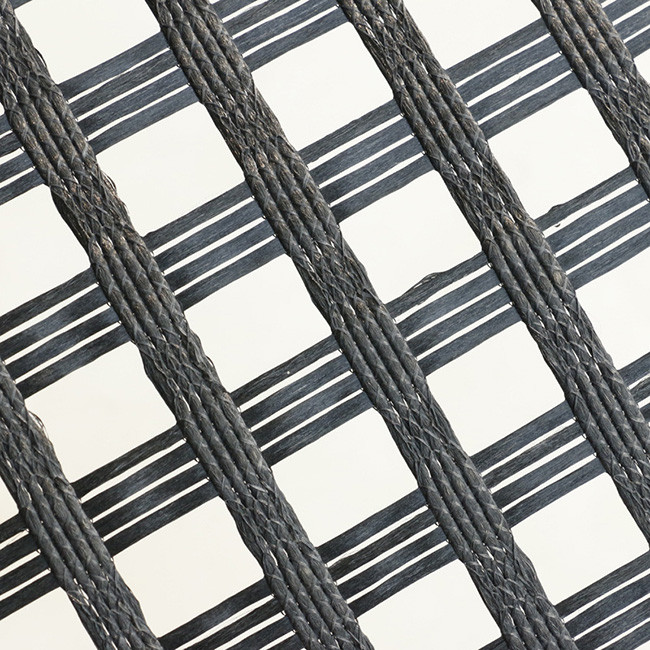

Lianyi PP triaxial geogrid with an additional cross-machine direction (CMD) rib and analyze its structural implications, advantages, disadvantages, and potential applications. This design tweak adds a fourth rib perpendicular to the machine direction (MD), creating a hybrid between triaxial and biaxial reinforcement.
First of all, I would like to give you a brief introduction of our biaxial geogrid and triaxial geogrid.Here’s a quick breakdown:
Biaxial Geogrid (BX)
-
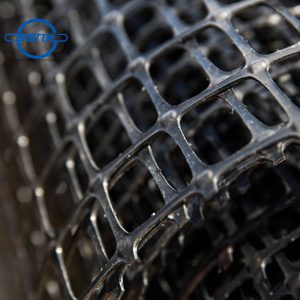
Structure: Square or rectangular apertures.
-
Strength: High tensile strength in two directions — longitudinal (MD) and transverse (TD).
-
Application: Base reinforcement in roads, parking lots, and working platforms where loading is predictable and two-directional.
Triaxial Geogrid (TX)
-
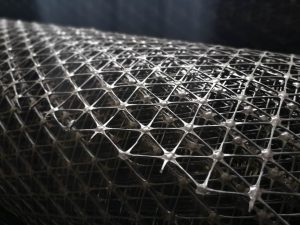
Structure: Triangular apertures radiating from central nodes.
-
Strength: Optimized for multi-directional stress distribution, especially 120° apart.
-
Application: Ideal for areas with variable load directions (e.g., roundabouts, unpaved roads, mining haul roads).
Introducing the PP Four-Axial Geogrid: The Ultimate Hybrid Solution for Modern Geotechnical Challenges
In an era where infrastructure demands are growing more complex, engineers and project managers need geosynthetic solutions that deliver versatility, durability, and cost efficiency. Enter PP Four-Axial Geogrid—a groundbreaking innovation that redefines geotechnical reinforcement by combining the strengths of biaxial and triaxial geogrids into a single, high-performance product. Designed for projects requiring multidirectional stability and targeted lateral strength, this geogrid is engineered to outperform conventional solutions.
What Is the PP Four-Axial Geogrid?
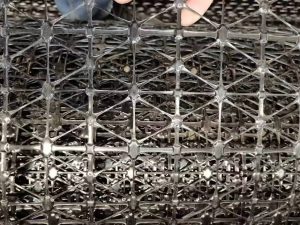
The PP Four-Axial Geogrid is a hybrid polypropylene geogrid featuring a triaxial base structure (hexagonal apertures) enhanced with an additional cross-machine direction (CMD) rib. This unique design merges:
-
Triaxial Reinforcement: Multidirectional load distribution across three axes (60° apart), ideal for stabilizing slopes, soft soils, and dynamic environments.
-
Biaxial Reinforcement: A reinforced CMD rib (perpendicular to the machine direction) to resist lateral spreading and deformation in critical applications like roadways and retaining walls.
This hybrid geometry creates a geogrid that adapts to both multidirectional stresses and unidirectional loads, eliminating the need for layering multiple geogrid types.
Key Advantages of the PP Four-Axial Geogrid
1. Superior Load Distribution
-
Triaxial Component: Distributes stress evenly across multiple angles, preventing localized failures in soft soils, slopes, or seismic zones.
-
CMD Rib Reinforcement: Provides exceptional lateral confinement, reducing rutting in pavements and lateral spreading in embankments.
-
Result: Enhanced structural integrity under combined stresses, such as heavy traffic on uneven terrain or backfill pressure in retaining walls.
2. Cost and Time Efficiency
-
Eliminates Layering: Combines the roles of biaxial and triaxial geogrids, reducing material and labor costs.
-
Simplified Installation: One-step deployment minimizes project timelines, especially in large-scale infrastructure projects.
3. Optimized Soil Interaction
-
The hybrid aperture design (hexagonal + rectangular) improves mechanical interlock with granular soils, maximizing load transfer and minimizing displacement.
-
Ideal for weak subgrades, mining haul roads, or coastal revetments where soil-geogrid interaction is critical.
4. Durability in Harsh Environments
-
Polypropylene Material: Resists UV degradation, chemical corrosion, and creep, ensuring long-term performance in extreme conditions (e.g., freeze-thaw cycles, acidic soils).
-
Fatigue Resistance: Withstands cyclic loading from heavy machinery, traffic, or tidal forces without losing tensile strength.
5. Adaptability to Complex Projects
-
Performs exceptionally in “mixed-stress” scenarios, such as:
-
Curved railway tracks (triaxial stability + CMD resistance to lateral ballast movement).
-
Bridge abutments (multidirectional shear resistance + CMD anchoring).
-
Landfill liners (triaxial settlement control + CMD resistance to waste pressure).
-
Why Choose the PP Four-Axial Geogrid Over Conventional Solutions?
| Scenario | Traditional Approach | Four-Axial Solution |
|---|---|---|
| Sloped Road Embankments | Layer biaxial (base) + triaxial (slope). | Single-layer installation with dual functionality. |
| Mining Haul Roads | Biaxial geogrids prone to lateral deformation. | CMD rib prevents lateral spreading; triaxial base stabilizes soft subgrades. |
| Retaining Walls | Requires separate geogrids for backfill and shear. | Combines CMD anchoring and multidirectional shear resistance. |
| Coastal Erosion Control | Triaxial geogrids lack lateral wave force resistance. | CMD rib counters tidal lateral forces; triaxial resists multidirectional erosion. |
Target Applications
-
Transportation Infrastructure
-
Highways & Railways: Reduces rutting and track misalignment while stabilizing subgrades.
-
Airport Runways: Handles heavy aircraft loads and jet blast forces.
-
-
Slope and Retaining Structures
-
Steep Slopes: Prevents soil slippage and erosion.
-
Mechanically Stabilized Earth (MSE) Walls: Enhances backfill confinement and facing connection strength.
-
-
Environmental and Industrial Projects
-
Landfills: Controls settlement and resists waste pressure.
-
Mining Sites: Stabilizes haul roads and tailings dams under extreme loads.
-
-
Coastal and Flood Defense
-
Revetments & Breakwaters: Resists multidirectional wave action and scour.
-
Proven Performance, Backed by Science
-
Tensile Strength Testing: Demonstrates 20% higher CMD strength compared to standard triaxial geogrids.
-
Pullout Resistance: 15% improvement in soil-geogrid interaction due to hybrid aperture geometry.
-
Long-Term Creep Tests: Confirms <5% elongation under sustained loading, meeting ASTM D5262 standards.
Why Partner With Us?
-
Custom Solutions: Adjust aperture sizes, rib spacing, and tensile properties to meet project-specific needs.
-
Technical Support: Our team provides finite element analysis (FEA) and design guidance to optimize geogrid performance.
-
Sustainability: Polypropylene is 100% recyclable, aligning with green construction practices.
Conclusion
The PP Four-Axial Geogrid is not just a product—it’s a paradigm shift in geotechnical engineering. By addressing the limitations of traditional biaxial and triaxial geogrids, it offers unmatched versatility, durability, and cost savings for modern infrastructure challenges. Whether you’re stabilizing a landslide-prone slope, reinforcing a high-traffic highway, or protecting a coastal zone, this geogrid delivers one-grid performance for multidimensional demands.
Contact us today to discuss how the PP Four-Axial Geogrid can elevate your next project’s resilience and efficiency. Let’s build smarter, together.
