


Why Fiberglass Geogrids Are the Crucial Supplement for Tougher, Longer-Lasting Roads & Infrastructure
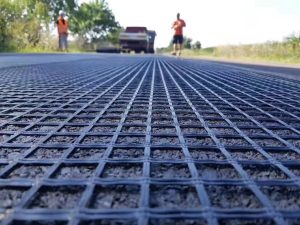
Building roads, runways, parking lots, and other paved surfaces that can withstand the relentless punishment of heavy trucks, harsh weather, and the passage of time is a constant challenge for engineers. One of the most effective solutions hidden beneath the asphalt surface isn’t magic – it’s fiberglass geogrids. Think of them as the hidden skeleton or reinforcing mesh that gives the pavement incredible strength and crack resistance.
While other geogrids (like polyester or polypropylene) have their uses, fiberglass geogrids are often the undisputed champion for reinforcing asphalt overlays and pavements. Let’s break down exactly why, in clear terms, and explore their wider civil engineering superpowers.
What Exactly Is a Geogrid (and Why Do We Need It)?
Imagine laying a new layer of asphalt (an “overlay”) on an old, cracked road. Without reinforcement, cracks from the old road will quickly “reflect” up through the new layer. Or, picture a new road built on soft ground – it can rut, sink, or crack under heavy loads. This is where geogrids come in.
-
The Problem: Asphalt is great at compression (handling downward squishing forces) but weak in tension (pulling apart). When a truck wheel rolls over it, the pavement bends slightly down under the wheel but bends up just ahead and behind it. This bending creates tension forces that cause cracks.
-
The Geogrid Solution: A geogrid is a grid-like mesh made from strong synthetic materials. It’s placed within the pavement structure (usually between the old surface and the new asphalt overlay, or within the base layers of a new road). Its job is to absorb these tension forces, acting like tendons or rebar in concrete, but for asphalt and soil.
Why Fiberglass Geogrids Shine for Asphalt Reinforcement
Fiberglass geogrids are made by weaving or knitting incredibly strong fiberglass yarns into a grid pattern and then coating them for protection and bond strength. Here’s what makes them the top choice for asphalt:
-
Unmatched Immediate Strength & Rigidity (The “Rebar” Effect):
-
The Science: Fiberglass has an extremely high “modulus of elasticity.” This means it’s incredibly stiff. When subjected to force (like a 40-ton truck), it offers maximum resistance immediately with very, very little stretching (“low strain”).
-
Why it Matters for Roads:
-
Stops Reflective Cracking Dead: This stiffness is crucial for overlays. It bridges cracks and joints in the old pavement beneath, preventing the bending forces from transferring upwards and causing cracks in the new asphalt layer. It literally locks the movement down.
-
Distributes Loads Widely: It spreads the weight of heavy vehicles over a much larger area of the underlying soil or base material. This reduces localized pressure points that cause rutting (permanent grooves) and fatigue cracking.
-
Provides Instant Support: Unlike some materials that need to stretch to develop strength, fiberglass geogrids are strong from the moment the load hits. This is vital for high-traffic areas that can’t afford any initial “settling” weakness.
-
-
-
Exceptional Durability Against Road Warriors:
-
The Science: Fiberglass itself is inert – it doesn’t rot, rust, or react with most chemicals. The polymer coating applied to the yarns provides superior protection against environmental attack.
-
Why it Matters for Roads:
-
UV Resistance Champion: Asphalt surfaces bake in the sun constantly. Fiberglass geogrids are highly resistant to ultraviolet (UV) degradation, unlike polypropylene which can become brittle, or polyester which can weaken significantly over time under sunlight.
-
Temperature Extremes? No Problem: From scorching desert heat (where asphalt can reach 70°C/160°F+) to freezing arctic conditions, fiberglass maintains its strength and properties. It won’t soften excessively in heat or become brittle in extreme cold.
-
Chemical Resistance: Resists damage from road salts, de-icers, oils, fuels, and mild acids/alkalis commonly found on roadways.
-
Long-Term Performance: This combination of resistances means the geogrid retains its strength throughout the design life of the pavement, often 20+ years, without significant degradation. It truly is a “set it and forget it” reinforcement.
-
-
-
Superior Bond with Asphalt:
-
The Science: The coating on fiberglass geogrids isn’t just protective; it’s specifically designed to create a strong mechanical and chemical bond with the hot asphalt concrete during paving.
-
Why it Matters for Roads: This strong bond is essential for the geogrid to work effectively. It ensures that the tension forces generated in the asphalt are efficiently transferred into the geogrid. A weak bond means the geogrid can’t do its job properly. Fiberglass geogrids excel at this critical interface.
-
Fiberglass vs. the Competition: A Detailed Showdown for Asphalt
How do fiberglass geogrids stack up against polyester and polypropylene (PP) geogrids specifically for asphalt reinforcement? Let’s compare the key factors:
| Feature | Fiberglass Geogrid | Polyester Geogrid | Polypropylene (PP) Geogrid |
|---|---|---|---|
| Tensile Strength | Highest initial strength. Maximum force resistance right away. | Good strength, but generally lower initial strength than fiberglass. | Moderate to good strength, but develops strength through stretching. |
| Stretch (Strain) | Very Low Strain. Minimal stretching under load (high modulus). Stiff. | Moderate Strain. More flexible than fiberglass. | High Strain. Very stretchy/elastic (low modulus). |
| Best For Load Type | Immediate, high-impact loads (truck tires). | Long-term, constant loads (soil retaining walls). | Lower stress, flexible applications (some soil stabilization). |
| Reflective Crack Control | Excellent. Stiffness bridges cracks effectively. | Moderate. Flexibility allows some movement/crack transfer. | Poor. High stretch allows significant movement/crack transfer. |
| UV Resistance | Excellent. Highly resistant to sunlight degradation. | Fair to Good. Can degrade significantly over long exposure. | Poor. Most susceptible to UV embrittlement. Requires careful handling/storage. |
| Chemical Resistance | Excellent. Resists salts, oils, fuels. | Good. Generally resistant, but can be affected by some strong acids/bases. | Good. Resistant to many chemicals, but vulnerable to some organics. |
| Temperature Resistance | Excellent. Performs well in extreme heat and cold. | Good. Stable over a wide range, but softening point lower than fiberglass. | Moderate. Can soften significantly in high heat, become brittle in extreme cold. |
| Primary Advantage | Stiffness, Immediate Strength, Crack Control, Durability | Creep Resistance (long-term load holding) | Flexibility, Cost (for non-asphalt uses) |
| Best Suited For (Asphalt) | Overlays, Highways, Airports, Heavy Industrial Pavements | Less critical overlays, Some base stabilization (if protected from UV) | Generally NOT recommended for asphalt reinforcement. |
Key Takeaways from the Comparison:
-
Polyester’s Niche: Its excellent “creep resistance” (resistance to slowly stretching under constant load over years) makes it fantastic for permanent earth structures like retaining walls or steep slopes holding back soil. However, its lower initial stiffness and moderate UV resistance make it a second choice for demanding asphalt overlay applications.
-
PP’s Limitations: Its high elasticity (stretchiness) is fundamentally at odds with what asphalt needs – rigidity to prevent cracking. Its poor UV resistance also makes it risky for long-term performance in exposed asphalt layers. It’s better suited for buried soil reinforcement applications where flexibility is an asset and UV isn’t a factor.
-
Fiberglass for the Win: When the priority is preventing cracks now, handling heavy impacts now, and lasting decades under the harsh sun and chemicals on a road surface, fiberglass geogrids deliver performance the others simply can’t match.
Beyond Asphalt Overlays: Other Civil Engineering Superpowers
While asphalt reinforcement is their star application, fiberglass geogrids are versatile:
-
New Pavement Construction: Placed within the base or subbase layers of new roads, parking lots, or industrial yards, they significantly improve the structural capacity. They allow for thinner base layers or building on slightly weaker subgrades while achieving the same strength, leading to potential material cost savings.
-
Concrete Pavement Reinforcement: They can be used under concrete slabs (roads, airports, yards) to minimize cracking and faulting by stabilizing the subgrade and distributing loads.
-
Pavement Patching & Repair: Reinforcing patches and mill-and-fill repairs with fiberglass geogrid greatly extends the life of the repair by preventing the patch edges from breaking down and stopping cracks from re-emerging.
-
Stabilizing Weak Subgrades: On very soft or variable ground, fiberglass geogrids placed at the bottom of the aggregate base layer provide essential separation and stabilization, preventing the aggregate from sinking into the soft soil and creating a stable working platform.
The Value Proposition: More Than Just Upfront Cost
Yes, fiberglass geogrids often have a higher initial material cost compared to polyester or PP geogrids. However, evaluating them solely on purchase price is shortsighted. Consider the Total Cost of Ownership (TCO):
-
Reduced Pavement Thickness: Their high strength can sometimes allow for a reduction in the thickness of the asphalt layer or the aggregate base course, saving significant material and construction costs.
-
Extended Pavement Life: By dramatically reducing reflective and fatigue cracking, fiberglass geogrids can easily extend the life of an asphalt overlay by 50% or more compared to unreinforced overlays or those using less suitable geogrids. This delays costly major rehabilitation.
-
Dramatically Lower Maintenance Costs: Fewer cracks mean less water infiltration, less base damage, and far fewer potholes. This translates to significantly reduced costs for crack sealing, pothole patching, and localized repairs over the pavement’s life.
-
Minimized User Delay Costs: Longer life and less frequent major repairs mean fewer lane closures, traffic disruptions, and associated economic costs to road users and businesses.
-
Sustainability Benefits: Extending pavement life reduces the need for frequent reconstruction, conserving raw materials (aggregate, asphalt binder) and lowering the carbon footprint associated with manufacturing, transporting materials, and construction activities.
The Verdict: Building Better, Smarter Infrastructure
For engineers and contractors demanding the highest performance and longest lifespan from asphalt pavements, especially overlays on cracked surfaces or pavements facing heavy loads and harsh environments, fiberglass geogrids are the unequivocal material of choice.
Their unique combination of immediate high strength, exceptional rigidity (low strain), unparalleled durability against environmental assault, and superior asphalt bond provides an engineering solution that directly translates to:
-
Virtually Eliminated Reflective Cracking
-
Reduced Fatigue Cracking & Rutting
-
Significantly Extended Pavement Service Life
-
Lower Long-Term Maintenance Costs
-
Potential for Optimized (Thinner) Pavement Designs
-
Reliable Performance in Extreme Conditions
While polyester and polypropylene geogrids serve important roles in soil reinforcement applications (retaining walls, embankments, slopes), they lack the specific properties needed to excel in the demanding environment within an asphalt pavement. Fiberglass geogrids provide the essential “backbone” that allows our vital infrastructure to carry heavier loads, resist the elements, and serve us reliably for decades, making them a truly smart investment in the future of our roads and pavements. They are the hidden reinforcement that delivers visible, long-lasting results.
