


Zvarjena geokompozitna georazpredaj iz polipropilena (PP) je geosintetični kompozit, ki združuje georazpredaj s slojem geotekstila. To zagotavlja ojačitev, ločevanje in filtracijo zemljine v enem samem izdelku. Ta geomrežje struktura se prepleta s okoliškim agregatom, ga omejuje in omejuje njegovo bočno gibanje pod obremenitvijo. Medtem pritrjeni geotekstil pomaga preprečiti migracijo drobnih delcev zemljine v sloj agregata. Ta opis temelji na smernicah oddelka za geotehniko Zvezne uprave za avtoceste, raziskovalnem pregledu z naslovom ‘Geosintetiki za filtracijo in stabilizacijo’ ter ustreznih specifikacijah izdelkov in standardih testiranja.
Kaj je zvarjena geokompozitna georazpredaj iz PP?
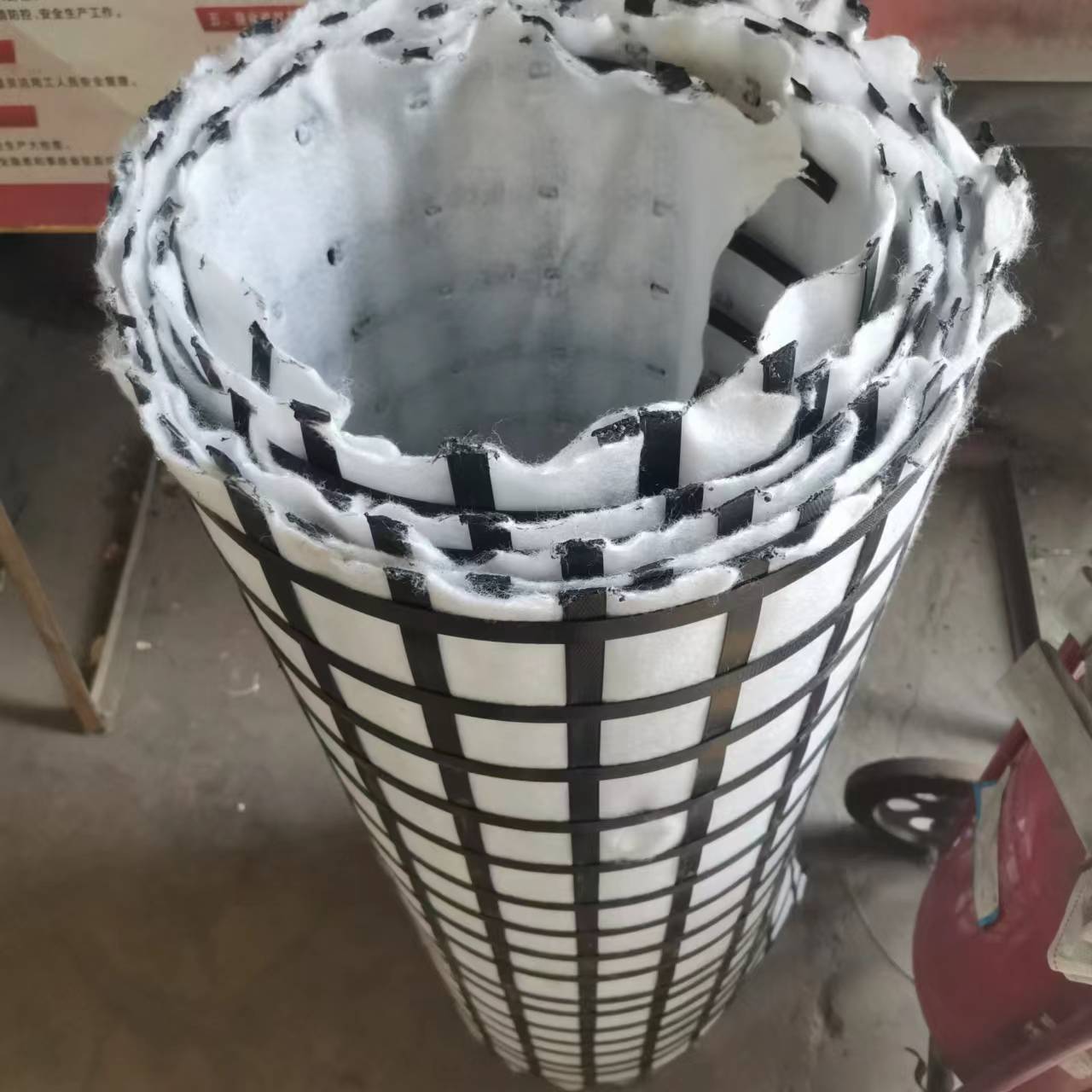
A Zvarjena geokompozitna georazpredaj iz PP je inženirski material za ojačitev, ki se uporablja v geotehničnih in gradbenih projektih. Običajno vsebuje strukturo georazpredaja iz polipropilena, kombinirano z prepustnim geotekstilom, običajno netkano tkanino. Ti dve komponenti sta integrirani med proizvodnim procesom, da zagotovita tako funkcije ojačitve kot ločevanja zemljine, kar odpravlja potrebo po ločeno nameščenih materialih.
Georazpredaj iz polipropilena je glavna nosilna komponenta. Ima odprto mrežasto strukturo, ki jo tvorijo vzdolžne in prečne rebraste elemente, povezane na stičiščih. V zvarjenih konstrukcijah so ti rebra ali polimerni trakovi na križiščih spojeni, da ustvarijo stabilne odprtine. Ko se nad razpredaj naloži granulat, se delci agregata vključijo v odprtine in rebra ter ustvarijo mehansko prepletanje in trenje, kar pomaga upreti bočnemu premikanju.
Sloj geotekstila opravlja drugačno, a dopolnilno vlogo. Njegova porozna struktura omogoča prehod vode, hkrati pa omejuje gibanje delcev zemljine, pod pogojem, da so velikost odprtin in prepustnost skladni s takimi v okoliški zemljini. To pomaga ohranjati ločenost med finozrnato podlago in granulatnimi osnovnimi materiali, s čimer se zmanjša tveganje za kontaminacijo in izgubo zmogljivosti sloja agregata.
Pomembno je vedeti, da vsi geokompozitni georazpredaji iz PP niso izdelani na enak način. Nekateri izdelki uporabljajo zvarjene ravne rebraste georazpredaje iz polipropilena (PP) s geotekstilom, integriranim v strukturo razpredaja, medtem ko drugi uporabljajo luknjane in raztegnjene liste PP s geotekstilom, toplotno pritrjenim na eno stran. Čeprav gre za sorodne konfiguracije izdelkov, jih ne bi smeli obravnavati kot identične. Kupci in inženirji bi zato morali v specifikaciji izdelka potrditi konstrukcijo razpredaja, zasnovo stičišč, material geotekstila in metodo lepljenja.

Glavne komponente in njihove funkcije
Uspešnost zvarjene geokompozitne georazpredaje iz PP je odvisna od tega, kako njene komponente delujejo skupaj. Izbor izdelka samo na podlagi njegove nominalne natezne trdnosti lahko spregleda pomembne dejavnike, kot so celovitost stičišč, dimenzije odprtin, filtracijske lastnosti geotekstila in interakcija med izdelkom in zemljino na lokaciji.
- Polipropilenska geomreža
Polipropilen je termoplastični polimer, ki se pogosto uporablja v geosintetičnih izdelkih za ojačitev. Lahko se obdela v rebra ali trakove z določeno geometrijo in mehanskimi lastnostmi. V zvarjeni georazpredaji vzdolžni in prečni elementi tvorijo pravilni vzorec odprtin, stičišča pa so zasnovana tako, da prenašajo sile v obe smeri.
Odprta struktura razpredaja omogoča, da delci agregata prodrejo skozi odprtine in postanejo mehansko zadržani. Pod prometno ali strukturno obremenitvijo se agregat nagiba k bočnemu premikanju. Razpredaj to gibanje omejuje z mobilizacijo prepletanja in upora na mejni površini, kar pomaga ustvariti stabilnejši, ojačan sloj agregata. Učinkovitost tega mehanizma je odvisna od velikosti odprtin, granulacije agregata, togosti razpredaja in kakovosti vgradnje, ne pa zgolj od vrste polimera.
- Netkani geotekstil
Geotekstil je običajno prepustna netkana tkanina, pritrjena na georazpredaj ali integrirana z njim. Njegove glavne funkcije sta ločevanje in filtracija. Na meji med finozrnato podzemno zemljino in granulatnim polnilom tkanina pomaga preprečiti mešanje teh dveh materialov, hkrati pa omogoča prehod vode.
Tkanino je treba izbrati tako, da ustreza razporeditvi velikosti delcev zemljine, njene prepustnosti in hidravličnim pogojem. Tkanina, ki je preveč odprta, lahko omogoči prekomerno migracijo zemljine, medtem ko lahko tista, ki je preveč omejujoča, ovira pretok vode ali postane dovzetna za zamašitve. Ustrezno ravnovesje je oblikovalski izziv, ne univerzalna lastnost vseh netkanih geotekstilov.
- Zvarjena stičišča in integracija kompozita
Stičišča povezujejo rebra razpredaja in pomagajo strukturi ohranjati svojo geometrijo ob nateznih silah in napetostih pri vgradnji. Njihova celovitost je še posebej pomembna pri dvoosnih izdelkih, kjer je potrebno prenašanje obremenitve tako v strojni kot v prečni smeri (MD in CD).
Integracija kompozita je prav tako pomembna. Geotekstil mora ostati dovolj trdno pritrjen na razpredaj skozi vse faze manipulacije, nameščanja, raztrosa agregata in valjanja. Šibka ali nedosledna vez lahko povzroči ločitev slojev in zmanjša praktične prednosti kombiniranega izdelka. Zato je pri primerjavi izdelkov treba poleg natezne trdnosti upoštevati tudi moč stičišč in integracijo geotekstila z razpredajem.
Kako deluje zvarjena geokompozitna georazpredaj iz PP?
Zvarjena geokompozitna georazpredaj iz PP deluje preko več medsebojno delujočih mehanizmov. Razpredaj ojača sloj agregata z omejevanjem bočnega premikanja, medtem ko geotekstil ohranja ločenost in zagotavlja filtracijo na meji zemljine. Te funkcije prispevajo k bolj stabilnemu asfaltnemu vozišču ali temeljnemu sistemu, zlasti tam, kjer ima naravna podlaga omejeno nosilnost.
- Prepletanje agregata in bočna omejitev
Ko se granulatni agregat položi nad georazpredaj, delci vstopijo in se vključijo v njegove odprtine. Ob obremenitvi s kolesi ali drugimi aplikiranimi silami se agregat nagiba k bočnemu širjenju. Rebra in stičišča georazpredaja temu gibanju kljubujejo z ustvarjanjem prepletanja in trenja na meji med agregatom in razpredajem.
Ta omejitev lahko izboljša togost in porazdelitev obremenitve ojačanega sloja agregata. Namesto da bi delcem omogočila neodvisno gibanje, razpredaj pomaga materialu delovati kot stabilnejši kompozitni sloj. Raziskave o temeljih vozišč, ojačanih z georazpredaji, identificirajo prepletanje agregata kot glavni mehanizem ojačitve.
- Ločevanje zemljine
V cestnem gradbeništvu nad mehkimi ali finozrnatimi podlagami se lahko agregat zaradi gradbenega prometa, ponavljajočih se obremenitev in lokalnih deformacij postopoma pomeša s podlago. Ta kontaminacija spremeni granulacijo agregata in lahko zmanjša njegovo drenažno in nosilno zmogljivost.
Komponenta geotekstila deluje kot ločevalni sloj med podlago in granulatno osnovno plastjo. Z omejevanjem migracije delcev zemljine v agregat pomaga ohranjati predvideno strukturo temelja vozišča. Ta funkcija je še posebej koristna tam, kjer podlaga vsebuje fine delce ali je občutljiva na motnje med gradnjo.
- Filtracija in prehod vode
Gibanje vode znotraj vozišča ali temelja lahko vpliva na trdnost in dolgoročno stabilnost zemljine. Geotekstili omogočajo prehod vode, hkrati pa zadržujejo delce zemljine znotraj meja njihovega filtracijskega dizajna. To zmanjša tveganje, da bi se drobni delci s pretočno vodo prenesli v sosednje granulatne plasti.
Vendar zvarjene geokompozitne georazpredaje ne bi smele biti obravnavane kot popoln drenažni sistem samostojno. Čeprav njihov geotekstil morda zagotavlja filtracijo in nekaj prenosa vode čez mejo, to ne pomeni nujno, da nudijo vodoodpornost v ravnini, kot jo zagotavlja namenska drenaža. geokompozit. Kjer je potrebno obsežno zbiranje vode ali bočni odvod, bodo morda potrebne ločene drenažne plasti, cevi ali odtočne kanale.
- Skupna zmogljivost pod obremenitvijo
Glavna prednost kompozita je, da so ojačitev, ločevanje in filtracija združeni v enem montažnem sloju. Georazmrežje pomaga zadržati premikanje agregata, medtem ko geotekstil zmanjšuje mešanje na meji med podlago in agregatom. Skupaj lahko ti mehanizmi izboljšajo stabilnost gradbene ploščadi in zmogljivost temelja vozišča.
Stopnja izboljšave je odvisna od celotnega sistema zemljina–geosintetik–agregat. Na rezultat vplivajo trdnost podlage, razmere podzemne vode, granulacija agregata, prometno obremenjevanje, togost izdelka, kakovost vgradnje in projektivna debelina. Zato je treba izbrati kompozitni izdelek na podlagi inženirske ocene, ne pa domnevati, da bo prinesel enako korist v vsakih talnih pogojih.
Ključne funkcije in inženirske koristi
PP varjeni geokompozitni georazmrežja se uporabljajo, ker združujejo več geosintetičnih funkcij v enem izdelku. Njihove praktične koristi so odvisne od projektnih pogojev, vendar se pri načrtovanju in specifikaciji običajno upoštevajo naslednje funkcije.
| Funkcija | Kako deluje | Inženirska ugodnost |
| Ojačitev tal | Rebra in odprtine razmrežja delujejo z agregatom, da zoperstavijo bočno gibanje | Izboljša stabilnost in togost zrnastih slojev |
| Ločevanje | Geotekstil omejuje mešanje med zemljino podlage in agregatom | Pomaga ohranjati granulacijo agregata in celovitost sloja |
| Filtriranje | Geotekstil omogoča prehod vode, hkrati pa zadržuje zemeljske delce | Pomaga nadzirati migracijo zemljine v primeru pronicanja vode |
| Podpora pri gradnji | Ojačan agregatni sloj učinkoviteje porazdeli konstrukcijske obremenitve | Lahko izboljša dostop in stabilnost delovne ploščadi na šibkih tleh |
| Integrirana vgradnja | Razmrežje in geotekstil sta dobavljena kot en kompozit | Zmanjša potrebo po namestitvi ločenih slojev za ojačitev in ločevanje |
Ena od možnih koristi projekta je zmanjšana izguba agregata v šibke zemljine podlage. V primernih pogojih to lahko inženirjem omogoči optimizacijo debeline zrnastega sloja ali zmanjšanje količine izkopavanja neprimernih zemljin. Vendar noben izid ni zagotovljen. Vsako zmanjšanje količin materiala mora biti podprto s projektom specifičnimi projektivnimi izračuni, gradbenimi zahtevami in veljavnimi specifikacijami.
Tipične aplikacije PP varjenega geokompozitnega georazmrežja
Izdelek je najpomembnejši tam, kjer projekt potrebuje tako ojačitev kot ločevanje na isti meji. Uporaba je pogosta v prometni infrastrukturi in pri izboljšanju tal, čeprav se natančna stopnja izdelka in načrtovana postavitev razlikujeta glede na obremenitve in talne razmere.
- Gradnja cest in avtocest
V cestnem gradbeništvu se PP varjeno geokompozitno georazmrežje običajno uporablja na meji med šibko podlago in zrnasto podnožno plastjo ali osnovnim slojem. Georazmrežje pomaga omejiti agregat pod ponavljajočim udarcem vozil, medtem ko geotekstil preprečuje, da bi drobni delci iz podlage migrirali v strukturo vozišča.
This arrangement is useful for soft, wet, or fine-grained subgrades, as construction traffic can cause rutting or aggregate contamination in these conditions. However, engineers should assess subgrade strength, drainage conditions, traffic loading and aggregate compatibility before deciding whether a composite is appropriate.
- Železniška infrastruktura
Railway foundations require stable support for ballast and underlying granular layers. Where weak formation soils or material migration are concerns, a geocomposite may be used as part of a ground-improvement design. The reinforcement component can help stabilize the granular layer, while the geotextile provides separation and filtration at the formation interface.
Railway projects have specific requirements for deformation control, cyclic loading, ballast behavior, and long-term maintenance. Product selection should therefore follow the railway authority’s specifications and project-specific geotechnical design.
- Airport Pavements and Heavy-Duty Platforms
Airport pavements, industrial yards, logistics areas and heavy-duty working platforms may experience substantial repeated or concentrated loads. Installing a reinforced aggregate layer can help to distribute stresses and limit lateral movement, particularly where the underlying soil is weak.
Geocomposites may be used in taxiways, access roads, aircraft parking areas, container yards, and temporary construction platforms. Before specifying a product, the designer must evaluate load magnitude, traffic frequency, subgrade variability, and the required service life.
- Embankments and Foundation Reinforcement
For embankments and foundation platforms, geogrid reinforcement can contribute tensile resistance and help improve the stability of granular foundation layers. The geotextile component may provide separation and filtration where the embankment fill contacts fine-grained or moisture-sensitive soil.
A PP Welded Geocomposite Geogrid is not a substitute for a complete slope-stability or foundation design. Where global stability, deep-seated failure, settlement, or bearing capacity governs, the design must account for the full soil profile and loading conditions.
| Aplikacija | Typical Placement | Main Design Considerations |
| Road and highway | Between subgrade and granular subbase/base | Subgrade strength, traffic, aggregate interlock, filtration |
| Railway | Formation or subgrade interface beneath granular layers | Cyclic loading, ballast compatibility, deformation limits |
| Airport pavement | Beneath granular pavement foundation layers | Aircraft loading, repeated stress, foundation stiffness |
| Industrial yard | Under aggregate working platform or pavement base | Heavy vehicle loads, subgrade variability, construction access |
| Embankment foundation | At the interface between soft soil and granular fill | Stability, settlement, tensile resistance, drainage conditions |
How to Select the Right PP Welded Geocomposite Geogrid?
Choosing a suitable PP Welded Geocomposite Geogrid requires more than comparing nominal tensile strength values. A product with a higher ultimate strength is not necessarily the best option if its stiffness at working strain, aperture geometry, geotextile properties, or junction performance do not match the project requirements.
The following parameters should be reviewed before procurement:
- Tensile strength in both directions: Check machine-direction and cross-machine-direction values. Biaxial reinforcement products should provide appropriate properties in both directions where the design requires them.
- Tensile stiffness at specified strain: Strength at 2% or 5% strain can be more informative for service behavior than ultimate strength alone. Compare values tested using equivalent methods and conditions.
- Aperture size and stability: The openings should be compatible with the aggregate grading so that particles can engage effectively with the grid. Aperture stability also matters during placement and compaction.
- Junction strength: Welded intersections must transfer load between ribs and resist damage during installation and service.
- Geotextile filtration properties: Review characteristic opening size, permeability, mass per unit area, and other relevant properties against the site soil and hydraulic conditions.
- Composite bond and durability: Confirm that the geotextile remains securely integrated with the grid and that the product has suitable resistance to installation damage, environmental exposure, and long-term service conditions.
EN ISO 10319:2024 specifies the wide-width tensile test for geosynthetics, including geogrids and geocomposites, for tensile properties. ASTM D6637/D6637M, on the other hand, addresses the tensile properties of geogrids using single- or multi-rib methods. However, these methods are not interchangeable without considering the specimen configuration and reported property, so technical comparisons must identify the test method used.
A useful procurement review should also request a current technical data sheet, quality-control documentation, product identification information, roll dimensions, installation guidance, and test reports from an appropriately qualified laboratory. If the project requires junction strength, installation damage or interface shear tests, these requirements should be stated separately rather than being inferred from a tensile strength certificate.

Installation Considerations and Quality Control
Even a technically suitable geocomposite can underperform if it is damaged, incorrectly oriented, or installed on an inadequately prepared surface. Installation should follow the manufacturer’s instructions and the project specification, with particular attention to subgrade preparation, roll placement, overlaps, aggregate placement, and compaction.
Tipična vrsta namestitve vključuje:
- Prepare the subgrade: Remove sharp objects, debris, and unsuitable materials. Address standing water, soft spots, and major surface irregularities in accordance with the project design.
- Unroll and position the composite: Place the geocomposite in the specified orientation, avoiding wrinkles, folds, and unnecessary tension. Confirm which side of the product should face the subgrade if the manufacturer specifies an orientation.
- Provide the required overlaps or connections: Overlap dimensions and joining details should follow the design drawings and product installation guidance. Do not assume a universal overlap width for all projects.
- Place aggregate carefully: Avoid direct turning, braking, or aggressive trafficking on exposed geosynthetics. Use the specified minimum cover before allowing construction equipment to travel over the layer.
- Spread and compact the fill: Place aggregate in the required sequence and compact it to the project specification without damaging the grid or geotextile.
- Inspect the completed layer: Check for exposed, torn, displaced, or folded material and repair or replace damaged areas according to the approved method.
Installation quality should be documented through inspection records, material traceability, and confirmation that the delivered product matches the approved submittal. Where installation damage is a design concern, relevant test methods and project-specific acceptance criteria should be included in the specification.
Common Mistakes When Specifying PP Welded Geocomposite Geogrid
A common error in specifications is to treat all geogrid composites as equivalent based on their similar appearance or nominal tensile strength. In practice, however, different types of geogrid composites can exhibit different mechanical behaviour and manufacturing characteristics. For example, welded polypropylene (PP) flat-bar grids, punched-and-stretched PP grids, and woven geogrids are all polymer structures that can behave differently. Their product data should be compared based on the actual construction and test methods used, rather than just the product name.
Another common error is assuming that the attached geotextile automatically provides sufficient drainage. While filtration and drainage are related, they are distinct functions: a filter controls particle movement while allowing water through, whereas a drainage layer must also convey water at the required flow rate to a suitable outlet. Projects involving significant groundwater or seepage may require a dedicated drainage solution.
Ultimate tensile strength alone should not determine product selection. Tensile stiffness at working strain, junction performance, aperture compatibility, geotextile filtration characteristics, resistance to installation damage, and long-term durability all affect performance. A technically sound specification considers the geocomposite as part of the complete soil-aggregate system.
Frequently Asked Questions About PP Welded Geocomposite Geogrid
- What is PP welded geocomposite geogrid used for?
It is used for soil reinforcement, separation, and filtration in applications such as roads, railways, airport pavements, and foundation platforms. It is particularly useful where granular layers are placed over weak or fine-grained subgrades.
- What is the difference between a PP geogrid and a PP geocomposite geogrid?
A PP geogrid primarily reinforces aggregate interlock and tensile resistance. A PP geocomposite geogrid combines the grid with a geotextile layer to add separation and filtration functions.
- How does a welded geogrid improve soil stability?
Its grid apertures engage with surrounding aggregate particles and restrict their lateral movement under loading. This interaction can increase the stiffness and stability of the reinforced granular layer.
- Is PP welded geocomposite geogrid suitable for road construction?
Yes, it is commonly considered for road subgrade stabilization and base or subbase reinforcement, especially where weak soils and aggregate contamination are concerns. The final selection depends on subgrade conditions, traffic loading, aggregate grading, and engineering design.
- What is the difference between PP and PET geogrid?
PP geogrids are made from polypropylene, while PET geogrids use polyester. Their tensile behavior, stiffness, creep characteristics, chemical resistance, and manufacturing structures can differ, so the appropriate material depends on the design conditions and product specifications.
- How do you choose the right PP welded geocomposite geogrid?
Compare tensile strength and stiffness in both directions, aperture size, junction strength, geotextile filtration properties, and installation-damage resistance. Always check the technical data sheet and confirm that the product meets the project’s design and testing requirements.
Zaključek
The PP Welded Geocomposite Geogrid combines the reinforcement capabilities of a polypropylene grid with the separation and filtration functions of a geotekstil. Its performance is based on the interaction between the grid’s apertures and the aggregate particles, as well as the geotextile’s ability to restrict soil migration while allowing water to pass through. This makes it a practical option for road foundations, railway formations, airport pavements, industrial platforms, and other geotechnical applications where weak subgrades or material intermixing are a concern.
Successful use depends on selecting the right product structure and engineering properties for the site conditions. As part of the design, tensile stiffness, junction strength, aperture compatibility, geotextile filtration characteristics, installation quality, and long-term durability should all be assessed. Rather than selecting a geocomposite based solely on its nominal tensile strength, engineers and buyers should evaluate the complete product specification and its suitability for the intended soil-aggregate system.
