

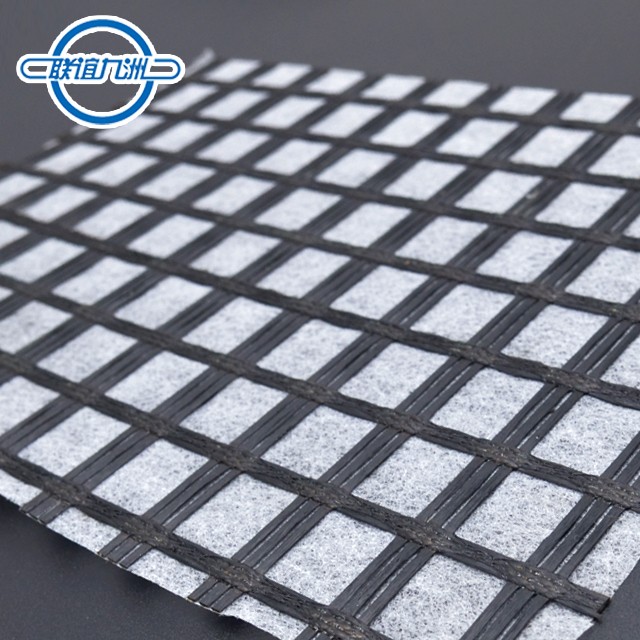

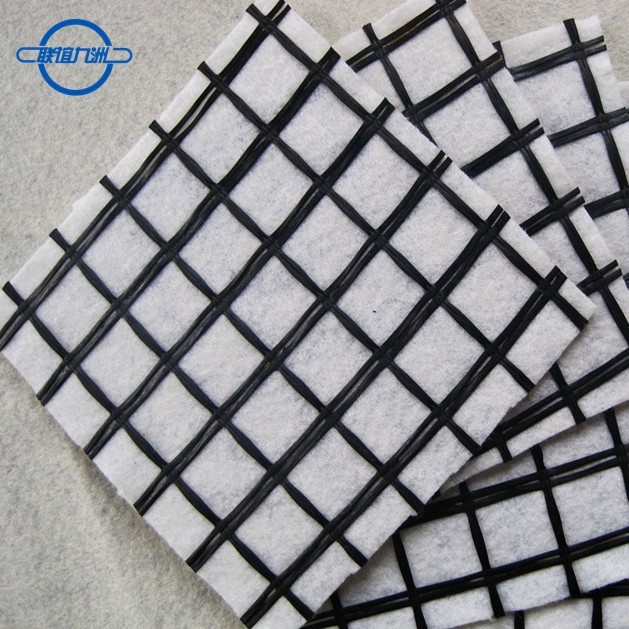
ポリプロピレン(PP)溶着型ジオコンポジットジオグリッドは、ジオグリッドとジオテキスタイル層を組み合わせたジオシンセティック複合材です。これにより、土壌補強、分離、ろ過の機能を一つの製品で実現します。この ジオグリッド 構造は周囲の骨材と相互に噛み合い、荷重下での側方変位を抑制して骨材を拘束します。同時に、貼り付けられたジオテキスタイルが細粒土粒子の骨材層への移動を防ぎます。本説明は、米国連邦道路管理局の地盤工学部門、『ろ過および安定化のためのジオシンセティック』という研究レビュー、ならびに関連する製品仕様書や試験規格に基づいています。.
PP溶着型ジオコンポジットジオグリッドとは?
A PP溶着型ジオコンポジットジオグリッド は、地盤工学および土木工学プロジェクトで使用される設計された補強材料です。通常、ポリプロピレン製ジオグリッド構造と透水性ジオテキスタイル(主に不織布)から構成されます。これら二つの要素は製造工程で一体化され、補強と土壌分離の両機能を提供し、別途材料を配置する必要をなくします。.
ポリプロピレン製ジオグリッドは主要な荷重支持部材です。縦方向と横方向のリブが接合部で連結されたオープングリッド構造を持ちます。溶着型では、これらのリブまたはポリマー帯が交点で接合され、安定した開口部を形成します。粒状充填物がグリッド上に敷設されると、骨材粒子が開口部やリブに噛み合い、機械的ロックと摩擦を生じさせることで、側方変位に対する抵抗力を高めます。.
ジオテキスタイル層は、異なるながらも補完的な役割を果たします。その多孔質構造により水は透過可能ですが、周囲の土壌の開口サイズおよび透水性と適合している場合に限ります。これにより、細粒の路盤と粒状の基礎材料との間の分離が維持され、骨材層の汚染や性能低下のリスクが低減されます。.
すべてのPPジオコンポジットジオグリッドが同一方法で製造されるわけではないことに留意することが重要です。一部の製品は溶着型ポリプロピレン(PP)フラットバー製グリッドを使用し、ジオテキスタイルがグリッド構造に統合されています。一方、別の製品では打ち抜き・延伸加工されたPPシートに片側へジオテキスタイルが熱接着されています。これらは関連する製品構成ですが、同一視すべきではありません。購入者およびエンジニアは、製品仕様書においてグリッド構造、接合部設計、ジオテキスタイル素材、および接着方法を必ず確認する必要があります。.

主要構成要素とその機能
PP溶着型ジオコンポジットジオグリッドの性能は、各構成要素がどのように連携するかに依存します。公称引張強度のみに基づいて製品を選定すると、接合部の完全性、開口寸法、ジオテキスタイルのろ過特性、および製品と現場土壌との相互作用といった重要な要素を見落とす可能性があります。.
- ポリプロピレン ジオグリッド
ポリプロピレンは、ジオシンセティック補強製品で一般的に使用される熱可塑性ポリマーです。特定の幾何学形状と機械的特性を持つリブやストリップに加工できます。溶着型ジオグリッドでは、縦横の要素が規則的な開口パターンを形成し、接合部は両方向に力を伝達するよう設計されています。.
グリッドのオープン構造により、骨材粒子が開口部に侵入し、機械的に拘束されます。交通荷重や構造荷重下では、骨材は側方に移動しがちです。グリッドはロック効果と界面抵抗を活用することでこの動きを制限し、より安定した補強された骨材層の形成を助けます。このメカニズムの有効性は、単なるポリマー種類よりもむしろ開口サイズ、骨材の粒度分布、グリッドの剛性、および施工品質に左右されます。.
- 不織布ジオテキスタイル
ジオテキスタイルは通常、ジオグリッドに貼り付けられるか統合された透水性不織布です。その主な機能は分離とろ過です。細粒の路盤土と粒状充填物の境界面において、この布は両材料の混合を防ぎつつ、水の透過を許容します。.
布は土壌の粒度分布、透水性、および水理条件に適合するように選定する必要があります。開口が大きすぎると過剰な土壌の移動を許し、逆に閉鎖しすぎると水流を妨げたり目詰まりを起こしやすくなります。適切なバランスは設計上の考慮事項であり、すべての不織布ジオテキスタイルに共通する普遍的特性ではありません。.
- 溶着接合部と複合体の統合
接合部はグリッドのリブを連結し、引張力や施工応力が加わる際に構造が形状を保つよう支援します。特に双軸製品では、マシン方向(MD)およびクロスマシン方向(CD)の両方向に荷重伝達が必要となるため、接合部の完全性は極めて重要です。.
複合体の統合も重要です。ジオテキスタイルは、取り扱い、配置、骨材の散布、および締固めの各工程を通じて、グリッドに十分に接着された状態を維持しなければなりません。結合が弱かったり不均一だったりすると、層間剥離が生じ、複合製品としての実用的利点が損なわれます。したがって、製品を比較する際には、引張強度だけでなく、接合部の強度やジオテキスタイルとグリッドの統合状態も考慮する必要があります。.
PP溶着型ジオコンポジットジオグリッドはどのように機能するのか?
PP溶着型ジオコンポジットジオグリッドは、いくつかの相互作用するメカニズムによって機能します。グリッドは骨材層の側方変位を制限することで補強し、ジオテキスタイルは土壌界面での分離とろ過を維持します。これらの機能は、特に天然路盤の支持力が低い場所において、より安定した舗装または基礎システムの構築に寄与します。.
- 骨材のロックと側方拘束
粒状骨材がジオグリッド上に敷設されると、粒子はグリッドの開口部に入り込み、そこに噛み合います。車輪荷重やその他の外力が加わると、骨材は横方向に広がろうとします。ジオグリッドのリブと接合部は、骨材とグリッドの界面でロックと摩擦を生じさせることで、この動きに抵抗します。.
この拘束は、補強された骨材層の剛性と荷重分散を向上させることがあります。粒子が独立して動くのではなく、グリッドは材料がより安定した複合層として振る舞うよう助けるのです。ジオグリッド補強舗装基層に関する研究では、骨材のロックが主要な補強メカニズムであることが示されています。.
- 土壌分離
軟弱または細粒の路盤の上で道路を建設する際、施工中の交通や繰り返し荷重、局所的な変形により、骨材が下層の土壌と徐々に混ざり合うことがあります。この汚染は骨材の粒度分布を変え、排水性や支持性能を低下させる可能性があります。.
ジオテキスタイル成分は、路盤と粒状基礎の間に分離層として機能します。土壌粒子の骨材への移動を制限することで、舗装基礎の意図された構造を維持するのに役立ちます。この機能は、路盤に細粒を含む場合や施工中に擾乱を受けやすい場合に特に有用です。.
- ろ過と水の透過
舗装や基礎内部における水の動きは、土壌の強度や長期的な安定性に影響を及ぼす可能性があります。ジオテキスタイルは水を透過させつつ、フィルタリング設計の範囲内で土壌粒子を保持します。これにより、浸透によって隣接する粒状層へ細粒が運ばれるリスクが低減されます。.
ただし、ジオコンポジットジオグリッドはそれ自体で完全な排水システムと見なすべきではありません。ジオテキスタイルはろ過と界面での一部の水透過を提供するかもしれませんが、専用の排水システムのような面内排水能力を必ずしも備えているわけではありません。 ジオコンポジット. 大量の集水や側方排出が必要な場合は、別途排水層、パイプ、または排水口を設置する必要があるかもしれません。.
- 荷重下での総合的な性能
複合材の主な利点は、補強・分離・ろ過の機能が一つの施工層に統合されている点です。ジオグリッドは骨材の移動を抑制し、ジオテキスタイルは路盤界面での混入を低減します。これらの機能が相乗的に作用することで、施工用作業平台の安定性や舗装基盤の性能向上に寄与します。.
改善効果の程度は、土壌・ジオシンセティック・骨材からなるシステム全体に依存します。路盤強度、地下水条件、骨材の粒度分布、交通荷重、製品の剛性、施工品質、設計厚さなど、さまざまな要因が結果に影響を与えます。したがって、複合製品はあらゆる地盤条件下で同様の効果が得られると想定するのではなく、工学的評価に基づいて選定すべきです。.

主要な機能と工学的メリット
PP溶着型ジオコンポジットジオグリッドは、単一製品で複数のジオシンセティック機能を兼ね備えているため採用されます。その実際の効果はプロジェクトの条件に左右されますが、設計および仕様検討時には一般的に以下の機能が考慮されます。.
| 機能 | 仕組み | エンジニアリング・ベネフィット |
| 土壌補強 | グリッドのリブと開口部が骨材と相互作用し、側方変位を抑制する | 粒状層の安定性と剛性を向上させる |
| 分離 | ジオテキスタイルが路盤土と骨材の混入を制限する | 骨材の粒度分布と層の一体性を維持するのに役立つ |
| ろ過 | ジオテキスタイルは水を通す一方で土粒子を保持する | 浸透水条件下での土壌の移動を抑制するのに役立つ |
| 施工時の支持力向上 | 補強された骨材層により、施工荷重をより効果的に分散できる | 軟弱地盤において、アクセス性や作業平台の安定性を向上させることができる |
| 一体化施工 | グリッドとジオテキスタイルが一体となった複合材として供給される | 別個の補強層や分離層を設置する必要性を低減する |
プロジェクトにおける潜在的なメリットの一つは、軟弱な路盤土への骨材の流出を抑制できることです。適切な条件下では、これにより設計者は粒状層の厚さを最適化したり、不適合土の掘削量を削減したりすることが可能です。ただし、いずれの効果も保証されるわけではありません。材料量の削減には、プロジェクト固有の設計計算、施工要件、および適用される仕様書による裏付けが必要です。.
PP溶着型ジオコンポジットジオグリッドの代表的な用途
この製品は、同一界面で補強と分離の両方が求められるプロジェクトにおいて最も有用です。交通インフラや地盤改良分野で広く使用されていますが、具体的な製品グレードや設計構成は荷重条件や土質によって異なります。.
- 道路・高速道路建設
道路建設において、PP溶着型ジオコンポジットジオグリッドは通常、軟弱な路盤と粒状の下層またはベース層との境界面で使用されます。ジオグリッドは車両通行による繰り返し荷重から骨材を拘束し、ジオテキスタイルは路盤からの微細粒子が舗装構造へ混入するのを防止します。.
This arrangement is useful for soft, wet, or fine-grained subgrades, as construction traffic can cause rutting or aggregate contamination in these conditions. However, engineers should assess subgrade strength, drainage conditions, traffic loading and aggregate compatibility before deciding whether a composite is appropriate.
- 鉄道インフラ
Railway foundations require stable support for ballast and underlying granular layers. Where weak formation soils or material migration are concerns, a geocomposite may be used as part of a ground-improvement design. The reinforcement component can help stabilize the granular layer, while the geotextile provides separation and filtration at the formation interface.
Railway projects have specific requirements for deformation control, cyclic loading, ballast behavior, and long-term maintenance. Product selection should therefore follow the railway authority’s specifications and project-specific geotechnical design.
- Airport Pavements and Heavy-Duty Platforms
Airport pavements, industrial yards, logistics areas and heavy-duty working platforms may experience substantial repeated or concentrated loads. Installing a reinforced aggregate layer can help to distribute stresses and limit lateral movement, particularly where the underlying soil is weak.
Geocomposites may be used in taxiways, access roads, aircraft parking areas, container yards, and temporary construction platforms. Before specifying a product, the designer must evaluate load magnitude, traffic frequency, subgrade variability, and the required service life.
- Embankments and Foundation Reinforcement
For embankments and foundation platforms, geogrid reinforcement can contribute tensile resistance and help improve the stability of granular foundation layers. The geotextile component may provide separation and filtration where the embankment fill contacts fine-grained or moisture-sensitive soil.
A PP Welded Geocomposite Geogrid is not a substitute for a complete slope-stability or foundation design. Where global stability, deep-seated failure, settlement, or bearing capacity governs, the design must account for the full soil profile and loading conditions.
| 申し込み | Typical Placement | Main Design Considerations |
| Road and highway | Between subgrade and granular subbase/base | Subgrade strength, traffic, aggregate interlock, filtration |
| Railway | Formation or subgrade interface beneath granular layers | Cyclic loading, ballast compatibility, deformation limits |
| Airport pavement | Beneath granular pavement foundation layers | Aircraft loading, repeated stress, foundation stiffness |
| Industrial yard | Under aggregate working platform or pavement base | Heavy vehicle loads, subgrade variability, construction access |
| Embankment foundation | At the interface between soft soil and granular fill | Stability, settlement, tensile resistance, drainage conditions |
How to Select the Right PP Welded Geocomposite Geogrid?
Choosing a suitable PP Welded Geocomposite Geogrid requires more than comparing nominal tensile strength values. A product with a higher ultimate strength is not necessarily the best option if its stiffness at working strain, aperture geometry, geotextile properties, or junction performance do not match the project requirements.
The following parameters should be reviewed before procurement:
- Tensile strength in both directions: Check machine-direction and cross-machine-direction values. Biaxial reinforcement products should provide appropriate properties in both directions where the design requires them.
- Tensile stiffness at specified strain: Strength at 2% or 5% strain can be more informative for service behavior than ultimate strength alone. Compare values tested using equivalent methods and conditions.
- Aperture size and stability: The openings should be compatible with the aggregate grading so that particles can engage effectively with the grid. Aperture stability also matters during placement and compaction.
- Junction strength: Welded intersections must transfer load between ribs and resist damage during installation and service.
- Geotextile filtration properties: Review characteristic opening size, permeability, mass per unit area, and other relevant properties against the site soil and hydraulic conditions.
- Composite bond and durability: Confirm that the geotextile remains securely integrated with the grid and that the product has suitable resistance to installation damage, environmental exposure, and long-term service conditions.
EN ISO 10319:2024 specifies the wide-width tensile test for geosynthetics, including geogrids and geocomposites, for tensile properties. ASTM D6637/D6637M, on the other hand, addresses the tensile properties of geogrids using single- or multi-rib methods. However, these methods are not interchangeable without considering the specimen configuration and reported property, so technical comparisons must identify the test method used.
A useful procurement review should also request a current technical data sheet, quality-control documentation, product identification information, roll dimensions, installation guidance, and test reports from an appropriately qualified laboratory. If the project requires junction strength, installation damage or interface shear tests, these requirements should be stated separately rather than being inferred from a tensile strength certificate.

Installation Considerations and Quality Control
Even a technically suitable geocomposite can underperform if it is damaged, incorrectly oriented, or installed on an inadequately prepared surface. Installation should follow the manufacturer’s instructions and the project specification, with particular attention to subgrade preparation, roll placement, overlaps, aggregate placement, and compaction.
典型的な施工手順には以下が含まれます:
- Prepare the subgrade: Remove sharp objects, debris, and unsuitable materials. Address standing water, soft spots, and major surface irregularities in accordance with the project design.
- Unroll and position the composite: Place the geocomposite in the specified orientation, avoiding wrinkles, folds, and unnecessary tension. Confirm which side of the product should face the subgrade if the manufacturer specifies an orientation.
- Provide the required overlaps or connections: Overlap dimensions and joining details should follow the design drawings and product installation guidance. Do not assume a universal overlap width for all projects.
- Place aggregate carefully: Avoid direct turning, braking, or aggressive trafficking on exposed geosynthetics. Use the specified minimum cover before allowing construction equipment to travel over the layer.
- Spread and compact the fill: Place aggregate in the required sequence and compact it to the project specification without damaging the grid or geotextile.
- Inspect the completed layer: Check for exposed, torn, displaced, or folded material and repair or replace damaged areas according to the approved method.
Installation quality should be documented through inspection records, material traceability, and confirmation that the delivered product matches the approved submittal. Where installation damage is a design concern, relevant test methods and project-specific acceptance criteria should be included in the specification.
Common Mistakes When Specifying PP Welded Geocomposite Geogrid
A common error in specifications is to treat all geogrid composites as equivalent based on their similar appearance or nominal tensile strength. In practice, however, different types of geogrid composites can exhibit different mechanical behaviour and manufacturing characteristics. For example, welded polypropylene (PP) flat-bar grids, punched-and-stretched PP grids, and woven geogrids are all polymer structures that can behave differently. Their product data should be compared based on the actual construction and test methods used, rather than just the product name.
Another common error is assuming that the attached geotextile automatically provides sufficient drainage. While filtration and drainage are related, they are distinct functions: a filter controls particle movement while allowing water through, whereas a drainage layer must also convey water at the required flow rate to a suitable outlet. Projects involving significant groundwater or seepage may require a dedicated drainage solution.
Ultimate tensile strength alone should not determine product selection. Tensile stiffness at working strain, junction performance, aperture compatibility, geotextile filtration characteristics, resistance to installation damage, and long-term durability all affect performance. A technically sound specification considers the geocomposite as part of the complete soil-aggregate system.
Frequently Asked Questions About PP Welded Geocomposite Geogrid
- What is PP welded geocomposite geogrid used for?
It is used for soil reinforcement, separation, and filtration in applications such as roads, railways, airport pavements, and foundation platforms. It is particularly useful where granular layers are placed over weak or fine-grained subgrades.
- What is the difference between a PP geogrid and a PP geocomposite geogrid?
A PP geogrid primarily reinforces aggregate interlock and tensile resistance. A PP geocomposite geogrid combines the grid with a geotextile layer to add separation and filtration functions.
- How does a welded geogrid improve soil stability?
Its grid apertures engage with surrounding aggregate particles and restrict their lateral movement under loading. This interaction can increase the stiffness and stability of the reinforced granular layer.
- Is PP welded geocomposite geogrid suitable for road construction?
Yes, it is commonly considered for road subgrade stabilization and base or subbase reinforcement, especially where weak soils and aggregate contamination are concerns. The final selection depends on subgrade conditions, traffic loading, aggregate grading, and engineering design.
- What is the difference between PP and PET geogrid?
PP geogrids are made from polypropylene, while PET geogrids use polyester. Their tensile behavior, stiffness, creep characteristics, chemical resistance, and manufacturing structures can differ, so the appropriate material depends on the design conditions and product specifications.
- How do you choose the right PP welded geocomposite geogrid?
Compare tensile strength and stiffness in both directions, aperture size, junction strength, geotextile filtration properties, and installation-damage resistance. Always check the technical data sheet and confirm that the product meets the project’s design and testing requirements.
結論
The PP Welded Geocomposite Geogrid combines the reinforcement capabilities of a polypropylene grid with the separation and filtration functions of a ジオテキスタイル. Its performance is based on the interaction between the grid’s apertures and the aggregate particles, as well as the geotextile’s ability to restrict soil migration while allowing water to pass through. This makes it a practical option for road foundations, railway formations, airport pavements, industrial platforms, and other geotechnical applications where weak subgrades or material intermixing are a concern.
Successful use depends on selecting the right product structure and engineering properties for the site conditions. As part of the design, tensile stiffness, junction strength, aperture compatibility, geotextile filtration characteristics, installation quality, and long-term durability should all be assessed. Rather than selecting a geocomposite based solely on its nominal tensile strength, engineers and buyers should evaluate the complete product specification and its suitability for the intended soil-aggregate system.
